
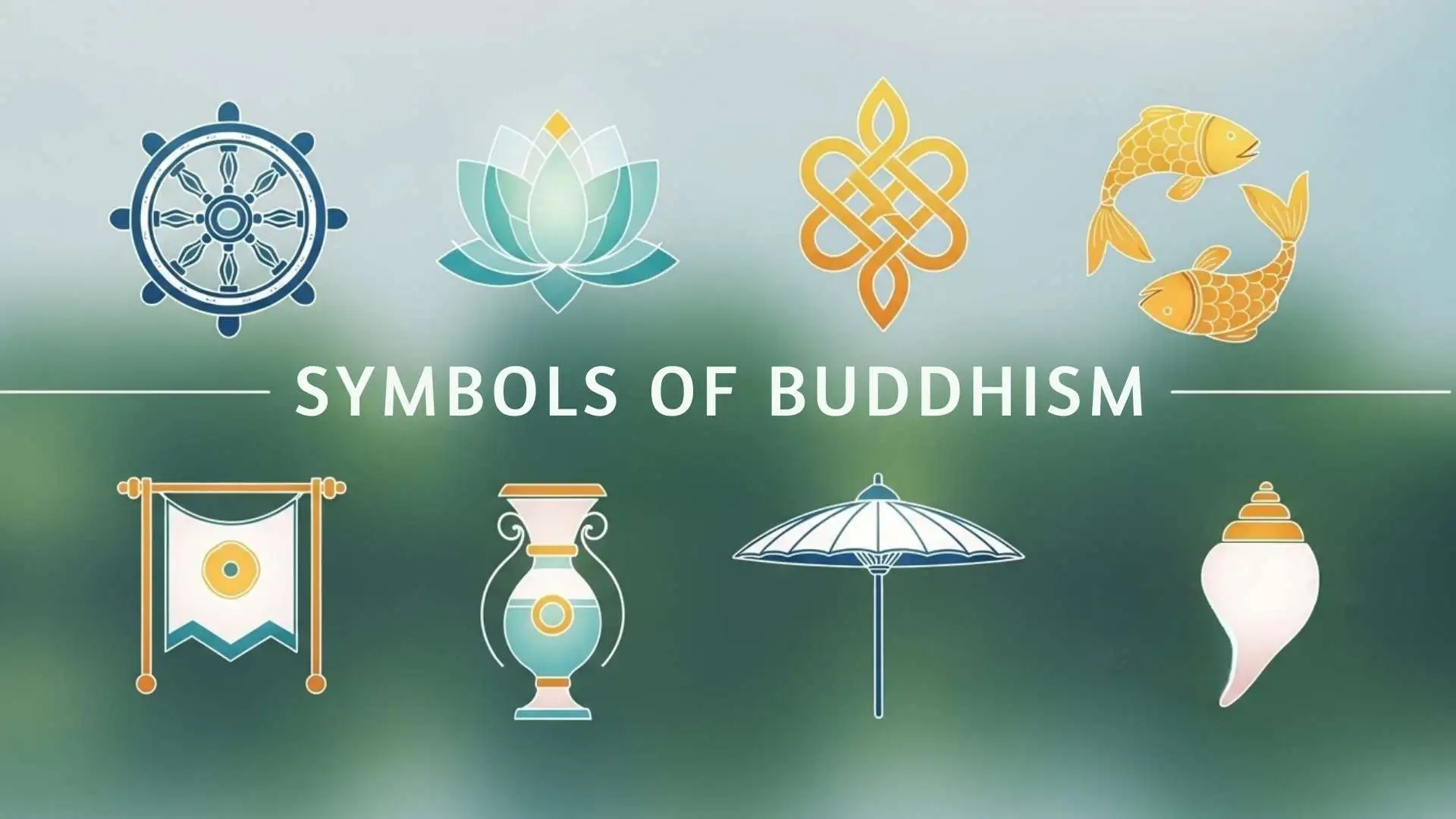
Across temples, ancient manuscripts, and quiet meditation halls, the “Symbols of Buddhism” speak a silent language of awakening.
These sacred signs are not decorative, they are emotional maps of the human journey through suffering, insight, and inner peace.
For centuries, they have guided minds, healed hearts, and revealed truths words often fail to express.
In this article, you will uncover the deeper meanings behind Buddhist symbols, meanings that touch psychology, spirituality and the timeless search for purpose.
What Are Symbols of Buddhism?
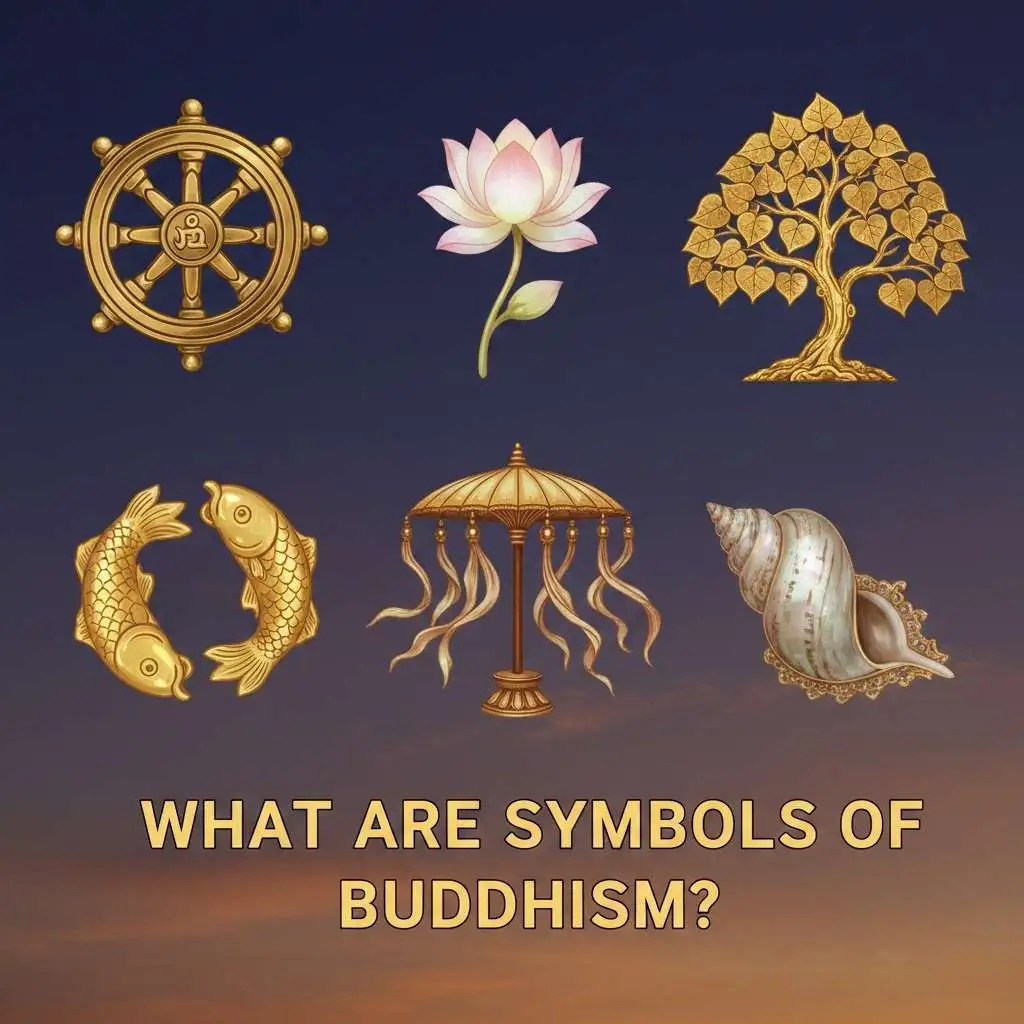
Symbols of Buddhism are visual representations of the Buddha’s teachings, spiritual states, and universal truths about existence. Emerging over 2,500 years ago in ancient India, these symbols helped communicate profound ideas in an age when teachings were passed orally and visually rather than through texts.
Each symbol carries layers of meaning tied to Buddhist philosophy—impermanence, compassion, mindfulness, suffering, and enlightenment. Over time, these symbols spread across Asia and beyond, adapting to local cultures while preserving their spiritual core.
Rather than demanding belief, Buddhist symbols invite reflection. They act as mirrors, helping individuals understand their own minds and emotions.
Core Buddhist Symbols And Their Deeper Meanings
Buddhism Symbols And Meanings
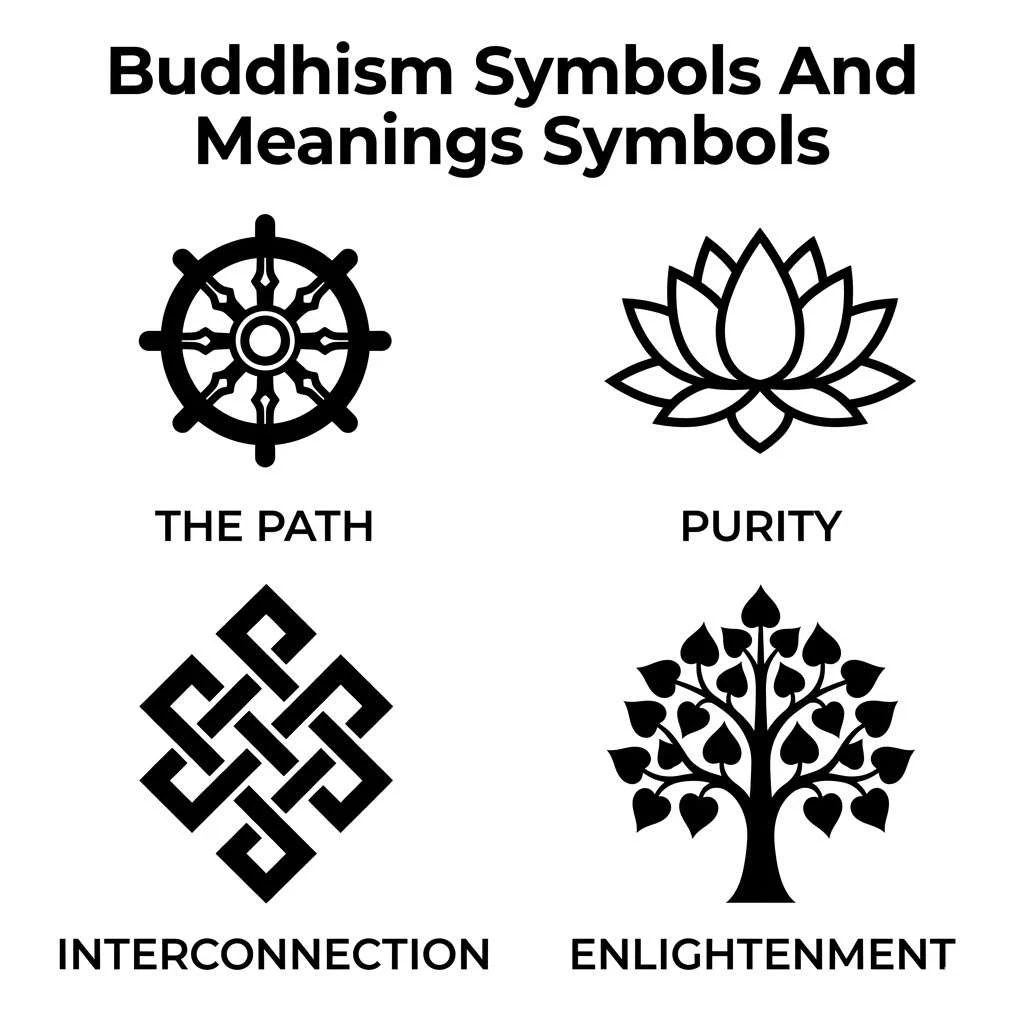
Buddhist symbols are not just art, they hold teachings within them. They explain life, suffering, and peace through simple imagery. Each symbol connects daily life with spiritual truth.
What Are The 8 Symbols Of Buddhism?
The Eight Auspicious Symbols represent the path to enlightenment and spiritual growth. Each symbol reflects values like wisdom, compassion, and harmony. Together, they guide followers toward a balanced and mindful life.
8 Symbols Of Buddhism And What They Mean
These sacred icons include the Lotus, Endless Knot, and Dharma Wheel, each carrying a unique message. They explain the journey from suffering to awakening in a simple visual way. Understanding them helps deepen spiritual awareness.
Symbols Of Enlightenment
These symbols focus on awakening and inner peace. They remind followers to let go of ego and embrace wisdom. Many are used in meditation to inspire clarity and focus.
Enlightenment Buddhist Symbols
Symbols like the Bodhi Tree and Lotus show the path to awakening. They represent growth, patience, and purity of mind. Their meaning encourages personal transformation.
Zen Symbols And Meanings
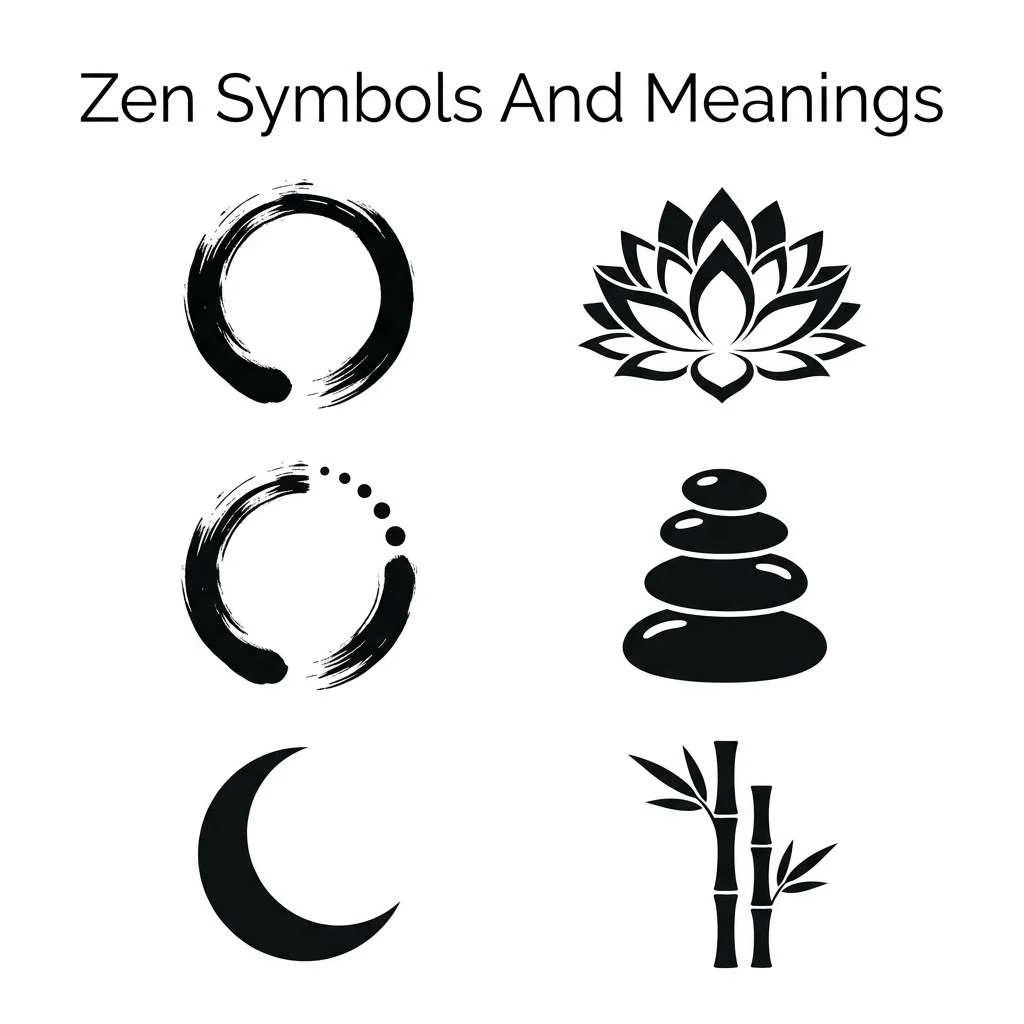
Zen symbols are simple yet powerful in meaning. They reflect balance, emptiness, and mindfulness. Their minimal design teaches deep spiritual lessons.
Types Of Buddhist Symbols In Culture And Practice
5 Symbols Of Buddhism
Five common symbols include the Lotus, Wheel, Conch, Parasol, and Endless Knot. Each one represents a key teaching of Buddhism. They are widely used in art and rituals.
Symbols Buddhism
Buddhist symbols appear in temples, books, and daily life. They serve as reminders of teachings and values. Their presence keeps spirituality close to everyday living.
Simple Buddhist Symbols
Simple designs like circles, flowers, and wheels carry deep meaning. They are easy to understand yet spiritually powerful. These symbols are perfect for beginners exploring Buddhism.
Buddhism Signs
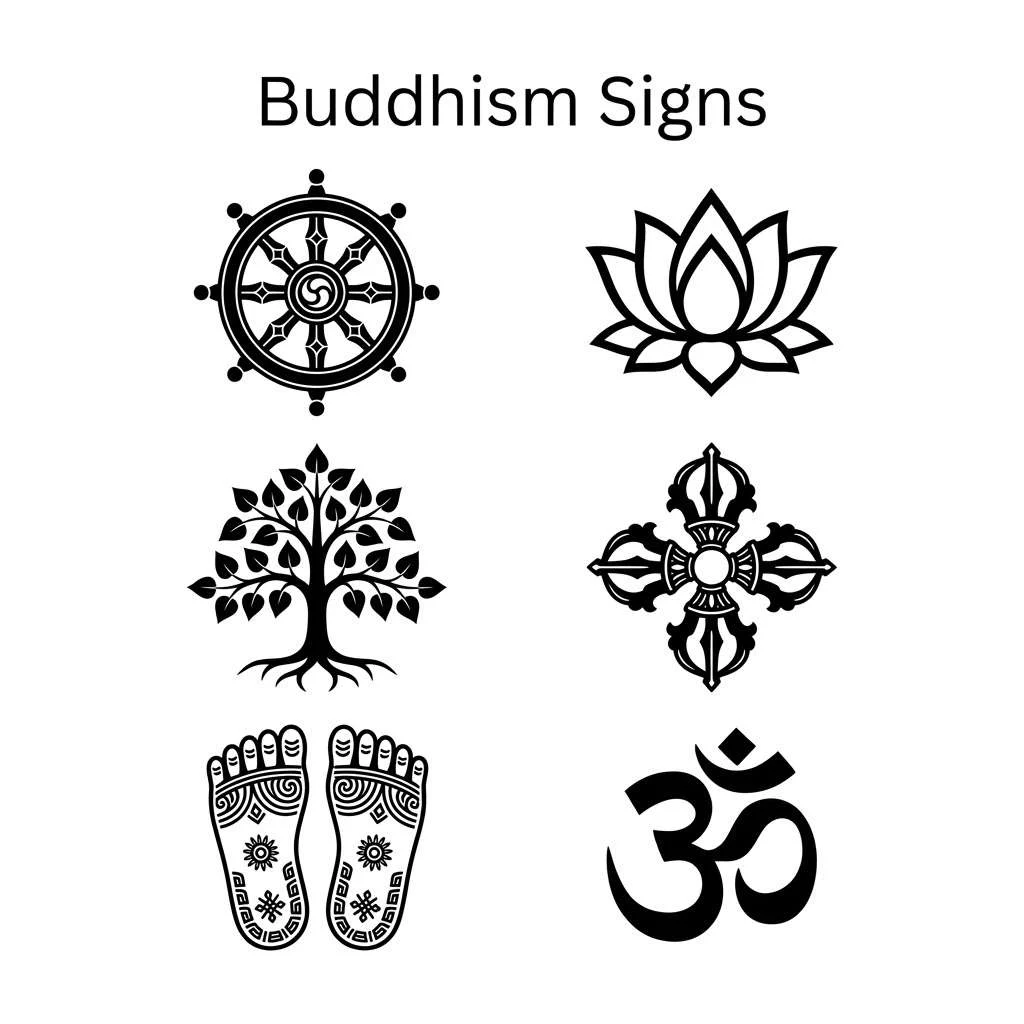
Buddhist signs are visual expressions of faith and belief. They help communicate teachings without words. Many are used in sacred places and ceremonies.
Buddha Signs
These signs often relate directly to the Buddha’s life and teachings. They show peace, meditation, and enlightenment. Followers use them for inspiration and guidance.
Sign For Buddhism
The most recognized sign is the Dharma Wheel. It represents the teachings and the path to truth. This symbol is widely used across Buddhist traditions.
Symbol Of Buddhism
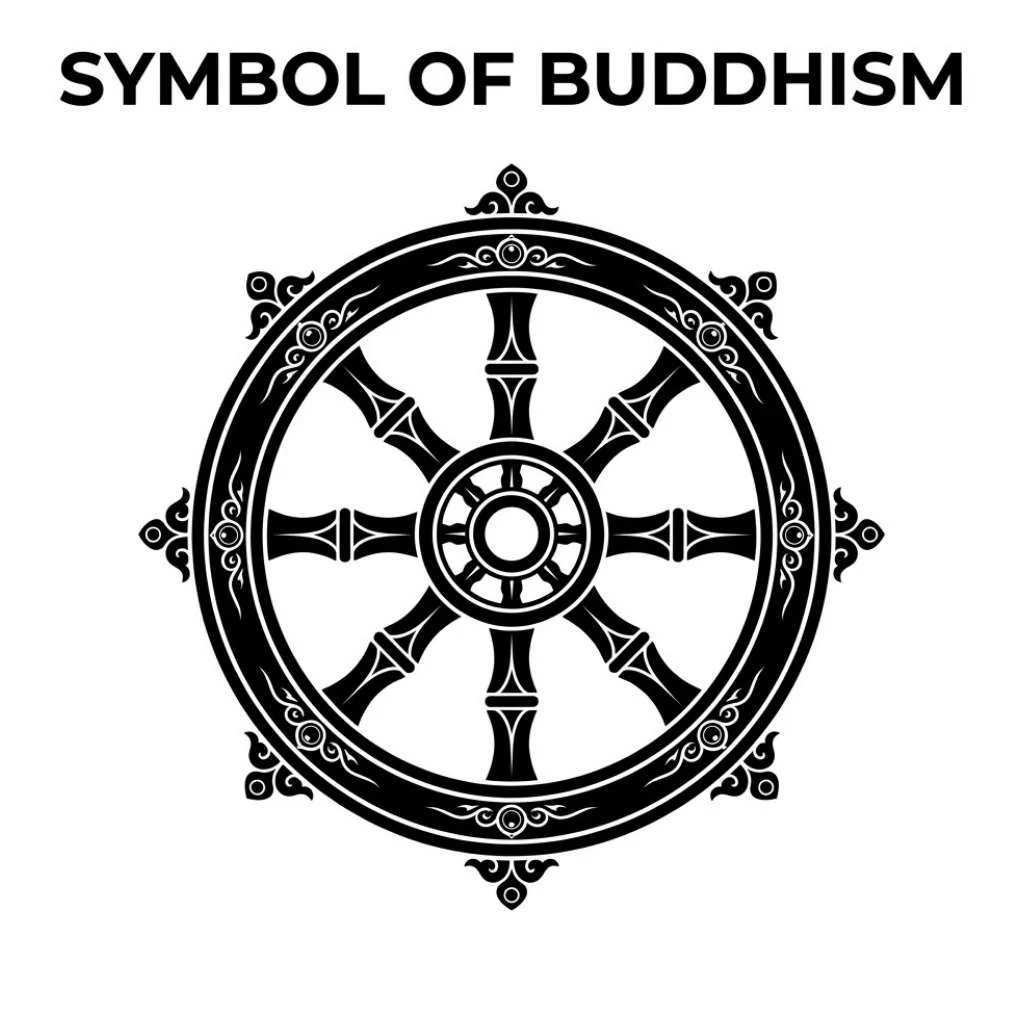
The Dharma Wheel stands as the main symbol of Buddhism. It shows movement toward enlightenment and understanding. Its design reflects the Eightfold Path.
Buddhism Sacred Symbol
Sacred symbols are deeply respected in Buddhist culture. They are used in rituals and spiritual practices. Each one carries a message of peace and wisdom.
Sacred Objects Of Buddhism
Objects like prayer wheels and statues hold symbolic value. They represent devotion and spiritual focus. These items help practitioners stay connected to their faith.
Symbolism In Buddhist Life And Expression
Buddhist Symbolism
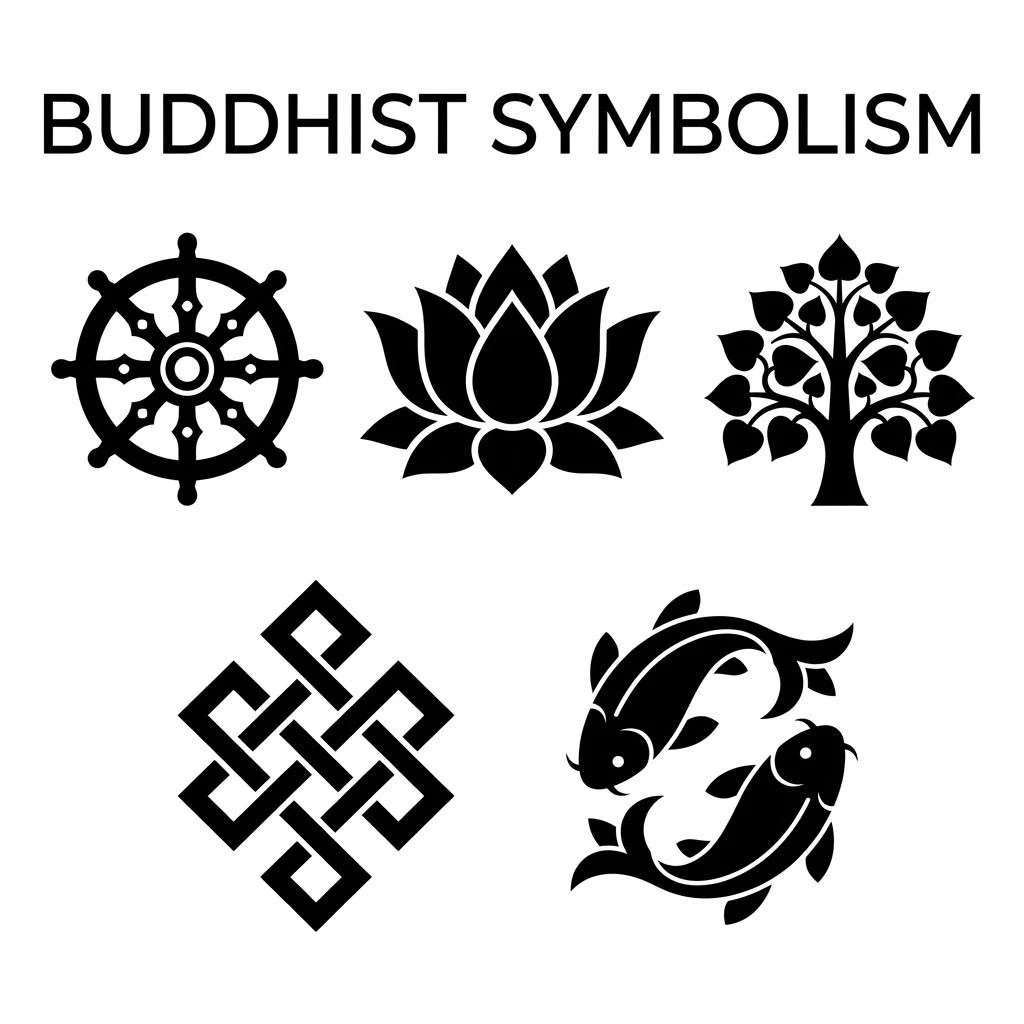
Buddhist symbolism connects the physical world with inner truth. It uses shapes and signs to express deep wisdom. This approach keeps teachings timeless and universal.
Symbolism Buddhism
Symbolism plays a major role in explaining Buddhist teachings. It turns complex ideas into simple visual forms. This makes spiritual concepts easier to understand.
Symbols And Meanings Of Buddhism
Each symbol tells a story about life, suffering, and peace. They guide people toward better understanding and compassion. Learning them adds depth to spiritual practice.
Buddhist Symbols And Their Meanings
These symbols offer insight into core beliefs of Buddhism. They explain the journey of life and the path to enlightenment. Their meanings remain relevant in modern life.
Buddhist Symbol Of Life
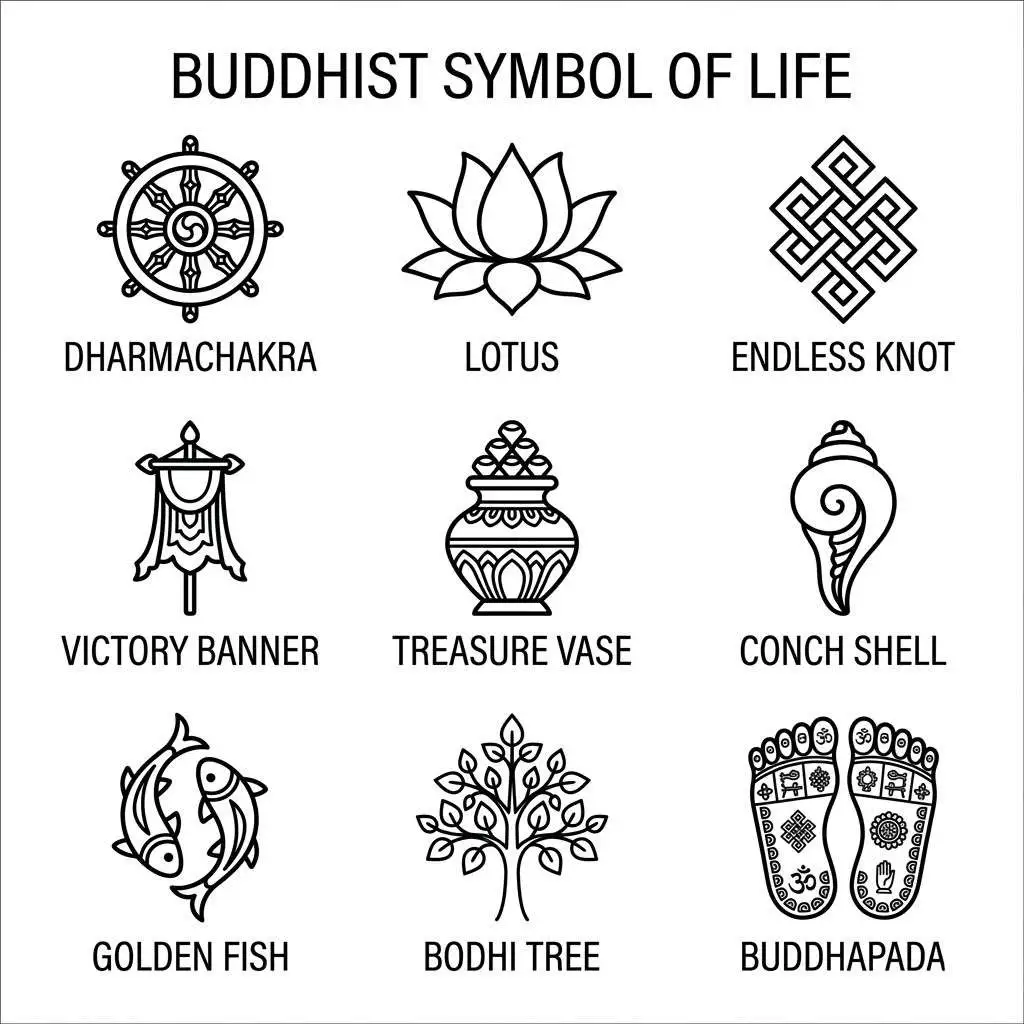
The Wheel of Life shows the cycle of birth, death, and rebirth. It explains how actions shape future experiences. This symbol teaches responsibility and awareness.
Buddha Symbols Meaning
Buddha symbols reflect his teachings and experiences. They represent calmness, awareness, and truth. Understanding them helps connect with his message.
Buddhist Symbol For Love
The Endless Knot often represents love and connection. It shows how all things are linked together. This symbol promotes compassion and unity.
Tibetan Buddhist Symbols
Tibetan symbols are colorful and rich in meaning. They combine art with deep spiritual teachings. These symbols are widely used in rituals and meditation.
Buddha Symbols
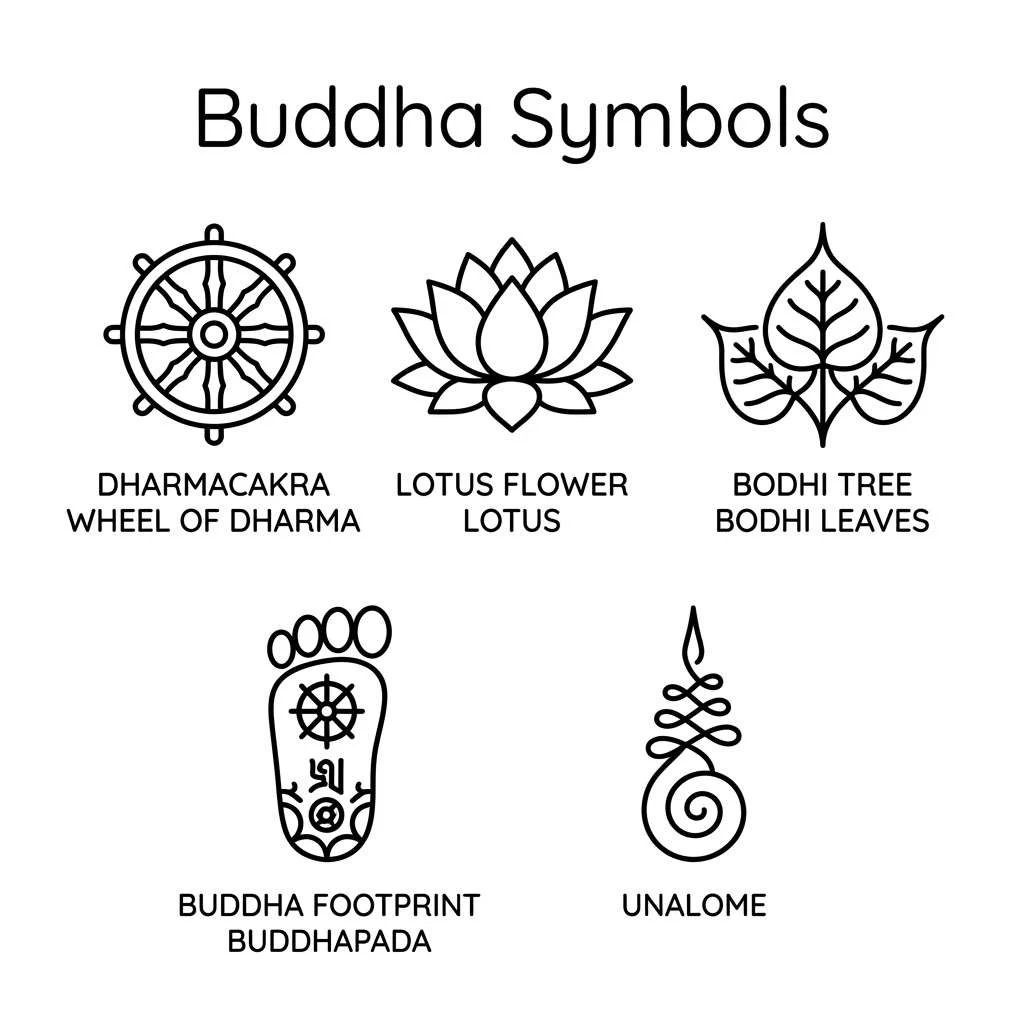
These symbols reflect different aspects of Buddha’s journey. They include meditation poses and sacred signs. Each one inspires peace and mindfulness.
Buddhism Symbol Photo
Images of Buddhist symbols help visualize their meaning. They make learning easier and more engaging. Photos are often used in books and online resources.
Deep Symbolic Meaning of Buddhism Symbols
Spiritual Level
On a spiritual level, Buddhist symbols point toward enlightenment—the liberation from suffering and ignorance. They represent inner awakening, balance, compassion, and the path to Nirvana.
Psychological Level
Psychologically, these symbols work like anchors for the mind. They calm anxiety, encourage self-awareness, and help individuals process pain, attachment, and fear. Many symbols reflect mental states we all experience, making them deeply relatable.
Cultural Level
Culturally, Buddhist symbols shape rituals, art, architecture, and moral values. They influence how communities understand life, death, kindness, and responsibility toward others.
These symbols endure because they speak to universal human emotions—confusion, hope, struggle, and peace.
Types and Variations of Symbols of Buddhism
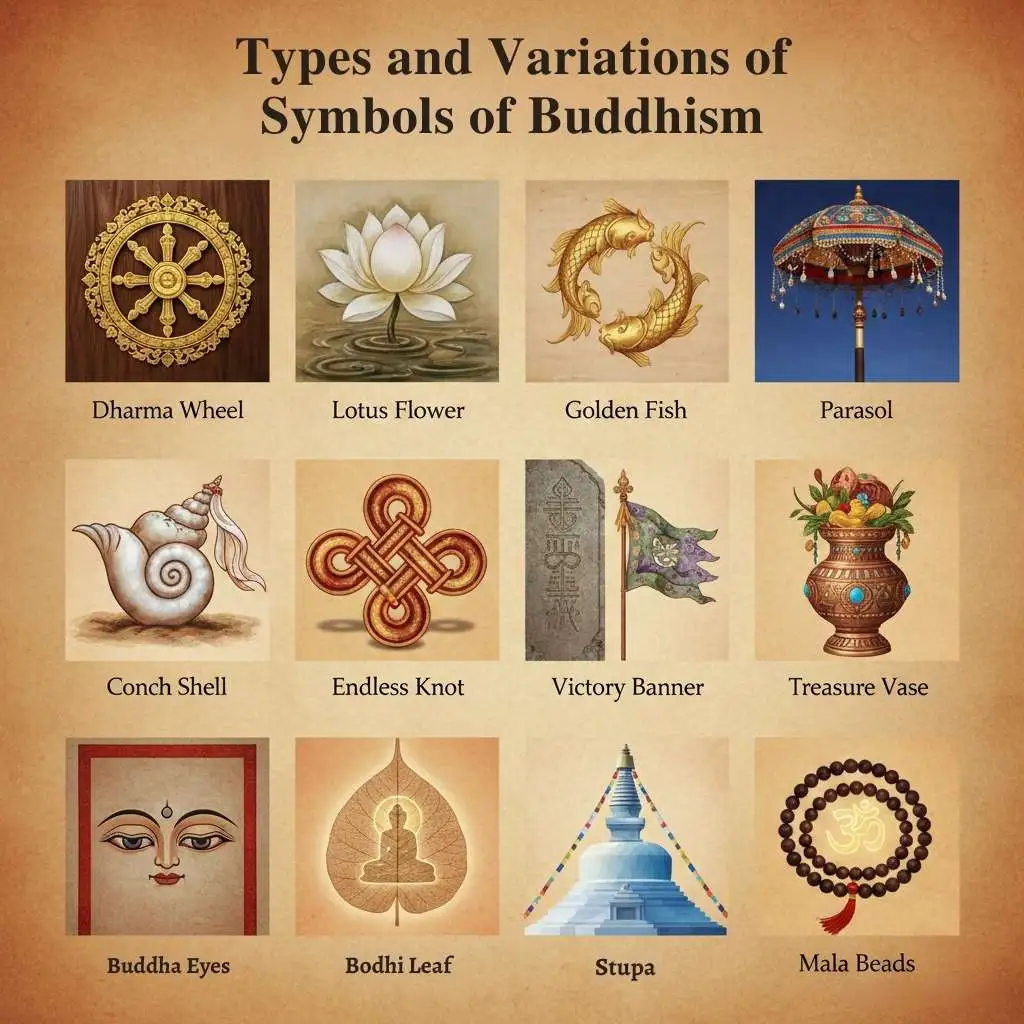
1. The Dharma Wheel (Dharmachakra)
- Visual Description: A wheel with eight spokes
- Meaning: The Noble Eightfold Path and the Buddha’s teachings
- Where It Appears: Temples, flags, scriptures, meditation spaces
2. The Lotus Flower
- Visual Description: A flower rising from muddy water
- Meaning: Purity, spiritual awakening, resilience
- Where It Appears: Buddhist art, meditation imagery, tattoos
3. The Buddha Image
- Visual Description: Seated or standing Buddha in various hand gestures
- Meaning: Enlightenment, compassion, wisdom
- Where It Appears: Statues, shrines, paintings, homes
4. The Endless Knot
- Visual Description: Interwoven lines with no beginning or end
- Meaning: Interconnectedness of all life and karma
- Where It Appears: Tibetan Buddhism, mandalas, ritual objects
5. The Bodhi Tree
- Visual Description: Sacred fig tree
- Meaning: Enlightenment and awakening
- Where It Appears: Pilgrimage sites, art, meditation symbolism
Symbols of Buddhism Across Cultures
India
The birthplace of Buddhism, where symbols emphasize enlightenment, meditation, and liberation from suffering.
China
Symbols merge with Taoist ideas, focusing on harmony, balance, and longevity.
Japan
Zen Buddhism simplifies symbols, highlighting mindfulness, emptiness, and inner stillness.
Tibet
Highly symbolic and colorful, Tibetan Buddhism uses complex imagery to represent cosmic truths and spiritual protection.
Southeast Asia
Symbols emphasize devotion, merit-making, and community spirituality.
Across cultures, the meaning shifts slightly—but the spiritual essence remains intact.
Symbols of Buddhism in Art, Movies and Pop Culture
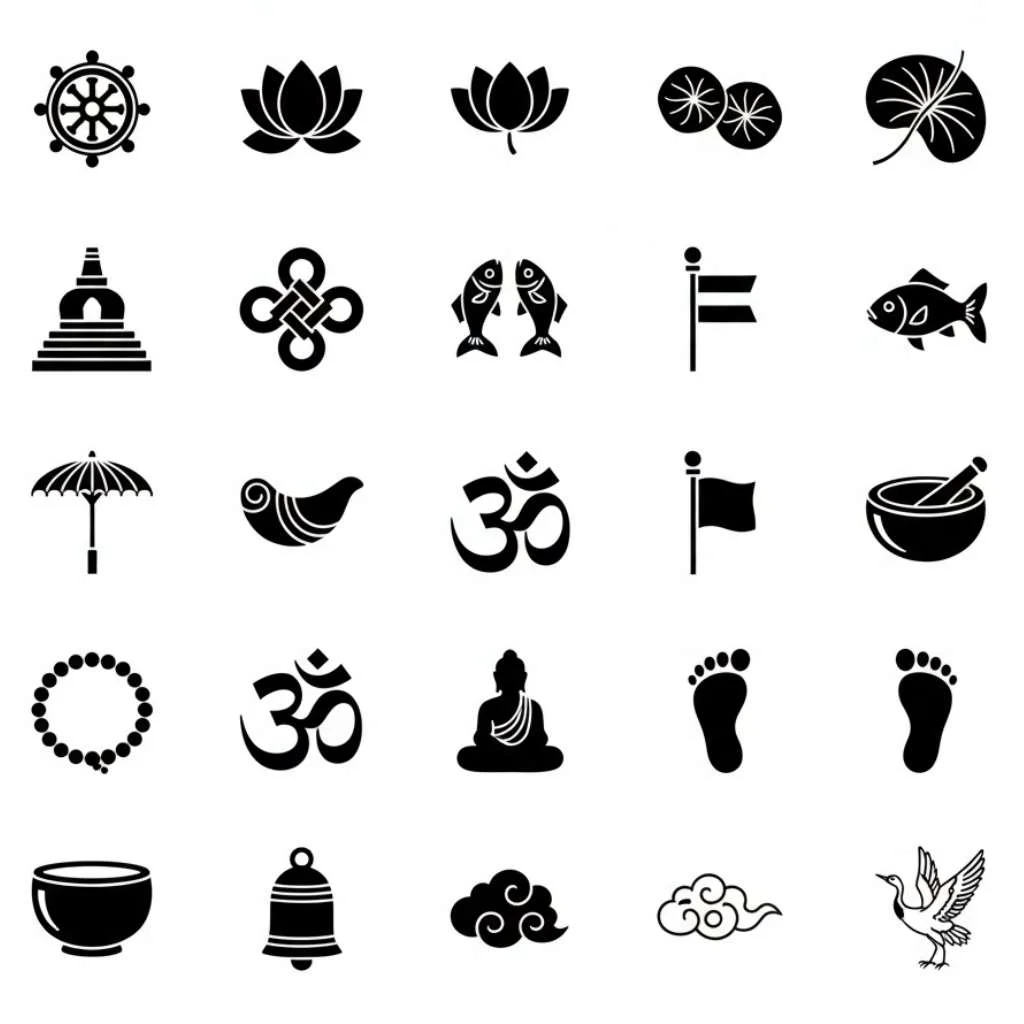
Buddhist symbols appear widely in:
- Movies: Representing inner peace, self-discovery, or transcendence
- Paintings: Used to evoke calm and spiritual depth
- Books: Symbolizing wisdom and detachment
- Tattoos: Personal reminders of growth and resilience
- Fashion: Minimalist designs expressing mindfulness
In modern culture, these symbols often stand for inner balance in a chaotic world.
Spiritual and Dream Meaning of Symbols of Buddhism
Seeing Buddhist symbols in dreams or meditation often signals:
- A desire for inner peace
- Emotional healing
- A period of spiritual growth
- Letting go of attachments
Many people report feeling calm, guided, or awakened after such experiences.
Positive vs Negative Meaning
Positive Meaning
- Enlightenment
- Compassion
- Wisdom
- Balance
- Freedom from suffering
Negative Meaning
- Attachment when misunderstood
- Spiritual bypassing
- Misuse as decoration without respect
Like all powerful symbols, meaning depends on intention and awareness.
Why Humans Are Attracted to Symbols of Buddhism
Humans are drawn to Buddhist symbols because they promise peace without force. They do not demand worship—they offer understanding. Psychologically, they soothe the mind. Emotionally, they reassure us that suffering has meaning and an end.
In a fast, noisy world, these symbols whisper stillness.
FAQs About Symbols of Buddhism
What is the most important symbol in Buddhism?
The Dharma Wheel is considered the most central symbol, representing the Buddha’s teachings.
Are Buddhist symbols religious or spiritual?
They are both religious in origin, spiritual in application.
Can anyone use Buddhist symbols?
Yes, when used respectfully and with understanding.
What does the lotus symbolize in Buddhism?
Purity, awakening, and rising above suffering.
Do Buddhist symbols have healing power?
Many believe they promote mental calm and emotional healing.
Why are Buddhist symbols common in meditation spaces?
They help focus the mind and encourage mindfulness.
Conclusion
The symbols of Buddhism are not relics of the past, they are living guides for the present.
Each symbol carries centuries of wisdom, reminding us that peace begins within, suffering can be understood, and awakening is possible for anyone willing to look inward.
When you truly understand these symbols, they stop being images and start becoming experiences.
Explore More Symbols:
- Winter Symbols Explained | The Spiritual Messages of Snow, Fire and Silence
- 49+ Birth Month Symbols That Reveal Your True Personality And Destiny
- 83+ Popular Sanskrit Symbols That Can Transform Your Life in 2026

Julian Shaw
I’ve always been fascinated by the small, quiet stories that make life feel magical. Writing allows me to explore worlds that exist just beyond the everyday, where imagination meets reality. Over the years, I’ve found joy in creating characters that feel real and stories that stay with readers long after the last page. When I’m not writing, you can usually find me wandering through city streets, notebook in hand, capturing little sparks of inspiration. I believe every story has the power to connect us, to make us feel a little less alone. Sharing these tales is my way of leaving a mark on the world.
Books:
-
Whispers in the Wind
-
Shadows of Tomorrow