
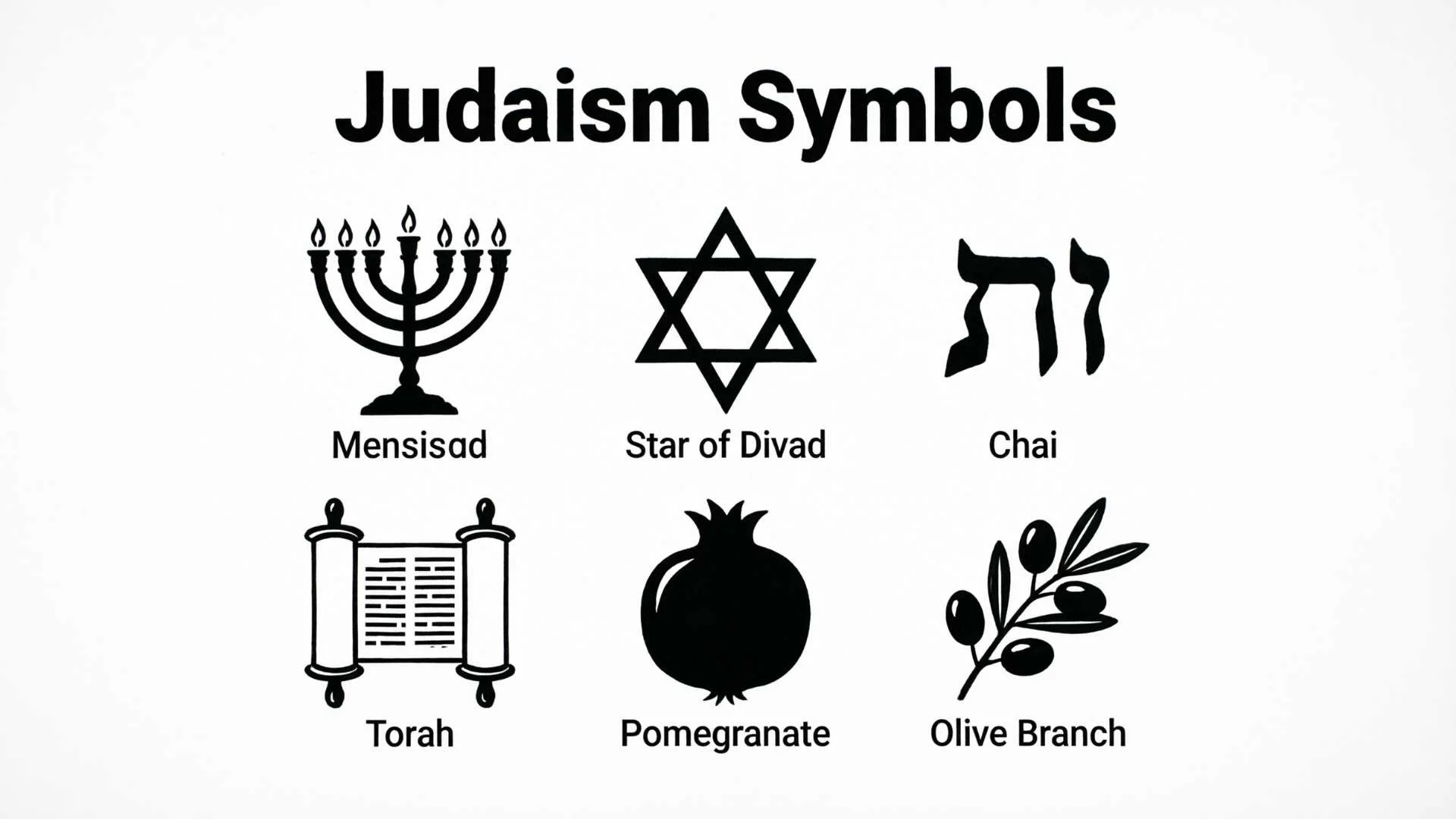
“Judaism symbols” carry centuries of faith, mystery, survival and spiritual wisdom within their sacred shapes.
From glowing menorahs to the powerful Star of David, these symbols are far more than religious designs. They hold stories of exile, hope, miracles, identity, and the deep human search for connection with God.
Across history, people have looked at Judaism symbols for protection, guidance, remembrance, and meaning.
Some appear in holy temples, while others are worn close to the heart like silent prayers. Behind every line, flame and Hebrew letter lies a hidden world most people never fully understand.
What Are Judaism Symbols?
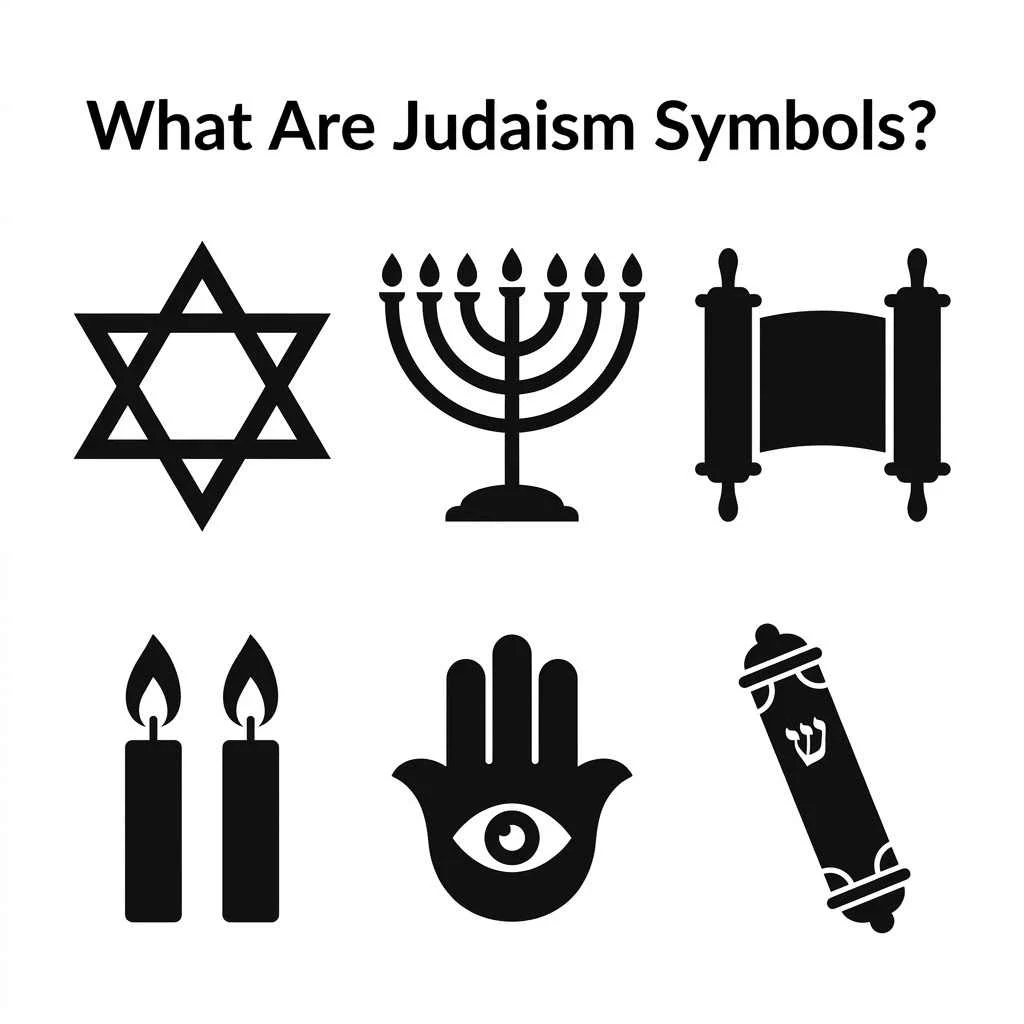
Judaism symbols are sacred signs, objects, shapes, and visual representations connected to Jewish faith, history, spirituality, and culture. These symbols help express religious beliefs, preserve traditions, and strengthen the identity of Jewish communities around the world.
Many Judaism symbols come directly from ancient biblical history. Others developed over centuries through Jewish teachings, mystical traditions, ceremonies, and cultural experiences. Some symbols appear in synagogues, sacred texts, jewelry, art, architecture, and holiday celebrations.
These symbols often represent powerful ideas such as:
- Divine protection
- Wisdom and knowledge
- Eternal life
- Faith in God
- Freedom and survival
- Spiritual light
- Unity between heaven and earth
For thousands of years, Jewish people carried these symbols through war, migration, persecution, and renewal. Because of this, Judaism symbols are deeply emotional. They are reminders of both suffering and hope.
The Historical Origins of Judaism Symbols
The roots of Judaism symbols stretch back to ancient Israel and biblical times. In the early days of Judaism, symbols were closely connected to worship in the Holy Temple of Jerusalem. Sacred objects mentioned in the Torah became lasting visual representations of faith.
One of the oldest and most important symbols was the menorah, the seven branched lampstand described in the Book of Exodus. It stood inside the Temple and symbolized divine light and wisdom.
Over time, other symbols gained importance. The Star of David became widely recognized during the medieval period. Hebrew letters also became sacred visual symbols because Jewish tradition considers language itself spiritually powerful.
During difficult periods in history, Judaism symbols helped Jewish communities preserve identity and unity. Even when people were scattered across different countries, these sacred signs kept their traditions alive.
Deep Symbolic Meaning of Judaism Symbols
Spiritual Meaning
On a spiritual level, Judaism symbols represent the relationship between humanity and God. They remind believers that life has sacred purpose and divine guidance.
The menorah symbolizes spiritual illumination and the eternal presence of God. The Star of David reflects harmony between earthly existence and heavenly wisdom. The Chai symbol, meaning “life,” celebrates the holiness of living.
Many Jewish mystical teachings believe symbols carry spiritual energy. Sacred geometry, Hebrew letters, and ritual objects are viewed as pathways to deeper awareness and divine connection.
Psychological Meaning
Psychologically, Judaism symbols create a sense of belonging, protection, and emotional strength. Human beings naturally seek symbols because they simplify complex emotions into visual forms.
For Jewish communities, these symbols became anchors during centuries of hardship. A small Star of David necklace or a mezuzah on a doorway could provide comfort during uncertain times.
Symbols also help memory survive across generations. A child seeing a Hanukkah menorah each year grows emotionally connected to family, tradition, and identity.
Cultural Meaning
Culturally, Judaism symbols represent endurance and continuity. Jewish history includes exile, persecution, rebuilding, and survival. Because of this, symbols became powerful signs of resilience.
Today, Judaism symbols appear in festivals, weddings, art, literature, and public celebrations. They unite Jewish people across different countries and traditions while preserving ancient heritage.
Most Important Types of Judaism Symbols
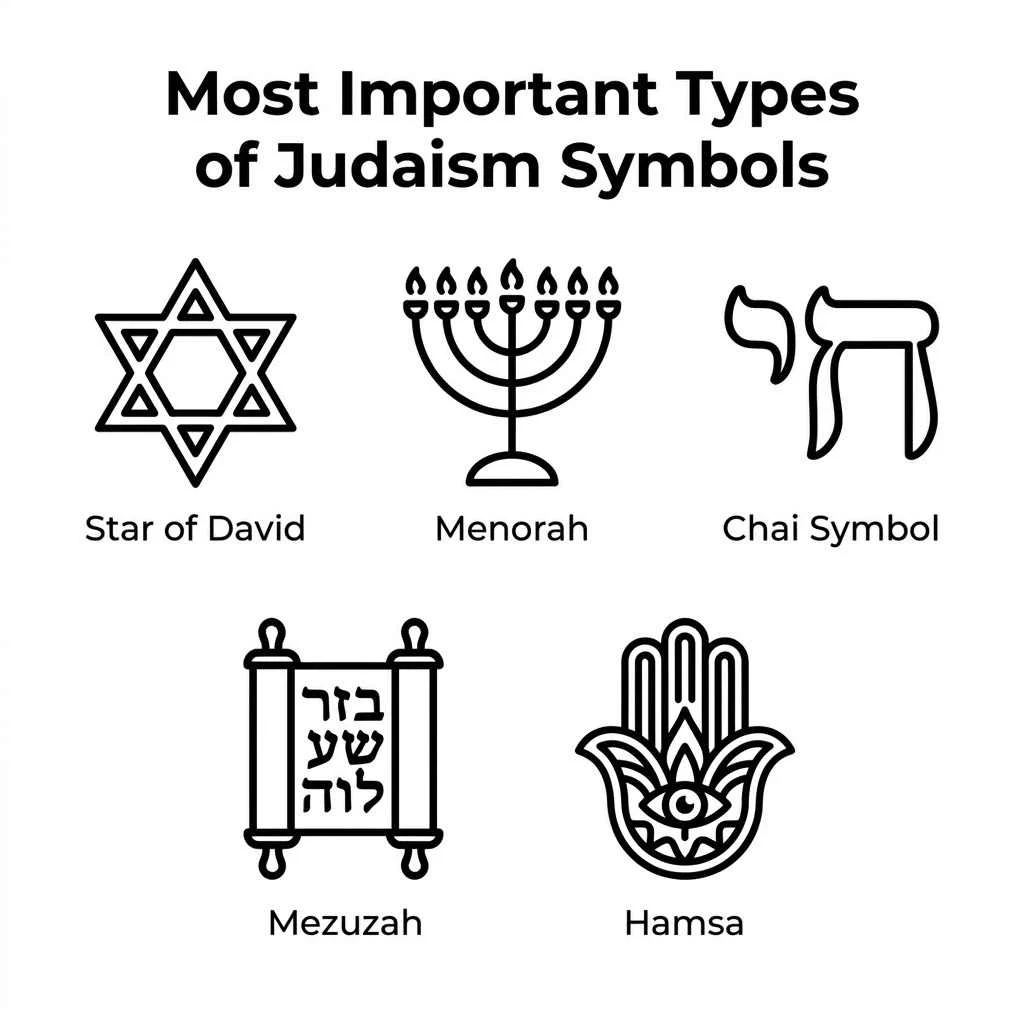
Star of David
Visual Description
The Star of David is a six pointed star made from two overlapping triangles.
Meaning
It symbolizes protection, unity, divine connection, and the balance between heaven and earth. Some interpretations say one triangle points upward toward God while the other points downward toward humanity.
Where It Appears
- Synagogues
- Jewelry
- Israeli flag
- Religious art
- Graves and memorials
The Star of David is one of the most recognized Judaism symbols in the world today.
Menorah
Visual Description
The menorah is a lampstand with seven branches. The Hanukkah menorah, called a hanukkiah, has nine branches.
Meaning
It represents divine wisdom, spiritual light, and God’s eternal presence. During Hanukkah, the menorah also symbolizes miracles and hope during darkness.
Where It Appears
- Hanukkah celebrations
- Synagogues
- Ancient temple imagery
- Jewish homes
- Ceremonial art
Chai Symbol
Visual Description
The Chai symbol comes from the Hebrew word meaning “life.” It is written using Hebrew letters.
Meaning
It represents vitality, blessing, joy, and the sacredness of life itself.
Where It Appears
- Necklaces
- Religious gifts
- Tattoos
- Artwork
- Charity donations
People often wear the Chai symbol as a reminder to value every moment of life.
Mezuzah
Visual Description
A mezuzah is a small decorative case attached to a doorway. Inside is a parchment containing sacred Hebrew prayers.
Meaning
It symbolizes protection, faithfulness, and God watching over the home.
Where It Appears
- Jewish homes
- Apartment entrances
- Schools
- Synagogues
Touching the mezuzah when entering a house has become a deeply emotional ritual for many Jewish families.
Hamsa
Visual Description
The Hamsa is a hand shaped symbol often featuring an eye in the center.
Meaning
It protects against evil energy and negative intentions. It also symbolizes blessings and spiritual defense.
Where It Appears
- Jewelry
- Home decorations
- Middle Eastern art
- Spiritual practices
Though found in several cultures, the Hamsa also holds strong significance within Jewish traditions.
Judaism Symbols Across Cultures
Ancient Hebrew Culture
In ancient Hebrew society, symbols were closely tied to temple worship and covenant with God. Sacred objects were treated with deep reverence because they reflected divine order and spiritual law.
Medieval Europe
During the medieval era, Judaism symbols became markers of identity. Jewish communities used symbols to preserve culture while living among larger Christian societies. The Star of David became more widespread during this period.
Middle Eastern Jewish Traditions
Jewish communities in Middle Eastern countries often blended local artistic styles with religious symbolism. The Hamsa became especially popular as a protective sign against harmful energy.
Modern Western Culture
Today, Judaism symbols appear in fashion, tattoos, films, and global art. While some people use them spiritually, others connect to them culturally or historically. These symbols continue evolving while preserving ancient meaning.
Mystical Kabbalah Traditions
In Jewish mysticism, symbols are believed to hold hidden spiritual truths. Hebrew letters are considered sacred vibrations connected to creation itself. Mystical diagrams and symbolic patterns became important tools for meditation and spiritual understanding.
Judaism Symbols in Art, Movies and Pop Culture
Judaism symbols appear throughout modern culture because they carry emotional depth and visual power.
In films about Jewish history and survival, symbols like the menorah or Star of David often represent hope and identity. Movies connected to World War II frequently use these symbols to portray remembrance and resilience.
In literature, Jewish symbols help authors explore themes of faith, exile, memory, and belonging. Writers often use sacred imagery to represent inner spiritual journeys.
In fashion, many people wear Star of David necklaces or Hamsa jewelry as expressions of spirituality, culture, or protection. Jewish inspired designs also appear in modern streetwear and luxury accessories.
Tattoo culture has also embraced Judaism symbols. Some people choose Hebrew words or sacred signs to honor ancestry, survival, or personal faith.
In fine art, Judaism symbols frequently appear in paintings exploring history, suffering, migration, and hope. Artists use these sacred forms to connect ancient stories with modern human emotions.
Spiritual and Dream Meaning of Judaism Symbols
Dreaming about Judaism symbols often reflects spiritual searching, protection, wisdom, or emotional healing.
Dreaming of the Star of David
This may symbolize balance, inner guidance, spiritual awakening, or a desire for protection during difficult times.
Dreaming of a Menorah
A menorah in dreams often represents hope, clarity, enlightenment, or the return of faith after darkness.
Dreaming of Hebrew Letters
Many people believe Hebrew letters carry sacred energy. Seeing them in dreams may symbolize divine messages, hidden truth, or spiritual transformation.
Dreaming of a Mezuzah
This can reflect the need for safety, family connection, or spiritual grounding in daily life.
During meditation or spiritual practices, Judaism symbols often help people feel connected to ancient wisdom and sacred tradition. Their shapes create emotional calm and symbolic focus.
Positive and Negative Meanings of Judaism Symbols
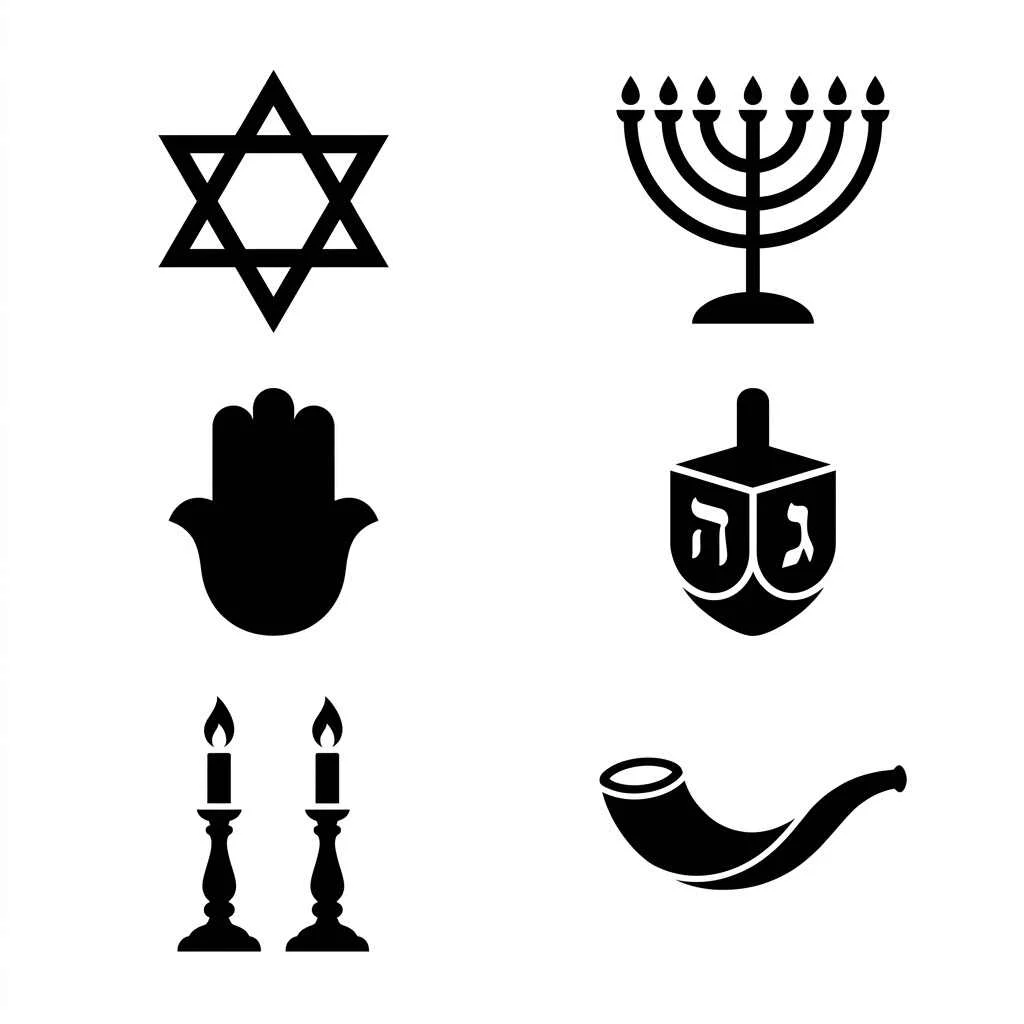
Like many sacred symbols, Judaism symbols can carry both positive and painful meanings depending on context and history.
Positive Meanings
- Faith and devotion
- Survival and resilience
- Wisdom and learning
- Hope during suffering
- Family and tradition
- Divine protection
- Spiritual awakening
Negative Associations
Because Jewish communities experienced persecution throughout history, some symbols also became reminders of pain and discrimination.
For example, during the Holocaust, Jewish people were forced to wear identifying stars. A sacred symbol of faith became connected to fear and suffering. Yet even after unimaginable tragedy, these symbols survived as signs of courage and identity.
This dual meaning gives Judaism symbols extraordinary emotional depth. They represent both human suffering and the strength to endure it.
Why Humans Are Attracted to Judaism Symbols
Humans naturally seek symbols because symbols speak directly to emotion and memory. Judaism symbols are especially powerful because they combine beauty, mystery, history, and spirituality.
A glowing menorah can remind someone of childhood warmth and family gatherings. A mezuzah on a doorway can create feelings of safety and belonging. A Star of David necklace can help someone feel connected to generations that came before them.
Psychologists believe symbols help people organize emotional experiences into meaningful stories. Sacred symbols also reduce feelings of isolation by connecting individuals to something larger than themselves.
Judaism symbols attract people because they carry timeless human themes:
- Hope during darkness
- Survival through suffering
- Faith despite uncertainty
- Light within chaos
- Identity across generations
Even people outside the Jewish faith often feel emotionally moved by these symbols because they represent universal human struggles and dreams.
Judaism Symbols and Their Role in Modern Identity
Today, Judaism symbols continue shaping both religious and cultural identity. For many Jewish people, these symbols are living reminders of heritage and continuity.
Younger generations use them in modern ways while still respecting tradition. Social media, digital art, fashion, and modern jewelry have introduced Judaism symbols to wider audiences around the world.
At the same time, these symbols still hold sacred importance during religious holidays, prayers, weddings, and family rituals. Their meaning continues evolving without losing connection to ancient roots.
FAQs About Judaism Symbols
What is the most famous Judaism symbol?
The Star of David is the most recognized Judaism symbol worldwide. It represents Jewish identity, spirituality, protection, and unity.
Why is the menorah important in Judaism?
The menorah symbolizes divine light, wisdom, and God’s eternal presence. It also represents the miracle celebrated during Hanukkah.
What does the Chai symbol mean?
The Chai symbol means “life” in Hebrew. It represents vitality, blessing, joy, and the sacred value of living.
Are Judaism symbols only religious?
No. While many Judaism symbols are religious, they also carry cultural, historical, emotional, and artistic meaning for Jewish communities worldwide.
What does the Hamsa mean in Judaism?
In Jewish tradition, the Hamsa symbolizes protection against negative energy and evil influences. It is also connected to blessings and spiritual safety.
Can non Jewish people wear Judaism symbols?
Some non Jewish people wear Judaism symbols for spiritual appreciation, cultural respect, or artistic meaning. However, understanding their sacred significance is important.
Conclusion
Judaism symbols are far more than ancient designs carved into history. They are living expressions of faith, memory, survival, and spiritual longing. Across centuries of joy and suffering, these sacred signs carried the heartbeat of a people who refused to let their identity disappear.
From the radiant menorah to the timeless Star of David, every symbol tells a story about light overcoming darkness and hope surviving against impossible odds. Their power continues today because they speak to something deeply human inside all of us, the desire to belong, to believe, and to remember.
Explore More Symbols:
- 81+ Romeo And Juliet Symbols That Completely Change The Story
- 95+ Top Discord Symbols For Aesthetic Profiles and Bios
- 89+ Symbols Of Islam Every Muslim Should Know About

Julian Shaw
I’ve always been fascinated by the small, quiet stories that make life feel magical. Writing allows me to explore worlds that exist just beyond the everyday, where imagination meets reality. Over the years, I’ve found joy in creating characters that feel real and stories that stay with readers long after the last page. When I’m not writing, you can usually find me wandering through city streets, notebook in hand, capturing little sparks of inspiration. I believe every story has the power to connect us, to make us feel a little less alone. Sharing these tales is my way of leaving a mark on the world.
Books:
-
Whispers in the Wind
-
Shadows of Tomorrow