
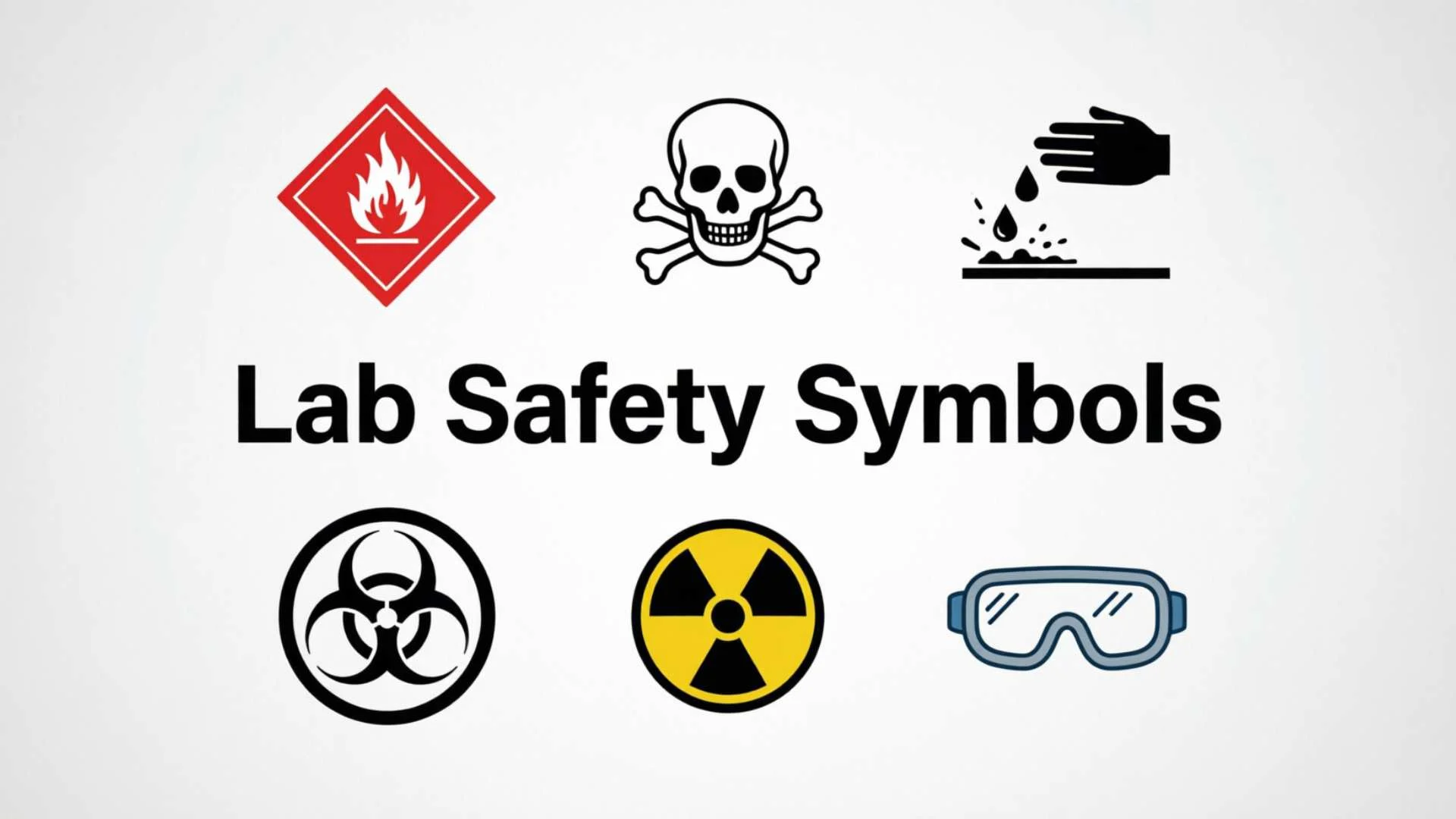
“Lab safety symbols” are far more than simple warning signs on bottles, walls and laboratory doors.
They silently protect human lives, prevent dangerous accidents, and guide scientists through some of the world’s most powerful discoveries.
Behind every flame icon, skull symbol, or radiation sign lies a story of human survival, fear, intelligence and responsibility. These symbols speak a universal language that crosses borders, cultures and professions.
Once you understand their deeper meanings, you will never look at laboratory signs the same way again.
What Are Lab Safety Symbols?
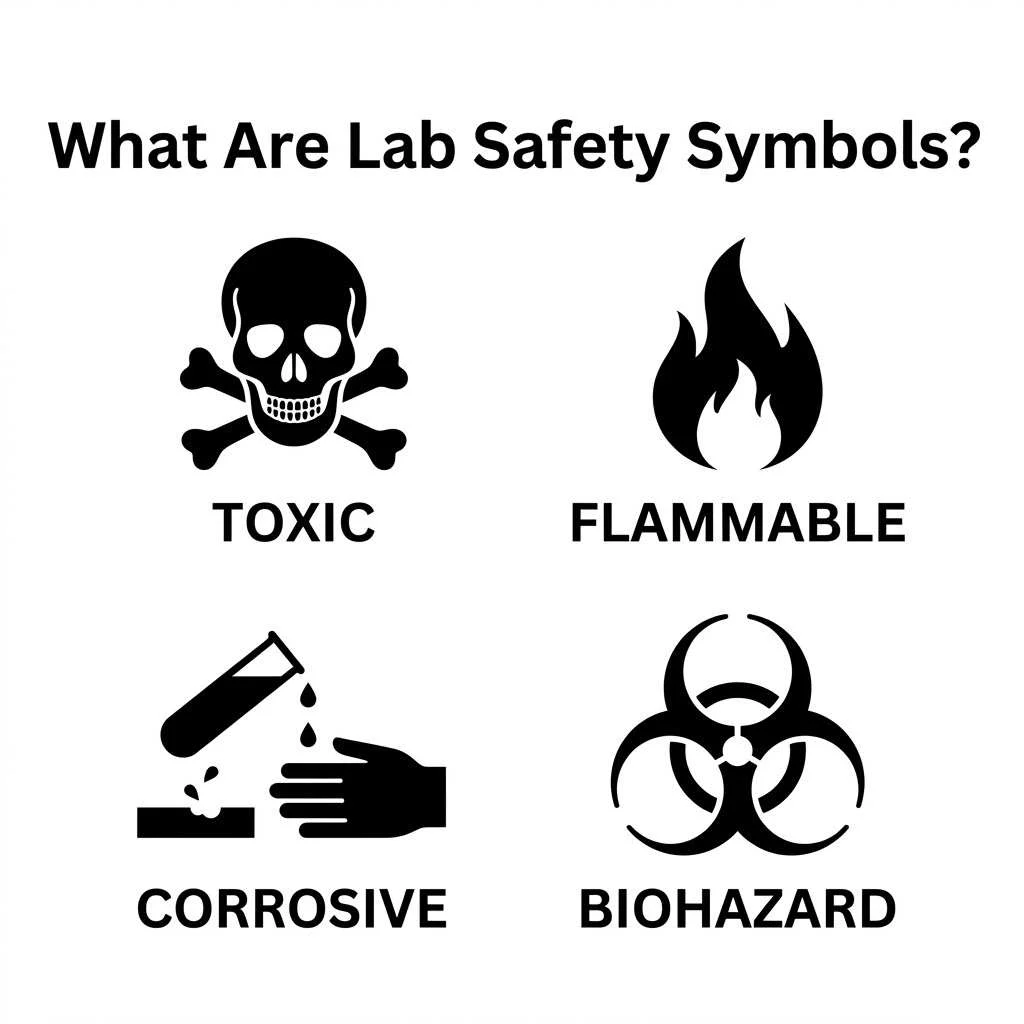
Lab safety symbols are visual signs used in laboratories, schools, hospitals, research centers, and industrial workplaces to warn people about hazards and safe practices. These symbols help workers quickly recognize dangerous materials, equipment risks, and emergency instructions without needing long explanations.
Scientists began using standardized safety signs during the rise of modern chemistry and industrial science in the nineteenth and twentieth centuries. As laboratories became more advanced, accidents involving chemicals, radiation, toxic gases, and fires increased. Governments and scientific organizations realized that people needed a universal visual system to communicate danger instantly.
Today, lab safety symbols appear in almost every scientific environment across the world. They are used on chemical containers, lab equipment, medical waste bins, protective gear, and storage rooms. Their purpose is simple but powerful, protect human life through awareness and quick understanding.
These symbols are also deeply connected to human psychology. The human brain reacts faster to images than words. A skull icon or bright red warning sign immediately creates emotional alertness. This instant reaction can save lives in dangerous situations.
Why Lab Safety Symbols Matter More Than Most People Realize
Many people think lab safety symbols are only important for scientists. In reality, these symbols affect everyday life more than most realize. Hospitals use them to handle infectious materials safely. Food factories rely on them to prevent contamination. Schools use them to teach safe science practices to children. Even household cleaning products sometimes contain symbols connected to laboratory safety systems.
Imagine a researcher accidentally touching a toxic chemical because there was no warning symbol. One small mistake could cause burns, poisoning, or even death. Safety symbols exist because humanity learned painful lessons through real accidents and tragedies.
These signs are silent guardians. They reduce fear through knowledge and create order in environments where one careless moment can change lives forever.
The Deep Symbolic Meaning of Lab Safety Symbols
Spiritual Meaning
On a spiritual level, lab safety symbols represent the balance between human curiosity and responsibility. Science allows humanity to explore powerful forces, but these symbols remind people to respect nature and knowledge wisely.
The radiation symbol, for example, represents invisible power. Fire symbols symbolize transformation and destruction at the same time. Biological hazard signs reflect humanity’s fragile relationship with life itself.
In many ways, these symbols act like modern sacred warnings. They remind humans that knowledge without caution can become dangerous.
Psychological Meaning
Psychologically, lab safety symbols trigger immediate emotional responses. Sharp shapes, bold colors, and dramatic icons activate the brain’s survival instincts.
A skull symbol naturally creates fear because humans associate it with death. Flames create urgency because fire has threatened human survival for thousands of years. Bright yellow and red colors signal caution because the brain processes them as warning colors.
These reactions are not accidental. Designers intentionally created lab safety symbols to communicate danger within seconds.
Cultural Meaning
Culturally, lab safety symbols represent humanity’s growing scientific civilization. They show how modern societies value protection, education, and shared responsibility.
Unlike ancient warning systems based on language or tribal symbols, modern lab signs create a universal visual language. A toxic symbol means the same thing whether you are in the United States, Japan, Germany, or Brazil.
This global understanding makes science safer and more connected across cultures.
Types and Variations of Lab Safety Symbols
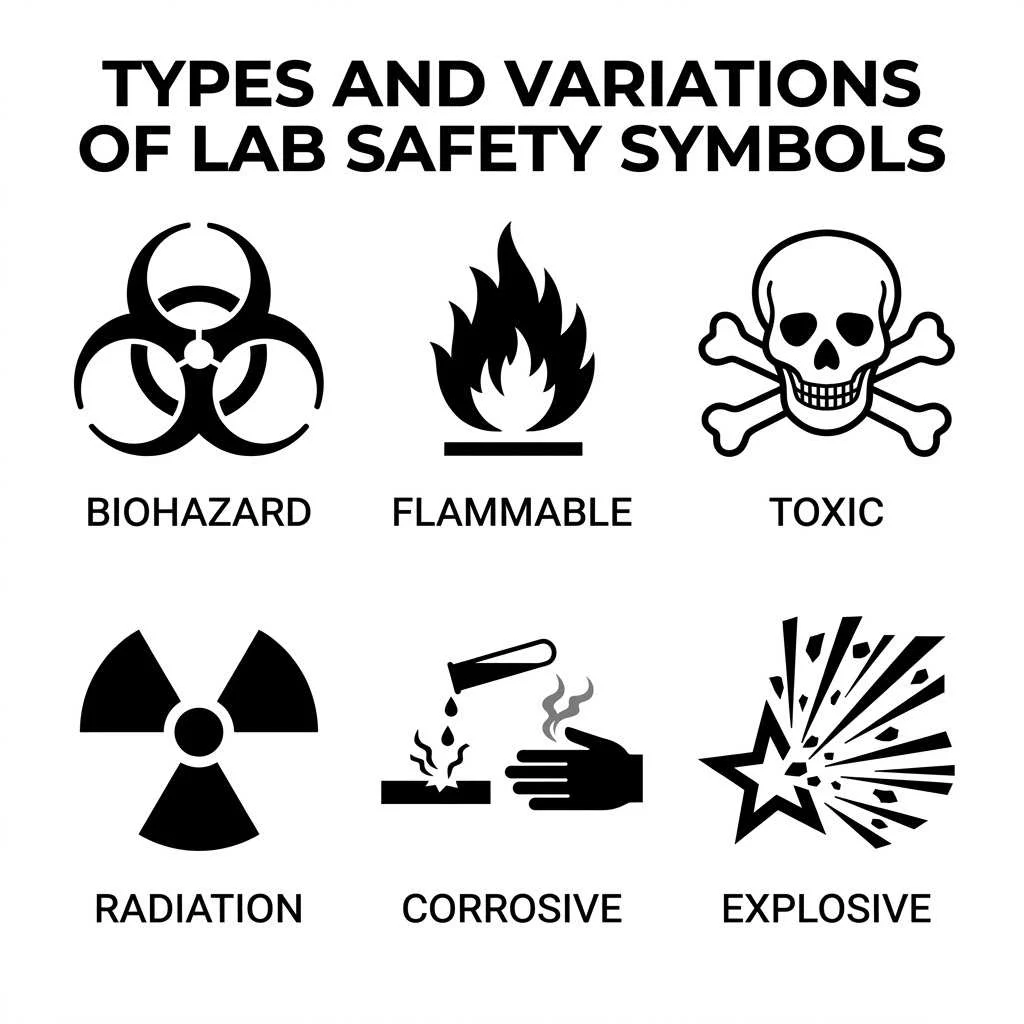
Biohazard Symbol
Visual Description
A black three curved design usually placed on a yellow or orange background.
Meaning
Warns about biological substances that may contain viruses, bacteria, or infectious materials.
Where It Appears
Hospitals, laboratories, medical waste containers, and disease research centers.
The biohazard symbol became especially recognized during global disease outbreaks. It now represents both fear and scientific protection.
Flammable Symbol
Visual Description
A black flame icon inside a warning shape.
Meaning
Indicates materials that can easily catch fire.
Where It Appears
Chemical storage rooms, fuel containers, laboratories, and industrial facilities.
Fire has always symbolized both creation and destruction in human history. In laboratories, this symbol warns people to control powerful reactions carefully.
Toxic Symbol
Visual Description
A skull and crossbones image.
Meaning
Warns about poisonous substances that can cause serious harm or death.
Where It Appears
Chemical containers, pesticide storage areas, and hazardous waste zones.
This symbol has ancient roots connected to pirates, death imagery, and poison warnings. Even children instinctively understand its dangerous meaning.
Radiation Symbol
Visual Description
A black trefoil symbol on a yellow background.
Meaning
Warns about radioactive materials or radiation exposure.
Where It Appears
Nuclear facilities, hospitals, laboratories, and research centers.
The radiation symbol became globally recognized after the rise of nuclear science during the twentieth century. It represents invisible danger and immense power.
Corrosive Symbol
Visual Description
Liquid dripping onto a hand and metal surface.
Meaning
Indicates chemicals that can burn skin or damage materials.
Where It Appears
Chemical laboratories, cleaning industries, and industrial plants.
This symbol visually communicates pain and destruction immediately, making it highly effective psychologically.
Explosive Symbol
Visual Description
An exploding object with fragments flying outward.
Meaning
Warns about unstable substances that may explode.
Where It Appears
Chemical labs, military facilities, and industrial storage areas.
The explosive symbol reflects humanity’s fear of sudden chaos and uncontrolled force.
Lab Safety Symbols Across Cultures
Ancient Civilizations
Ancient Egyptians and Greeks used symbolic markings to warn about dangerous substances and sacred restricted areas. While not modern safety symbols, these early signs reflected humanity’s need to communicate danger visually.
Medieval Europe
Alchemists used mysterious symbols to identify chemicals, metals, and risky experiments. These markings blended science, spirituality, and secrecy.
Many modern lab symbols evolved from this tradition of visual scientific communication.
Japanese Scientific Culture
Japan strongly emphasizes order, discipline, and safety in scientific environments. Lab safety symbols are deeply respected and integrated into educational systems from a young age.
Western Modern Science
Western laboratories standardized many of today’s internationally recognized hazard symbols. Organizations created systems that could be understood regardless of language barriers.
Indigenous Perspectives
Some Indigenous traditions view warning symbols as sacred protective signs connected to balance and respect for nature. Dangerous substances are often treated with spiritual caution as well as practical care.
Lab Safety Symbols in Art, Movies and Pop Culture
Lab safety symbols frequently appear in movies, television, fashion, and modern art because they create instant emotional impact.
In science fiction films, radiation signs often symbolize forbidden knowledge or dangerous experiments gone wrong. Biohazard symbols appear in zombie movies and outbreak stories to create fear and suspense.
Artists use toxic and radioactive imagery to explore themes like environmental destruction, technology, and human ambition. Fashion designers sometimes include these symbols on streetwear to create rebellious or futuristic aesthetics.
Tattoo culture also embraces certain lab safety symbols. Some people choose radiation or biohazard tattoos to represent resilience, survival, danger, or transformation.
In books and video games, these symbols often signal mystery, hidden experiments, or powerful forces beyond human control.
Their visual simplicity makes them unforgettable in popular culture.
Spiritual and Dream Meaning of Lab Safety Symbols
Dreaming about lab safety symbols often reflects emotional warnings from the subconscious mind.
Seeing a Toxic Symbol in Dreams
This may represent harmful relationships, negative emotions, or dangerous situations in waking life. The mind could be warning you to protect yourself emotionally.
Seeing Fire or Flammable Symbols
Fire symbols in dreams often represent passion, transformation, anger, or creative energy that feels difficult to control.
Seeing Radiation Symbols
Radiation imagery may symbolize invisible stress, anxiety, or emotional energy affecting your life beneath the surface.
Seeing Biohazard Symbols
This can reflect fears about emotional contamination, unhealthy environments, or psychological pressure from others.
Spiritually, these symbols often encourage awareness, boundaries, and self protection.
Positive vs Negative Meaning of Lab Safety Symbols
Lab safety symbols carry both positive and negative meanings depending on perspective.
Positive Meanings
- Protection and awareness
- Scientific progress
- Responsibility and discipline
- Human intelligence
- Prevention of accidents
- Respect for knowledge
Negative Meanings
- Fear and anxiety
- Dangerous experiments
- Environmental harm
- Death and destruction
- Human mistakes
- Invisible threats
This dual meaning makes lab safety symbols emotionally powerful. They represent both humanity’s greatest discoveries and its greatest risks.
A radiation sign can symbolize cancer treatment that saves lives or nuclear disasters that destroy cities. A biohazard sign can represent medical breakthroughs or deadly outbreaks.
The symbols themselves are neutral. Human choices give them meaning.
Why Humans Are Attracted to Lab Safety Symbols
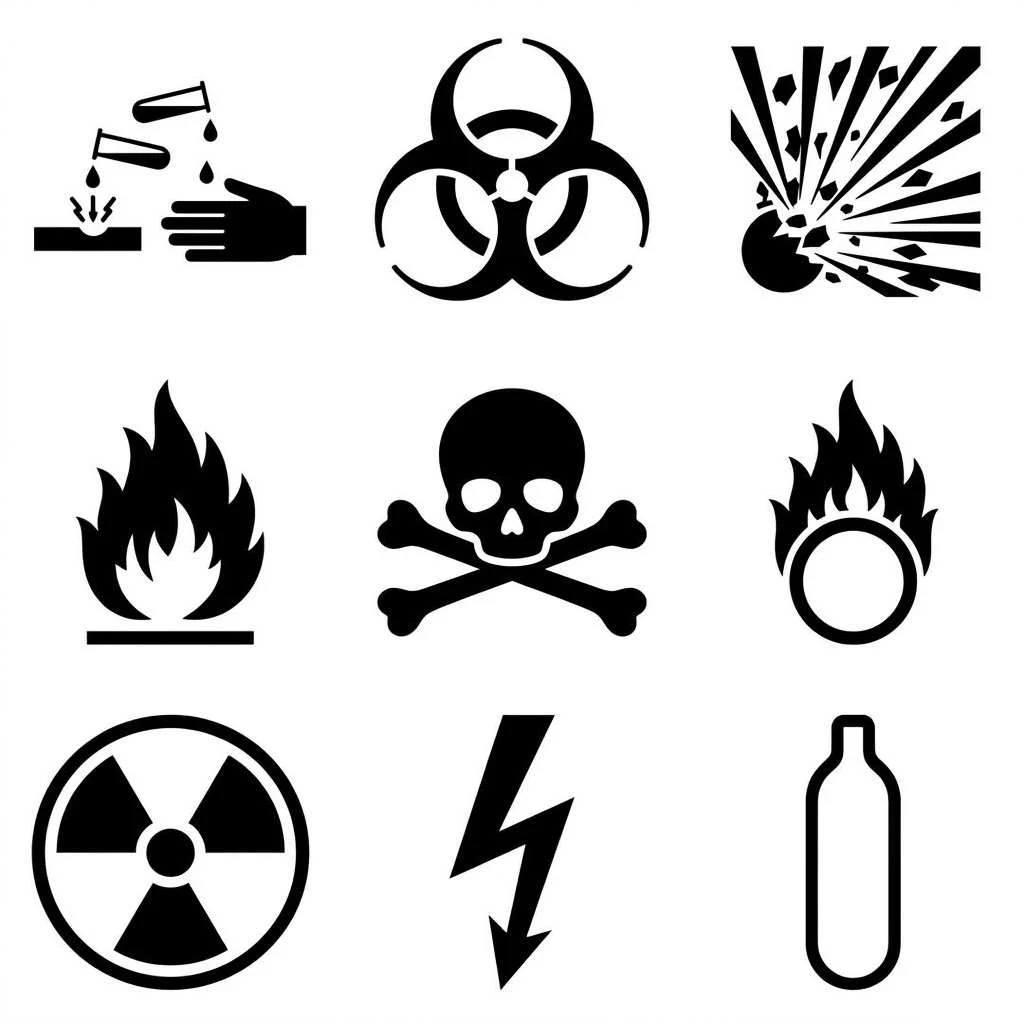
Humans are naturally drawn to warning symbols because survival instincts shape human psychology.
Danger captures attention faster than comfort. The brain constantly scans for threats to ensure survival. This explains why people immediately notice bright warning signs even in crowded environments.
There is also emotional fascination behind these symbols. They represent mystery, hidden power, and forbidden knowledge. Many people feel curious about laboratories because they symbolize discovery and transformation.
Children often feel excited by science labs because the environment seems mysterious and powerful. Adults continue feeling this fascination through movies, books, and scientific stories.
Lab safety symbols also create emotional tension between fear and curiosity. Humans want to understand dangerous things while also protecting themselves from them.
That balance makes these symbols unforgettable.
Common Mistakes People Make About Lab Safety Symbols
Ignoring Basic Warnings
Many accidents happen because people become too comfortable around familiar symbols and stop taking them seriously.
Assuming Symbols Mean the Same Everywhere
While many signs are internationally recognized, some variations exist across countries and industries.
Confusing Similar Symbols
Certain hazard icons look similar, especially for beginners. Proper education is essential in laboratories and workplaces.
Treating Safety as Optional
Some people view safety signs as unnecessary rules instead of life saving tools. This mindset can lead to serious consequences.
FAQs About Lab Safety Symbols
What is the most important lab safety symbol?
The biohazard, toxic, and flammable symbols are among the most important because they warn about life threatening risks commonly found in laboratories.
Why are lab safety symbols important?
They help prevent injuries, accidents, contamination, and dangerous exposure by communicating hazards instantly and clearly.
What does the skull and crossbones symbol mean?
It represents toxic or poisonous substances that may cause serious illness or death if touched, inhaled, or swallowed.
Are lab safety symbols universal?
Many modern symbols follow international standards, making them recognizable across different countries and scientific industries.
What color is commonly used in lab warning symbols?
Yellow, red, orange, and black are commonly used because they quickly attract human attention and signal caution or danger.
Can lab safety symbols appear outside laboratories?
Yes. Hospitals, factories, schools, transportation systems, and cleaning products often use similar hazard symbols.
Conclusion
Lab safety symbols may seem small, but they carry enormous meaning. They represent humanity’s struggle to balance discovery with responsibility, curiosity with caution, and power with wisdom. Every warning sign tells a silent story about survival, knowledge, and protection.
These symbols do more than prevent accidents. They remind people that even the greatest scientific progress requires respect and awareness. Once understood deeply, lab safety symbols become more than signs. They become universal guardians of human life.

Sophia Reed
Hi, I’m Sophia Reed, a storyteller at heart who finds magic in everyday moments. Ever since I could hold a pen, I’ve been weaving tales that explore love, courage, and the unexpected twists of life. Writing allows me to connect with readers on a deeper level, sharing emotions and experiences that resonate across worlds. When I’m not lost in my stories, you can find me wandering through quiet streets, sipping coffee, or dreaming up my next plot twist. I believe every story has the power to inspire, heal, and transport. Through my books, I hope to leave a piece of my imagination with you.
Books:
-
Whispers of the Heart
-
Shadows and Sunlight