
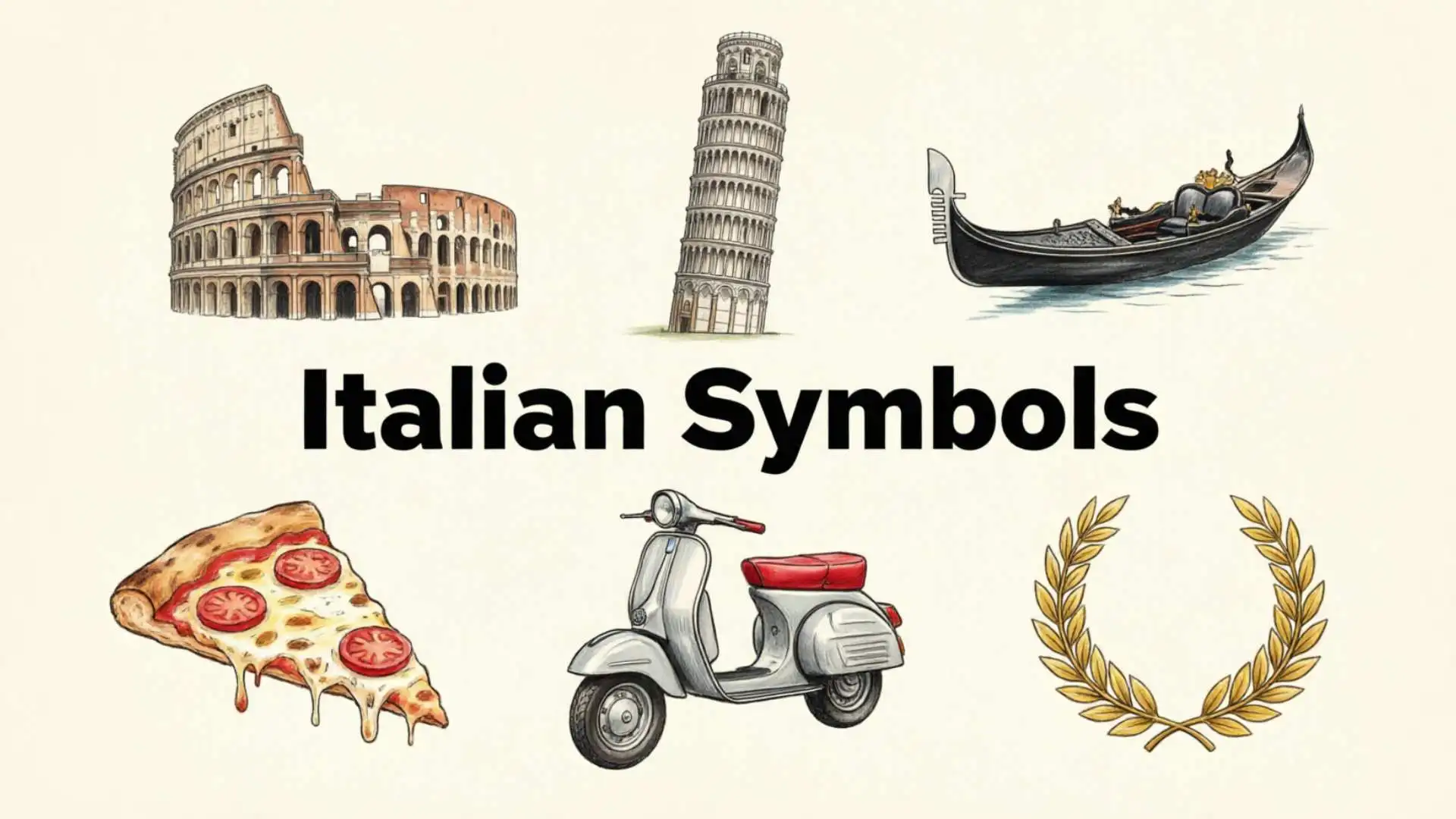
“Italian symbols” carry centuries of emotion, faith, beauty, rebellion and human passion within their shapes and stories.
From ancient Roman emblems to lucky charms hanging in family homes, these symbols are far more than decorative images.
They represent protection, identity, love, strength, and the deep spiritual roots of Italian culture. Across villages, churches, paintings, fashion houses, and family traditions, Italian symbols continue to shape how people express meaning and connection.
Many travelers admire them without ever realizing the hidden stories quietly living behind every color, gesture and design.
What Are Italian Symbols?
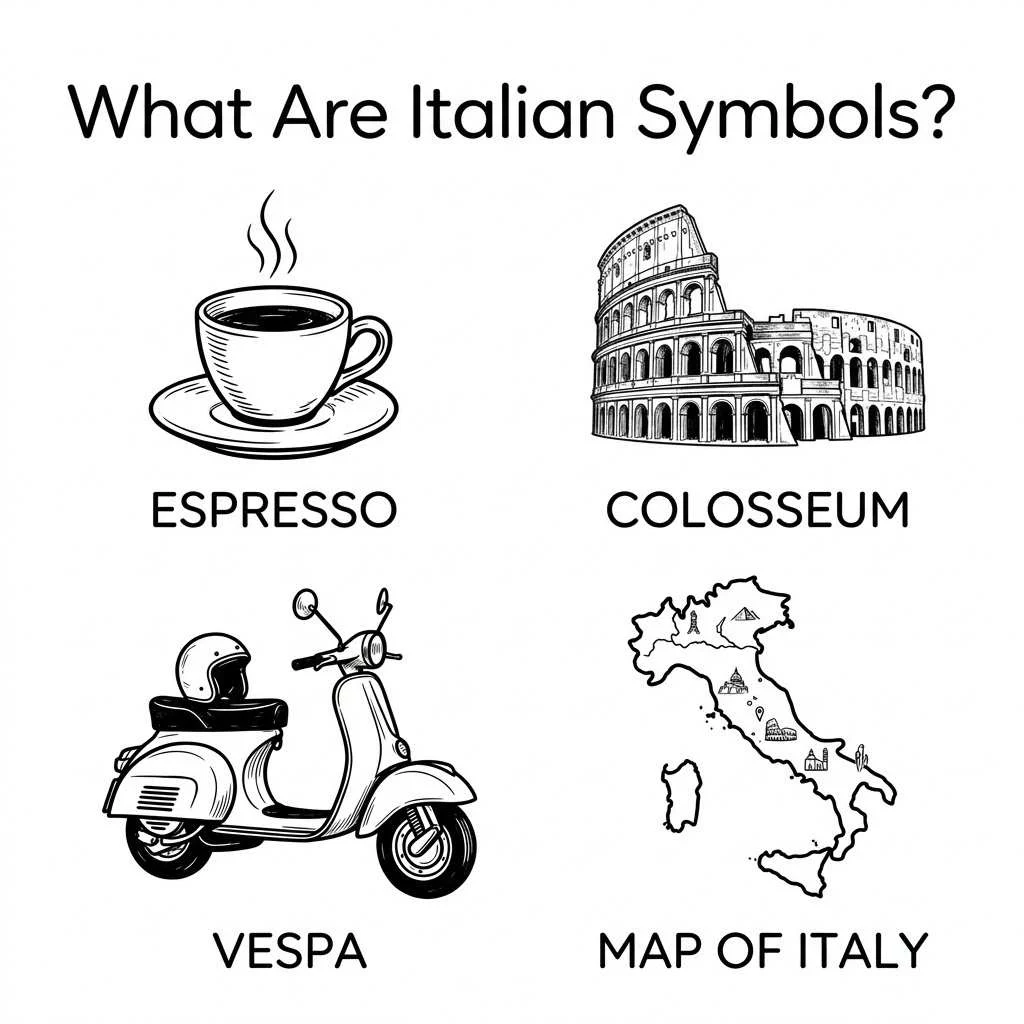
Italian symbols are visual signs, objects, patterns, gestures, or emblems that represent ideas deeply connected to Italian history, spirituality, culture, mythology, and identity. Some originated in Ancient Rome while others grew from Christianity, Renaissance art, folklore, and regional traditions passed through generations.
Italy has always been a land where symbolism mattered deeply. Roman emperors used symbols to show power and authority. Religious communities used sacred imagery to inspire faith and protection. Families displayed charms and icons to guard against bad luck. Artists painted hidden meanings into masterpieces that still fascinate historians today.
Unlike ordinary decorations, Italian symbols often carry emotional and spiritual significance. A simple horn charm may represent protection from envy. An olive branch can symbolize peace, wisdom, and divine blessing. Even colors and hand gestures in Italy sometimes hold symbolic meaning shaped by centuries of tradition.
These symbols remain alive in modern Italian life. They appear in architecture, jewelry, tattoos, fashion, literature, sports, religious festivals, and daily conversation. For many people, they serve as reminders of heritage, family roots, resilience, and cultural pride.
The Deep Symbolic Meaning Behind Italian Symbols
Spiritual Meaning
Many Italian symbols connect directly to spiritual beliefs and sacred traditions. Italy became one of the historical centers of Christianity, which gave religious symbolism enormous importance throughout the country.
Symbols such as the cross, the dove, the halo, and sacred hearts represent divine protection, forgiveness, purity, and eternal hope. Ancient Roman symbols also blended with Christian beliefs over time, creating a unique spiritual identity that still shapes Italian culture today.
Some traditional Italian charms, especially the famous cornicello or horn charm, are believed to protect people from negative energy and jealousy known as the evil eye. Families often pass these protective objects down through generations as symbols of love and spiritual care.
Psychological Meaning
Psychologically, Italian symbols often reflect human desires for identity, beauty, safety, and emotional belonging. Humans naturally search for meaning in visual forms, and Italian culture mastered the art of emotional symbolism through architecture, painting, and storytelling.
A person wearing an Italian symbol may feel connected to family roots or personal strength. Symbols can comfort people during difficult moments because they create emotional stability and continuity. They remind individuals that they belong to something larger than themselves.
The emotional richness of Italian culture also explains why its symbols feel deeply alive. They are rarely cold or abstract. Instead, they express passion, protection, romance, sacrifice, pride, and memory.
Cultural Meaning
Culturally, Italian symbols represent national identity and historical continuity. Italy experienced centuries of empire, religious transformation, artistic revolution, and regional diversity. Symbols helped preserve shared traditions across changing eras.
For example, the Roman eagle symbolized imperial authority and military strength. The olive branch became associated with peace and Mediterranean wisdom. Venetian lions represented courage and power in medieval Venice.
Today, these symbols continue to unite Italians with their history while also inspiring admiration around the world.
Types of Italian Symbols and Their Meanings
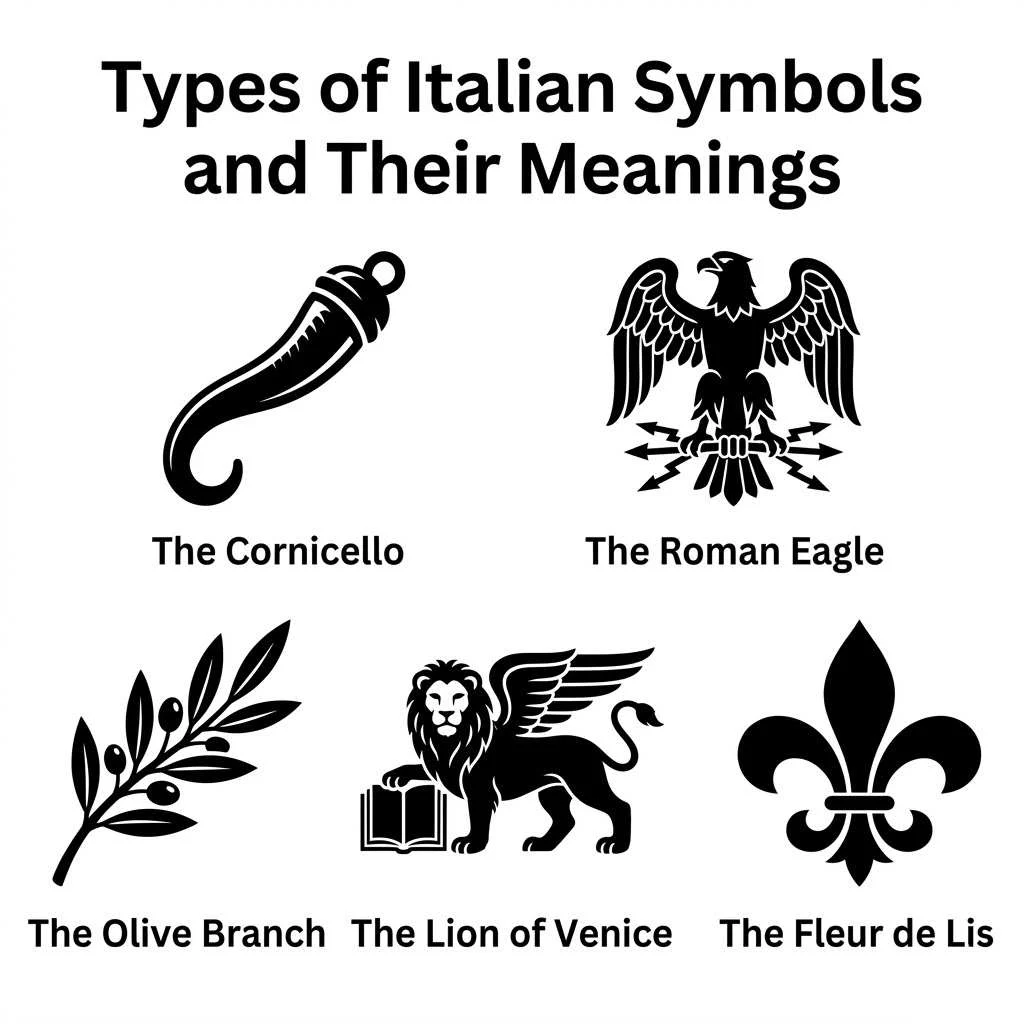
The Cornicello
Visual Description
The cornicello looks like a curved horn, usually made from gold, silver, or red coral.
Meaning
This symbol protects against bad luck, jealousy, and negative energy. Italians often wear it as a necklace or charm for spiritual defense.
Where It Appears
The cornicello appears in homes, jewelry, tattoos, and family heirlooms throughout Southern Italy. It remains one of the most recognized Italian protective symbols.
The Roman Eagle
Visual Description
A majestic eagle with open wings, often shown holding Roman emblems.
Meaning
The Roman eagle symbolizes power, authority, victory, and imperial strength. Ancient Roman armies carried eagle standards into battle as sacred objects.
Where It Appears
It appears in Roman history, architecture, military symbolism, and modern Italian inspired art.
The Olive Branch
Visual Description
A branch filled with olive leaves and sometimes olives.
Meaning
The olive branch symbolizes peace, wisdom, healing, abundance, and reconciliation.
Where It Appears
It is common in religious paintings, political imagery, family crests, and Mediterranean artwork.
The Lion of Venice
Visual Description
A winged lion often holding a book.
Meaning
This symbol represents courage, wisdom, divine protection, and the power of Venice during the medieval period.
Where It Appears
The Lion of Venice appears on flags, historic buildings, fountains, and statues throughout Venice.
The Fleur de Lis
Visual Description
A stylized lily flower with elegant curved petals.
Meaning
In Italian culture, especially in Florence, it symbolizes purity, nobility, spiritual enlightenment, and civic pride.
Where It Appears
It is found in architecture, family emblems, Renaissance art, and decorative fashion.
Italian Symbols Across Different Cultures
Ancient Roman Culture
In Ancient Rome, symbols represented authority, discipline, divine favor, and military dominance. Eagles, laurel wreaths, and fasces were deeply respected emblems of leadership and power.
Romans believed symbols carried spiritual force. Victorious generals wore laurel crowns as signs of honor and divine approval.
Christian Italian Culture
Christianity transformed Italian symbolism by introducing sacred imagery focused on salvation, sacrifice, compassion, and eternal life. Churches across Italy became visual storytelling spaces filled with symbolic paintings, stained glass, and sculptures.
The dove symbolized peace and the Holy Spirit. Candles represented divine light. Saints became symbols of protection for cities and families.
Renaissance Italy
During the Renaissance, Italian symbols evolved into intellectual and artistic expressions. Artists such as Leonardo da Vinci and Michelangelo filled their works with hidden symbolic meanings connected to philosophy, religion, and human emotion.
Flowers, geometric shapes, hand gestures, and celestial imagery all carried deeper messages within Renaissance masterpieces.
Medieval Italian States
Different regions developed their own unique symbols during medieval times. Venice used the winged lion. Florence embraced the fleur de lis. Sicily adopted symbols connected to ancient mythology and Mediterranean identity.
These regional emblems helped cities express pride and political independence.
Modern Global Culture
Today, Italian symbols influence fashion, luxury branding, cinema, tattoo culture, interior design, and spiritual practices worldwide. Even people with no Italian ancestry often feel emotionally drawn to Italian imagery because it represents beauty, elegance, passion, and timeless tradition.
Italian Symbols in Art, Movies, Literature, Tattoos and Fashion
Italian symbols have shaped global creativity for centuries. In Renaissance paintings, symbols often revealed hidden religious or philosophical messages beneath the surface beauty. A single object in a painting could completely transform the meaning of the scene.
In movies, Italian symbols frequently represent family loyalty, power, tradition, romance, or organized authority. Films centered around Italian heritage often use religious icons, old architecture, family crests, and symbolic jewelry to create emotional depth.
Literature also embraces Italian symbolism. Writers describe Roman ruins, church bells, olive trees, and ancient statues as symbols of memory, longing, or spiritual transformation.
Tattoos inspired by Italian symbols have become increasingly popular. People choose Roman eagles for strength, olive branches for peace, or cornicello charms for protection. These tattoos often reflect deeply personal emotional journeys.
Fashion designers regularly incorporate Italian symbols into luxury clothing, jewelry, and accessories. Gold medallions, Renaissance patterns, lion imagery, and religious iconography continue influencing modern style around the world.
Spiritual And Dream Meaning of Italian Symbols
Many people report seeing Italian symbols during dreams, meditation, or emotionally intense life experiences. These symbols often carry personal spiritual meaning connected to protection, transformation, ancestry, or emotional healing.
Dreaming of an olive branch may suggest inner peace or reconciliation after conflict. Seeing Roman imagery could symbolize ambition, personal strength, or leadership potential. A protective horn charm in dreams may reflect a desire for safety and emotional security.
Some spiritual practitioners believe ancient symbols awaken subconscious memories and emotional wisdom. Symbols act like bridges between conscious thought and deeper intuition.
In meditation, Italian symbols may help individuals feel grounded, inspired, or connected to cultural roots and historical continuity.
Positive And Negative Meanings of Italian Symbols
Like many ancient symbols, Italian symbols can represent both positive and negative forces depending on context.
The Roman eagle symbolizes leadership and courage, but it can also represent conquest and domination. Religious symbols inspire faith and compassion, yet history also connects some of them with conflict and political power struggles.
Protective charms may comfort believers while skeptics view them as superstition. Symbols connected to wealth and luxury can inspire admiration but also reflect status obsession or inequality.
This dual nature makes symbols powerful. They mirror the complexity of human nature itself. Light and darkness often exist together within the same image.
Why Humans Feel Deeply Attracted to Italian Symbols
Humans are emotional storytellers by nature. Symbols help people express feelings that words cannot fully capture. Italian symbols feel especially powerful because Italian culture itself is emotionally expressive, artistic, and deeply rooted in history.
A person standing before an ancient Roman statue may suddenly feel connected to thousands of years of human struggle and ambition. A grandmother giving a protective charm to her grandchild transforms a simple object into an emotional legacy filled with love.
Italian symbols also attract people because they combine beauty with mystery. They feel elegant yet meaningful. Ancient yet timeless. Familiar yet deeply spiritual.
Psychologists often explain that symbols create emotional anchors. They help people organize memories, fears, hopes, and identities into visual forms that feel stable and meaningful.
This is why people continue wearing symbolic jewelry, decorating homes with meaningful imagery, and tattooing ancient symbols onto their bodies. Symbols become emotional companions throughout life.
Italian Symbols And Their Role In Daily Italian Life
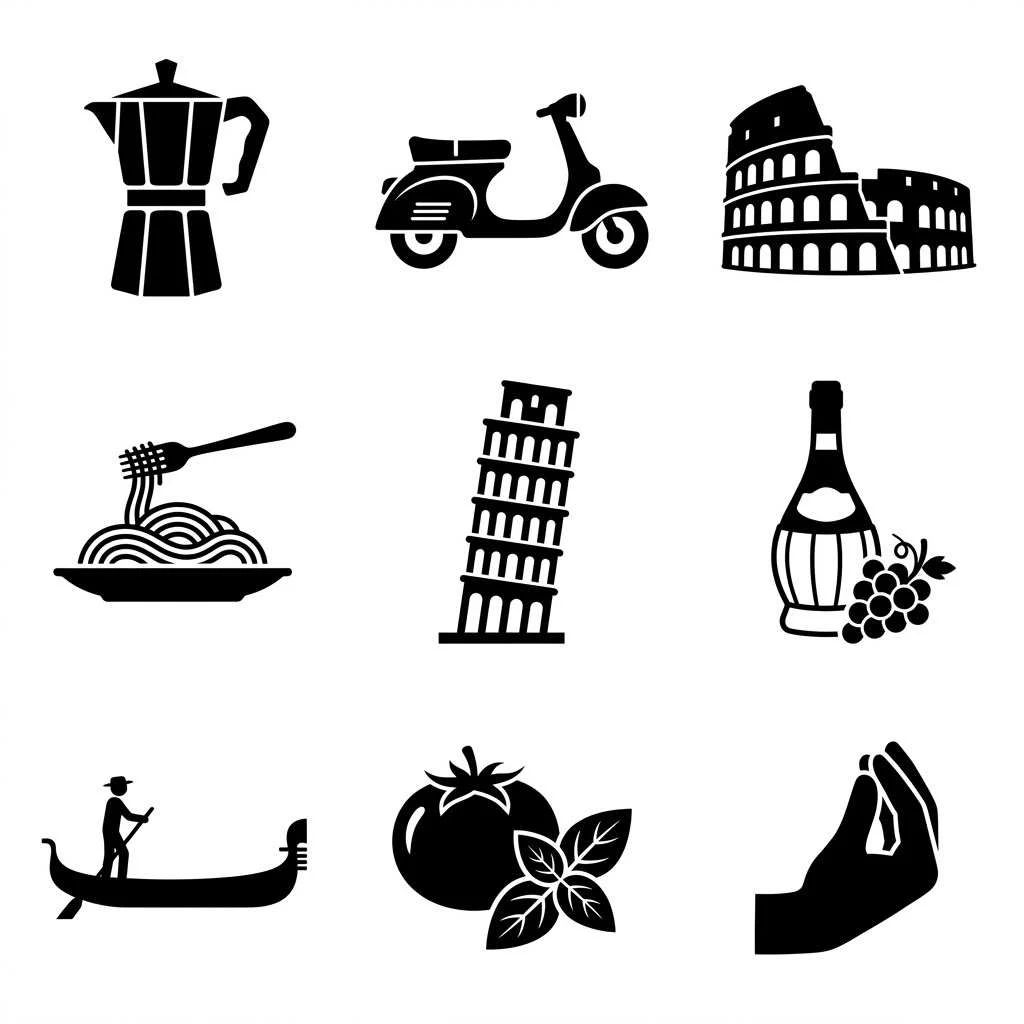
Italian symbolism is not limited to museums or history books. It still lives in everyday life across Italy.
Families hang protective charms inside homes and cars. Religious processions fill streets during festivals. Traditional symbols appear in bakeries, cafes, churches, football clubs, and local celebrations.
Even Italian hand gestures carry symbolic meaning that communicates emotion more powerfully than words alone. Food itself often becomes symbolic in Italian culture. Bread represents life and togetherness. Wine symbolizes celebration and spiritual connection.
In many Italian communities, symbols preserve emotional continuity between generations. Grandparents teach children the meanings behind family traditions and sacred objects, ensuring that cultural memory survives.
FAQs About Italian Symbols
What is the most famous Italian symbol?
The cornicello is one of the most famous Italian symbols. It is widely recognized as a protective charm against bad luck and negative energy.
What does the Italian horn symbolize?
The Italian horn symbolizes protection, strength, fertility, and defense against the evil eye or jealousy.
Why are Roman symbols still important today?
Roman symbols remain important because they represent power, discipline, leadership, history, and the lasting influence of Ancient Rome on modern civilization.
Are Italian symbols religious?
Some Italian symbols are strongly connected to Christianity while others come from Roman mythology, folklore, regional traditions, or cultural identity.
What do olive branches mean in Italian culture?
Olive branches symbolize peace, healing, wisdom, prosperity, and spiritual harmony in Italian culture.
Why do people tattoo Italian symbols?
People tattoo Italian symbols to express heritage, strength, protection, spiritual beliefs, family pride, or emotional connection to Italian culture.
Conclusion
Italian symbols are far more than artistic decorations or ancient relics. They are emotional fingerprints left behind by generations searching for meaning, protection, beauty, and connection. From Roman empires to quiet family traditions, these symbols continue shaping human identity and imagination.
Their stories reveal how deeply humans long to belong to history, culture, and something spiritually greater than themselves. Even today, Italian symbols remind the world that beauty becomes most powerful when it carries meaning within it.

Julian Shaw
I’ve always been fascinated by the small, quiet stories that make life feel magical. Writing allows me to explore worlds that exist just beyond the everyday, where imagination meets reality. Over the years, I’ve found joy in creating characters that feel real and stories that stay with readers long after the last page. When I’m not writing, you can usually find me wandering through city streets, notebook in hand, capturing little sparks of inspiration. I believe every story has the power to connect us, to make us feel a little less alone. Sharing these tales is my way of leaving a mark on the world.
Books:
-
Whispers in the Wind
-
Shadows of Tomorrow