
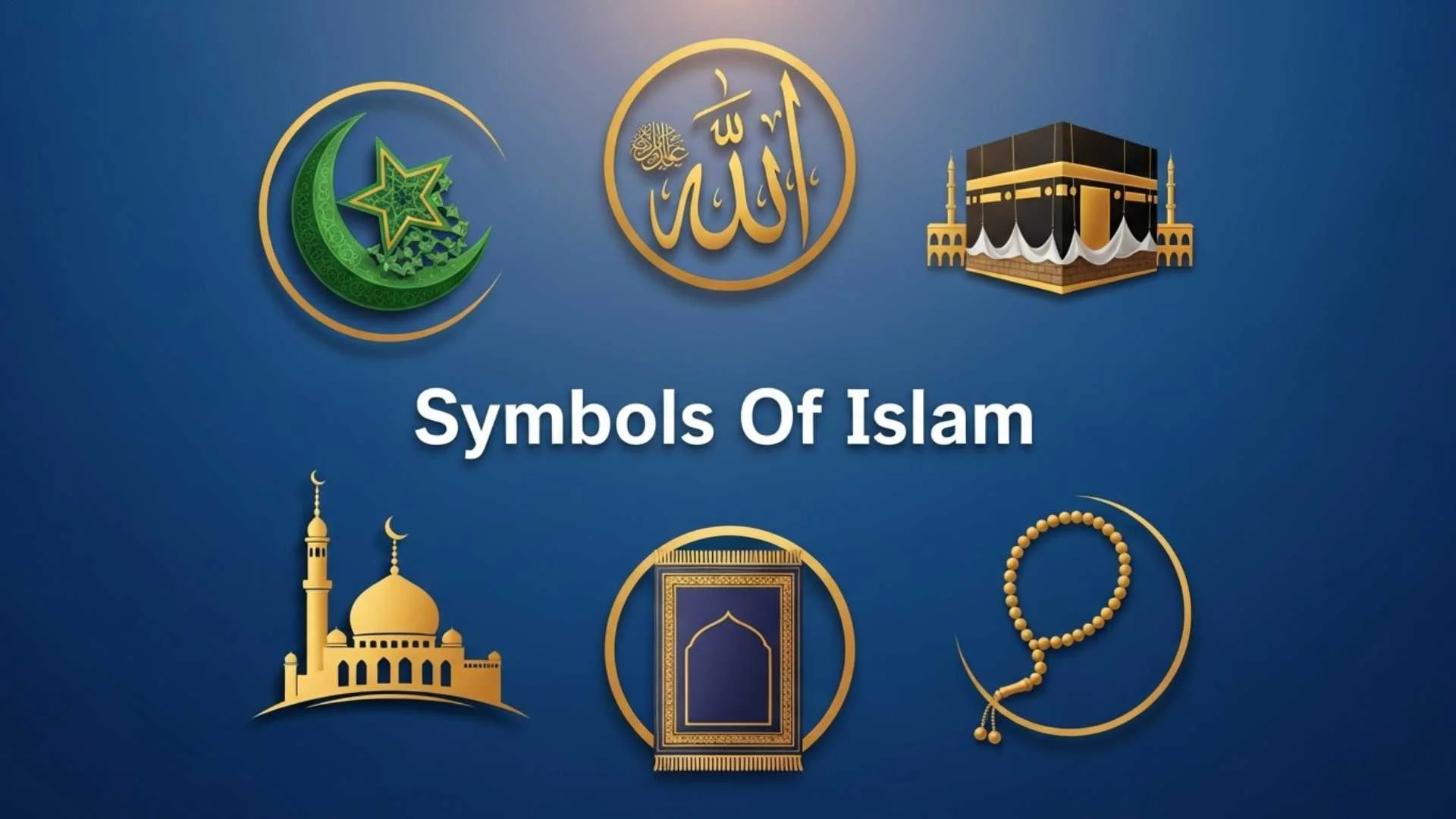
“Symbols of Islam” have guided hearts, inspired civilizations and carried spiritual meaning for more than fourteen centuries.
From the peaceful crescent moon shining over mosques to the elegant flow of Arabic calligraphy, these symbols connect millions of people to faith, identity and divine purpose.
Every symbol tells a deeper story about devotion, unity, sacrifice, and hope. Many people recognize Islamic symbols visually, yet few truly understand the emotional and spiritual meanings hidden within them.
This article uncovers the beauty, mystery and timeless wisdom behind the most powerful symbols of Islam.
What Are Symbols Of Islam?
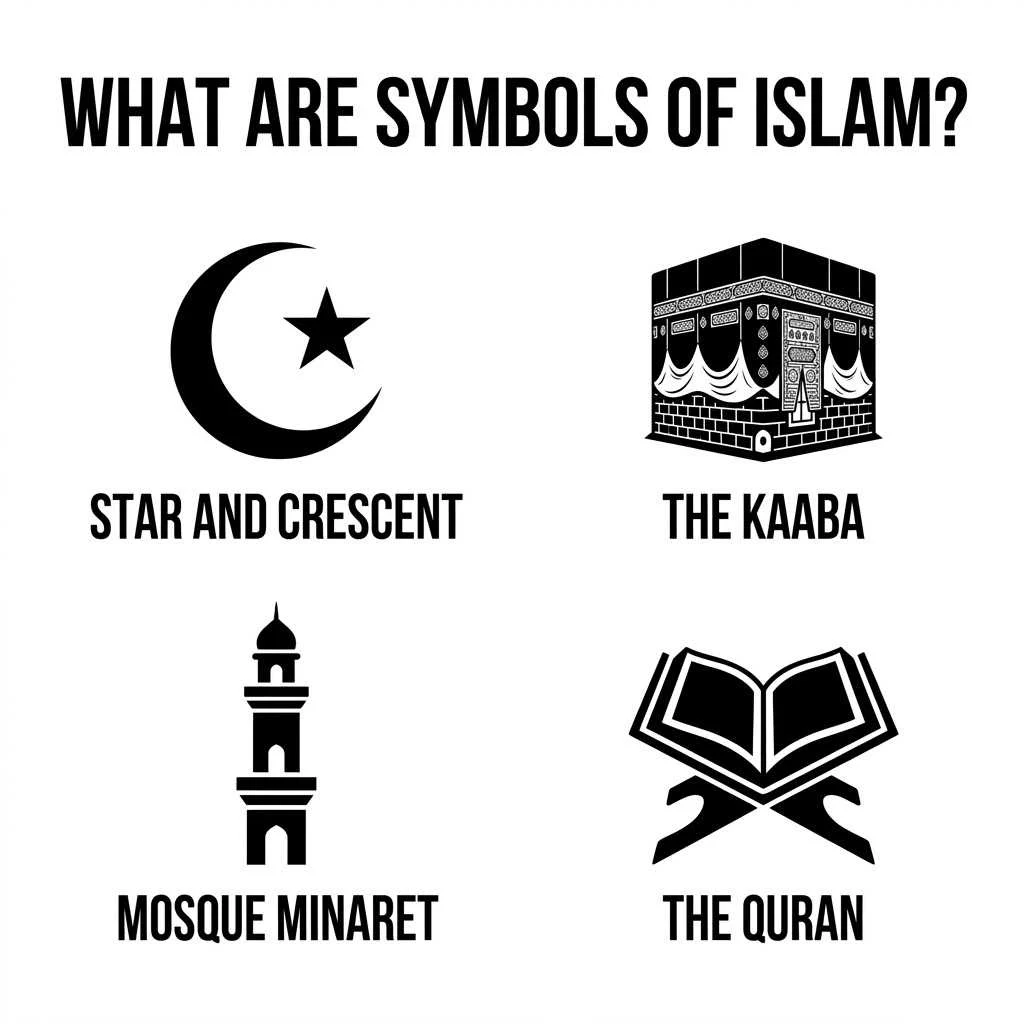
Symbols of Islam are visual signs, sacred objects, artistic expressions, and spiritual representations connected to the Islamic faith and Muslim culture. Unlike some religions that rely heavily on statues or images, Islam emphasizes symbolic meaning through geometry, calligraphy, architecture, colors, and sacred practices.
Islamic symbols developed over centuries across Arabia, Persia, Turkey, North Africa, South Asia, and many other regions influenced by Islam. These symbols often reflect the core teachings of Islam including faith in one God, humility, peace, knowledge, compassion, and unity.
Some Islamic symbols come directly from religious tradition while others grew through culture and history. For example, the crescent and star became associated with Muslim civilizations during the Ottoman era, even though they are not official religious symbols mentioned in the Quran.
The beauty of Islamic symbolism lies in simplicity. A single word written in Arabic can move a believer to tears. A geometric pattern inside a mosque can remind the human soul of divine perfection and infinite creation.
The Deep Symbolic Meaning Of Symbols Of Islam
Spiritual Meaning
Spiritually, Islamic symbols remind believers of their connection with Allah. They encourage prayer, self reflection, patience, and obedience to divine guidance. Symbols such as the Kaaba or the crescent moon are not worshipped themselves. Instead, they direct attention toward spiritual truths and sacred values.
The Kaaba symbolizes unity because Muslims around the world pray toward one direction. Arabic calligraphy symbolizes reverence for the words of Allah. Prayer beads symbolize remembrance and inner peace.
Psychological Meaning
Psychologically, symbols of Islam create emotional comfort and belonging. A Muslim seeing Islamic calligraphy or hearing the Adhan often experiences feelings of calmness, identity, and spiritual safety.
Humans naturally connect emotions with visual signs. Islamic symbols strengthen memory, discipline, and faith by constantly reminding people about moral values and divine presence.
Cultural Meaning
Culturally, Islamic symbols shape art, fashion, architecture, literature, and daily life. From grand mosques in Turkey to intricate carpets in Persia, Islamic symbols became part of cultural identity across continents.
Even today, symbols of Islam appear in jewelry, tattoos inspired by geometry, clothing designs, home decor, and digital art. They continue to influence modern creativity while preserving ancient spiritual wisdom.
Most Important Symbols Of Islam
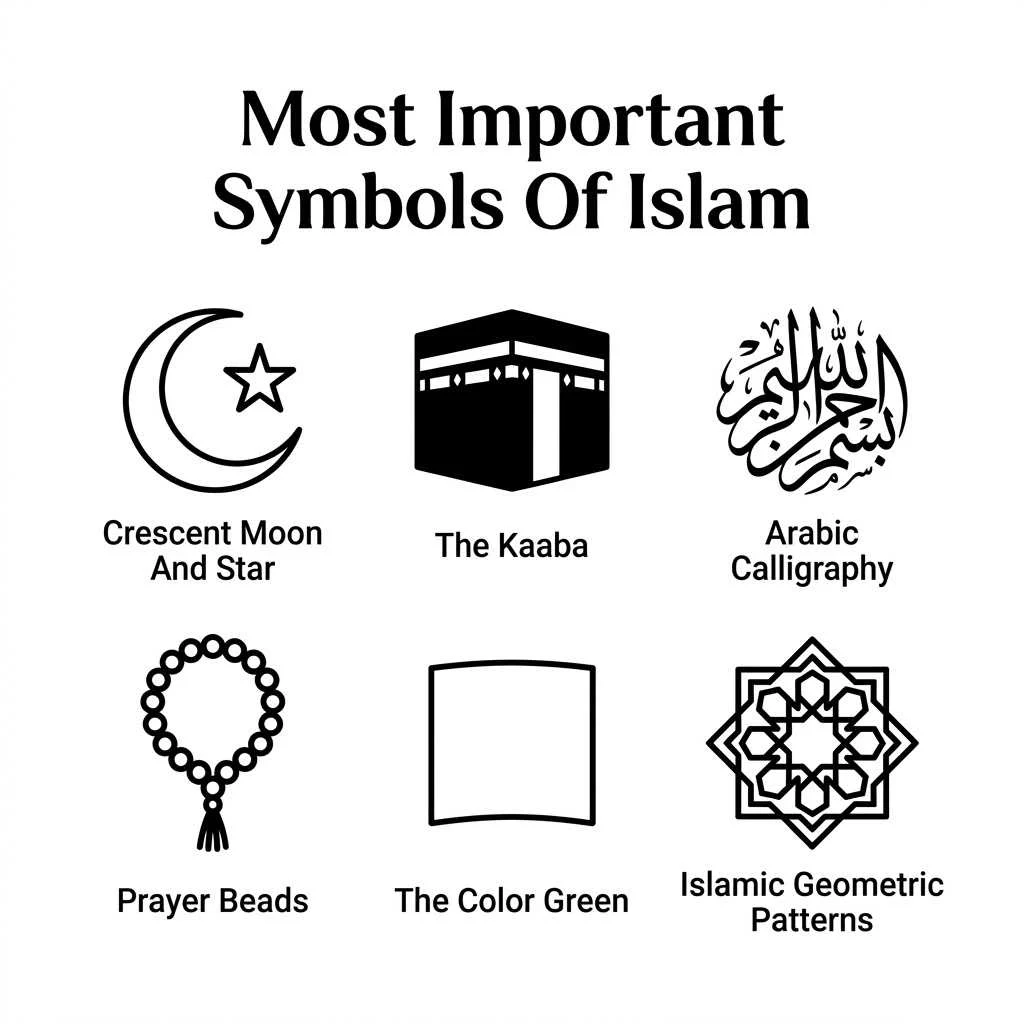
Crescent Moon And Star
The crescent moon and star are among the most recognized symbols associated with Islam.
Visual Description
A curved crescent moon paired with a shining star.
Meaning
The crescent often represents progress, renewal, and the lunar calendar used in Islamic traditions. The star symbolizes light, guidance, and divine knowledge.
Where It Appears
It appears on mosque domes, Islamic flags, books, jewelry, and historical monuments throughout Muslim cultures.
Although not officially prescribed by Islam, this symbol became widely connected with Muslim identity during the Ottoman Empire.
The Kaaba
Visual Description
A large black cube located in Mecca, Saudi Arabia.
Meaning
The Kaaba symbolizes unity, devotion, and submission to Allah. Muslims around the world face toward it during prayer.
Where It Appears
It appears in Islamic art, religious education, pilgrimage imagery, and spiritual literature.
For many believers, seeing the Kaaba for the first time creates overwhelming emotions. Tears, gratitude, and spiritual awakening often follow.
Arabic Calligraphy
Visual Description
Elegant Arabic writing, often featuring Quranic verses or the names of Allah.
Meaning
Islamic calligraphy symbolizes beauty, wisdom, sacred knowledge, and divine speech.
Where It Appears
Mosques, paintings, books, architecture, fashion, and home decor.
Calligraphy became central in Islamic civilization because Islam discourages idol worship. Artists expressed spirituality through words instead of statues.
Prayer Beads
Visual Description
A string of beads used for counting prayers and remembrance.
Meaning
Prayer beads symbolize mindfulness, remembrance of Allah, inner peace, and spiritual discipline.
Where It Appears
Daily worship, meditation, spiritual gatherings, and Islamic traditions.
Many Muslims use prayer beads during moments of stress because repetitive remembrance creates emotional calmness.
The Color Green
Visual Description
A vibrant green shade associated with paradise and peace.
Meaning
Green symbolizes life, mercy, growth, and eternal beauty in Islamic tradition.
Where It Appears
Mosques, Islamic flags, clothing, decorations, and religious art.
Green often creates feelings of serenity and spiritual comfort among believers.
Islamic Geometric Patterns
Visual Description
Repeating symmetrical designs and intricate mathematical patterns.
Meaning
These patterns symbolize infinity, divine order, balance, and the perfection of creation.
Where It Appears
Mosques, carpets, ceramics, architecture, manuscripts, and modern design.
The endless repetition reflects the limitless nature of Allah and the harmony of the universe.
Symbols Of Islam Across Cultures
Arabian Culture
In early Arabian culture, Islamic symbols focused on simplicity, prayer, and unity. The desert environment shaped minimalistic designs emphasizing spiritual purity over material beauty.
Persian Culture
Persian Islamic art introduced breathtaking floral patterns, poetry, and colorful calligraphy. Persian symbolism often blended spirituality with emotional storytelling and artistic elegance.
Turkish Culture
The Ottoman Empire popularized the crescent moon and star. Turkish mosques with towering minarets became iconic representations of Islamic civilization worldwide.
South Asian Culture
In South Asia, Islamic symbols merged with local traditions. Mughal architecture such as the Taj Mahal reflects Islamic geometry, symmetry, and Quranic artistry.
North African Culture
North African Islamic culture developed intricate tile work, arches, and symbolic patterns influenced by both Arab and Berber traditions.
Modern Global Culture
Today, symbols of Islam appear in global fashion, social media art, films, and digital creativity. Young Muslims often use symbols to express both spirituality and modern identity.
Symbols Of Islam In Art, Movies and Pop Culture
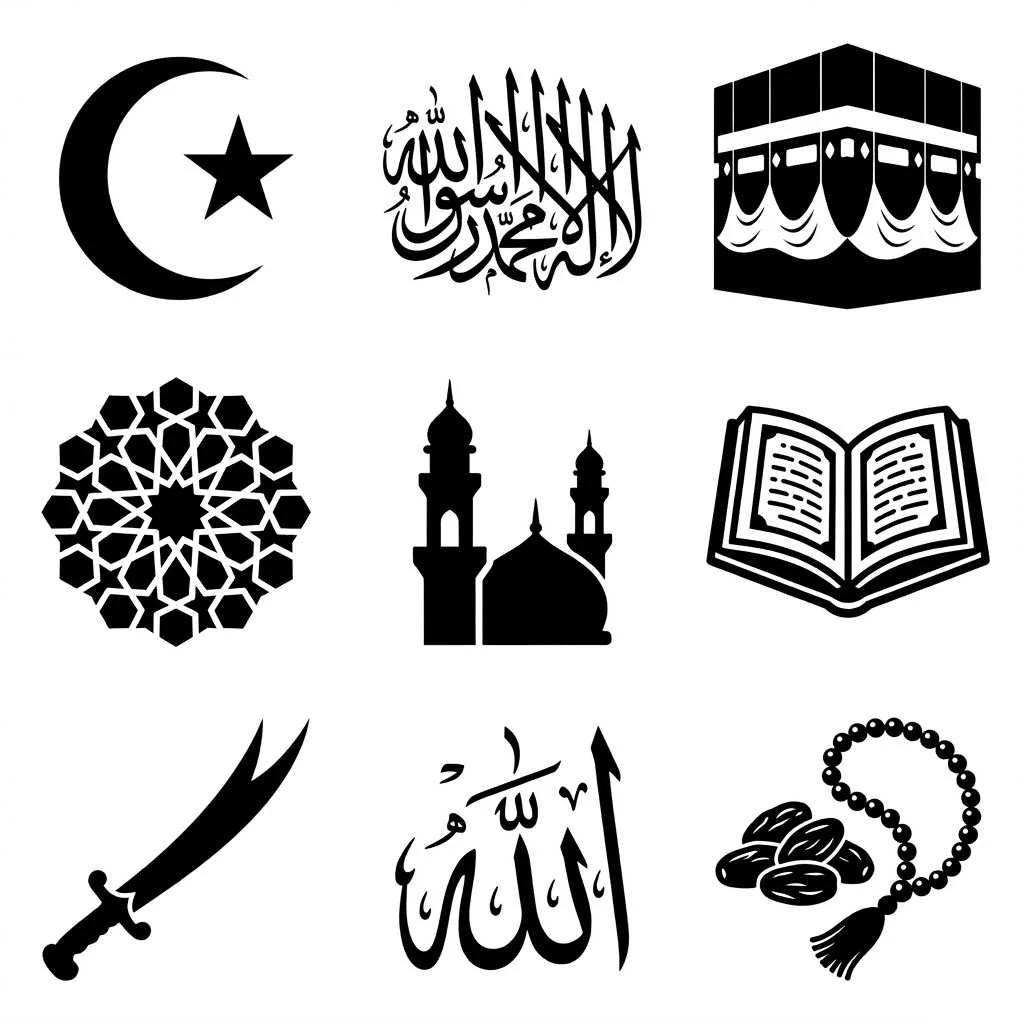
Islamic symbols continue to inspire artists, filmmakers, and writers across the world.
In Art
Islamic art focuses heavily on geometric beauty and calligraphy. Museums worldwide display ancient Quran manuscripts and mosque decorations as masterpieces of human creativity.
In Movies
Films often use Islamic symbols to represent faith, tradition, family honor, spirituality, or historical identity. The call to prayer and mosque imagery frequently create emotional atmosphere in cinema.
In Books
Many novels explore Islamic symbols as representations of hope, exile, identity, and inner transformation. Writers use the desert, moon, and prayer imagery to express emotional depth.
In Fashion
Modern fashion designers incorporate crescent symbols, Arabic typography, and geometric Islamic designs into jewelry, scarves, and streetwear.
In Tattoos
Although tattoos remain controversial in Islamic teachings, some people use Islamic inspired geometric patterns or crescent imagery for cultural expression and personal identity.
Spiritual And Dream Meaning Of Symbols Of Islam
Many people report seeing Islamic symbols during dreams, meditation, or emotional life experiences.
Dreaming of the Kaaba often symbolizes spiritual awakening, guidance, or a longing for peace. Seeing bright Islamic calligraphy in dreams may represent divine wisdom or inner healing.
The crescent moon in dreams usually reflects renewal, hope, emotional growth, or spiritual transition. Hearing the Adhan in dreams often symbolizes a call toward righteousness or personal transformation.
Spiritually, Islamic symbols remind people that life is temporary and the soul constantly seeks connection with something eternal and meaningful.
Positive Vs Negative Meaning Of Symbols Of Islam
Like many powerful symbols, Islamic symbols can carry both positive and misunderstood meanings depending on context.
Positive Meaning
- Peace and unity
- Faith and devotion
- Compassion and mercy
- Discipline and self control
- Wisdom and spiritual guidance
- Hope and emotional healing
Negative Misinterpretations
Sadly, some Islamic symbols have been unfairly associated with fear or extremism due to political conflicts and media stereotypes. These misunderstandings ignore the true teachings of Islam which emphasize mercy, justice, and peace.
Throughout history, Islamic civilization contributed greatly to science, medicine, mathematics, philosophy, and art. The symbols themselves represent spiritual beauty rather than violence.
Why Humans Are Attracted To Symbols Of Islam
Humans naturally seek meaning, belonging, and emotional connection. Symbols of Islam fulfill these deep psychological needs through beauty, structure, and spirituality.
The human brain responds emotionally to symmetry, repetition, and sacred storytelling. Islamic geometric art creates calmness because the mind enjoys patterns and balance.
Calligraphy attracts people because written words carry emotional power. A beautifully written verse can inspire hope even without full understanding of the language.
For believers, Islamic symbols provide identity and comfort during difficult times. A mosque dome, prayer rug, or Quranic verse can instantly remind someone that they are never spiritually alone.
Even non Muslims often admire Islamic symbols because they represent timeless beauty, mystery, and inner peace.
Commonly Asked Questions About Symbols Of Islam
What is the main symbol of Islam?
The crescent moon and star are the most widely recognized symbols associated with Islam, although Islam itself does not have one official universal symbol.
Why is the crescent moon important in Islam?
The crescent moon is connected to the Islamic lunar calendar which determines important events such as Ramadan and Eid.
Is the Kaaba a symbol of Islam?
Yes, the Kaaba is one of the most sacred symbols in Islam because Muslims pray facing it and visit it during Hajj pilgrimage.
What does green symbolize in Islam?
Green symbolizes paradise, peace, mercy, spiritual growth, and eternal life in many Islamic traditions.
Are Islamic symbols religious or cultural?
Some Islamic symbols are deeply religious while others developed culturally through Islamic civilizations over time.
Conclusion
Symbols of Islam are far more than decorative signs or historical images. They carry centuries of faith, emotion, wisdom, and spiritual longing within their shapes and meanings. From the sacred Kaaba to the flowing elegance of Arabic calligraphy, each symbol reflects humanity’s eternal search for peace, purpose and divine connection.
These symbols continue to inspire millions because they speak directly to the human heart. In a fast moving world filled with noise and confusion, the symbols of Islam still whisper timeless messages of unity, beauty and hope.

Nora Bennett
Nora Bennett is a storyteller at heart, always finding magic in the everyday moments of life. From a young age, she discovered the joy of weaving emotions into words, creating characters that feel like old friends. Writing, for her, is both an adventure and a sanctuary—a way to explore the world and herself. She loves connecting with readers who share her passion for heartfelt stories and unforgettable journeys. When she’s not crafting her next tale, Nora enjoys quiet mornings with a cup of coffee and a notebook full of ideas. Her stories are meant to inspire, comfort, and spark imagination in everyone who reads them.
Books:
-
Whispers of Yesterday
-
Echoes of Tomorrow