
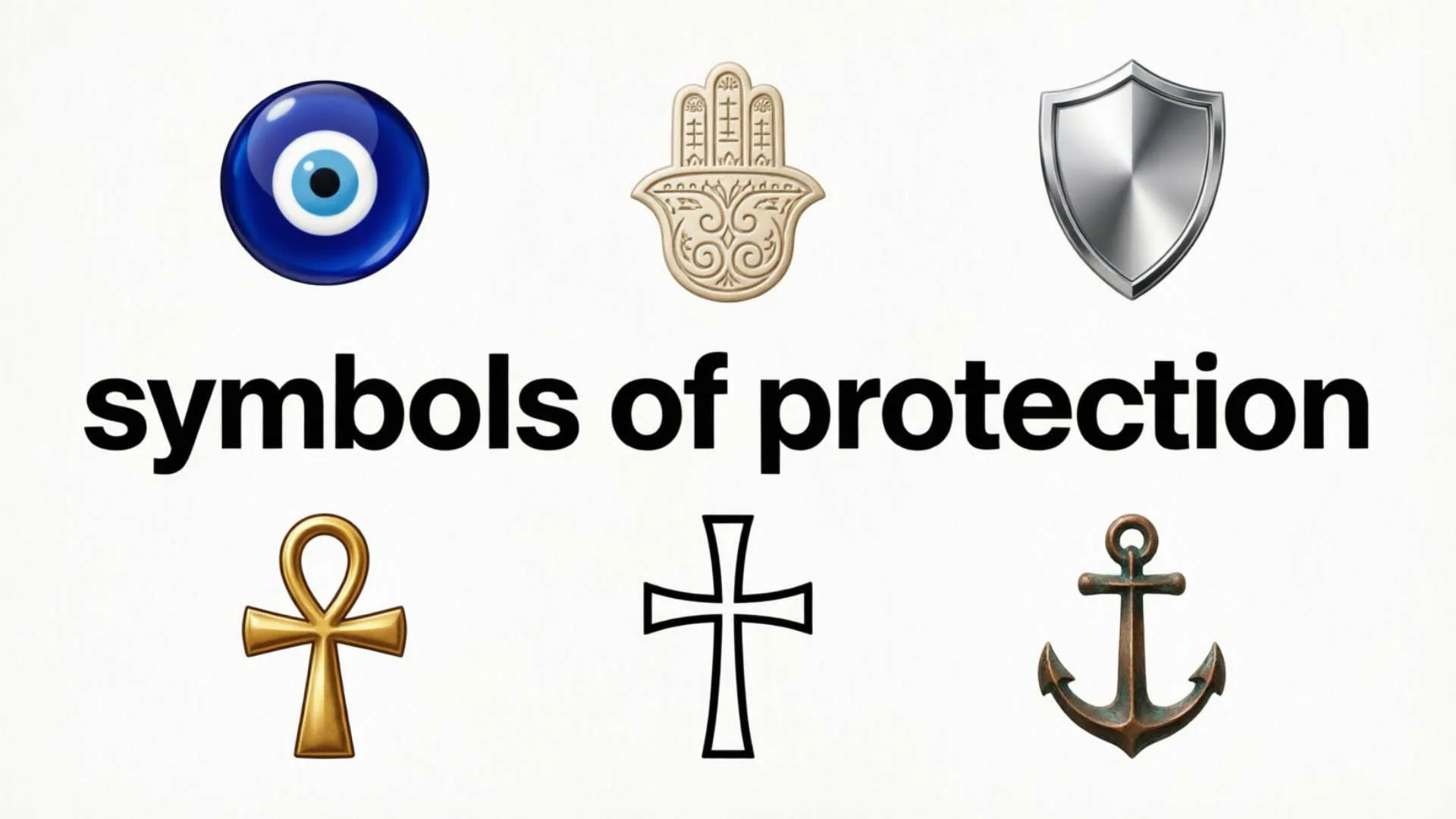
There is something deeply human about the desire to feel safe, protected from harm, unseen dangers, and the unknown.
Across centuries and civilizations, people have turned to symbols of protection not just as decorations, but as silent guardians. These symbols carry stories, fears, hopes, and beliefs woven into their shapes.
What’s fascinating is that even today, whether in jewelry, tattoos, or dreams, we still cling to these ancient signs, often without fully understanding why.
This article will take you beneath the surface, revealing the powerful meanings and emotional truths hidden within symbols of protection.
What Are Symbols of Protection?
Symbols of protection are visual signs, objects, or designs believed to shield individuals from harm whether physical, spiritual, or emotional. These symbols can be found carved into ancient walls, worn as amulets, painted on doorways, or even imagined in dreams.
Historically, humans have lived in a world filled with uncertainty disease, war, natural disasters, and unseen forces. Without scientific explanations, people turned to symbolic systems to make sense of danger and to feel in control.
These symbols often acted as:
- Spiritual shields against evil or negative energy
- Emotional anchors during times of fear
- Cultural expressions of safety and divine protection
From ancient Egypt to modern-day tattoos, symbols of protection have never truly disappeared they’ve simply evolved.
Deep Symbolic Meaning
Spiritual Level
On a spiritual level, symbols of protection are believed to create a barrier between the individual and harmful forces. Many cultures see them as channels of divine power—tools that invite blessings, ward off evil spirits, and maintain balance.
For example, wearing or displaying such a symbol is often thought to:
- Attract positive energy
- Repel negativity or curses
- Connect the wearer to higher powers
Psychological Level
Psychologically, these symbols provide a powerful sense of comfort. When someone believes they are protected, their anxiety decreases. This creates a placebo-like effect where belief itself becomes a form of strength.
Think of a child clutching a lucky charm before a big moment—the object doesn’t physically protect them, but it changes how they feel.
Cultural Level
Culturally, symbols of protection reflect shared fears and values. They are passed down through generations, becoming part of identity and tradition.
In many societies:
- They mark sacred spaces
- They are used in rituals and ceremonies
- They represent collective beliefs about safety and danger
Types / Variations of Symbols of Protection
1. The Evil Eye
Visual: A blue eye-shaped design
Meaning: Protection against jealousy and ill intentions
Where it appears: Middle Eastern, Mediterranean cultures, jewelry, home decor
The Evil Eye is one of the most recognized protective symbols. It’s believed that envy can cause harm, and this symbol reflects that energy back to its source.
2. The Hamsa Hand
Visual: An open hand, often with an eye in the center
Meaning: Protection, blessings, strength
Where it appears: North Africa, Middle East, religious art, amulets
The Hamsa is often worn as jewelry and hung in homes to guard against negative forces.
3. The Ankh
Visual: A cross with a loop at the top
Meaning: Eternal life and divine protection
Where it appears: Ancient Egyptian art, carvings, modern spiritual symbols
It represents not just life, but protection through the continuity of existence.
4. The Pentagram
Visual: A five-pointed star
Meaning: Balance, protection, harmony of elements
Where it appears: Pagan traditions, occult symbolism, modern spirituality
Though sometimes misunderstood, it originally symbolized protection and balance between natural forces.
5. The Cross
Visual: Two intersecting lines
Meaning: Faith, sacrifice, divine protection
Where it appears: Christianity, churches, jewelry
For many, it represents spiritual safety and guidance.
6. The Eye of Horus
Visual: Stylized human eye with markings
Meaning: Healing, protection, royal power
Where it appears: Ancient Egyptian artifacts, tattoos, art
This symbol was believed to protect both the living and the dead.
Symbols of Protection Across Cultures
Ancient Egypt
Egyptians used symbols like the Ankh and Eye of Horus to ensure safety in both life and the afterlife. Protection extended beyond death, showing how deeply they valued spiritual security.
Greek & Roman Civilizations
Amulets and charms were common. People believed in warding off curses and evil spirits using symbolic objects.
Middle Eastern Cultures
The Evil Eye and Hamsa remain powerful symbols today, deeply embedded in daily life and traditions.
Asian Traditions
In many Asian cultures, protective symbols are tied to balance and harmony—such as yin-yang or sacred animals like dragons.
European Medieval Period
Symbols were often tied to religion. Crosses, saints, and holy relics were believed to offer divine protection.
Symbols of Protection in Art, Movies & Pop Culture
These symbols haven’t stayed in the past—they’ve transformed into modern storytelling tools.
- Movies: Protective symbols often appear in horror films to ward off evil forces
- Paintings: Artists use them to represent safety, faith, or inner strength
- Books: Characters carry amulets or symbols for protection on their journeys
- Tattoos: Many people tattoo protective symbols as permanent guardians
- Fashion: Symbols are used in jewelry and clothing for both style and meaning
In modern culture, they often symbolize personal empowerment rather than literal protection.
Spiritual & Dream Meaning of Symbols of Protection
When you see symbols of protection in dreams or meditation, it often reflects your inner emotional state.
Common interpretations:
- A need for safety or reassurance
- A sign of spiritual guidance
- Protection during a period of change or uncertainty
For example:
- Dreaming of an eye may suggest awareness and protection
- Seeing a hand symbol may indicate support and strength
These symbols often appear when your mind is trying to comfort or guide you.
Positive vs Negative Meaning
Interestingly, symbols of protection can carry dual meanings.
Positive
- Safety
- Strength
- Guidance
- Faith
Negative
- Fear of harm
- Dependence on external protection
- Misinterpretation or misuse
For example, a symbol meant to protect can also reflect anxiety—the belief that danger is always present.
Why Humans Are Attracted to Symbols of Protection
At the core, our attraction to these symbols is deeply emotional.
Humans fear the unknown. We want control in a world that often feels unpredictable. Symbols of protection give us:
- A sense of control
- Emotional comfort
- A connection to something greater
There’s also a storytelling element—when we wear or use a symbol, we become part of a narrative that stretches across history.
It’s not just about protection.
It’s about feeling safe in a world that isn’t always certain.
FAQs
1. What is the most powerful symbol of protection?
There is no single “most powerful” symbol—it depends on cultural beliefs. However, the Evil Eye and Hamsa are widely recognized globally.
2. Do symbols of protection really work?
Their effectiveness often lies in belief. Psychologically, they can provide comfort and confidence, which can influence behavior and perception.
3. Can I wear multiple protective symbols together?
Yes, many people combine symbols. However, it’s important to understand their meanings to ensure they align.
4. Are protective symbols religious?
Some are tied to religion, while others are cultural or spiritual. Not all require religious belief.
5. Why do I keep seeing protective symbols?
This could be your subconscious seeking safety or reassurance, especially during stressful times.
Conclusion
Symbols of protection are more than ancient drawings or decorative objects, they are reflections of the human soul. They carry our fears, our hopes, and our desire to feel safe in an unpredictable world. Even today, in an age of science and logic, we still turn to these symbols, quietly, almost instinctively.
Not because we are naive, but because we are human. And perhaps that’s their true power. They don’t just protect us from the outside world, they protect something within us that still believes in meaning, connection, and unseen strength.

Freddie Wood
Hi! I’m Freddie Wood, a storyteller at heart and a lifelong explorer of ideas. Writing has always been my way of making sense of the world, turning ordinary moments into stories that linger in your mind. I love blending emotions with adventure, and I’m fascinated by the way words can connect people across distances and experiences. When I’m not writing, you’ll find me wandering through nature, listening to music, or sketching out ideas for my next story. My goal is always to create books that stay with readers long after the last page.
Books by Freddie Wood:
-
The Hidden Path
-
Shadows of Tomorrow