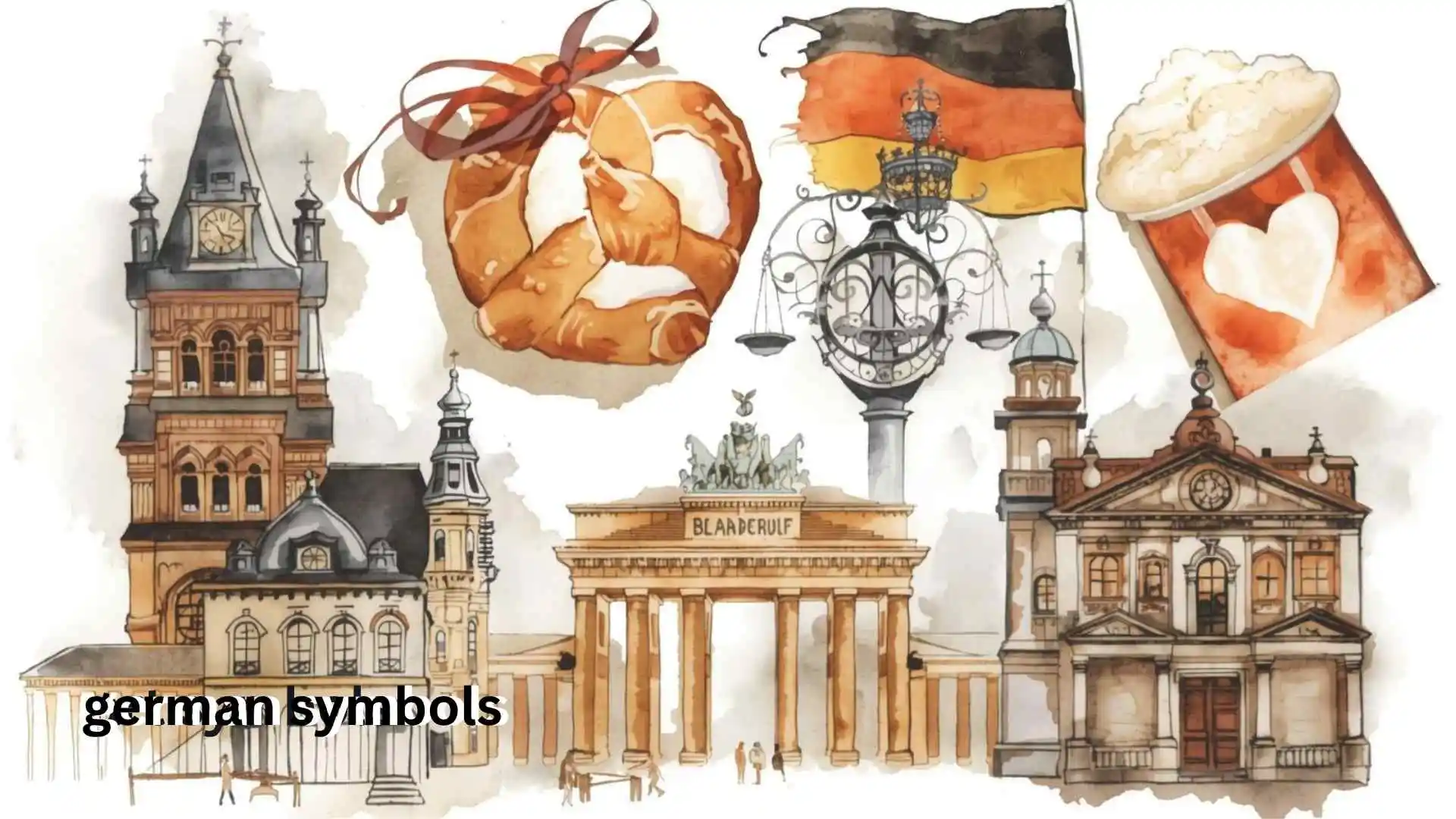
German symbols are more than just flags, emblems, or ancient marks carved into stone—they are emotional fingerprints of a nation shaped by triumph, tragedy, philosophy, and deep cultural evolution.
From medieval heraldry to modern national identity, these symbols carry stories that have influenced art, politics, and even global history.
When you look closely, you realize they are not just “designs,” but living memories of a civilization that has transformed again and again.
In this article, we will uncover the hidden meanings, forgotten origins, and powerful cultural layers behind German symbols that most people never truly understand.
What are German Symbols?
German symbols refer to visual emblems, icons, and traditional marks associated with Germany’s history, culture, and identity.
These include national symbols like the Federal Eagle, historical emblems from the Holy Roman Empire, regional heraldry, and cultural motifs found in folklore and art.
Historically, Germany was not always a unified country.
Before unification in 1871, it was a collection of kingdoms, duchies, and city-states, each with its own symbols and coats of arms.
This is why German symbolism is so rich—it is layered with centuries of regional identity, political change, and philosophical thought.
Even today, German symbols reflect a balance between tradition and modern democracy.
Deep Symbolic Meaning of German Symbols
German symbols carry meaning on multiple levels, far beyond their visual form.
Spiritual Meaning
Spiritually, many German symbols—especially ancient ones—represent protection, strength, and order.
In early Germanic tribes, symbols were believed to carry protective power, guiding warriors and communities through uncertainty.
Psychological Meaning
Psychologically, these symbols reflect identity and belonging.
The eagle, for example, represents authority and vision, appealing to the human desire for strength and leadership.
Ancient patterns and runic shapes often reflect humanity’s need to find meaning in structure and repetition.
Cultural Meaning
Culturally, German symbols reflect discipline, unity, and resilience.
They tell the story of a nation that rebuilt itself multiple times through history, carrying forward both memory and transformation.
Types / Variations of German Symbols
1. Federal Eagle (Bundesadler)
- Visual Description: A black eagle with wings spread, often shown in a minimalist modern style.
- Meaning: Power, sovereignty, and unity.
- Where it appears: Government documents, official seals, national emblems.
2. Black-Red-Gold Flag
- Visual Description: Three horizontal stripes: black, red, and gold.
- Meaning: Freedom, democracy, and unity.
- Where it appears: National events, sports, political representation.
3. Iron Cross (Eisernes Kreuz)
- Visual Description: A black cross outlined in silver or white.
- Meaning: Historically represented bravery and military honor.
- Where it appears: Military history, medals, and historical artifacts.
- Note: Today it is primarily seen as a historical military decoration.
4. Germanic Runes
- Visual Description: Ancient angular alphabet-like symbols.
- Meaning: Protection, fate, and communication with spiritual forces in ancient beliefs.
- Where it appears: Viking-era artifacts, mythology, modern neo-pagan art.
5. Holy Roman Empire Eagle
- Visual Description: A double-headed eagle.
- Meaning: Dual authority (spiritual and political power).
- Where it appears: Medieval banners, imperial seals, ancient coats of arms.
German Symbols Across Cultures
German symbols have influenced and been influenced by multiple civilizations:
Ancient Germanic Tribes
Symbols were deeply spiritual, often carved into wood, weapons, and stones for protection and identity.
Roman Influence
As the Roman Empire expanded, Germanic regions adopted structured heraldic systems and imperial symbolism.
Medieval Europe
Coats of arms became essential for knights and noble families, representing honor and lineage.
Modern Europe
Symbols shifted toward democracy, unity, and peace after centuries of conflict.
Global Influence
German design philosophy (especially minimalism and precision) has influenced modern branding and architecture worldwide.
German Symbols in Art, Movies & Pop Culture
German symbols appear widely in global culture, often carrying deep emotional meaning.
- Movies: Used in historical films to represent war, empire, or resistance movements.
- Paintings: Medieval and renaissance art often features eagles, shields, and heraldic patterns.
- Books: German philosophy and literature frequently reference symbolic identity and national transformation.
- Tattoos: Runic and eagle designs are popular for representing strength and heritage.
- Fashion: Minimalist German design influences luxury and streetwear aesthetics globally.
These symbols often represent power, identity, or historical reflection depending on context.
Spiritual & Dream Meaning of German Symbols
When German symbols appear in dreams or meditation, they are often interpreted symbolically rather than literally.
- Eagle: Leadership, clarity, rising above challenges.
- Runes: Hidden knowledge or guidance from the subconscious.
- Cross-like symbols: Inner conflict, moral decision-making, or transformation.
- National symbols: Identity search or connection to heritage.
In spiritual interpretations, these symbols often reflect personal strength, discipline, or life transitions.
Positive vs Negative Meaning
German symbols can carry both positive and negative meanings depending on context.
Positive Meanings
- Unity and strength
- Discipline and order
- Protection and leadership
- Cultural pride and resilience
Negative Interpretations
- Over-control or rigidity
- Historical associations with conflict periods
- Misuse of symbols in extremist ideologies (historically sensitive contexts)
The meaning always depends on time, culture, and intent—not just the symbol itself.
Why Humans Are Attracted to German Symbols
Humans are naturally drawn to German symbols because they combine simplicity with deep structure.
Psychologically, the brain loves patterns, symmetry, and meaning—and Germanic designs often reflect all three.
There is also an emotional factor:
These symbols represent survival, rebuilding, and transformation through history.
People connect to them because they reflect human resilience—falling, rebuilding, and redefining identity.
In a world full of chaos, structured symbols feel grounding and powerful.
FAQs about German Symbols
1. What is the most important German symbol today?
The Federal Eagle is the most recognized national symbol of modern Germany.
2. What do German runes mean?
They are ancient symbolic letters believed to represent protection, fate, and spiritual meaning.
3. Why is the eagle used in German symbolism?
The eagle represents strength, authority, and national unity across centuries of German history.
4. Are German symbols religious?
Some ancient symbols have spiritual origins, but modern German symbols are mostly political or cultural.
5. What does the German flag represent?
Black, red, and gold represent unity, freedom, and democracy.
6. Are all German symbols ancient?
No, many symbols are modern and were redesigned after Germany became a unified democratic state.
7. Why are German symbols so powerful in design?
Because they are rooted in centuries of history, philosophy, and structured visual identity.
Conclusion
German symbols are not just visual marks—they are emotional archives of a nation that has experienced war, unity, collapse, and rebirth.
From the ancient runes carved into stone to the modern eagle representing democracy, each symbol tells a story of transformation.
Understanding these symbols is like reading the soul of a culture that values strength, order, and reinvention.
And once you see them beyond their surface, you realize they are not just German—they are deeply human.
Discover More Topics:
- The Secret Language of Circuits | How Wiring Diagram Symbols Map the Human Need for Order
- Vow of the Disciple Symbols | The Sacred Marks of Eternal Promise

Sophia Reed
Hi, I’m Sophia Reed, a storyteller at heart who finds magic in everyday moments. Ever since I could hold a pen, I’ve been weaving tales that explore love, courage, and the unexpected twists of life. Writing allows me to connect with readers on a deeper level, sharing emotions and experiences that resonate across worlds. When I’m not lost in my stories, you can find me wandering through quiet streets, sipping coffee, or dreaming up my next plot twist. I believe every story has the power to inspire, heal, and transport. Through my books, I hope to leave a piece of my imagination with you.
Books:
-
Whispers of the Heart
-
Shadows and Sunlight