
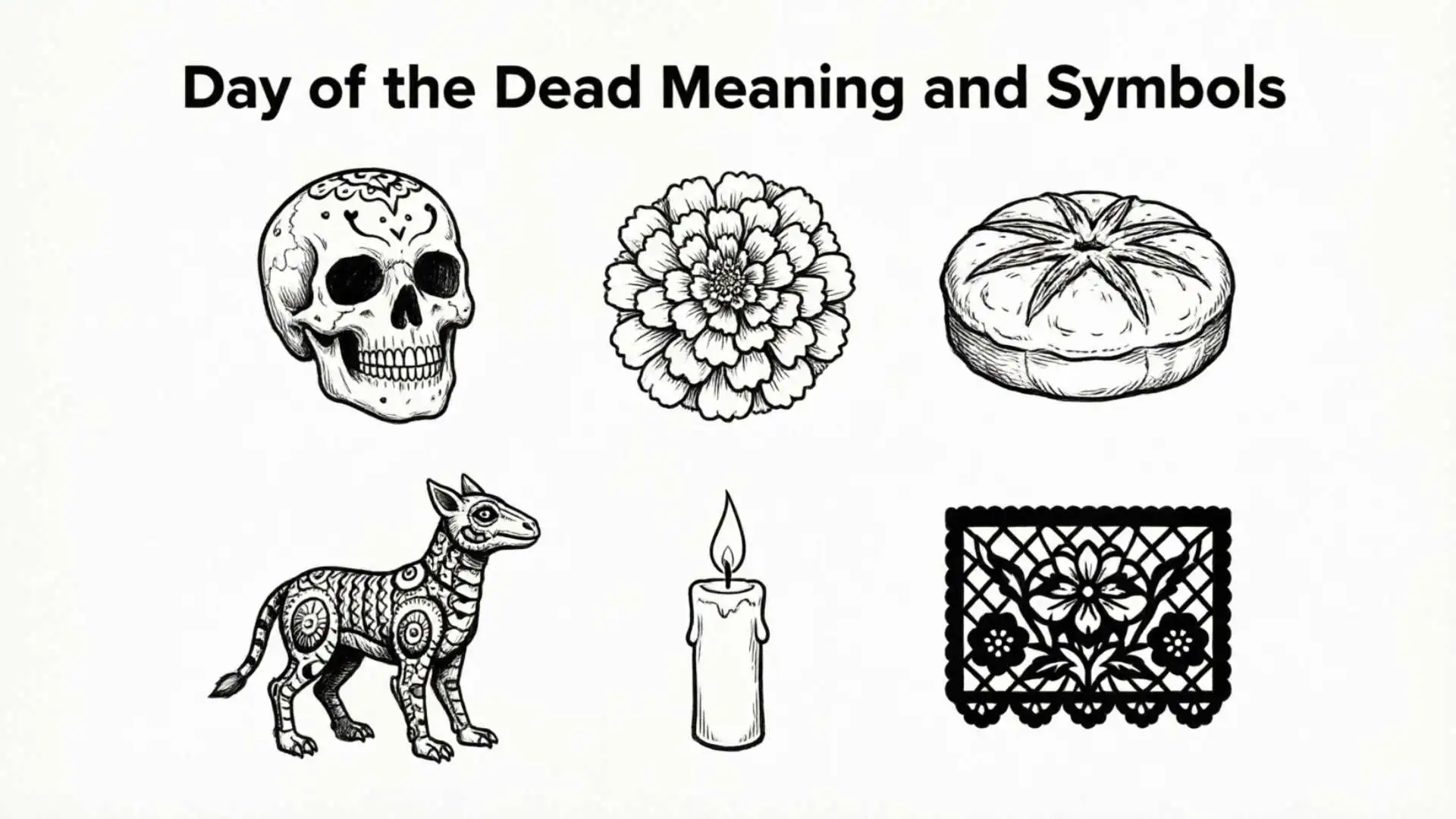
“Day of the Dead meaning and symbols” hold a deep emotional power that goes far beyond what most people see on the surface.
You may have seen colorful skulls, glowing candles, and bright marigolds, but each detail carries a story about love that never dies.
This ancient tradition reminds us that death is not an end, but a continuation of connection. It speaks to something universal inside every human heart, the desire to remember and be remembered.
In this article, you will uncover meanings and symbols that reveal a profound truth about life, loss, and eternal bonds.
What Are Day of the Dead Meaning and Symbols?
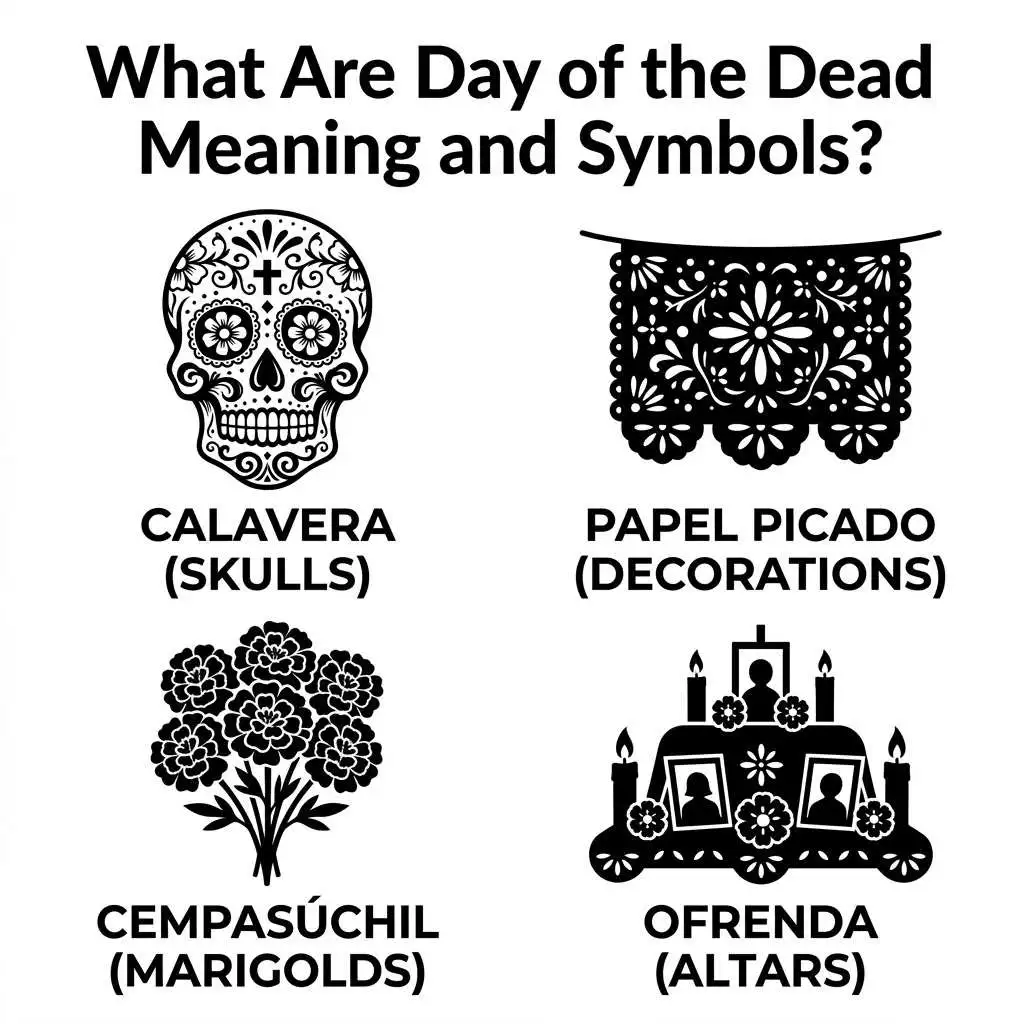
The Day of the Dead, known as Día de los Muertos, is a traditional Mexican celebration that honors deceased loved ones. It is celebrated on November 1 and 2, blending indigenous Aztec beliefs with Spanish Catholic influences. Unlike mourning rituals in many cultures, this day is filled with color, joy, and celebration.
At its core, the Day of the Dead meaning and symbols represent the idea that death is a natural part of life. The living and the dead reconnect during this time through memories, offerings, and rituals. Families create altars called ofrendas, decorate graves, and prepare favorite foods of those who have passed.
People also search for related ideas like:
- Why is Day of the Dead celebrated
- What do skulls symbolize in Day of the Dead
- Meaning of marigolds in Día de los Muertos
- Day of the Dead traditions and significance
All of these questions point to one central idea, this tradition is about love that continues beyond death.
Deep Symbolic Meaning
Spiritual Meaning
Spiritually, the Day of the Dead symbolizes the thin veil between the living and the dead. It is believed that during this time, souls return to visit their families. The symbols used are not decorations, they are invitations guiding spirits back home.
Psychological Meaning
On a psychological level, these symbols help people cope with grief. Instead of suppressing sadness, the tradition transforms it into celebration. It teaches acceptance, healing, and emotional resilience.
Cultural Meaning
Culturally, the Day of the Dead reflects a unique perspective on death. Instead of fear, there is familiarity. Instead of darkness, there is color. It celebrates identity, ancestry, and the importance of remembering where you come from.
Types and Variations of Day of the Dead Symbols
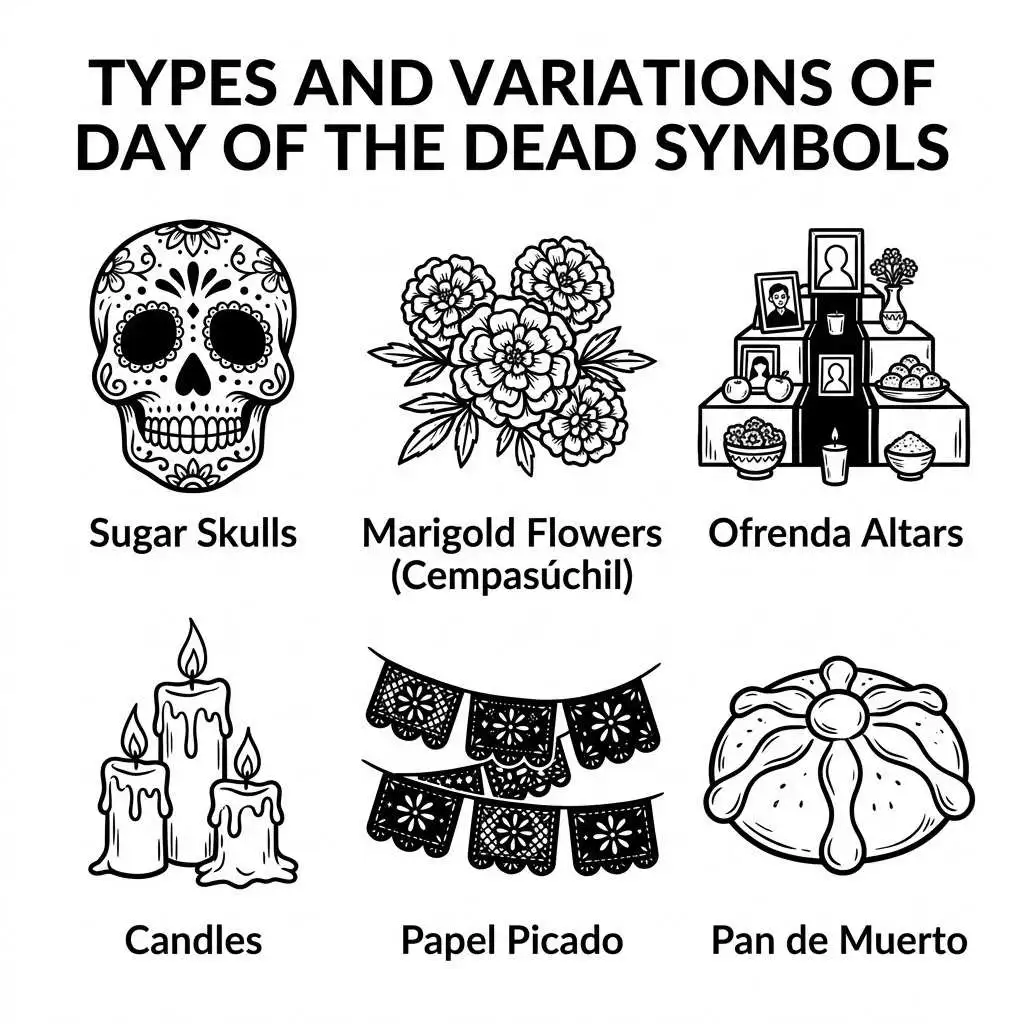
Sugar Skulls
Visual Description: Brightly decorated skulls made of sugar or clay
Meaning: They represent the souls of the departed and the sweetness of life
Where It Appears: Altars, gifts, face paint, art
Sugar skulls are perhaps the most iconic symbol. They remind us that death is not bitter, but part of life’s natural cycle.
Marigold Flowers
Visual Description: Bright orange and yellow flowers with strong fragrance
Meaning: They guide spirits with their scent and vibrant color
Where It Appears: Altars, graves, pathways
Known as the flower of the dead, marigolds create a bridge between worlds.
Ofrenda Altars
Visual Description: Multi-layered altars with photos, candles, food, and objects
Meaning: A sacred space to welcome spirits back
Where It Appears: Homes, cemeteries
Each altar tells a personal story, filled with love, memory, and intention.
Candles
Visual Description: Soft glowing lights placed on altars and graves
Meaning: They guide souls back home and represent hope
Where It Appears: Everywhere during the celebration
The light symbolizes presence, even in absence.
Papel Picado
Visual Description: Colorful paper banners with intricate cut designs
Meaning: Represents the fragility of life and the presence of wind and spirit
Where It Appears: Decorations across streets and homes
These delicate papers remind us how temporary yet beautiful life is.
Pan de Muerto
Visual Description: Sweet bread shaped with bone-like patterns
Meaning: Represents nourishment for the returning souls
Where It Appears: Altars and family meals
Food plays a key role, symbolizing care and connection.
Day of the Dead Across Cultures
Aztec Civilization
The origins trace back to ancient Aztec rituals honoring the goddess of death. Death was seen as a continuation, not an ending.
Spanish Influence
With colonization, Catholic elements like All Saints Day merged with indigenous traditions, creating the modern celebration.
Modern Mexico
Today, it is a national celebration filled with parades, art, and family gatherings. It preserves cultural identity and heritage.
United States
In the US, especially in places like California and Texas, the tradition has been embraced and adapted, blending cultures while keeping its essence.
Global Interpretation
Across the world, similar traditions exist. From ancestor worship in Asia to remembrance days in Europe, the idea of honoring the dead is universal.
Day of the Dead in Art, Movies and Pop Culture
The beauty of Day of the Dead meaning and symbols has inspired countless creative expressions.
In movies, animated films have brought the tradition to global audiences, showing its emotional depth and cultural richness. These stories often focus on memory, family, and legacy.
In art, the iconic skull imagery appears in paintings and murals, often blending life and death in surreal ways.
In tattoos, sugar skull designs symbolize remembrance, strength, and individuality.
In fashion, vibrant patterns and skull motifs have influenced global trends, representing boldness and cultural appreciation.
In books, authors explore themes of memory, loss, and spiritual connection through this lens.
Each representation carries the same message, death is not an end, it is a continuation of love.
Spiritual and Dream Meaning
Seeing Day of the Dead symbols in dreams or meditation can carry deep messages.
- Skulls in dreams may symbolize transformation or acceptance of change
- Marigolds may represent guidance or a connection with ancestors
- Candles may indicate hope, clarity, or spiritual presence
Spiritually, these symbols often appear during times of emotional reflection. They can signal healing, closure, or a reminder to honor your roots.
Positive vs Negative Meaning
Positive Meaning
- Celebration of life
- Connection with loved ones
- Emotional healing
- Acceptance of mortality
Negative Meaning
- Fear of death
- Misinterpretation as dark or morbid
- Cultural misunderstanding
The truth lies in balance. What seems dark on the surface often holds deep beauty beneath.
Why Humans Are Attracted to This Symbol
Humans are naturally drawn to the Day of the Dead meaning and symbols because they address one of our deepest fears, death.
But instead of fear, these symbols offer comfort.
They tell us:
- You are not forgotten
- Love does not end
- Memory keeps people alive
Psychologically, this creates a sense of peace. Emotionally, it builds connection. Spiritually, it offers hope.
People are not attracted to death itself, they are drawn to the idea that something continues beyond it.
FAQs
What is the main meaning of Day of the Dead?
It represents honoring and remembering loved ones who have passed, celebrating their lives rather than mourning their absence.
Why are skulls used in Day of the Dead?
Skulls symbolize death as a natural part of life and often represent the personality of the deceased.
What do marigolds symbolize?
Marigolds guide spirits back to the living world with their color and scent.
Is Day of the Dead scary?
No, it is a joyful and meaningful celebration focused on love, memory, and connection.
Can anyone celebrate Day of the Dead?
Yes, but it should be done with respect and understanding of its cultural roots.
Conclusion
Day of the Dead meaning and symbols reveal something deeply human, our desire to stay connected beyond time. They transform grief into beauty and loss into remembrance.
In every candle, flower and skull, there is a quiet message that love never fades. When you truly understand these symbols, you begin to see death not as an end, but as a continuation of the story. And that changes everything.

Julian Shaw
I’ve always been fascinated by the small, quiet stories that make life feel magical. Writing allows me to explore worlds that exist just beyond the everyday, where imagination meets reality. Over the years, I’ve found joy in creating characters that feel real and stories that stay with readers long after the last page. When I’m not writing, you can usually find me wandering through city streets, notebook in hand, capturing little sparks of inspiration. I believe every story has the power to connect us, to make us feel a little less alone. Sharing these tales is my way of leaving a mark on the world.
Books:
-
Whispers in the Wind
-
Shadows of Tomorrow