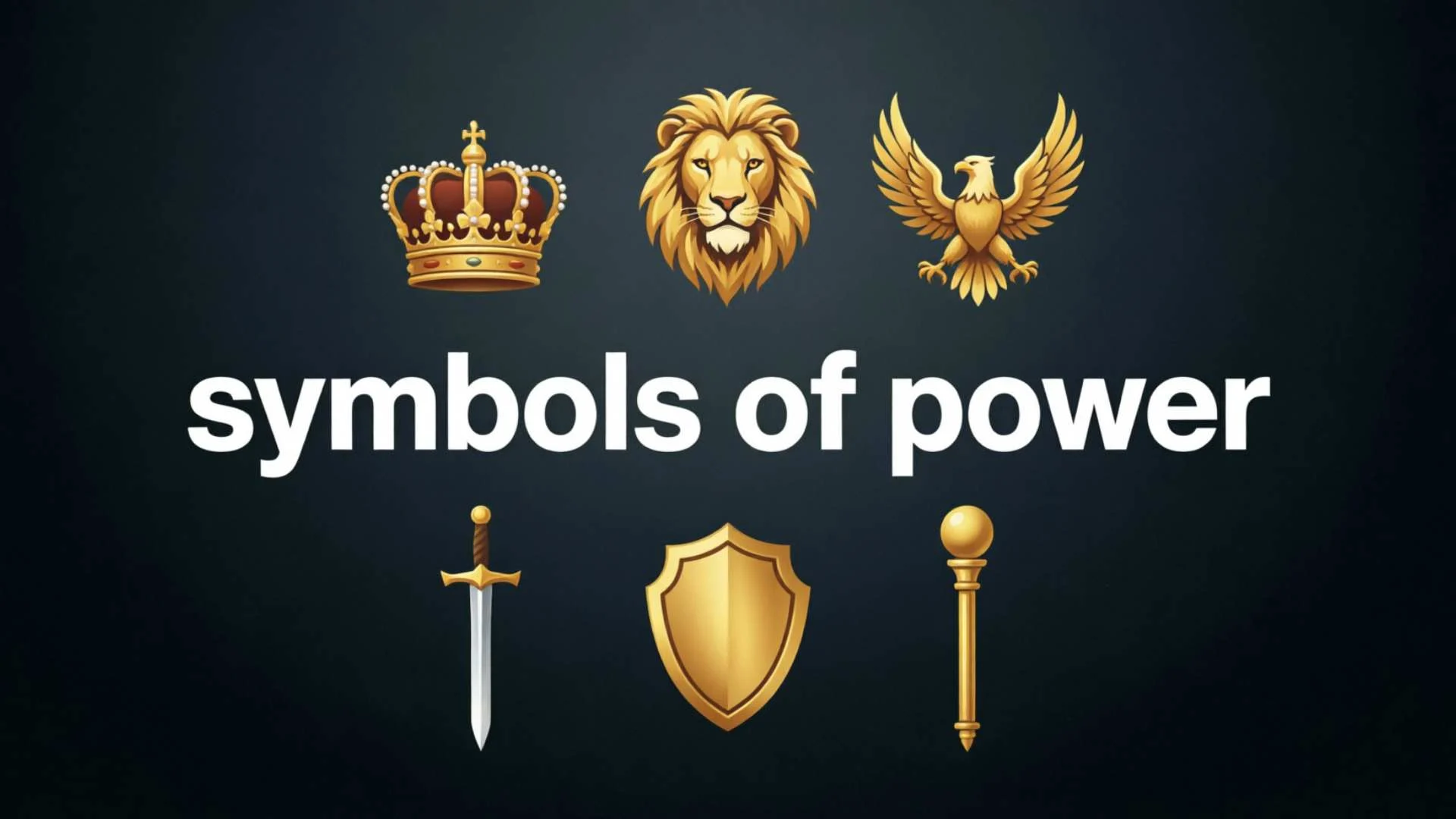
Power has never been just about strength, it has always been about symbols. From ancient empires to modern leaders, humans have relied on visual signs to express authority, control, and influence.
These symbols speak without words, yet they command respect, fear, loyalty, and belief. I’ve always found it fascinating how a simple object — a crown, an animal, a shape—can carry centuries of meaning.
It’s as if these symbols hold an invisible force, quietly shaping how we see leaders, ourselves, and the world.
In this article, you’ll uncover the deeper truth behind symbols of power—their origins, their emotional pull, and the hidden meanings most people never notice.
What Are Symbols of Power?
Symbols of power are visual representations that communicate authority, dominance, influence, or control. They can be objects, animals, gestures, colors, or designs that societies recognize as markers of strength and leadership.
Historically, these symbols date back to the earliest human civilizations. Kings wore crowns, warriors carried weapons, and rulers sat on elevated thrones—not just for function, but to project power visually. Over time, these symbols became deeply embedded in culture, religion, and psychology.
A symbol of power doesn’t need words. It works instantly. When you see it, you feel it.
Deep Symbolic Meaning
Spiritual Level
On a spiritual level, symbols of power often represent divine authority or cosmic balance. They suggest a connection between human leadership and higher forces. For example, many ancient rulers claimed their power came from the heavens, using symbols to reinforce that belief.
These symbols can also represent inner power—the strength of the soul, self-mastery, and enlightenment.
Psychological Level
Psychologically, humans are wired to respond to symbols. A strong symbol can trigger feelings of safety, fear, admiration, or submission. It simplifies complex ideas—like authority—into something instantly recognizable.
Think about how uniforms, logos, or even posture can influence how powerful someone appears. The mind fills in the rest.
Cultural Level
Culturally, symbols of power define hierarchy. They separate leaders from followers, rulers from citizens, and sacred from ordinary. Over time, they become traditions—passed down, respected, and rarely questioned.
Types / Variations of Symbols of Power
1. Crown
- Visual: A jeweled headpiece worn by royalty
- Meaning: Authority, sovereignty, divine right
- Where it appears: Monarchies, ceremonies, mythology
The crown represents ultimate rule. It sits above the head—symbolizing dominance over others.
2. Throne
- Visual: An elevated, ornate chair
- Meaning: Stability, control, rulership
- Where it appears: Palaces, religious texts, fantasy worlds
A throne is not just a seat—it is a statement: this is where power resides.
3. Lion
- Visual: A majestic, powerful animal
- Meaning: Courage, leadership, dominance
- Where it appears: Flags, coats of arms, mythology
The lion is often called the “king of beasts,” making it one of the oldest natural symbols of power.
4. Eagle
- Visual: A soaring bird with wide wings
- Meaning: Vision, freedom, authority
- Where it appears: National emblems, military insignia
The eagle represents power that rises above—seeing what others cannot.
5. Sword
- Visual: A sharp, metallic weapon
- Meaning: Strength, justice, protection
- Where it appears: Warfare, legends, ceremonies
A sword symbolizes both the ability to defend and to destroy.
6. Scepter
- Visual: A decorated staff held by rulers
- Meaning: Control, governance, legitimacy
- Where it appears: Royal regalia, ancient kingdoms
It represents authority that is recognized and accepted.
7. Dragon
- Visual: A mythical, powerful creature
- Meaning: Raw power, wisdom, chaos or protection
- Where it appears: Asian and European mythology
The dragon embodies power that is both feared and revered.
8. Pyramid
- Visual: A triangular structure
- Meaning: Hierarchy, strength, stability
- Where it appears: Ancient Egypt, symbolism in modern design
It represents structured power—built from the base to the top.
Symbols of Power Across Cultures
Ancient Egypt
Power was divine. Pharaohs were seen as gods, and symbols like the crook and flail represented both guidance and control.
Ancient Rome
Power was political and military. Eagles, laurel wreaths, and armor symbolized victory and dominance.
China
Power was balanced with harmony. Dragons symbolized imperial authority, wisdom, and cosmic energy.
Medieval Europe
Power was tied to monarchy and religion. Crowns, crosses, and thrones reinforced both royal and divine authority.
Modern Society
Power is often represented through branding, wealth, and influence—logos, luxury items, and digital presence have become new-age symbols.
Symbols of Power in Art, Movies & Pop Culture
Symbols of power are everywhere in storytelling and media.
- Movies: Thrones, rings, and weapons often represent who holds control
- Paintings: Kings and leaders are depicted with crowns, armor, or elevated positions
- Books: Power symbols often define the hero or villain
- Tattoos: Lions, crowns, and swords are popular for expressing personal strength
- Fashion: Luxury brands use subtle symbols to signal status and influence
These symbols help audiences instantly understand who is powerful—and why.
Spiritual & Dream Meaning of Symbols of Power
When symbols of power appear in dreams or meditation, they often reflect your inner state.
- Seeing a crown may suggest a desire for recognition or leadership
- Holding a sword could indicate strength or conflict
- Encountering a lion may represent courage—or a challenge you must face
Spiritually, these symbols are not just external—they are mirrors of your inner power.
Positive vs Negative Meaning
Symbols of power are not always positive.
Positive Side
- Leadership
- Protection
- Confidence
- Achievement
Negative Side
- Control
- Oppression
- Ego
- Fear
A crown can symbolize a wise ruler—or a tyrant. A sword can protect—or destroy. The meaning depends on how the power is used.
Why Humans Are Attracted to Symbols of Power
Humans are naturally drawn to power—it represents survival, control, and security.
From a psychological perspective:
- We seek symbols that make us feel strong
- We admire symbols that represent success
- We fear symbols that signal dominance
On a deeper level, these symbols reflect something inside us—a desire to rise, to lead, to matter.
It’s not just about ruling others. It’s about mastering ourselves.
FAQs About Symbols of Power
1. What is the most powerful symbol in history?
There is no single answer, but crowns, lions, and eagles are among the most universally recognized symbols of power.
2. Are symbols of power still relevant today?
Yes. They’ve evolved into modern forms like logos, brands, and social status indicators.
3. Can symbols of power influence behavior?
Absolutely. They can shape how people perceive authority and how they act around it.
4. Why do leaders use symbols?
Symbols create instant recognition and reinforce authority without needing explanation.
5. Are symbols of power always positive?
No. They can represent both empowerment and oppression.
6. Can anyone use symbols of power?
Yes, but their meaning depends on context and perception.
Conclusion
Symbols of power are more than just images, they are silent forces that shape how we see the world. They have guided civilizations, defined leaders, and influenced human behavior for thousands of years.
But the most important realization is this: the true power of these symbols doesn’t lie in crowns, swords, or thrones. It lies in how we interpret them. Because in the end, the strongest symbol of power is not something you wear or hold, it’s something you become.
Nora Bennett
Nora Bennett is a storyteller at heart, always finding magic in the everyday moments of life. From a young age, she discovered the joy of weaving emotions into words, creating characters that feel like old friends. Writing, for her, is both an adventure and a sanctuary—a way to explore the world and herself. She loves connecting with readers who share her passion for heartfelt stories and unforgettable journeys. When she’s not crafting her next tale, Nora enjoys quiet mornings with a cup of coffee and a notebook full of ideas. Her stories are meant to inspire, comfort, and spark imagination in everyone who reads them.
Books:
-
Whispers of Yesterday
-
Echoes of Tomorrow