
Close your eyes and imagine a world without light switches, smartphones, or even a simple fan humming in the background.
Every modern comfort we rely on is born from an invisible force, electricity and the quiet, powerful language that controls it: circuit symbols.
These tiny drawings may look simple, almost childlike, yet they hold the blueprint of entire civilizations. They are the silent storytellers behind innovation, bridging human imagination and raw energy.
What if I told you these symbols are more than just technical marks, they are a reflection of how humans understand, organize, and control chaos itself?
What is Circuit Symbols?
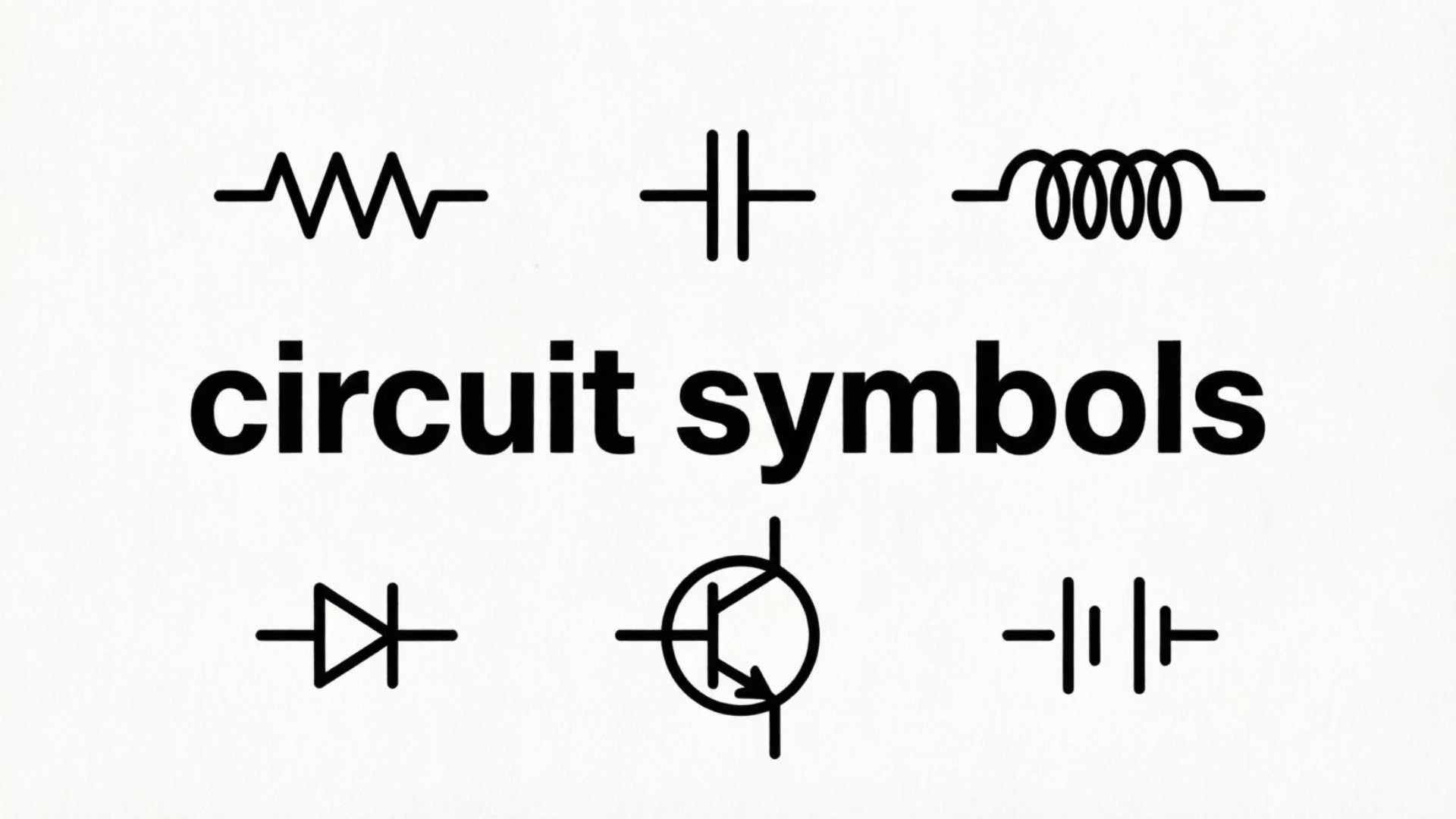
Circuit symbols are standardized graphical representations used to depict electrical and electronic components in a circuit diagram. Instead of drawing complex physical devices, engineers and students use these symbols to simplify and communicate how electricity flows through a system.
Historically, as electricity began to transform the world in the 19th century, scientists needed a universal visual language. Just as written alphabets allowed ideas to travel across borders, circuit symbols allowed electrical knowledge to spread globally. Organizations like the International Electrotechnical Commission (IEC) and IEEE later standardized these symbols, making them universally understood.
At their core, circuit symbols are not just drawings—they are abstractions of reality, turning physical components into recognizable ideas.
Deep Symbolic Meaning
Spiritual Level
On a deeper level, circuit symbols represent connection and flow. Electricity moves like life energy—entering, transforming, and exiting. A simple closed circuit mirrors the idea of wholeness found in many spiritual traditions: energy must flow freely for balance to exist.
Psychological Level
Psychologically, circuit symbols appeal to our desire for order and clarity. They reduce complexity into simple shapes, giving us control over something invisible. This mirrors how the human mind processes chaos—by breaking it into understandable patterns.
Cultural Level
Culturally, circuit symbols symbolize progress and intelligence. They are associated with innovation, problem-solving, and the human ability to harness nature. In modern society, they often represent technology, intelligence, and futuristic thinking.
Types / Variations of Circuit Symbols
1. Resistor
- Visual: A zigzag line
- Meaning: Resistance or limitation of electrical flow
- Where it appears: Electronics, engineering diagrams, educational materials
2. Capacitor
- Visual: Two parallel lines
- Meaning: Storage of electrical energy
- Where it appears: Power systems, audio devices, energy storage concepts
3. Battery
- Visual: Long and short parallel lines
- Meaning: Source of power or life energy
- Where it appears: Everyday devices, symbolic representations of energy
4. Switch
- Visual: A break in a line with a movable lever
- Meaning: Control, decision, choice
- Where it appears: Household circuits, symbolic metaphors for decision-making
5. Diode
- Visual: Triangle pointing to a line
- Meaning: One-way flow
- Where it appears: Electronics, symbolic ideas of direction and restriction
6. Transistor
- Visual: Complex three-terminal symbol
- Meaning: Amplification and control
- Where it appears: Modern electronics, computing systems
7. Ground
- Visual: Three descending lines
- Meaning: Stability, safety, return path
- Where it appears: All electrical systems, symbolic grounding concepts
Circuit Symbols Across Cultures
Western Scientific Culture
In Western societies, circuit symbols represent logic, precision, and innovation. They are deeply tied to industrial progress and technological dominance.
Japanese Culture
Japan’s technological evolution has made circuit symbolism part of its cultural identity. These symbols reflect efficiency, minimalism, and harmony with systems.
Indian Context
In regions like Pakistan and India, circuit symbols are often associated with education and upward mobility, representing access to knowledge and modern careers.
Ancient Analogies
Though ancient cultures didn’t have electricity, they used symbols to represent flow and energy, like water channels or spiritual energy pathways, which conceptually resemble circuits.
Modern Global Culture
Today, circuit symbols are universal. They transcend language barriers and are understood worldwide, making them a global symbolic language of intelligence.
Circuit Symbols in Art, Movies & Pop Culture
Circuit symbols have quietly entered creative expression:
- Movies: Sci-fi films use glowing circuit patterns to represent advanced intelligence or artificial life.
- Art: Contemporary artists incorporate circuit diagrams to symbolize the fusion of human and machine.
- Books: Often used metaphorically to describe systems of thought or emotional connections.
- Tattoos: People ink circuit designs to represent intelligence, connectivity, or their relationship with technology.
- Fashion: Circuit patterns appear on clothing to evoke a futuristic, tech-driven identity.
In all these forms, circuit symbols represent the merging of humanity and technology.
Spiritual & Dream Meaning of Circuit Symbols
Seeing circuit symbols in dreams or meditation can be surprisingly meaningful:
- Flow of energy: You may be processing emotional or mental energy
- Need for connection: A reminder to reconnect with people or purpose
- Blocked circuits: Symbolize stress, confusion, or emotional resistance
- Complete circuits: Indicate harmony, balance, and clarity
Spiritually, they suggest that your life is a system—and every part must work together for balance.
Positive vs Negative Meaning
Positive
- Connection and unity
- Intelligence and problem-solving
- Innovation and growth
- Balance and energy flow
Negative
- Over-mechanization of life
- Emotional disconnection
- Feeling like part of a system rather than an individual
- Burnout from constant “flow” without rest
Like electricity itself, circuit symbols can represent both creation and overload.
Why Humans Are Attracted to This Symbol
Humans are naturally drawn to patterns, and circuit symbols offer a perfect blend of simplicity and complexity.
They give us a sense of control over something invisible. They reassure us that even the most chaotic forces can be understood, mapped, and directed.
Emotionally, they resonate because they mirror our own lives:
- We seek connection like circuits
- We store emotions like capacitors
- We resist challenges like resistors
- We make choices like switches
In many ways, we are living circuits.
FAQs
1. What are circuit symbols used for?
Circuit symbols are used to represent electrical components in diagrams, making complex systems easy to understand and communicate.
2. Why are circuit symbols important?
They provide a universal language for engineers, students, and designers, enabling efficient design and troubleshooting.
3. Are circuit symbols the same worldwide?
Mostly yes. International standards ensure consistency, though minor variations may exist.
4. How can I learn circuit symbols easily?
Start with basic components like resistors, batteries, and switches, then gradually move to more complex symbols.
5. Do circuit symbols have meanings beyond engineering?
Yes, they often symbolize connection, energy, control, and modern technological identity.
6. Where are circuit symbols commonly used?
They appear in electronics, education, engineering, and even art and design.
Conclusion
Circuit symbols may seem small and technical, but they carry a profound truth: everything in life is connected. From the electricity powering your home to the emotions flowing through your mind, the same principles apply flow, resistance, balance, and control.
These symbols are more than tools for engineers, they are mirrors of human existence. They remind us that even in a world of invisible forces, there is structure, meaning, and beauty waiting to be understood.
The next time you see a simple zigzag line or a pair of parallel bars, pause for a moment. You’re not just looking at a symbol, you’re witnessing the language that powers the modern world.

Sophia Reed
Hi, I’m Sophia Reed, a storyteller at heart who finds magic in everyday moments. Ever since I could hold a pen, I’ve been weaving tales that explore love, courage, and the unexpected twists of life. Writing allows me to connect with readers on a deeper level, sharing emotions and experiences that resonate across worlds. When I’m not lost in my stories, you can find me wandering through quiet streets, sipping coffee, or dreaming up my next plot twist. I believe every story has the power to inspire, heal, and transport. Through my books, I hope to leave a piece of my imagination with you.
Books:
-
Whispers of the Heart
-
Shadows and Sunlight