
“Engineering symbols” speak silently yet powerfully in every structure you see, every machine you use, and every system that keeps life moving.
They are not just marks on paper, they are the invisible language behind innovation and human progress. From ancient carvings to modern blueprints, these symbols carry meaning, precision, and purpose.
This article will uncover the deeper story behind engineering symbols and reveal why they matter more than most people realize.
What Are Engineering Symbols?
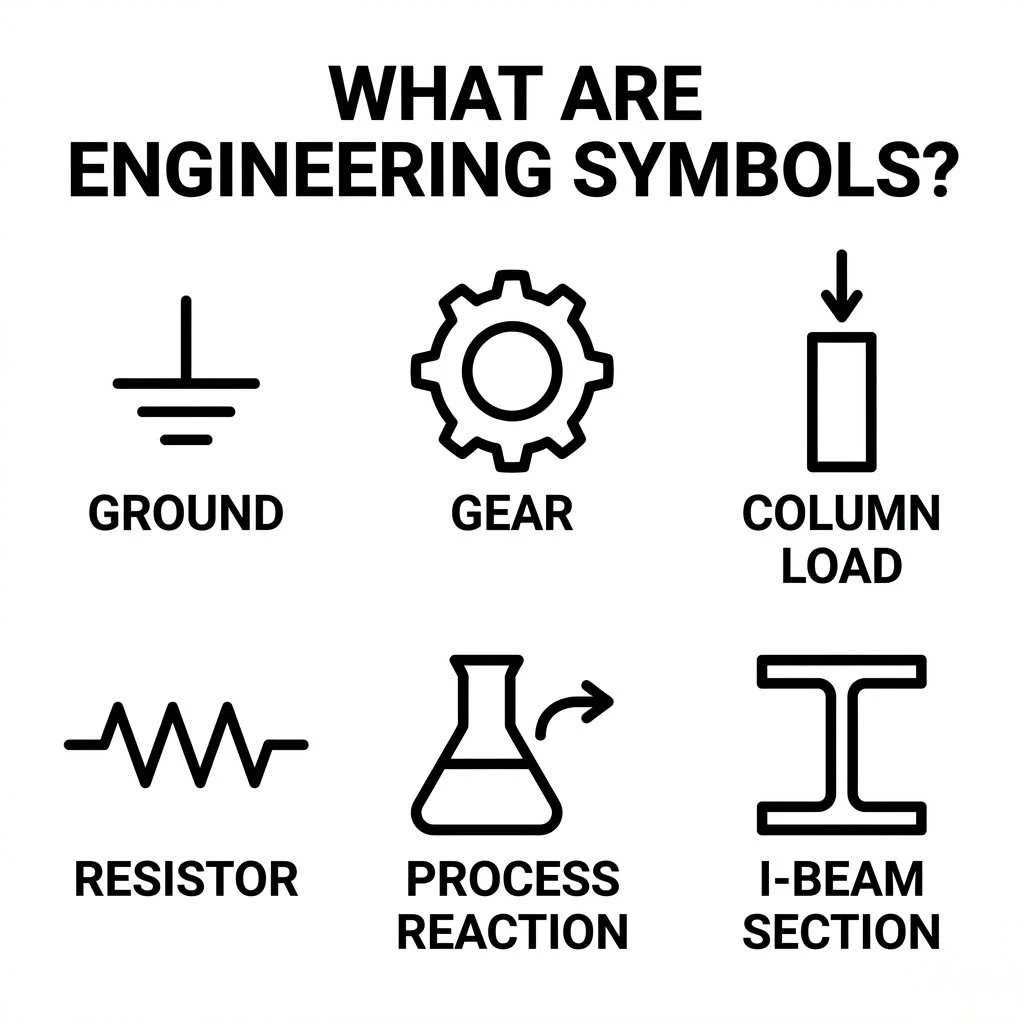
Engineering symbols are standardized visual representations used in technical drawings, diagrams, and schematics to communicate complex information quickly and accurately. Instead of writing long descriptions, engineers rely on these symbols to express ideas with clarity and efficiency.
These symbols date back to early civilizations when builders and craftsmen needed simple ways to represent structures and tools. Over time, as engineering evolved into a precise science, symbols became standardized across disciplines like civil, mechanical, electrical, and chemical engineering.
Today, engineering symbols form a universal language. Whether an engineer works in Pakistan, the United States, or Japan, these symbols ensure that designs are understood without confusion. They eliminate language barriers and reduce errors in construction, manufacturing, and design.
At their core, engineering symbols are about communication, precision, and trust.
Deep Symbolic Meaning
Spiritual Level
On a deeper level, engineering symbols reflect order in chaos. They represent humanity’s desire to create structure, stability, and harmony in the physical world. Just as sacred symbols guide spiritual understanding, engineering symbols guide creation.
A simple circle in engineering can symbolize unity and continuity, while a triangle often represents strength and balance. These shapes echo patterns found in nature and sacred geometry, suggesting a connection between human creation and universal design.
Psychological Level
Psychologically, engineering symbols appeal to our need for clarity and control. They simplify complexity, turning overwhelming systems into understandable visuals.
When you look at a blueprint filled with symbols, your brain recognizes patterns and relationships. This creates a sense of confidence and reduces uncertainty. Engineers rely on this mental clarity to make critical decisions.
These symbols also trigger a sense of trust. When people see organized diagrams, they feel reassured that systems are safe, well-designed, and reliable.
Cultural Level
Culturally, engineering symbols represent progress and innovation. They are associated with technology, intelligence, and the advancement of society.
From skyscrapers to smartphones, these symbols are behind everything that defines modern life. They are not just tools for engineers, they are symbols of human ambition and creativity.
Types and Variations of Engineering Symbols
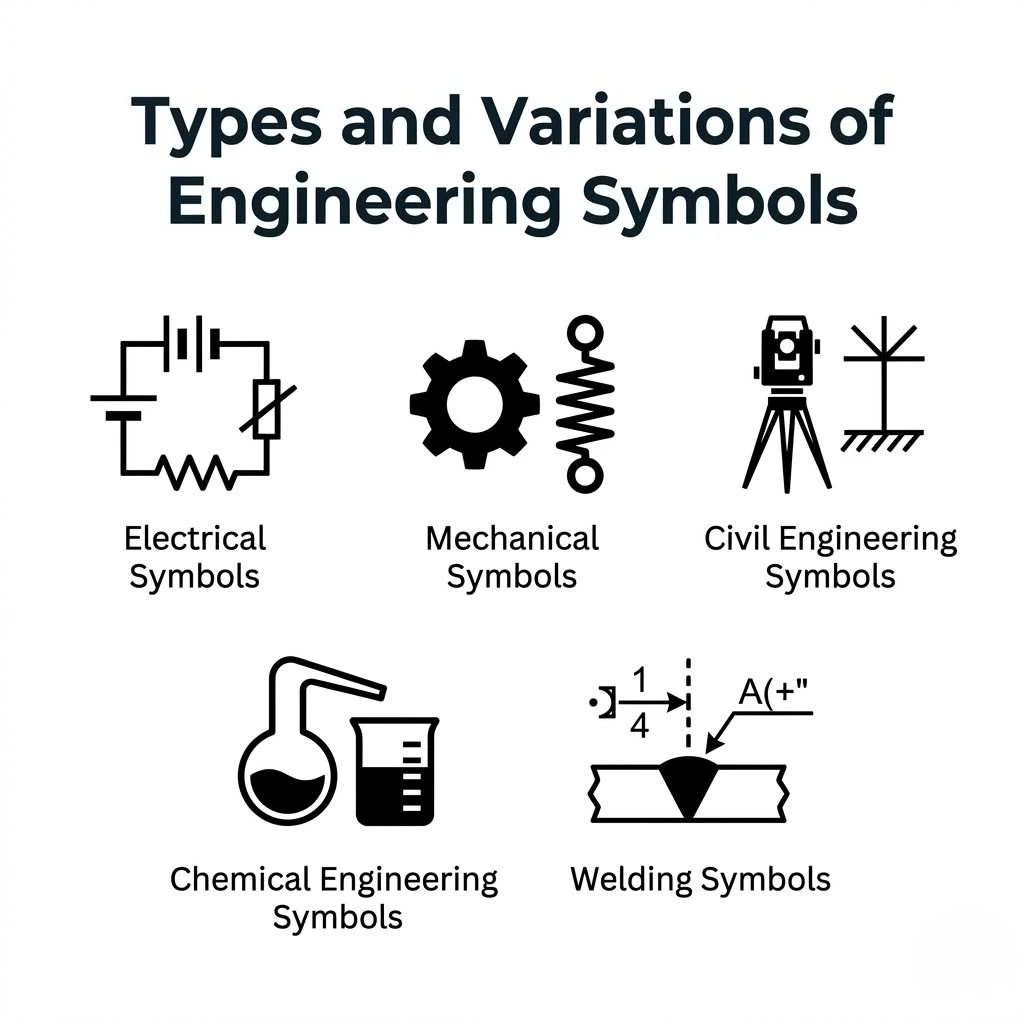
Engineering symbols vary depending on the field, but each carries a specific meaning and purpose.
Electrical Symbols
Visual Description: Simple geometric shapes with lines representing wires and connections
Meaning: Represent electrical components and circuits
Where It Appears: Circuit diagrams, wiring plans, electronic devices
Examples include resistors, capacitors, switches, and batteries. These symbols allow engineers to design complex electrical systems with precision.
Mechanical Symbols
Visual Description: Shapes representing gears, springs, valves, and moving parts
Meaning: Show mechanical functions and interactions
Where It Appears: Machine designs, automotive systems, industrial equipment
These symbols help engineers visualize how machines move and operate.
Civil Engineering Symbols
Visual Description: Lines, patterns, and shapes representing materials and structures
Meaning: Indicate construction elements like walls, roads, and foundations
Where It Appears: Architectural drawings, building plans, infrastructure projects
They ensure that buildings are constructed safely and according to design.
Chemical Engineering Symbols
Visual Description: Icons representing tanks, pipes, valves, and chemical processes
Meaning: Show flow of materials and chemical reactions
Where It Appears: Process flow diagrams, industrial plants
These symbols are essential for understanding complex chemical systems.
Welding Symbols
Visual Description: Arrows, lines, and geometric shapes
Meaning: Specify welding type, size, and location
Where It Appears: Fabrication drawings, manufacturing blueprints
They ensure precision and safety in metalwork.
Engineering Symbols Across Cultures
Ancient Civilizations
Early builders in Egypt and Mesopotamia used symbolic markings to guide construction. These were not standardized but served similar purposes, representing materials and measurements.
Greek and Roman Influence
The Greeks and Romans introduced geometry into engineering. Symbols became more structured, reflecting mathematical precision and architectural beauty.
Medieval Era
During the medieval period, craftsmen used symbols to protect trade secrets. These marks were often hidden within designs, creating a sense of mystery and exclusivity.
Industrial Revolution
The rise of machinery demanded standardized symbols. This era transformed engineering symbols into a universal language, enabling mass production and global collaboration.
Modern Global Standards
Today, organizations like ISO and ANSI define engineering symbols. These standards ensure consistency across industries and countries, making global engineering possible.
Engineering Symbols in Art, Movies and Pop Culture
Engineering symbols have moved beyond technical drawings into everyday culture.
In movies, complex schematics often appear on screens to represent intelligence and innovation. They create a sense of realism and sophistication.
In art, abstract designs inspired by engineering symbols express themes of structure, balance, and technology. Artists use these elements to explore the relationship between humans and machines.
In books, especially science fiction, engineering symbols represent advanced civilizations and futuristic technologies.
Tattoos inspired by gears, circuits, and blueprints symbolize creativity, intelligence, and a passion for building and designing.
In fashion, patterns based on engineering designs reflect a modern, tech-driven identity.
Spiritual and Dream Meaning of Engineering Symbols
Seeing engineering symbols in dreams can carry deep meaning.
If you dream of blueprints, it may indicate that you are planning something important in your life. It reflects a desire for structure and direction.
Dreaming of gears or machinery often symbolizes movement and progress. It suggests that things are working behind the scenes to bring change.
Electrical symbols in dreams may represent energy, connection, or emotional intensity.
Spiritually, these symbols can appear during meditation when a person seeks clarity or control. They act as reminders to organize thoughts and focus on building a stable future.
Positive vs Negative Meaning
Engineering symbols can represent both light and darkness depending on context.
Positive Meaning
They symbolize innovation, intelligence, and progress
They represent clarity, order, and problem-solving
They inspire creativity and human achievement
Negative Meaning
They can represent rigidity and lack of flexibility
They may symbolize over-control or obsession with perfection
In some contexts, they reflect cold, mechanical thinking without emotion
This dual nature makes engineering symbols deeply human. They mirror both our strengths and our limitations.
Why Humans Are Attracted to Engineering Symbols
Humans are naturally drawn to patterns and structure. Engineering symbols tap into this instinct.
They simplify the world. In a complex and chaotic environment, these symbols offer clarity and understanding.
They also represent power. The ability to design and build gives people a sense of control over their environment.
Emotionally, these symbols connect to our desire to create something lasting. Whether it is a building, a machine, or a system, engineering symbols are the foundation of creation.
There is also beauty in their simplicity. Clean lines, balanced shapes, and precise forms create a visual harmony that appeals to the human eye.
FAQs About Engineering Symbols
What are engineering symbols used for?
Engineering symbols are used to represent components, systems, and processes in technical drawings. They simplify communication and ensure accuracy.
Are engineering symbols the same worldwide?
Most engineering symbols follow international standards, but slight variations may exist depending on the region or industry.
Why are engineering symbols important?
They reduce errors, improve understanding, and allow engineers to communicate complex ideas quickly and clearly.
Can non engineers understand engineering symbols?
Basic symbols can be understood with some learning, but advanced symbols require technical knowledge and training.
Where can I learn engineering symbols?
You can learn them through engineering textbooks, online courses, and technical training programs.
Conclusion
Engineering symbols are far more than technical marks. They are the silent language of creation, the blueprint of human imagination, and the bridge between ideas and reality.
Every line, every shape, and every symbol carries meaning. Together, they tell a story of progress, precision, and purpose. They remind us that behind every great invention lies a system of thought, carefully designed and beautifully expressed.
When you look at engineering symbols, you are not just seeing diagrams. You are witnessing the hidden language that builds the world.

Freddie Wood
Hi! I’m Freddie Wood, a storyteller at heart and a lifelong explorer of ideas. Writing has always been my way of making sense of the world, turning ordinary moments into stories that linger in your mind. I love blending emotions with adventure, and I’m fascinated by the way words can connect people across distances and experiences. When I’m not writing, you’ll find me wandering through nature, listening to music, or sketching out ideas for my next story. My goal is always to create books that stay with readers long after the last page.
Books by Freddie Wood:
-
The Hidden Path
-
Shadows of Tomorrow