
“Symbols of Christmas” are not just decorations you hang or lights you admire, they are emotional bridges connecting memory, faith and human longing.
Every ornament, every glow, every color carries a story that whispers through centuries. Beneath the beauty lies a quiet language of hope, sacrifice, love and renewal.
This article opens that hidden world and reveals meanings most people feel but rarely understand.
What Are Symbols of Christmas?
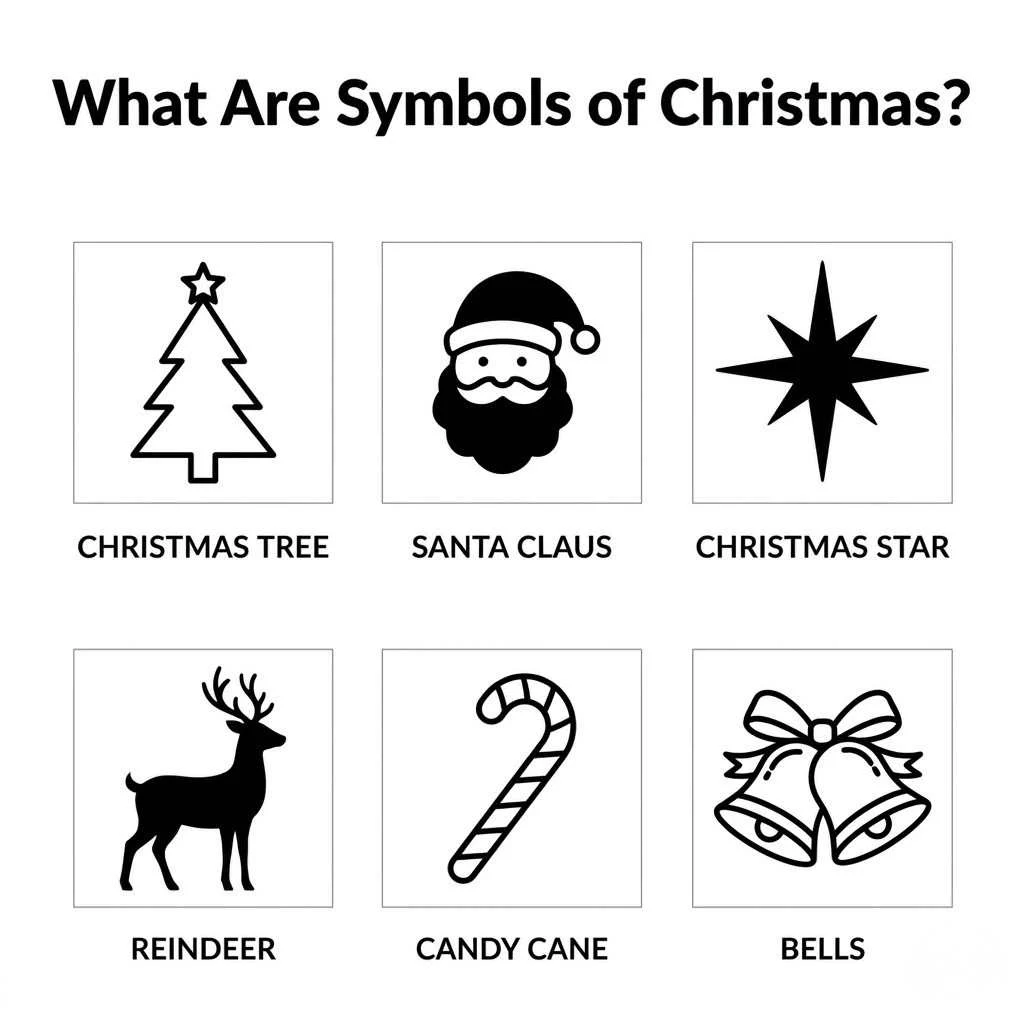
Symbols of Christmas are visual, cultural, and spiritual representations tied to the celebration of Christmas. They include objects like trees, stars, candles, and gifts, each carrying deep-rooted meanings shaped by religion, folklore, and human tradition.
Historically, many of these symbols existed long before Christmas itself. Ancient civilizations celebrated winter solstice with greenery, fire, and light. When Christianity spread, these existing traditions blended with the story of the birth of Jesus Christ, giving rise to the Christmas symbols we know today.
Over time, these symbols evolved into a universal language. Whether someone is religious or not, the symbols of Christmas still evoke warmth, generosity, and togetherness.
Deep Symbolic Meaning
Spiritual Level
At a spiritual level, Christmas symbols represent divine presence and sacred transformation. The star symbolizes guidance from above. The tree reflects eternal life. Light represents the triumph of goodness over darkness. Together, they tell a story of hope entering the world quietly yet powerfully.
Psychological Level
Psychologically, these symbols offer comfort. During the darkest and coldest time of the year, humans instinctively seek warmth and connection. Lights, colors, and rituals create emotional safety. They remind people that even in darkness, something bright survives.
Think about how a simple glowing tree can change your mood instantly. That is not accidental, it is deeply wired into human perception.
Cultural Level
Culturally, symbols of Christmas unite people across different backgrounds. Even in non-Christian societies, these symbols have become part of shared global celebration. They represent generosity, family bonds, and the joy of giving.
Types / Variations of Symbols of Christmas
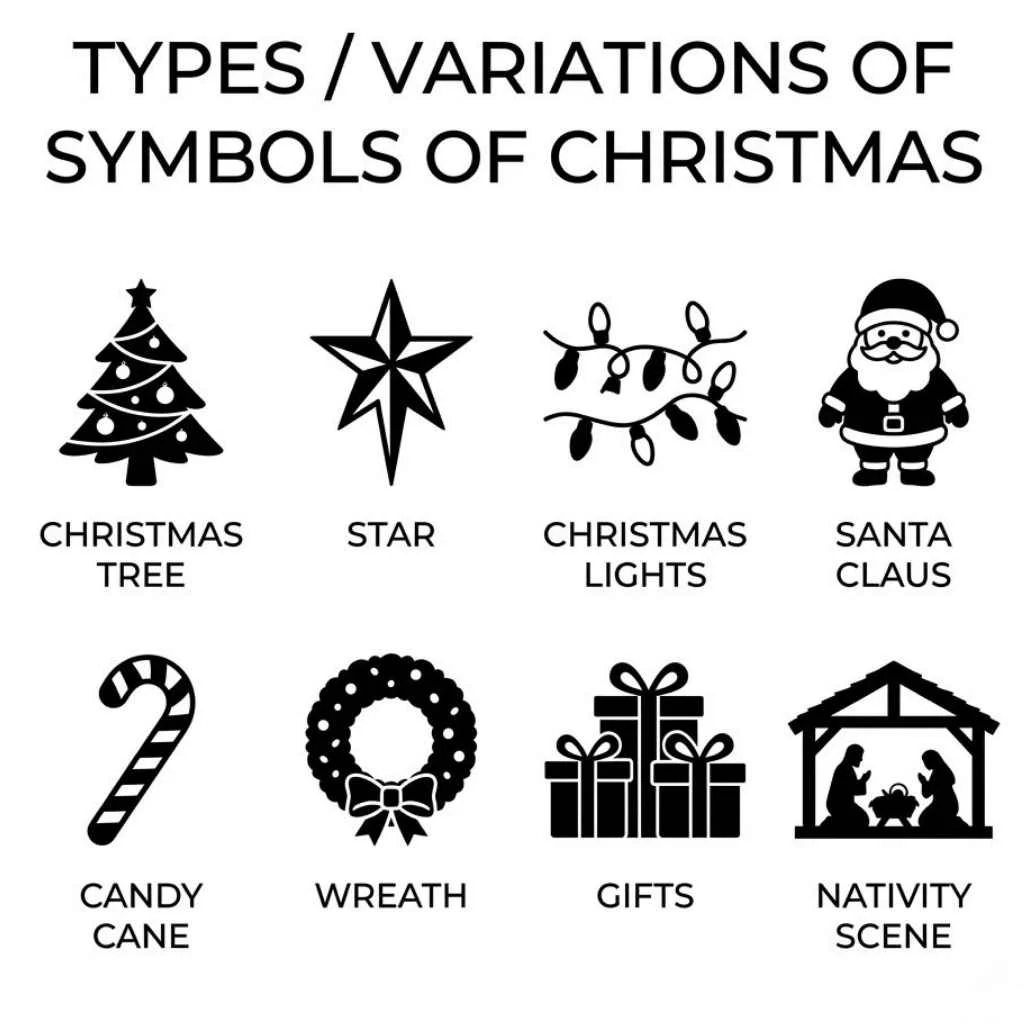
Christmas Tree
Visual Description: An evergreen tree decorated with lights, ornaments, and a star or angel on top.
Meaning: Eternal life, resilience, and hope.
Where It Appears: Homes, public spaces, religious celebrations, and global media.
The evergreen tree stays green even in harsh winter, symbolizing life that never fades.
Star
Visual Description: A shining star placed on top of trees or displayed in lights.
Meaning: Divine guidance, hope, and direction.
Where It Appears: Churches, nativity scenes, decorations.
It represents the Star of Bethlehem, believed to guide wise men to the birthplace of Jesus.
Christmas Lights
Visual Description: Strings of glowing bulbs in various colors.
Meaning: Light overcoming darkness, joy, and celebration.
Where It Appears: Homes, streets, festivals.
Originally, candles were used. Today, lights still carry the same symbolic warmth.
Santa Claus
Visual Description: A cheerful old man in red clothing with a white beard.
Meaning: Generosity, kindness, and magical giving.
Where It Appears: Stories, films, shopping culture, children’s imagination.
Santa reflects the spirit of selfless giving inspired by Saint Nicholas.
Candy Cane
Visual Description: A curved stick candy with red and white stripes.
Meaning: Purity and sacrifice.
Where It Appears: Decorations, gifts, sweets.
Some interpretations suggest the shape resembles a shepherd’s staff, symbolizing care and guidance.
Wreath
Visual Description: A circular arrangement of evergreen branches.
Meaning: Eternity, unity, and the cycle of life.
Where It Appears: Doors, walls, churches.
Its circular form has no beginning or end, representing endless life.
Gifts
Visual Description: Wrapped presents exchanged between people.
Meaning: Love, generosity, and gratitude.
Where It Appears: Homes, gatherings.
Gift giving reflects the biblical story of the wise men offering gifts.
Nativity Scene
Visual Description: A display showing the birth of Jesus with figures of Mary, Joseph, and animals.
Meaning: Humility, divine birth, and faith.
Where It Appears: Churches, homes.
It is the heart of the Christmas story.
Symbols of Christmas Across Cultures
European Traditions
In many parts of Europe, Christmas symbols have strong religious roots. Germany popularized the Christmas tree tradition. Scandinavian countries emphasize light through candles and lanterns to fight long winter darkness.
American Interpretation
In the United States, Christmas symbols blend religion with commercial culture. Santa Claus, gift giving, and festive decorations dominate. The symbols focus heavily on joy, family, and celebration.
Asian Adaptation
In countries like Japan and South Korea, Christmas symbols are more about romance and celebration rather than religion. Lights and decorations are popular, but the meaning shifts toward happiness and social connection.
Middle Eastern Perspective
In regions where Christianity originated, Christmas symbols remain deeply spiritual. Nativity scenes and religious rituals take center stage, emphasizing the birth of Jesus.
African Celebrations
In many African cultures, Christmas symbols combine local traditions with Christian beliefs. Music, dance, and community gatherings become powerful symbolic expressions of joy and unity.
Symbols of Christmas in Art, Movies and Pop Culture
Christmas symbols have become iconic in global storytelling. Films often use snow, lights, and decorated trees to create emotional warmth and nostalgia.
Movies like Home Alone and The Polar Express use these symbols to evoke childhood wonder and belief.
In literature, stories like A Christmas Carol use Christmas symbols to represent transformation, redemption, and moral awakening.
In fashion, Christmas colors like red and green dominate seasonal clothing. Tattoos often feature trees, stars, or angels as symbols of faith and personal meaning.
Art throughout history has depicted nativity scenes and divine light, turning these symbols into timeless masterpieces.
Spiritual and Dream Meaning of Symbols of Christmas
Seeing Christmas symbols in dreams often represents emotional renewal. A glowing tree might symbolize hope returning to your life. A gift could represent unexpected blessings or hidden talents.
Spiritually, these symbols often appear during moments of reflection. They invite you to reconnect with gratitude, kindness, and inner peace.
For many, these symbols are not just external decorations, they are mirrors reflecting inner transformation.
Positive vs Negative Meaning
Positive Meaning
Symbols of Christmas represent love, unity, hope, and generosity. They remind people to care for others and find joy in simple moments.
Negative Meaning
However, these symbols can also carry pressure. Commercialization has turned some symbols into expectations. Gifts may feel like obligation rather than love. Decorations can sometimes mask loneliness.
This dual nature shows how powerful symbols are. They amplify both joy and emptiness depending on human experience.
Why Humans Are Attracted to Symbols of Christmas
Humans are naturally drawn to symbols because they simplify complex emotions. Christmas symbols combine light, color, warmth, and meaning into a single experience.
From a psychological perspective, these symbols activate memory and nostalgia. They remind people of childhood, family, and belonging.
There is also a biological element. Warm lights and colors trigger comfort responses in the brain. During winter, when days are shorter, humans crave visual brightness and emotional connection.
Most importantly, these symbols tell a story. And humans are wired for stories.
FAQs
What are the most important symbols of Christmas?
The most important symbols include the Christmas tree, star, lights, gifts, wreath, and nativity scene. Each represents a different aspect of the holiday’s meaning.
Why is the Christmas tree important?
It symbolizes eternal life and hope. Its evergreen nature reflects resilience even in harsh conditions.
Are Christmas symbols religious or cultural?
They are both. Some symbols have religious origins while others evolved culturally over time.
Why do people decorate during Christmas?
Decoration creates emotional warmth and connection. It helps people celebrate, reflect, and bond with others.
Conclusion
Symbols of Christmas are more than tradition, they are emotional languages written across time. They carry whispers of ancient rituals, echoes of faith, and reflections of human longing. Every light, every ornament, every shared gift tells a story of hope surviving darkness.
When you look at these symbols again, you may not just see decoration. You may see meaning, memory, and something quietly sacred waiting to be felt.

Sophia Reed
Hi, I’m Sophia Reed, a storyteller at heart who finds magic in everyday moments. Ever since I could hold a pen, I’ve been weaving tales that explore love, courage, and the unexpected twists of life. Writing allows me to connect with readers on a deeper level, sharing emotions and experiences that resonate across worlds. When I’m not lost in my stories, you can find me wandering through quiet streets, sipping coffee, or dreaming up my next plot twist. I believe every story has the power to inspire, heal, and transport. Through my books, I hope to leave a piece of my imagination with you.
Books:
-
Whispers of the Heart
-
Shadows and Sunlight