
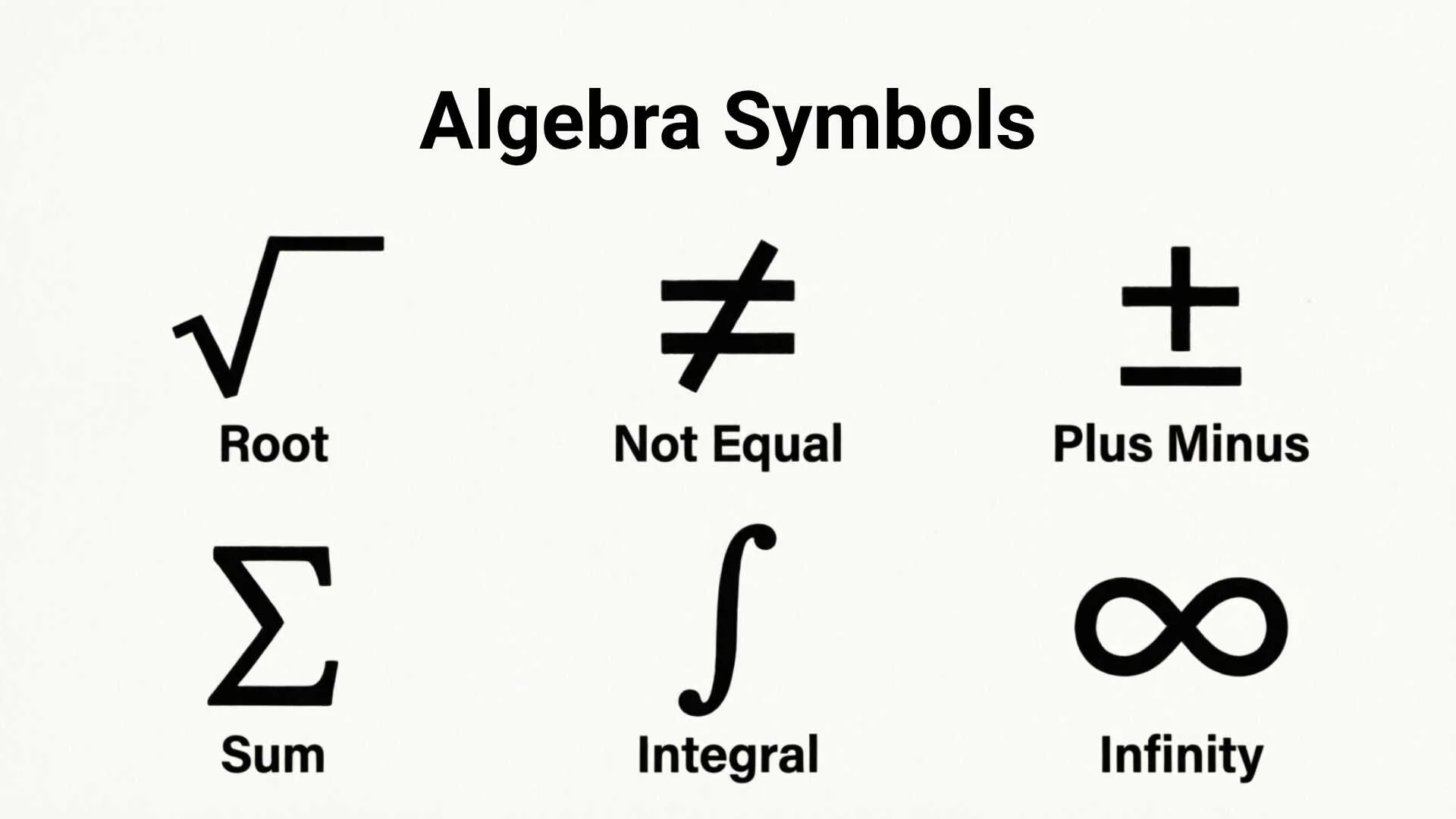
“Algebra symbols” shape the way humans understand patterns, logic and the hidden structure of life itself.
From the simple plus sign to mysterious variables like x and y, these symbols quietly guide science, technology, money and even human thought.
Most people see them only in classrooms, yet their meanings reach far beyond textbooks.
Once you understand the deeper story behind algebra symbols, you begin to see mathematics as a universal language woven into history, culture, and the human mind.
What Are Algebra Symbols?
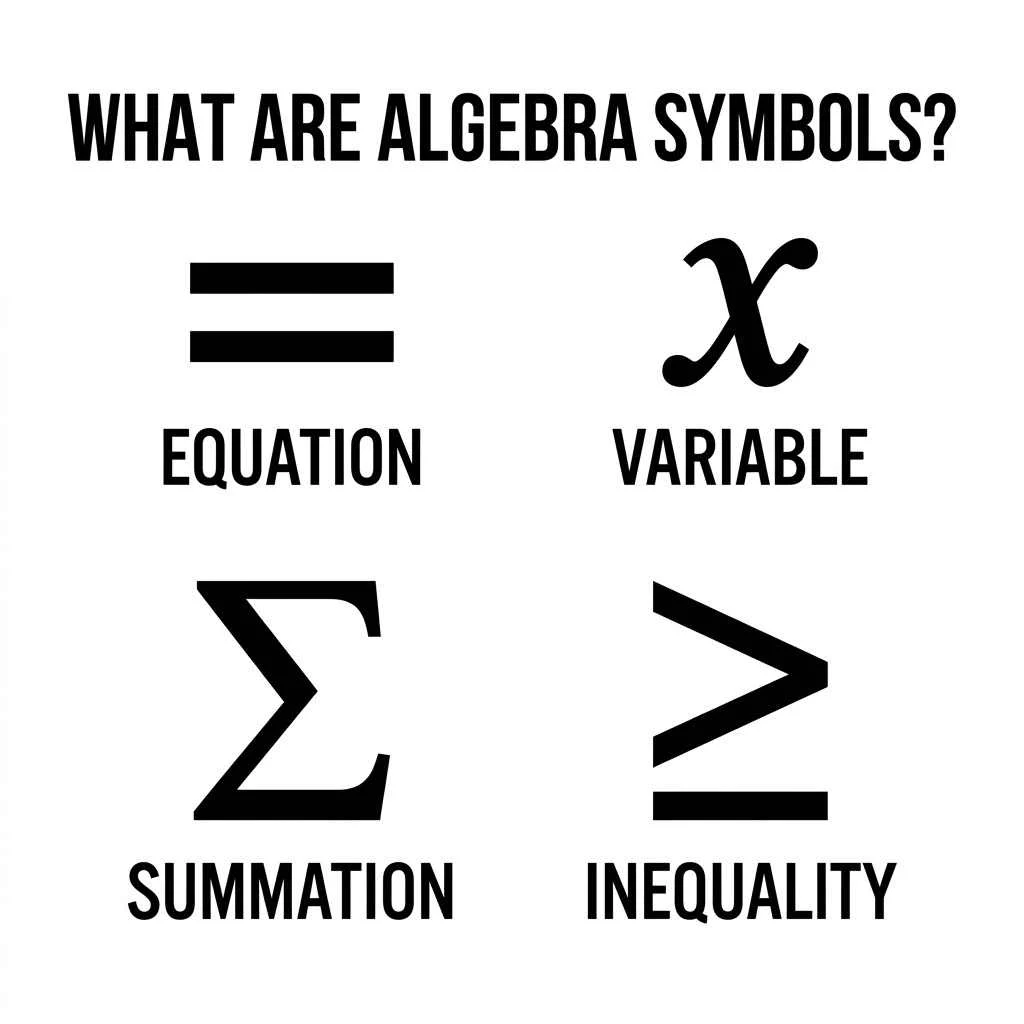
Algebra symbols are special signs, letters, and characters used in mathematics to represent numbers, relationships, operations, and unknown values. They help people solve equations, describe patterns, and communicate complex ideas in a simple visual form.
At the heart of algebra lies the idea that symbols can stand for something unseen. A letter like x may represent an unknown number. A symbol like + represents addition, while = shows equality between two expressions. These symbols allow humans to think abstractly and solve problems that would otherwise feel impossible.
The history of algebra symbols stretches back thousands of years. Ancient Babylonians used early forms of algebra around 1900 BCE. Later, Greek mathematicians expanded symbolic reasoning, while Islamic scholars transformed algebra into a formal discipline. In fact, the word “algebra” comes from the Arabic term “al jabr,” introduced by the Persian mathematician Al Khwarizmi in the 9th century.
Over time, algebra symbols became a bridge between civilizations. They allowed merchants to calculate trade, architects to design monuments, astronomers to map the stars, and scientists to unlock the laws of nature.
The Deep Symbolic Meaning of Algebra Symbols
Algebra symbols may look simple, yet they carry profound meaning on spiritual, psychological, and cultural levels.
Spiritual Meaning
Spiritually, algebra symbols represent order within chaos. Humans have always searched for hidden truths in the universe. Algebra became one way to uncover invisible patterns behind life’s mysteries.
The equal sign symbolizes balance and harmony. Variables symbolize the unknown parts of existence, reminding people that not every answer is immediately visible. Equations mirror the spiritual belief that every action creates a reaction and every imbalance seeks resolution.
For many thinkers, mathematics reflects divine intelligence. Ancient philosophers believed numbers and symbols revealed the sacred architecture of the universe.
Psychological Meaning
Psychologically, algebra symbols train the human brain to think beyond surface appearances. They encourage logic, patience, and creative problem solving.
A child learning algebra often feels frustrated at first. Yet the moment an equation finally makes sense, the brain experiences satisfaction and confidence. This emotional journey mirrors life itself. Humans constantly solve unknowns, search for balance, and attempt to understand hidden meanings.
Symbols like x represent uncertainty, which explains why algebra often feels emotional. People naturally fear the unknown, yet they also feel drawn toward discovering it.
Cultural Meaning
Culturally, algebra symbols symbolize intelligence, education, and progress. They appear in schools, scientific discoveries, engineering projects, and financial systems worldwide.
In many societies, understanding algebra represents discipline and opportunity. Algebra symbols became icons of modern civilization because they helped humans build bridges, launch rockets, create computers, and understand the universe.
Most Important Types of Algebra Symbols
Algebra contains many symbols, each with a unique role and meaning.
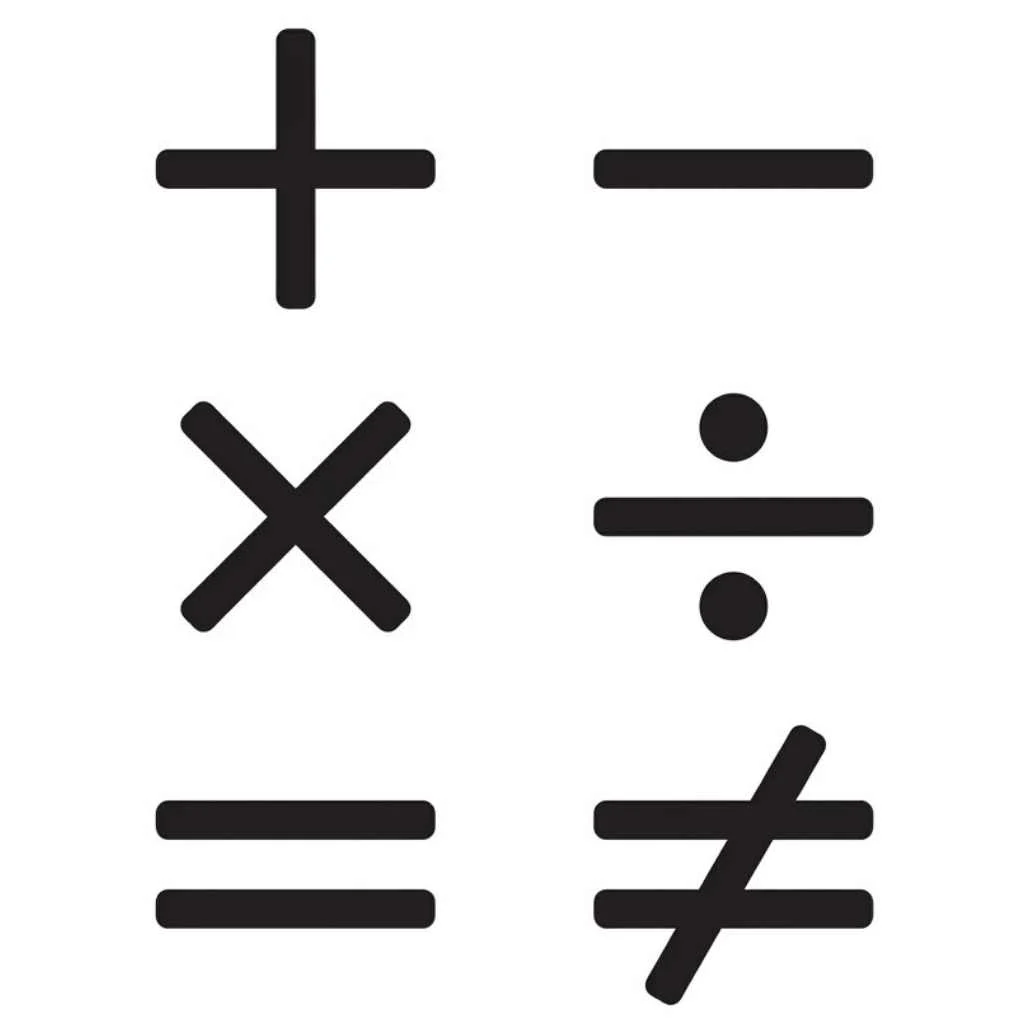
Addition Symbol (+)
Visual Description
A simple cross shaped sign.
Meaning
Represents combining values or increasing quantity.
Where It Appears
Used in mathematics, accounting, science, and even spiritual symbolism where it can represent positivity and unity.
The plus sign emotionally represents growth and connection. People often associate it with optimism because it adds rather than removes.
Subtraction Symbol (−)
Visual Description
A single horizontal line.
Meaning
Represents removal, decrease, or difference.
Where It Appears
Common in finance, equations, statistics, and measurement systems.
This symbol often reflects life’s painful yet necessary process of letting go. In psychological terms, subtraction symbolizes sacrifice and transformation.
Equal Sign (=)
Visual Description
Two parallel horizontal lines.
Meaning
Shows that two sides have the same value.
Where It Appears
Every branch of mathematics and logic.
The equal sign carries deep emotional symbolism because humans constantly seek fairness, justice, and balance in relationships and society.
Multiplication Symbol (×)
Visual Description
An x shaped cross.
Meaning
Represents repeated addition or scaling.
Where It Appears
Mathematics, business calculations, engineering, and science.
Multiplication symbolizes expansion and abundance. It reflects how small actions can grow into larger outcomes.
Division Symbol (÷)
Visual Description
A horizontal line with dots above and below.
Meaning
Represents sharing or splitting into equal parts.
Where It Appears
Education, economics, and scientific calculations.
Emotionally, division can symbolize separation, distribution, or sacrifice.
Variable Symbols (x, y, z)
Visual Description
Letters used instead of fixed numbers.
Meaning
Represent unknown or changing values.
Where It Appears
Equations, scientific formulas, programming, and physics.
Variables are among the most fascinating algebra symbols because they represent mystery itself. They remind humans that not everything in life is certain.
Greater Than and Less Than Symbols (>, <)
Visual Description
Angled signs pointing toward smaller values.
Meaning
Show comparison between quantities.
Where It Appears
Statistics, economics, and logical reasoning.
These symbols reflect competition, ambition, and judgment in human psychology.
Common Algebra Symbols and Their Meanings
| Symbol | Name | Meaning |
| + | Addition | Combines values |
| − | Subtraction | Removes values |
| × | Multiplication | Increases through repeated addition |
| ÷ | Division | Splits into equal parts |
| = | Equal Sign | Shows balance |
| ≠ | Not Equal To | Indicates inequality |
| > | Greater Than | Larger value |
| < | Less Than | Smaller value |
| √ | Square Root | Finds hidden roots |
| π | Pi | Infinite mathematical constant |
Algebra Symbols Across Cultures
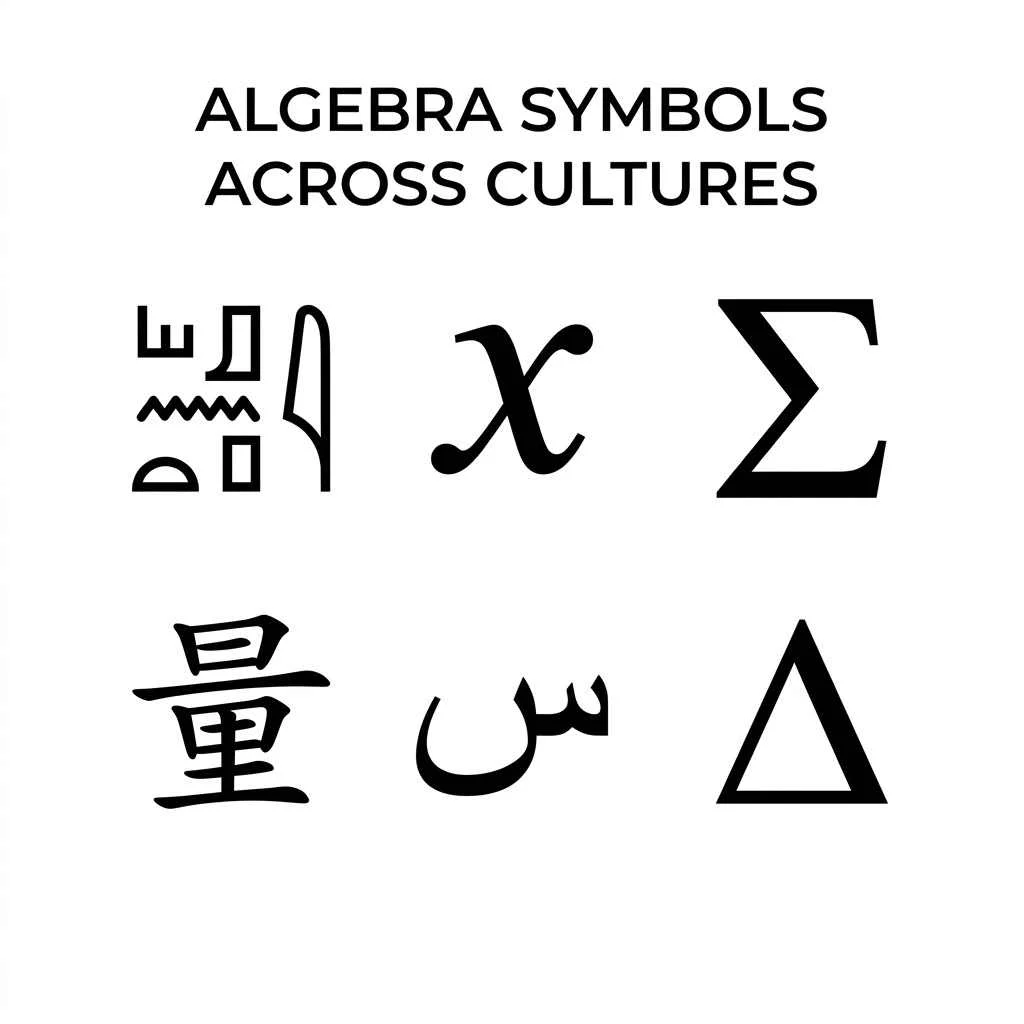
Ancient Babylonian Culture
Babylonians created some of the earliest algebraic systems. They used symbols and number patterns to solve land measurement and trade problems. Their work laid the foundation for future mathematical thinking.
Ancient Greek Culture
Greek philosophers saw mathematics as a pathway to universal truth. Thinkers like Pythagoras believed numbers held mystical and spiritual significance.
For Greeks, algebra symbols represented cosmic harmony and intellectual perfection.
Islamic Golden Age
Islamic scholars transformed algebra into a systematic science. Al Khwarizmi introduced methods that shaped modern equations and symbolic reasoning.
In Islamic civilization, algebra symbols represented wisdom, balance, and the pursuit of knowledge.
Medieval European Culture
During the medieval period, European mathematicians adopted Arabic algebraic ideas. Symbols slowly replaced long written explanations, making mathematics faster and more universal.
This period turned algebra into a practical tool for commerce, astronomy, and engineering.
Modern Global Culture
Today, algebra symbols form a universal language understood across nations. A student in Pakistan, Japan, Brazil, or America can recognize the same mathematical symbols.
This global consistency shows how algebra transcends language, religion, and geography.
Algebra Symbols in Art, Movies and Pop Culture
Algebra symbols appear far beyond classrooms.
In Movies
Films often use algebra equations to symbolize intelligence or genius. Characters solving equations are portrayed as deep thinkers searching for hidden truths.
Movies about scientists, hackers, or prodigies frequently display algebra symbols on walls, screens, or notebooks to create a sense of mystery and brilliance.
In Paintings and Modern Art
Many modern artists use mathematical symbols to explore chaos, order, and infinity. Abstract art sometimes includes equations to represent humanity’s attempt to understand reality.
In Books
Algebra symbols often symbolize puzzles, hidden knowledge, or intellectual growth in literature. Mystery novels and science fiction stories frequently use equations as clues.
In Tattoos
Some people tattoo algebra symbols as personal reminders of balance, growth, or overcoming challenges. The infinity related symbols and equal signs are especially popular.
In Fashion
Fashion brands sometimes use mathematical symbols to create futuristic or intellectual aesthetics. Minimalist designs featuring equations can represent creativity and innovation.
Spiritual and Dream Meaning of Algebra Symbols
Dreaming about algebra symbols often reflects unresolved questions or mental challenges.
Dreaming of Variables
Seeing x or unknown numbers in dreams may symbolize uncertainty in life. The dreamer could be searching for answers about relationships, career, or identity.
Dreaming of the Equal Sign
This often represents a desire for balance, peace, or fairness. It may appear during emotionally stressful periods when life feels unstable.
Dreaming of Complex Equations
Complex equations in dreams can symbolize mental pressure or the feeling that life has become difficult to understand.
Spiritually, many people interpret algebra symbols as signs that the universe follows hidden laws and patterns beyond ordinary perception.
Positive vs Negative Meaning of Algebra Symbols
Like many symbols, algebra symbols can represent both light and darkness depending on context.
Positive Meanings
- Intelligence and wisdom
- Balance and fairness
- Progress and innovation
- Discovery and curiosity
- Order within chaos
Negative Meanings
- Confusion and anxiety
- Fear of failure
- Emotional pressure from academics
- Obsession with perfection
- Feeling controlled by systems or rules
For some people, algebra symbols inspire excitement and confidence. For others, they trigger memories of stress and self doubt. This emotional contrast makes them psychologically powerful.
Why Humans Are Attracted to Algebra Symbols
Humans naturally search for patterns. The brain feels comfort when chaos becomes understandable, which explains why algebra symbols fascinate people across cultures and generations.
A simple equation can create the emotional satisfaction of solving a mystery. Even children experience pride when they discover the value of x for the first time.
Algebra symbols also attract people because they represent possibility. Variables symbolize unanswered questions, and humans are emotionally wired to chase answers.
There is also beauty in their simplicity. A few small marks on paper can describe planets, machines, money, architecture, and technology. That ability feels almost magical.
In many ways, algebra symbols mirror life itself. Humans constantly face unknown variables, search for balance, and try to solve problems that seem impossible at first.
The Role of Algebra Symbols in Modern Life
Most people use algebra symbols every day without realizing it.
They appear in:
- Mobile phone technology
- Banking systems
- Computer programming
- Artificial intelligence
- Engineering and architecture
- Medical research
- Space exploration
Without algebra symbols, modern civilization would struggle to function. They quietly power the digital world behind screens, apps, and machines.
FAQs About Algebra Symbols
What are the most common algebra symbols?
The most common algebra symbols include +, −, ×, ÷, =, x, y, >, and <. These symbols help represent operations, comparisons, and unknown values.
Why are letters used in algebra?
Letters represent unknown or changing numbers. This allows mathematicians to create general formulas and solve problems involving uncertainty.
Who invented algebra symbols?
Algebra developed gradually across many civilizations, including Babylonian, Greek, Indian, and Islamic cultures. Islamic mathematician Al Khwarizmi played a major role in shaping modern algebra.
What does x mean in algebra?
The symbol x usually represents an unknown variable that must be solved within an equation.
Why do algebra symbols feel confusing?
Many people struggle because algebra requires abstract thinking. Unlike simple arithmetic, algebra asks the brain to imagine hidden values and relationships.
Conclusion
Algebra symbols are far more than marks on a classroom page. They represent humanity’s endless desire to understand the unknown, create balance, and uncover hidden patterns in life. Across ancient civilizations and modern technology, these symbols have guided discovery, imagination, and progress.
They connect logic with emotion, mystery with clarity, and chaos with order. Once you truly understand algebra symbols, you begin to see them not just as mathematical tools, but as quiet reflections of the human journey itself.

Sophia Reed
Hi, I’m Sophia Reed, a storyteller at heart who finds magic in everyday moments. Ever since I could hold a pen, I’ve been weaving tales that explore love, courage, and the unexpected twists of life. Writing allows me to connect with readers on a deeper level, sharing emotions and experiences that resonate across worlds. When I’m not lost in my stories, you can find me wandering through quiet streets, sipping coffee, or dreaming up my next plot twist. I believe every story has the power to inspire, heal, and transport. Through my books, I hope to leave a piece of my imagination with you.
Books:
-
Whispers of the Heart
-
Shadows and Sunlight