
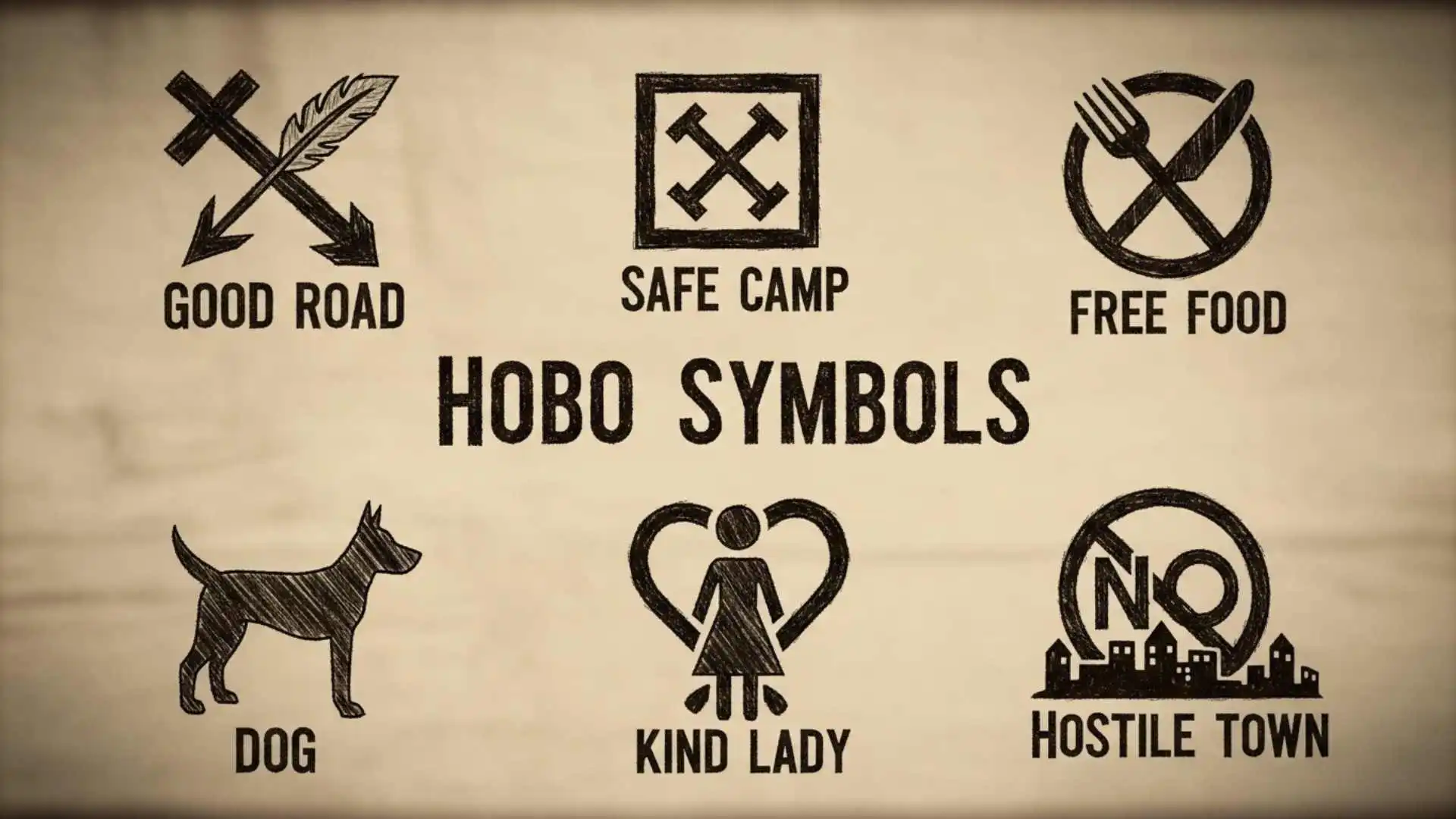
“Hobo symbols” once whispered survival secrets across lonely roads, abandoned buildings, and railroad fences.
Long before smartphones or social media existed, struggling travelers used tiny chalk marks and carved signs to warn, guide and protect one another.
These mysterious symbols carried messages about danger, kindness, food, work and hope. Hidden in plain sight, they became one of the most fascinating secret languages in human history.
What Are Hobo Symbols?
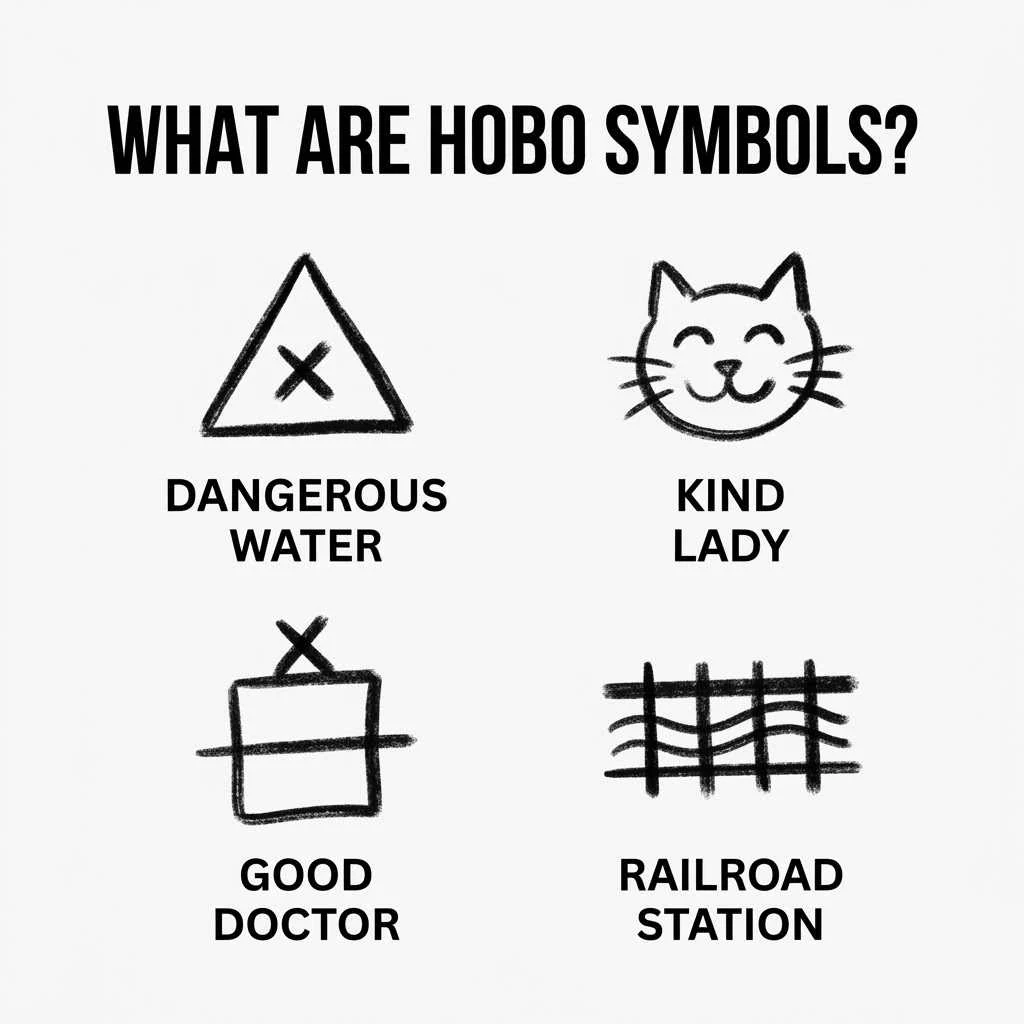
Hobo symbols are simple drawings or markings traditionally used by hobos and traveling workers during the late 1800s and early 1900s. These symbols acted as coded messages that shared important information with other travelers. They were often drawn with chalk, charcoal, or carved into wood near roads, fences, train stations, bridges, or buildings.
During the Great Depression and the rise of railroad travel in America, thousands of people traveled from town to town searching for food, shelter, and work. Life on the road was dangerous. Travelers faced hunger, harsh weather, thieves, police officers, and rejection from strangers. Hobo symbols became a silent communication system that helped people survive.
A simple cat symbol could mean a kind woman lived nearby and might offer food. A circle with arrows warned travelers to leave quickly. A cross symbol often meant free food was available. These markings carried life saving information in only a few strokes.
Although historians debate how widespread some symbols truly were, the idea of hobo codes became deeply rooted in American folklore and cultural memory. Today, these symbols continue to fascinate historians, artists, writers, and people drawn to hidden meanings.
The History Behind Hobo Symbols
The roots of hobo culture grew during the Industrial Revolution in the United States. Railroads expanded rapidly, creating temporary jobs across the country. Workers traveled constantly, hopping freight trains and moving wherever labor was needed.
After the economic collapse of the 1930s, millions lost their homes and jobs. Many became wanderers by necessity rather than choice. In this harsh environment, communication became survival.
Hobo symbols emerged as a practical tool. Travelers left warnings and advice for others who would pass through later. Unlike spoken language, symbols crossed barriers of literacy, accent, and nationality. A hungry traveler could recognize a danger sign instantly without needing words.
The symbols also created a sense of brotherhood among strangers. They reminded travelers that someone else had already walked the same difficult road.
Deep Symbolic Meaning of Hobo Symbols
Spiritual Meaning
On a spiritual level, hobo symbols represent guidance, faith, and human connection during hardship. Many symbols reflected the belief that even in poverty and uncertainty, kindness still existed.
A symbol marking a safe home was more than practical advice. It represented hope. For exhausted travelers, finding food or shelter could feel almost miraculous. These signs became tiny acts of compassion passed between strangers who might never meet.
The journey itself also carried spiritual symbolism. Wandering roads and railways mirrored the human search for purpose, belonging, and survival.
Psychological Meaning
Psychologically, hobo symbols reflect humanity’s deep need for communication and protection. People naturally create codes and signs when living under pressure or danger. Similar secret systems appear in prisons, wartime resistance groups, and underground communities.
These symbols also reduced fear. Imagine traveling alone through unknown towns with no money and no certainty about tomorrow. A simple chalk mark saying “safe place” could instantly calm anxiety and restore confidence.
Hobo symbols turned loneliness into shared experience.
Cultural Meaning
Culturally, hobo symbols became symbols of resilience and rebellion. They represented people living outside normal society while still creating their own rules, ethics, and networks.
Over time, these markings evolved into legends of freedom and independence. Some people romanticized the wandering lifestyle as an escape from modern pressures and rigid social expectations.
Today, hobo symbols remain connected to ideas of adventure, survival, hidden knowledge, and resistance against hardship.
Common Types of Hobo Symbols and Their Meanings
Cat Symbol
The cat symbol usually meant a kind hearted woman lived nearby who might provide food or help.
Visual description: A simple drawing of a cat face or outline.
Meaning: Compassion, safety, and generosity.
Where it appeared: Fences, gates, or near homes.
Cross Symbol
A cross symbol often meant free food or charitable help was available.
Visual description: A plain cross shape.
Meaning: Hope, relief, and survival.
Where it appeared: Churches, shelters, or homes known for kindness.
Circle With Two Arrows
This symbol warned travelers to leave immediately because danger was nearby.
Visual description: A circle with arrows pointing outward.
Meaning: Threat, hostility, or police presence.
Where it appeared: Dangerous neighborhoods or towns.
Wavy Lines
Wavy lines indicated water could be found nearby.
Visual description: Two or three horizontal waves.
Meaning: Life, renewal, and basic survival.
Where it appeared: Near rivers, pumps, or wells.
Angry Dog Symbol
This warning sign told travelers that aggressive dogs guarded the property.
Visual description: A rough drawing of a barking dog.
Meaning: Caution and danger.
Where it appeared: Outside homes or farms.
Safe Camp Symbol
This symbol marked a secure place to rest overnight.
Visual description: A square or tent like drawing.
Meaning: Shelter, peace, and temporary safety.
Where it appeared: Forest areas, abandoned buildings, or hidden camps.
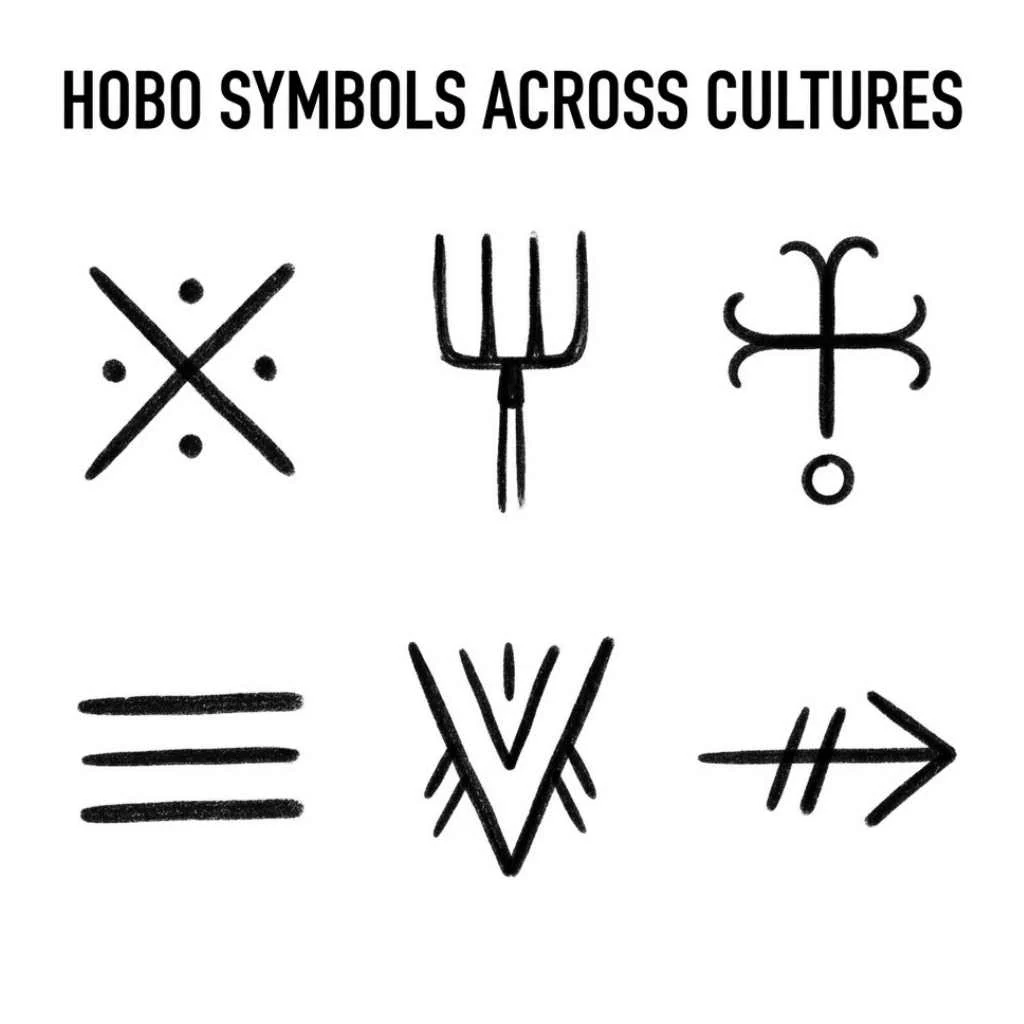
Hobo Symbols Across Cultures
American Railroad Culture
In the United States, hobo symbols became strongly tied to railroad life and the Great Depression. They reflected survival during economic hardship and became part of American folklore.
Stories about wandering workers, freight trains, and coded messages still appear in books, documentaries, and museums today.
Ancient Nomadic Cultures
Long before American hobos existed, nomadic groups across Asia and the Middle East used markings and trail signs to guide travelers through deserts and trade routes.
These early symbols shared the same purpose, helping strangers survive unfamiliar landscapes.
Medieval Europe
Travelers and wandering workers in medieval Europe sometimes carved symbols into inns, churches, and roadsides to communicate warnings or opportunities.
Pilgrims also used symbolic markings to identify safe routes and holy destinations.
Indigenous Trail Markings
Many Indigenous communities across North America used natural symbols and trail signs to communicate directions, water locations, and dangers.
These markings respected nature and often blended into the environment itself.
Modern Urban Symbolism
Today, modern street art and graffiti sometimes echo the spirit of hobo symbols. Artists use hidden messages, coded imagery, and public markings to express identity, protest, or community.
The desire to leave messages for strangers still exists, only the methods have changed.
Hobo Symbols in Art, Movies and Pop Culture
Hobo symbols continue to inspire modern storytelling because they combine mystery with human emotion.
Movies
Films about the Great Depression or railroad culture often include hidden markings and coded signs. These symbols create atmosphere and remind viewers how dangerous life once was for wandering workers.
Movies use hobo symbols to represent survival, freedom, and rebellion against society.
Literature
Writers frequently use hobo symbols in novels about journeys, hardship, and hidden wisdom. The symbols add mystery and emotional depth to stories about outsiders and forgotten people.
Books about American history often explore how these signs shaped the lives of travelers during difficult times.
Tattoos
Many people choose hobo symbol tattoos because they represent independence, resilience, and personal struggle.
A traveler may choose a safe camp symbol to represent finding peace after hardship. Others select railroad inspired markings as reminders of freedom and endurance.
Fashion and Design
Vintage Americana fashion sometimes includes hobo inspired imagery such as railroad maps, coded signs, and wandering traveler aesthetics.
Graphic designers also use these symbols because their rough hand drawn style feels authentic and emotionally powerful.
Street Art
Modern graffiti artists occasionally reference hobo symbols to create secretive or rebellious messages within urban spaces.
The idea of communicating hidden truths through public markings remains deeply appealing.
Spiritual and Dream Meaning of Hobo Symbols
Dreaming about hobo symbols often reflects guidance during uncertain times. These symbols usually appear when someone feels lost, emotionally exhausted, or uncertain about the future.
A dream about discovering a safe symbol may suggest emotional healing or support is coming into your life. Warning symbols in dreams can reflect anxiety, distrust, or fear about upcoming decisions.
Spiritually, hobo symbols remind people to pay attention to subtle signs around them. Life often sends guidance quietly rather than dramatically.
Some spiritual thinkers view wandering roads and coded signs as metaphors for the soul’s journey through life. Every symbol becomes part of a deeper search for belonging and meaning.
Positive and Negative Meanings of Hobo Symbols
Positive Meaning
Hobo symbols often represent kindness, solidarity, and resilience. They remind people that compassion can exist even during hardship.
The symbols also celebrate adaptability. Travelers survived difficult conditions by sharing knowledge and protecting one another.
Many people feel inspired by the bravery and resourcefulness connected to these signs.
Negative Meaning
At the same time, hobo symbols emerged from poverty, homelessness, and social instability. Some symbols warned about violence, exploitation, or dangerous authorities.
The darker side of hobo culture included loneliness, hunger, discrimination, and fear.
This contrast makes the symbols emotionally powerful. They reflect both human suffering and human strength.
Why Humans Are Drawn to Hobo Symbols
People feel attracted to hobo symbols because they touch something ancient inside the human mind.
Humans naturally search for hidden meanings and secret messages. Symbols create curiosity because they suggest knowledge beneath the surface. A small chalk drawing suddenly feels mysterious and important.
Hobo symbols also connect deeply with emotional themes many people understand today. Fear of uncertainty, desire for freedom, search for belonging, and hope during hardship are universal human experiences.
There is also beauty in the simplicity of the symbols. A few rough lines can carry enormous emotional weight.
Imagine a tired traveler standing beside railroad tracks on a cold night. One small symbol scratched into wood tells him food and safety are nearby. In that moment, the symbol becomes more than a drawing. It becomes hope itself.
Are Hobo Symbols Still Used Today?
True historical hobo symbols are rarely used in modern daily life, but their influence continues.
Some train hopping communities and travelers still reference old symbols for tradition or identity. Historians, collectors, and museums preserve these markings as important cultural artifacts.
The idea behind hobo symbols also survives in modern digital culture. Online communities use emojis, abbreviations, memes, and coded language in similar ways. Humans still create symbols to share meaning quickly and secretly.
The tools have changed, but the instinct remains the same.
FAQs About Hobo Symbols
What were hobo symbols used for?
Hobo symbols were used to share survival information between traveling workers and wanderers. They warned about danger and identified places offering food, shelter, or work.
Are hobo symbols real or just folklore?
Many hobo symbols are based on real historical practices, though some popular lists were likely exaggerated or romanticized over time.
When were hobo symbols most common?
They became most common during the late 1800s and the Great Depression era in the United States.
What does the cat symbol mean in hobo code?
The cat symbol usually meant a kind woman lived nearby and might provide help or food.
Why are hobo symbols still popular today?
People remain fascinated by their mystery, emotional history, and connection to freedom, survival, and hidden communication.
Conclusion
Hobo symbols are far more than forgotten chalk drawings from the past. They are emotional echoes of survival, resilience, and quiet human kindness during difficult times. Every mark carried a story of fear, hope, hunger, or compassion shared between strangers on lonely roads.
Even today, these symbols remind us that people will always search for connection and guidance in uncertain moments. Hidden within their simple lines is a timeless truth, humanity survives best when it helps one another.

Freddie Wood
Hi! I’m Freddie Wood, a storyteller at heart and a lifelong explorer of ideas. Writing has always been my way of making sense of the world, turning ordinary moments into stories that linger in your mind. I love blending emotions with adventure, and I’m fascinated by the way words can connect people across distances and experiences. When I’m not writing, you’ll find me wandering through nature, listening to music, or sketching out ideas for my next story. My goal is always to create books that stay with readers long after the last page.
Books by Freddie Wood:
-
The Hidden Path
-
Shadows of Tomorrow