
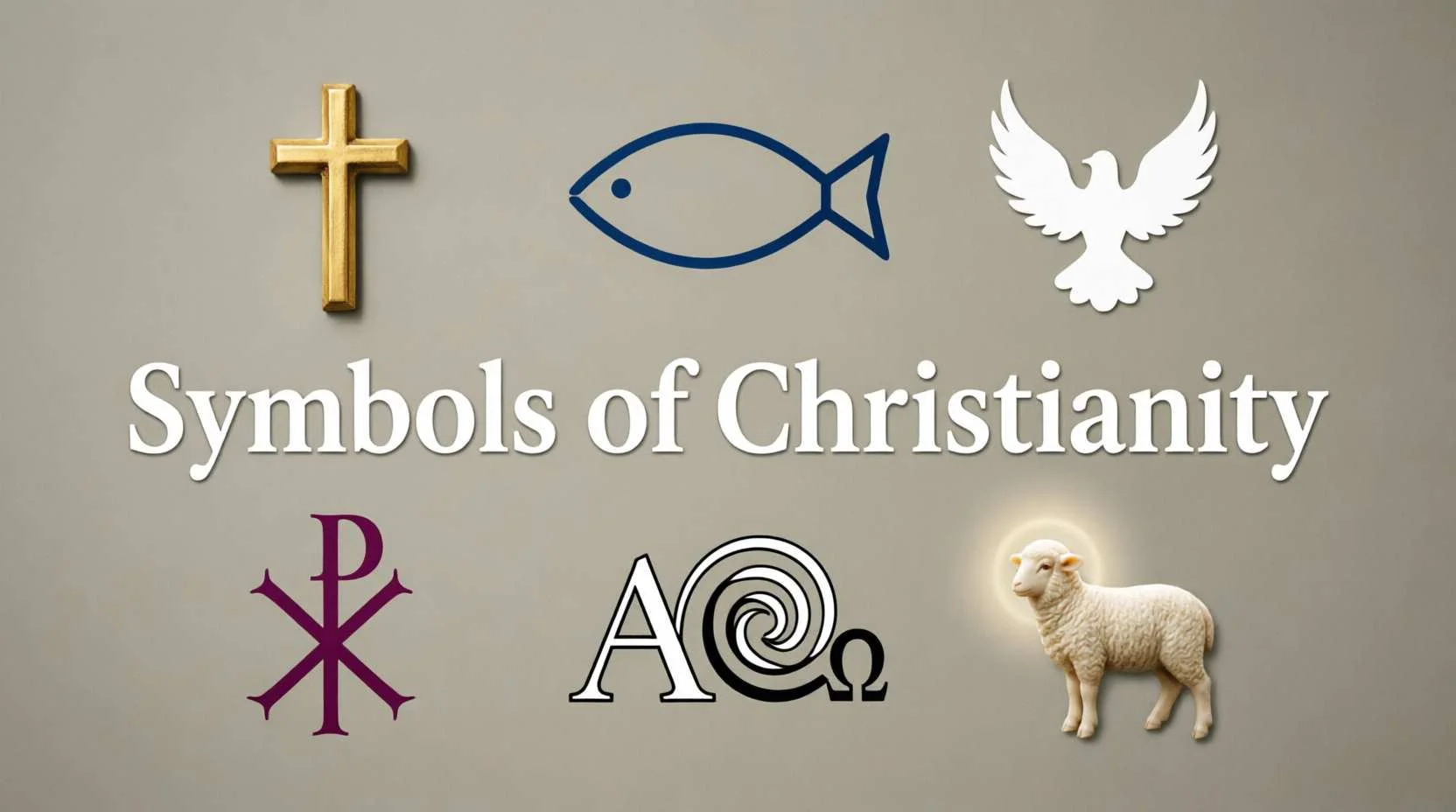
There is something deeply moving about a symbol. A simple shape, a quiet mark, yet it carries centuries of faith, struggle, hope, and human longing.
When I first began exploring the symbols of Christianity, I realized they are far more than religious icons, they are emotional anchors, whispers of history, and mirrors of the human soul.
These symbols have survived empires, persecution, and time itself. They speak in silence yet echo loudly in churches, art, dreams, and even modern culture.
Whether you’re religious or simply curious, understanding these symbols opens a doorway into one of humanity’s most powerful spiritual traditions and perhaps into yourself.
What Are Symbols of Christianity?
The symbols of Christianity are visual representations used to express beliefs, teachings, and the identity of the Christian faith. These symbols date back nearly 2,000 years, emerging in the earliest days of the religion when followers needed ways to communicate secretly under persecution.
From the Roman catacombs to grand cathedrals, these symbols evolved as both expressions of devotion and tools of storytelling. Before widespread literacy, symbols taught people about faith about sacrifice, salvation, love, and eternal life.
At their core, Christian symbols act like a language without words. They translate complex theological ideas into forms the heart can understand instantly.
Deep Symbolic Meaning
Spiritual Level
Spiritually, Christian symbols point toward divine truths. They represent the relationship between humanity and God, sin and redemption, death and resurrection, suffering and hope. Each symbol acts like a doorway to the sacred.
Psychological Level
On a psychological level, these symbols resonate with universal human experiences. The idea of sacrifice, rebirth, forgiveness these are deeply rooted archetypes. They comfort us, guide us, and help us process fear, guilt, and hope.
Cultural Level
Culturally, Christian symbols have shaped civilizations. They appear in architecture, law, art, and everyday life. Even in secular societies, their influence remains embedded in traditions, holidays, and language.
Types / Variations of Symbols of Christianity
1. The Cross
- Visual: A vertical line intersected by a horizontal one
- Meaning: Sacrifice, salvation, and the crucifixion of Jesus
- Where it appears: Churches, jewelry, graves, art
The cross is the most recognized symbol of Christianity. It represents suffering transformed into hope—a reminder that even the darkest moment can lead to redemption.
2. The Crucifix
- Visual: A cross with the figure of Jesus on it
- Meaning: The physical sacrifice of Christ
- Where it appears: Catholic churches, prayer items
Unlike the plain cross, the crucifix emphasizes the human pain and divine love expressed through sacrifice.
3. The Ichthys (Fish Symbol)
- Visual: A simple outline of a fish
- Meaning: Jesus Christ, Son of God, Savior
- Where it appears: Early Christian art, modern car decals
This symbol was used secretly by early Christians. It’s a quiet sign of identity, faith, and belonging.
4. The Dove
- Visual: A white bird, often in flight
- Meaning: Peace, the Holy Spirit, purity
- Where it appears: Baptism imagery, paintings
The dove represents divine presence and calm—like a breath of peace in a chaotic world.
5. The Lamb
- Visual: A gentle lamb, sometimes with a flag
- Meaning: Jesus as the sacrificial offering
- Where it appears: Religious art, Easter symbolism
The lamb speaks of innocence and sacrifice—quiet strength in vulnerability.
6. The Alpha and Omega
- Visual: Greek letters Α and Ω
- Meaning: God as the beginning and the end
- Where it appears: Church decorations, manuscripts
It reminds believers that everything starts and ends with the divine.
7. The Anchor
- Visual: A ship’s anchor
- Meaning: Hope and stability
- Where it appears: Early Christian graves, tattoos
In times of uncertainty, the anchor symbolizes unshakable faith.
8. The Chi-Rho
- Visual: Overlapping Greek letters XP
- Meaning: Christ
- Where it appears: Early Christian banners, Roman Empire artifacts
One of the earliest Christograms, it represents victory through faith.
Symbols of Christianity Across Cultures
Ancient Roman World
In the Roman Empire, symbols like the fish and anchor were used secretly. They carried hidden meanings to avoid persecution.
Medieval Europe
During the Middle Ages, symbols became elaborate. Churches were filled with stained glass, carvings, and paintings that told biblical stories visually.
Eastern Orthodox Tradition
Symbols became more mystical and symbolic, especially in icons. Colors, gestures, and shapes all carried layered meanings.
African Christianity
Christian symbols blended with local traditions, creating unique interpretations that reflect community and ancestral heritage.
Modern Global Culture
Today, these symbols are everywhere—from fashion to digital media—often carrying both religious and cultural meanings.
Symbols of Christianity in Art, Movies & Pop Culture
Christian symbols have left a deep mark on creative expression.
- Movies: Films often use the cross or sacrificial imagery to represent redemption arcs.
- Paintings: Renaissance art is filled with symbolic storytelling—every object has meaning.
- Books: Literature uses Christian symbolism to explore morality, guilt, and salvation.
- Tattoos: Many people wear crosses, doves, or angels as personal expressions of faith or identity.
- Fashion: Cross necklaces and symbolic prints blend spirituality with style.
Even when people don’t consciously recognize them, these symbols influence how stories are told and understood.
Spiritual & Dream Meaning of Symbols of Christianity
When these symbols appear in dreams or meditation, they often carry personal messages.
- Cross: A need for sacrifice or transformation
- Dove: Inner peace or spiritual awakening
- Fish: Faith, guidance, or hidden truth
- Light or halo symbols: Divine presence or clarity
These visions often emerge during times of emotional struggle or spiritual searching, offering guidance or reassurance.
Positive vs Negative Meaning
Like all powerful symbols, Christian imagery carries both light and shadow.
Positive Meanings
- Hope
- Redemption
- Love
- Forgiveness
- Eternal life
Negative Interpretations
- Suffering
- Guilt
- Judgment
- Religious control (in some contexts)
This duality reflects the human condition itself—light and darkness existing side by side.
Why Humans Are Attracted to These Symbols
Humans are storytelling beings. We crave meaning, connection, and something greater than ourselves.
Christian symbols tap into universal emotions:
- The fear of death
- The hope for redemption
- The desire for unconditional love
Psychologically, these symbols act as anchors. They provide comfort in chaos, structure in uncertainty, and a sense of belonging in a vast world.
There’s also something deeply personal about them. Even if someone isn’t religious, the imagery can still evoke powerful feelings—because it speaks to shared human experiences.
FAQs About Symbols of Christianity
1. What is the most important symbol of Christianity?
The cross is the most central symbol, representing the crucifixion and resurrection of Jesus.
2. Why did early Christians use secret symbols?
They used symbols like the fish to identify each other during times of persecution in the Roman Empire.
3. Are Christian symbols only religious?
No, many have cultural and artistic significance beyond religion.
4. What does the fish symbol mean in Christianity?
It represents Jesus Christ and was used as a hidden sign of faith.
5. Why is the dove important in Christianity?
It symbolizes peace and the Holy Spirit.
6. Can these symbols appear in dreams?
Yes, and they often reflect personal spiritual or emotional messages.
Conclusion
The symbols of Christianity are more than relics of the past they are living expressions of faith, emotion, and human experience. They tell stories of suffering and hope, loss and redemption, fear and love.
What makes them truly powerful is not just their history, but their ability to connect with us, even now. A simple cross, a quiet dove, a hidden fish each one carries a message that transcends time.
And perhaps that’s why they endure. Because deep down, we are all searching for meaning… and sometimes, a symbol says what words never can.

Nora Bennett
Nora Bennett is a storyteller at heart, always finding magic in the everyday moments of life. From a young age, she discovered the joy of weaving emotions into words, creating characters that feel like old friends. Writing, for her, is both an adventure and a sanctuary—a way to explore the world and herself. She loves connecting with readers who share her passion for heartfelt stories and unforgettable journeys. When she’s not crafting her next tale, Nora enjoys quiet mornings with a cup of coffee and a notebook full of ideas. Her stories are meant to inspire, comfort, and spark imagination in everyone who reads them.
Books:
-
Whispers of Yesterday
-
Echoes of Tomorrow