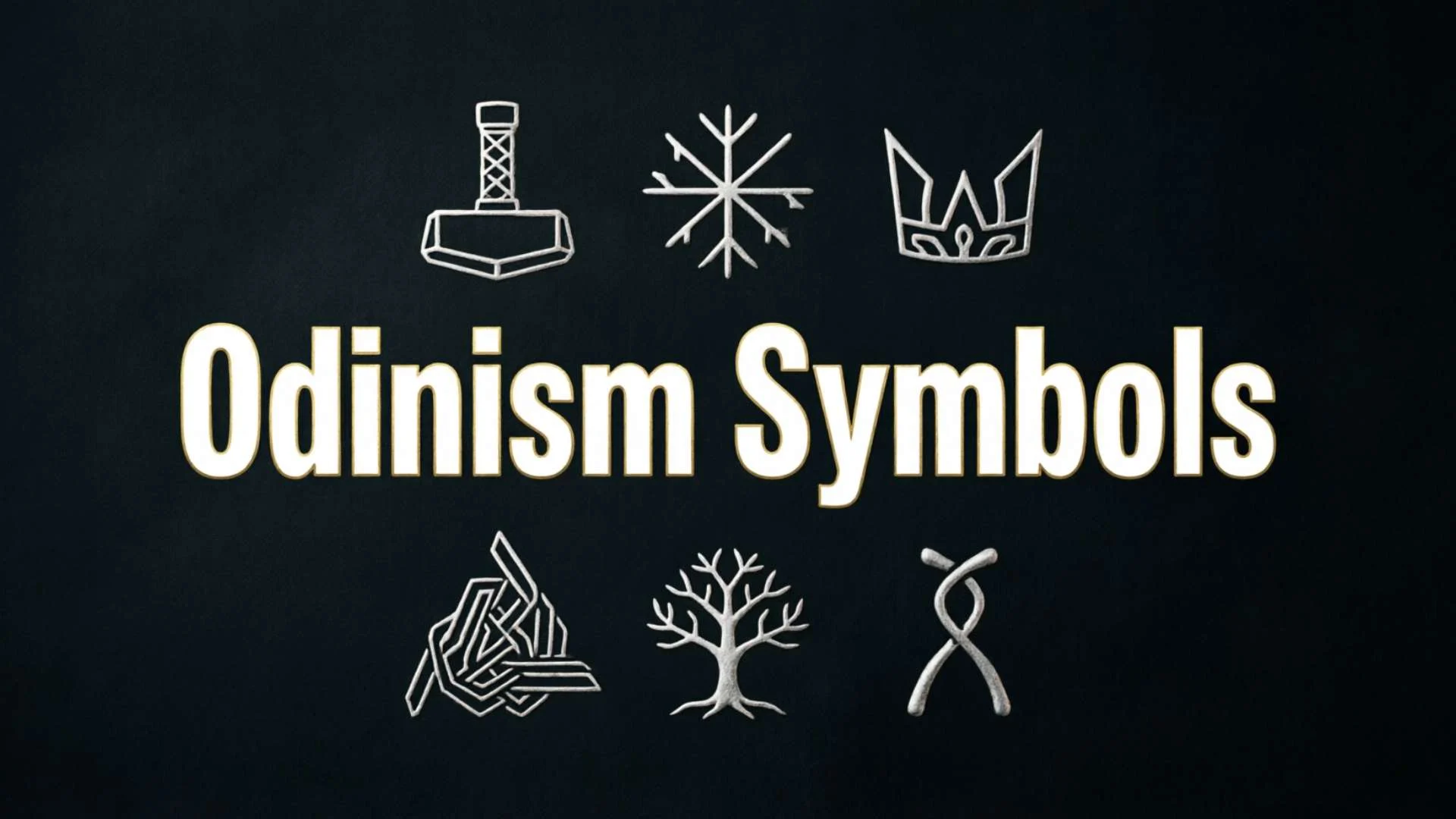
There’s something hauntingly powerful about ancient symbols especially those rooted in the raw, untamed world of Norse mythology.
Odinism symbols don’t just belong to the past; they feel alive, whispering stories of gods, fate, war, wisdom and the unseen forces that shape human destiny.
If you’ve ever felt drawn to a mysterious rune, a striking Viking emblem, or the all-seeing presence of Odin himself, you’re not alone. These symbols tap into something deeper, something almost instinctual.
In this guide, we’ll go beyond surface meanings and uncover the true essence of Odinism symbols, their history, their spiritual depth, and why they continue to captivate hearts in the modern world.
What Are Odinism Symbols?
Odinism symbols are sacred signs associated with Odinism, a modern revival of ancient Norse pagan beliefs centered around the god Odin. These symbols originate from the spiritual traditions of the Vikings and Germanic tribes, dating back over a thousand years.
Odinism itself is rooted in Old Norse mythology, where gods like Odin, Thor, and Freyja shaped the cosmic order. Symbols were not just decorative—they were tools of power, protection, identity, and communication with the divine.
These symbols appear in:
- Ancient carvings and runestones
- Viking weapons and armor
- Ritual objects and amulets
- Modern tattoos and spiritual practices
Each symbol carries layers of meaning some obvious, others deeply hidden.
Deep Symbolic Meaning
Spiritual Level
Odinism symbols represent the connection between humans and the divine. They act as bridges between worlds the physical realm and the spiritual cosmos. Symbols like runes were believed to carry magical energy, capable of influencing fate itself.
Psychological Level
On a deeper level, these symbols reflect the human struggle for meaning:
- The search for wisdom
- The acceptance of fate
- The courage to face chaos
They resonate with the inner warrior, the seeker, and the thinker within us.
Cultural Level
Culturally, Odinism symbols represent identity and heritage. For many, they are a link to ancestral roots, a reminder of resilience, strength, and honor.
Types / Variations of Odinism Symbols
Here are the most powerful and widely recognized Odinism symbols:
1. Valknut (The Knot of the Slain)
- Visual: Three interlocking triangles
- Meaning: Death, the afterlife, and Odin’s power over warriors
- Where it appears: Viking burial stones, battle imagery
The Valknut is often associated with fallen warriors chosen by Odin. It symbolizes the transition between life and death.
2. Yggdrasil (The World Tree)
- Visual: A massive tree connecting different realms
- Meaning: Interconnectedness of all existence
- Where it appears: Norse cosmology, art, mythology
Yggdrasil represents the universe itself—binding gods, humans, and spirits.
3. Huginn and Muninn (Odin’s Ravens)
- Visual: Two ravens
- Meaning: Thought (Huginn) and Memory (Muninn)
- Where it appears: Odin’s mythology, storytelling
These ravens symbolize the mind’s power our ability to reflect, remember, and learn.
4. Gungnir (Odin’s Spear)
- Visual: A spear often depicted with runic carvings
- Meaning: Authority, power, and divine precision
- Where it appears: Mythological texts and warrior symbolism
It represents unwavering focus and the inevitability of fate.
5. Runes (Elder Futhark)
- Visual: Alphabet-like symbols
- Meaning: Language, magic, and destiny
- Where it appears: Stones, charms, divination
Each rune holds a unique vibration used for guidance, protection, and insight.
6. Helm of Awe (Ægishjálmr)
- Visual: A circular symbol with radiating arms
- Meaning: Protection and invincibility
- Where it appears: Warrior traditions, magical texts
Believed to instill fear in enemies and courage in the bearer.
7. Mjölnir (Thor’s Hammer)
- Visual: A short-handled hammer
- Meaning: Protection, strength, and blessing
- Where it appears: Jewelry, rituals, Viking artifacts
Though tied to Thor, it is deeply connected to Odinist belief systems.
Odinism Symbols Across Cultures
Ancient Norse Culture
Symbols were sacred tools used in rituals, warfare, and storytelling. They were deeply integrated into daily life.
Germanic Tribes
Similar symbols appeared across Germanic regions, often with variations in meaning but similar spiritual themes.
Medieval Europe
As Christianity spread, many Odinism symbols were suppressed but not forgotten. They survived in folklore and hidden traditions.
Modern Pagan Movements
Today, Odinism symbols are revived in spiritual communities seeking connection with ancient wisdom.
Global Interpretation
In modern times, these symbols have transcended geography, becoming universal icons of strength, mystery, and identity.
Odinism Symbols in Art, Movies & Pop Culture
You’ve likely seen Odinism symbols even if you didn’t recognize them.
- Movies: Norse-inspired films often feature Valknut, runes, and Yggdrasil as visual storytelling elements
- Books: Fantasy literature uses these symbols to evoke ancient power and mysticism
- Tattoos: Many people wear Odinism symbols as personal emblems of strength or spirituality
- Fashion: Viking-inspired designs have become a bold statement of identity
- Video Games: Norse mythology heavily influences game worlds and character design
In pop culture, these symbols often represent:
- Power
- Destiny
- Mystery
- Inner strength
Spiritual & Dream Meaning of Odinism Symbols
Seeing Odinism symbols in dreams or meditation can be deeply meaningful.
- Valknut: A transformation or major life shift
- Runes: Guidance or hidden knowledge emerging
- Ravens: Reflection, awareness, or a message from the subconscious
- Yggdrasil: Growth, connection, or spiritual awakening
These symbols often appear during times of inner change—when the mind is searching for direction.
Positive vs Negative Meaning
Like all powerful symbols, Odinism symbols carry dual meanings.
Positive Aspects
- Strength and courage
- Wisdom and knowledge
- Protection and guidance
- Connection to ancestry
Negative Aspects
- Association with death or war
- Misuse in extremist ideologies (in modern contexts)
- Misinterpretation or superficial use
Understanding the context is crucial these symbols are not inherently good or bad, but reflections of how they are used.
Why Humans Are Attracted to Odinism Symbols
There’s a reason these symbols feel magnetic.
They represent:
- The hero’s journey
- The mystery of life and death
- The desire for purpose and identity
Psychologically, humans are drawn to symbols that:
- Simplify complex truths
- Offer a sense of belonging
- Connect us to something greater than ourselves
Odinism symbols speak to the part of us that longs for meaning beyond the ordinary.
FAQs
1. What do Odinism symbols represent?
They represent spiritual concepts like fate, wisdom, protection, and the connection between worlds.
2. Are Odinism symbols religious?
Yes, they are tied to Odinism and Norse pagan beliefs, though many people use them culturally or artistically.
3. Is the Valknut a symbol of death?
Yes, it is associated with death and the afterlife, particularly warriors chosen by Odin.
4. Are runes magical?
Historically, runes were believed to carry magical properties and were used for divination and protection.
5. Can anyone use Odinism symbols?
Yes, but it’s important to understand their meaning and cultural significance.
6. Are these symbols connected to Vikings?
Yes, many Odinism symbols originate from Viking-era Norse culture.
Conclusion
Odinism symbols are more than ancient markings, they are living echoes of humanity’s deepest questions. They speak of courage in the face of chaos, wisdom earned through sacrifice and the eternal dance between fate and free will.
In a world that often feels disconnected, these symbols remind us of something timeless, that we are part of a greater story, one written in myth, memory and meaning.
Whether you see them as spiritual tools, cultural artifacts, or personal emblems, one thing is certain: Odinism symbols don’t just exist to be understood… they exist to be felt.

Freddie Wood
Hi! I’m Freddie Wood, a storyteller at heart and a lifelong explorer of ideas. Writing has always been my way of making sense of the world, turning ordinary moments into stories that linger in your mind. I love blending emotions with adventure, and I’m fascinated by the way words can connect people across distances and experiences. When I’m not writing, you’ll find me wandering through nature, listening to music, or sketching out ideas for my next story. My goal is always to create books that stay with readers long after the last page.
Books by Freddie Wood:
-
The Hidden Path
-
Shadows of Tomorrow