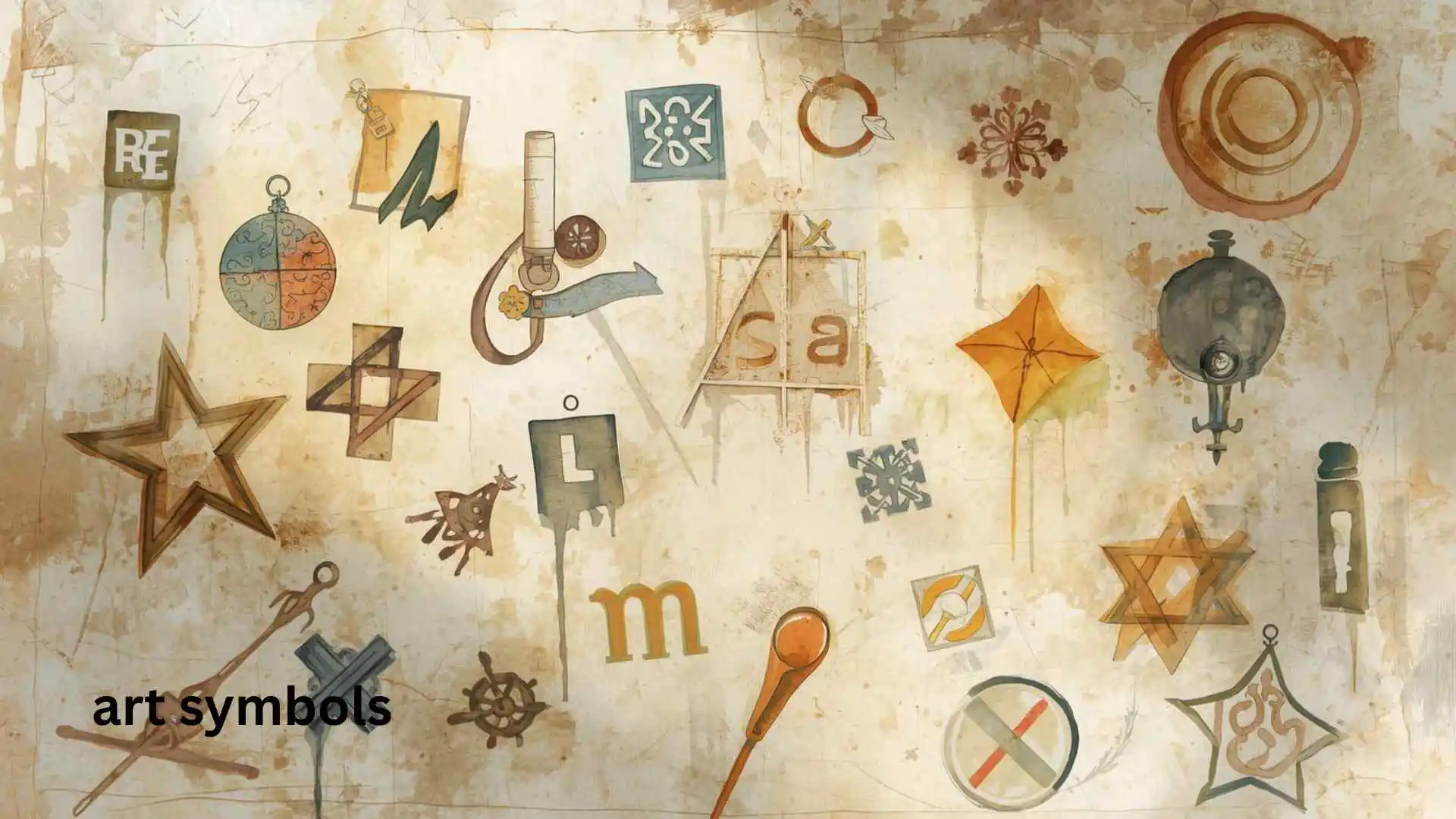
Art has always spoken in a language deeper than words, and that language is symbols. A single shape, color, or mark in a painting can carry centuries of emotion, belief, and hidden meaning.
From ancient cave drawings to modern digital art, humans have used art symbols to express what cannot be spoken aloud.
In this article, you will uncover the powerful meanings behind art symbols and discover how they quietly shape the way we see the world.
What Are Art Symbols?
Art symbols are visual elements used in artwork to represent ideas, emotions, beliefs, or concepts beyond their literal appearance.
They act like a secret code between the artist and the viewer.
Historically, symbols in art date back to prehistoric cave paintings, where early humans used simple shapes to represent hunting scenes, survival, and spiritual beliefs.
Over time, civilizations like the Egyptians, Greeks, Chinese, and Mayans developed rich symbolic systems that became part of their religious and cultural identity.
Today, art symbols are found everywhere—from religious paintings and street murals to logos and digital illustrations.
Deep Symbolic Meaning of Art Symbols
Art symbols operate on multiple levels of human experience.
Spiritual Meaning
Spiritually, art symbols often represent divine forces, the soul, or universal truths.
For example, light in art can symbolize enlightenment, purity, or God’s presence.
Many religious artworks use symbols to express what cannot be fully described in human language.
Psychological Meaning
On a psychological level, symbols reflect human emotions and subconscious thoughts.
A broken circle might represent emotional fragmentation, while a tree may symbolize personal growth or identity.
Artists often use symbols to reveal inner struggles without directly stating them.
Cultural Meaning
Culturally, symbols carry shared meaning within societies.
A single symbol can unite communities, represent traditions, or preserve historical memory.
For example, colors and animals often carry specific meanings in different cultures.
Types / Variations of Art Symbols
1. The Circle
- Visual Description: A continuous round shape with no beginning or end
- Meaning: Unity, eternity, wholeness
- Where It Appears: Ancient religious art, mandalas, spiritual paintings, modern logos
2. The Cross
- Visual Description: Two intersecting lines
- Meaning: Faith, sacrifice, balance between worlds
- Where It Appears: Christianity, medieval art, jewelry, architecture
3. The Eye (Eye of Providence / All-Seeing Eye)
- Visual Description: A single eye often surrounded by rays or a triangle
- Meaning: Awareness, protection, divine observation
- Where It Appears: Egyptian art, religious symbolism, modern conspiracy art
4. The Tree
- Visual Description: A rooted trunk with spreading branches
- Meaning: Life, growth, ancestry, connection
- Where It Appears: Mythology, nature art, tattoos, spiritual illustrations
5. The Skull
- Visual Description: Human skull
- Meaning: Death, mortality, transformation
- Where It Appears: Renaissance paintings, Mexican Day of the Dead art, modern tattoos
Art Symbols Across Cultures
Ancient Egypt
Egyptian art symbols like the ankh represented eternal life, while the scarab beetle symbolized rebirth and transformation.
Symbols were deeply connected to gods and afterlife beliefs.
Ancient Greece
Greeks used symbols like the laurel wreath to represent victory and honor.
Mythological symbols reflected human traits and divine interaction.
Chinese Culture
In Chinese art, symbols like the dragon represent power, luck, and protection.
The lotus flower symbolizes purity rising from hardship.
Indian Culture
Indian art is rich with spiritual symbols such as Om, representing universal consciousness.
The lotus again appears as a symbol of enlightenment and rebirth.
Native American Art
Symbols like the eagle represent freedom and spiritual connection to the sky.
Patterns and totems often tell ancestral stories.
Art Symbols in Art, Movies & Pop Culture
Art symbols are not limited to ancient history—they are alive in modern culture.
Movies
Films like The Matrix use symbols such as the “red pill” to represent awakening to reality.
Superhero films often use symbols like logos to represent identity and power.
Paintings
Renaissance paintings often used hidden symbols to express religious messages without direct words.
Even modern abstract art uses shapes and colors to express emotion.
Books
Literature frequently uses symbolic imagery—like darkness representing fear or journey symbols representing life struggles.
Tattoos
People choose symbols like anchors (stability), feathers (freedom), or snakes (rebirth) to express personal identity.
Fashion
Brands use symbols to create emotional connection—hearts, stars, and geometric shapes often communicate lifestyle and values.
Spiritual & Dream Meaning of Art Symbols
In dreams, art symbols often appear as messages from the subconscious mind.
- Circles in dreams may represent life cycles or emotional completion
- Water symbols often reflect emotional depth and healing
- Eyes in dreams can indicate awareness or self-reflection
- Trees may represent personal growth or family connections
In spiritual practices, symbols are used in meditation to focus the mind and connect with deeper consciousness.
Many people believe these symbols carry energetic meanings beyond physical reality.
Positive vs Negative Meaning of Art Symbols
Art symbols are not fixed in meaning—they can shift depending on context.
Positive Meaning
A snake can represent healing, transformation, and wisdom in many cultures.
Light symbolizes hope, truth, and guidance.
Negative Meaning
The same snake can also represent danger, deception, or fear.
Darkness may symbolize ignorance, loss, or emotional struggle.
This duality is what makes symbols powerful—they reflect both light and shadow within human experience.
Why Humans Are Attracted to Art Symbols
Humans are naturally drawn to symbols because the brain processes images faster than words.
Symbols speak directly to emotions and the subconscious mind.
Psychologically, symbols help people make sense of complex feelings.
A single image can hold meaning that would take paragraphs to explain.
Emotionally, symbols create connection.
They remind us of identity, culture, spirituality, and shared human experience.
This is why even simple shapes can feel deeply meaningful or even comforting.
FAQs About Art Symbols
1. What are art symbols used for?
Art symbols are used to represent ideas, emotions, beliefs, and cultural meanings visually.
2. Why are symbols important in art history?
They help communicate spiritual, cultural, and emotional messages across generations.
3. Do art symbols have universal meanings?
Some symbols are universal, but many change meaning depending on culture and context.
4. What is the most common art symbol?
The circle, cross, and eye are among the most widely used symbols in art history.
5. Can symbols have multiple meanings?
Yes, most symbols carry layered meanings—spiritual, psychological, and cultural.
6. Why do artists use symbols instead of words?
Because symbols express complex ideas more emotionally and universally than language.
7. Are art symbols still important today?
Yes, they are widely used in modern design, branding, tattoos, and digital media.
Conclusion
Art symbols are more than visual decorations—they are the hidden language of human civilization.
They connect ancient beliefs with modern expression, bridging cultures, emotions, and time itself.
Whether found in a sacred painting, a tattoo, or a dream, symbols continue to speak to something deep within us.
Understanding art symbols is not just about studying art—it is about understanding humanity itself.
Discover More topics:
- The Secret Language of Circuits | How Wiring Diagram Symbols Map the Human Need for Order
- Vow of the Disciple Symbols | The Sacred Marks of Eternal Promise
