
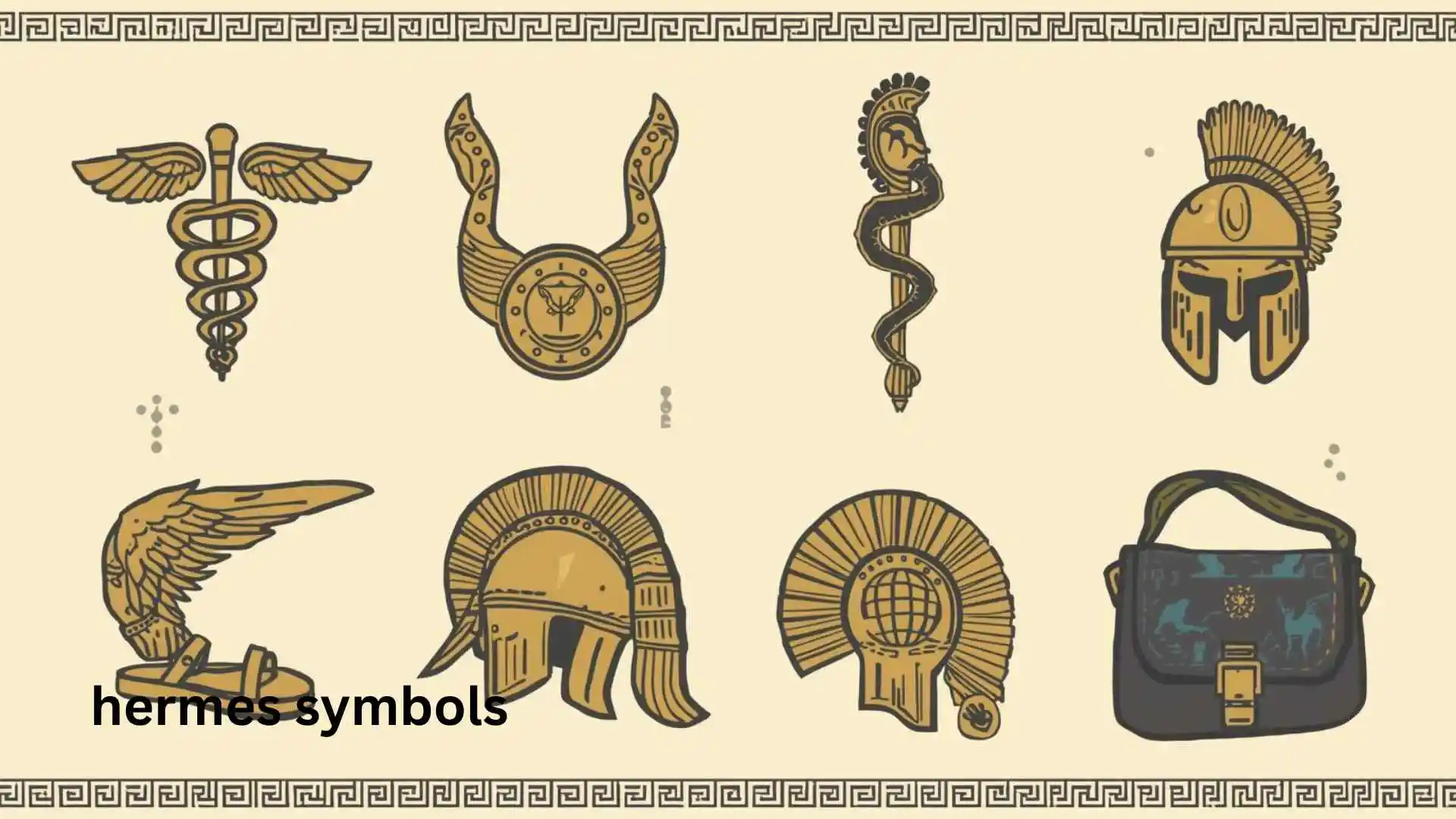
Across ancient myths and modern imagination, Hermes remains one of the most fascinating figures ever created by human storytelling.
The symbols of Hermes are not just decorative images they feel like coded messages from a forgotten world.
People are often drawn to them without even knowing why, as if something deeper is being remembered rather than learned.
From divine communication to human psychology, these symbols continue to shape how we understand movement, intelligence, and transformation.
In this article, you will uncover meanings that are rarely explained so clearly, yet they have influenced cultures for thousands of years.
What is Hermes Symbols?
Hermes symbols are visual representations connected to the Greek messenger god Hermes in ancient mythology.
Hermes was believed to deliver messages between gods and humans, guide souls to the afterlife, and protect travelers, merchants, and thinkers.
His symbols were used in ancient Greece to represent communication, speed, trade, intelligence, and divine connection.
Over time, these symbols expanded into Roman mythology as Mercury and later influenced modern concepts like communication systems, commerce, and even medicine.
Deep Symbolic Meaning of Hermes Symbols
Hermes symbols carry layered meanings that operate on multiple levels of human experience.
Spiritual Meaning
On a spiritual level, Hermes represents the bridge between worlds.
He connects physical reality with unseen realms of intuition and higher knowledge.
His symbols often represent divine messages, guidance, and awakening of inner awareness.
Psychological Meaning
Psychologically, Hermes represents mental speed, curiosity, and adaptability.
He reflects the part of the human mind that jumps between ideas, solves problems quickly, and communicates thoughts effectively.
He also represents the “trickster mind,” which challenges fixed thinking and creates new perspectives.
Cultural Meaning
Culturally, Hermes symbols represent travel, trade, diplomacy, and communication.
Ancient societies saw him as essential for safe journeys and successful exchange of goods and ideas.
Together, these meanings make Hermes a symbol of transition, intelligence, and connection across all levels of existence.
Types / Variations of Hermes Symbols
1. Caduceus
- Visual: A staff with two snakes wrapped around it
- Meaning: Balance, negotiation, duality, communication
- Where it appears: Greek mythology, modern medicine symbols (commonly but incorrectly used), logos, healing imagery
- Symbolic depth: It represents harmony between opposing forces and the flow of energy between worlds
2. Winged Sandals (Talaria)
- Visual: Sandals with wings attached
- Meaning: Speed, freedom, divine travel
- Where it appears: Greek myths, modern fantasy art, branding related to speed and delivery
- Symbolic depth: Represents the ability to move beyond limits—physically and mentally
3. Winged Helmet (Petasos)
- Visual: A traveler’s hat with wings
- Meaning: Intelligence, quick thinking, mobility
- Where it appears: Ancient Greek art, sculptures, modern interpretations of Hermes
- Symbolic depth: Shows mental agility and the power of fast decision-making
4. The Lyre
- Visual: A small stringed instrument
- Meaning: Harmony, creativity, invention, artistic intelligence
- Where it appears: Greek mythology, music symbolism, classical literature
- Symbolic depth: Represents the birth of creativity and emotional expression
5. The Tortoise
- Visual: A tortoise or its shell
- Meaning: Patience, hidden intelligence, invention
- Where it appears: Myth of Hermes creating the first lyre
- Symbolic depth: Shows that brilliance can come from slow observation and transformation
Hermes Symbols Across Cultures
Ancient Greece
In Greece, Hermes was worshipped as the divine messenger, protector of travelers, and guide of souls.
His symbols represented safe movement between worlds and the flow of divine communication.
Ancient Rome
In Roman culture, Hermes became Mercury.
His symbols became strongly associated with trade, wealth, and commerce.
Egyptian Influence
Hermes was linked with Thoth.
This connection strengthened his role as a symbol of knowledge, writing, and intelligence.
Medieval Europe
During the medieval period, Hermes symbols became part of alchemy, representing transformation, hidden wisdom, and spiritual evolution.
Modern Culture
Today, Hermes symbols appear in branding, communication technology, logistics, and even psychology, representing speed and connection.
Hermes Symbols in Art, Movies & Pop Culture
Hermes symbols continue to appear everywhere in modern storytelling.
- In films, winged sandals represent speed, heroism, and supernatural movement
- In literature, Hermes often appears as a guide or trickster archetype
- In tattoos, caduceus designs symbolize healing, balance, or transformation
- In fashion, Hermes-inspired aesthetics represent luxury, motion, and intelligence
- In branding, Hermes symbolism is used to represent fast communication and delivery systems
Even without knowing it, modern culture constantly reuses Hermes imagery to represent progress and movement.
Spiritual & Dream Meaning of Hermes Symbols
Seeing Hermes symbols in dreams or spiritual visions often carries deep meaning.
- Winged sandals → desire for change, freedom, or escape from limitations
- Caduceus → healing process or inner balance
- Staff → receiving guidance or important life message
- Wings → spiritual awakening or mental expansion
In many spiritual traditions, Hermes represents the messenger between the conscious and unconscious mind.
Positive vs Negative Meaning of Hermes Symbols
Positive Meaning
- Intelligence and quick thinking
- Spiritual guidance
- Safe travel and transition
- Creativity and invention
- Communication mastery
Negative Meaning
- Deception or manipulation
- Restlessness and overthinking
- Miscommunication
- Emotional instability due to mental speed
Hermes is powerful because he represents both clarity and confusion, truth and trickery—depending on how his energy is used.
Why Humans Are Attracted to Hermes Symbols
Humans are naturally drawn to Hermes symbols because they reflect something deeply familiar: the need to move, communicate, and evolve.
Psychologically, Hermes mirrors the human mind’s constant flow of thoughts and ideas.
Emotionally, he represents freedom—the ability to escape limitation and explore new possibilities.
Spiritually, his symbols feel like messages from something greater, guiding people through uncertainty and change.
This combination makes Hermes symbols timeless and universally powerful.
FAQs About Hermes Symbols
1. What do Hermes symbols represent?
They represent communication, speed, intelligence, travel, and divine messages.
2. What is the caduceus symbol of Hermes?
It is a staff with two snakes representing balance and communication.
3. Why is Hermes important in mythology?
Because he acts as the messenger between gods and humans.
4. Are Hermes symbols used today?
Yes, in medicine, branding, communication, and art.
5. What does Hermes mean spiritually?
He represents divine messages, intuition, and higher awareness.
6. Is Hermes the same as Mercury?
Yes, in Roman mythology he is known as Mercury.
Conclusion
Hermes symbols are not just ancient artifacts they are living ideas that continue to shape how humans think, communicate, and evolve.
From the wings of his sandals to the staff of the caduceus, each symbol carries a message about movement, intelligence, and transformation.
Even in today’s fast-moving digital world, Hermes remains a powerful reminder that communication is not just about words it is about connection between worlds, minds, and possibilities.
Discover More topics:
- The Secret Language of Circuits | How Wiring Diagram Symbols Map the Human Need for Order
- Vow of the Disciple Symbols | The Sacred Marks of Eternal Promise

Nora Bennett
Nora Bennett is a storyteller at heart, always finding magic in the everyday moments of life. From a young age, she discovered the joy of weaving emotions into words, creating characters that feel like old friends. Writing, for her, is both an adventure and a sanctuary—a way to explore the world and herself. She loves connecting with readers who share her passion for heartfelt stories and unforgettable journeys. When she’s not crafting her next tale, Nora enjoys quiet mornings with a cup of coffee and a notebook full of ideas. Her stories are meant to inspire, comfort, and spark imagination in everyone who reads them.
Books:
-
Whispers of Yesterday
-
Echoes of Tomorrow