
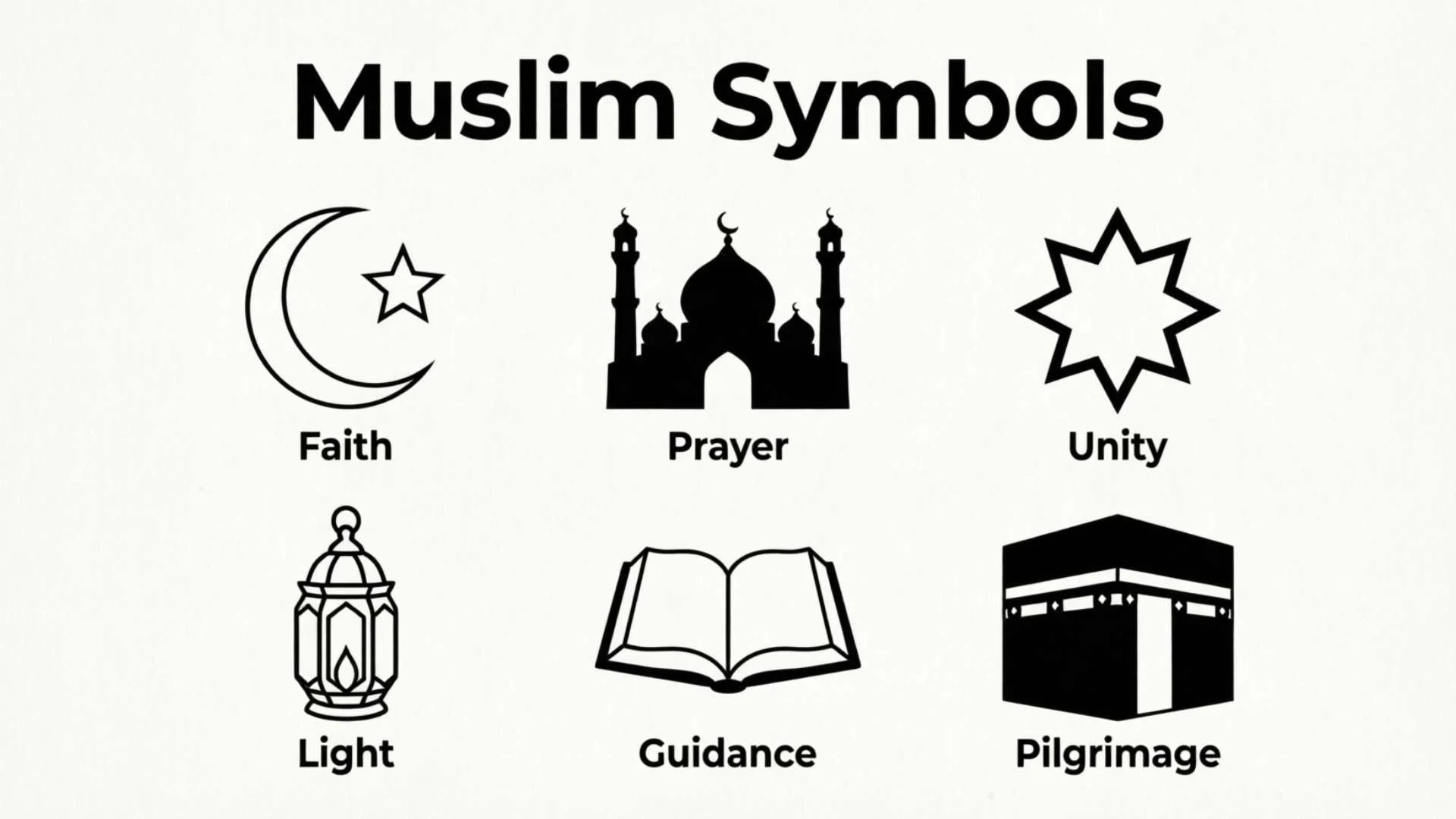
“Muslim symbols” have carried deep spiritual meaning for centuries, touching hearts through faith, beauty, history and identity.
From the glowing crescent moon above a mosque to elegant Arabic calligraphy written with devotion, these symbols speak to millions without using a single word. They connect people to prayer, hope, discipline and inner peace.
Behind every Islamic symbol lies a story filled with culture, emotion, sacrifice and spiritual wisdom that many people have never fully explored.
What Are Muslim Symbols?
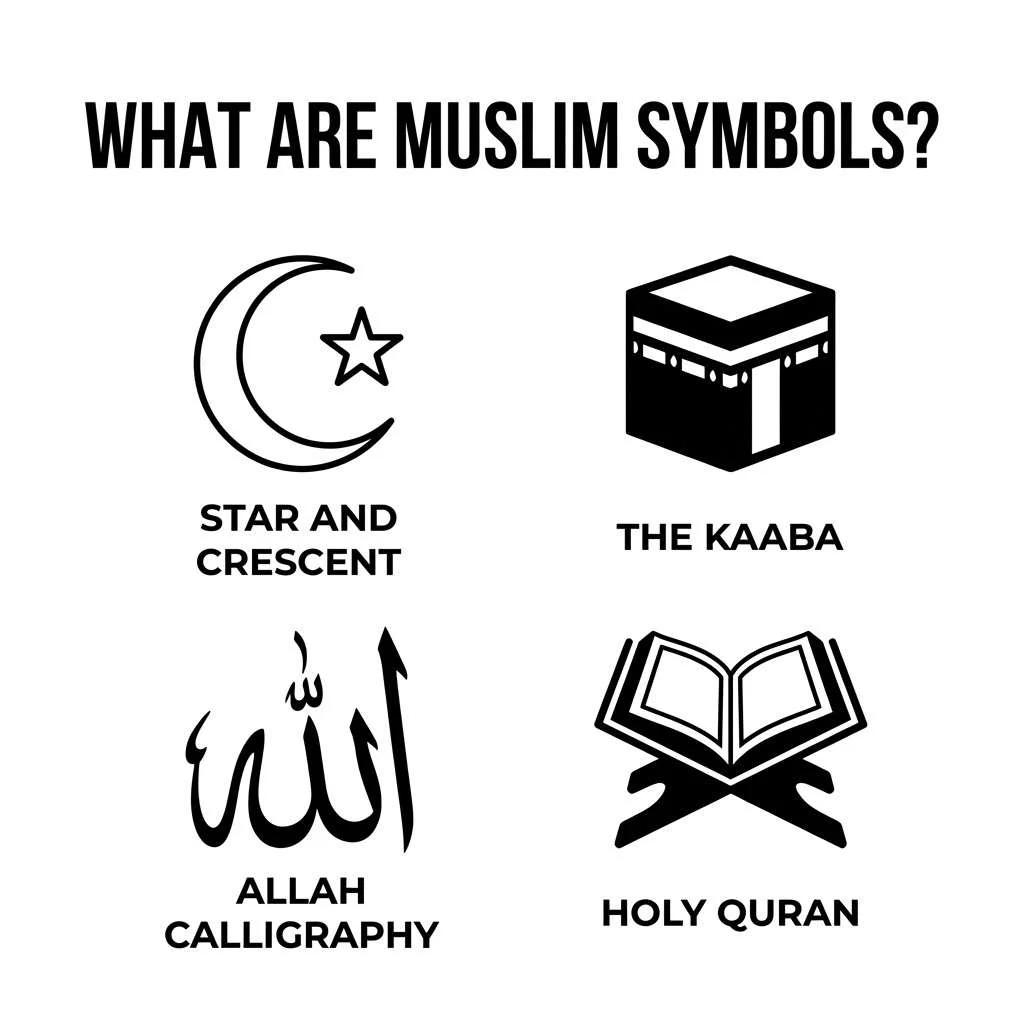
Muslim symbols are visual signs, sacred designs, objects, patterns, or artistic expressions connected to Islam and Islamic culture. These symbols help represent faith, spirituality, unity, morality and devotion to Allah. Some are directly linked to religious traditions while others developed through centuries of Islamic art, architecture, and history.
Unlike many religions that rely heavily on statues or sacred figures, Islam traditionally emphasizes simplicity, geometry, words, and spiritual meaning. This is why Islamic symbols often appear through calligraphy, patterns, crescents, stars, mosques, prayer beads, and sacred colors rather than human images.
Muslim symbols can be found in:
- Mosques and Islamic architecture
- Ancient Islamic manuscripts
- Jewelry and fashion
- Flags of Muslim countries
- Tattoos inspired by spirituality
- Islamic books and art
- Dreams and spiritual experiences
For Muslims around the world, these symbols are not merely decorative. They represent identity, faith, remembrance of God, and emotional connection to spiritual life.
The Historical Origins of Muslim Symbols
The history of Muslim symbols dates back to the rise of Islam in the 7th century. As Islamic civilization spread across the Middle East, Asia, Africa, and Europe, artistic traditions merged with local cultures. This created rich symbolic traditions that continue today.
Early Muslims focused strongly on monotheism and avoided idol worship. Because of this, Islamic artists turned toward:
- Geometric patterns
- Arabic calligraphy
- Celestial imagery
- Natural motifs
- Architectural symbolism
Over time, symbols such as the crescent moon and star became widely associated with Muslim communities. Although these were not officially established by the Quran itself, they became culturally powerful through Islamic empires and historical influence.
Islamic symbols also evolved differently across regions. Turkish Islamic art looked different from Persian traditions, while South Asian Islamic symbols developed their own emotional and visual identity.
Deep Symbolic Meaning of Muslim Symbols
Spiritual Meaning
On a spiritual level, Muslim symbols often represent surrender to Allah, divine unity, eternal truth, and inner purification. Islamic art encourages reflection rather than distraction. Every curve, line, and pattern aims to remind believers of the greatness of God.
For example, repeating geometric designs symbolize infinity and the endless nature of divine creation. Arabic calligraphy often carries verses from the Quran, transforming words into sacred visual beauty.
The crescent moon symbolizes guidance through darkness, while light in Islamic symbolism represents wisdom, truth, and divine mercy.
Psychological Meaning
Psychologically, Muslim symbols create feelings of peace, belonging, protection, and discipline. A person hearing the call to prayer from a mosque or seeing Quranic calligraphy may instantly feel emotional comfort and spiritual grounding.
Symbols also help strengthen identity. For many Muslims, wearing a symbol of faith creates confidence and reminds them to live with kindness, patience, and moral responsibility.
Cultural Meaning
Culturally, Muslim symbols unite diverse communities across continents. Although Muslims come from different races, languages, and traditions, shared symbols create emotional unity.
From Morocco to Indonesia, Islamic symbols appear in homes, architecture, clothing, weddings, and celebrations. They preserve cultural memory while keeping spiritual values alive.
Most Important Types of Muslim Symbols
Crescent Moon and Star
Visual Description
A curved crescent moon paired with a bright star.
Meaning
The crescent moon symbolizes progress, guidance, and spiritual growth. The star often represents divine light and knowledge.
Where It Appears
- Mosque domes
- Islamic flags
- Jewelry
- Religious decorations
- Cultural artwork
Although not officially the symbol of Islam itself, the crescent and star became globally associated with Muslim identity through historical Islamic empires.
Arabic Calligraphy
Visual Description
Elegant Arabic writing often formed into artistic shapes and flowing patterns.
Meaning
Arabic calligraphy symbolizes the beauty of divine words. Quranic verses written artistically remind believers of Allah’s wisdom and mercy.
Where It Appears
- Mosques
- Islamic manuscripts
- Wall art
- Home decoration
- Fashion and jewelry
Calligraphy remains one of the most beloved forms of Islamic artistic expression.
Prayer Beads
Visual Description
A string of beads used during prayer and remembrance.
Meaning
Prayer beads symbolize mindfulness, remembrance of Allah, and spiritual focus.
Where It Appears
- Personal prayer rituals
- Islamic gifts
- Spiritual meditation
Many Muslims use prayer beads to recite phrases of gratitude and devotion.
The Kaaba
Visual Description
A black cube shaped sacred structure located in Mecca.
Meaning
The Kaaba symbolizes unity, direction, and devotion to God. Muslims around the world pray facing this sacred center.
Where It Appears
- Islamic imagery
- Pilgrimage photography
- Religious education
- Spiritual dreams
The emotional power of the Kaaba deeply affects millions of believers during Hajj.
Islamic Geometric Patterns
Visual Description
Repeating symmetrical shapes and intricate mathematical designs.
Meaning
These patterns symbolize order, harmony, eternity, and the perfection of divine creation.
Where It Appears
- Mosques
- Tiles
- Carpets
- Islamic books
- Architecture
Their endless repetition reflects the infinite nature of the universe and spirituality.
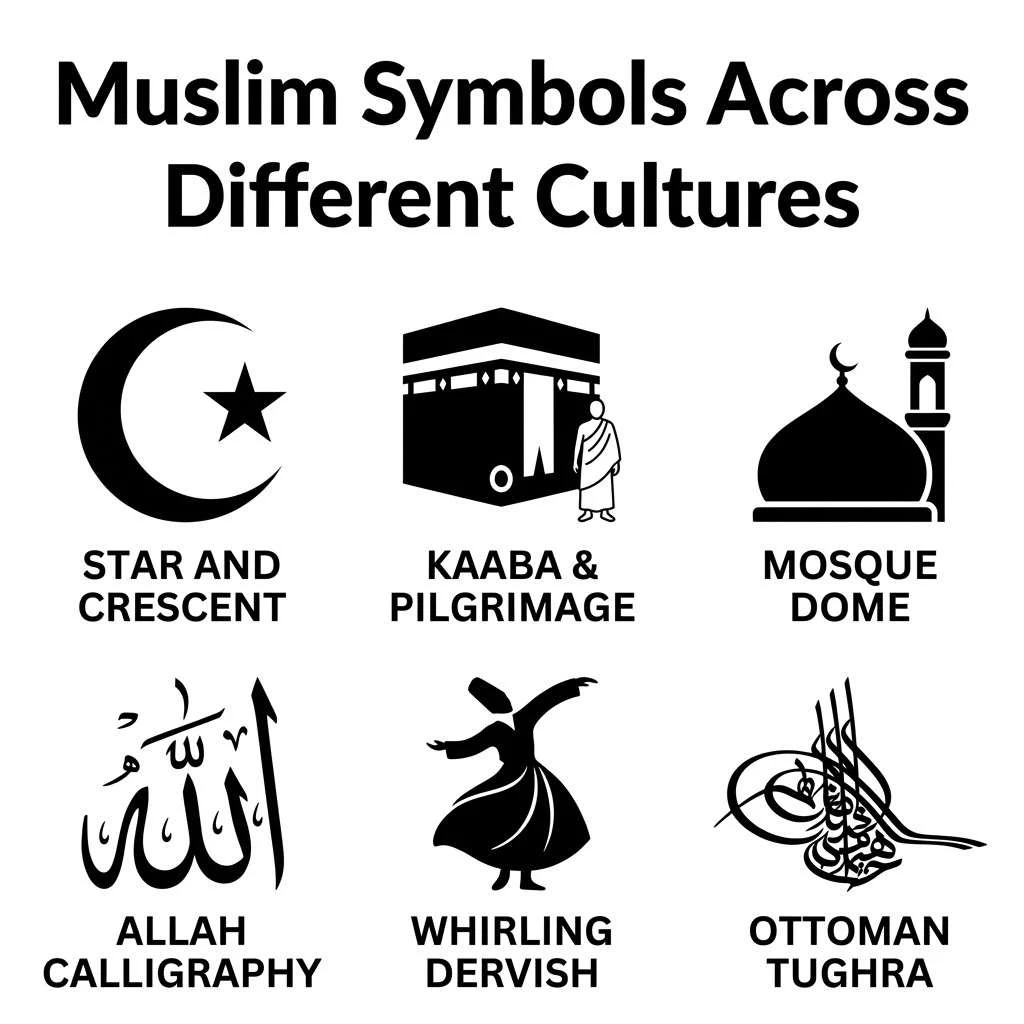
Muslim Symbols Across Different Cultures
Middle Eastern Islamic Culture
In the Middle East, Islamic symbols often focus on calligraphy, mosque architecture, crescents, and sacred geometry. Gold and green colors are commonly associated with spirituality and paradise.
Ancient Islamic cities used symbolic architecture to inspire humility and reflection.
Turkish Islamic Culture
Ottoman Islamic traditions strongly popularized the crescent moon and star. Turkish mosques with towering minarets became powerful symbols of faith and civilization.
Ottoman calligraphy also turned Quranic verses into breathtaking artistic masterpieces.
Persian Islamic Culture
Persian Islamic art emphasizes poetry, floral symbolism, and mystical spirituality. Persian mosques often contain blue tiles symbolizing heaven and divine peace.
Sufi traditions in Persia added emotional and spiritual depth to many Islamic symbols.
South Asian Muslim Culture
In Pakistan, India, and Bangladesh, Muslim symbols blend Islamic traditions with local artistic heritage. Crescent moons appear during Ramadan celebrations while calligraphy decorates homes and mosques.
Spiritual shrines and Islamic poetry also hold symbolic importance in South Asian Muslim communities.
African Islamic Traditions
African Muslim cultures often combine Islamic symbols with tribal artistic expression. Symbols may appear in textiles, architecture, jewelry, and ceremonial art while preserving Islamic spiritual values.
Muslim Symbols in Art, Movies, and Pop Culture
Muslim symbols appear widely in modern media, fashion, literature, and art. Their visual beauty and emotional depth attract people from many backgrounds.
In Movies
Films often use crescents, mosques, prayer scenes, and calligraphy to create spiritual atmosphere, cultural identity, or emotional storytelling.
In historical movies, Islamic symbols frequently represent wisdom, tradition, sacrifice, and honor.
In Paintings and Art
Islamic art avoids excessive realism and instead celebrates pattern, symmetry, and sacred words. This creates meditative beauty that feels timeless.
Many modern artists use Islamic symbols to explore identity, migration, spirituality, and cultural pride.
In Books
Islamic symbols in literature often represent inner journeys, faith struggles, redemption, and spiritual awakening.
Writers use symbolic imagery like light, water, prayer, and the moon to express emotional depth.
In Tattoos
Although tattoos remain a debated topic in Islamic traditions, some people use Islamic inspired symbols such as crescents or Arabic phrases to express identity and spirituality.
In Fashion
Islamic symbols appear in modest fashion, jewelry, scarves, and luxury design. Calligraphy and geometric patterns have influenced global fashion trends.
Spiritual and Dream Meaning of Muslim Symbols
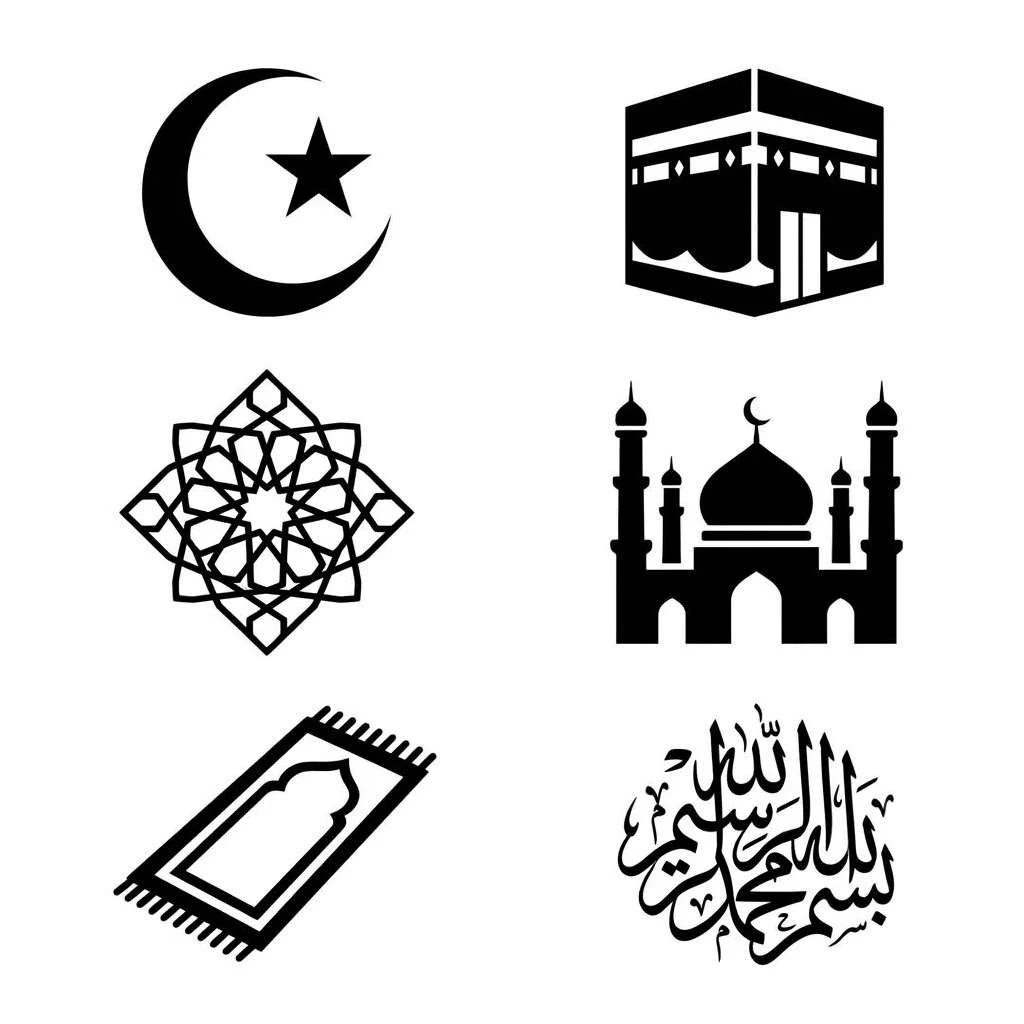
Many people report seeing Muslim symbols in dreams, meditation, or spiritual experiences. These symbols often carry emotional and spiritual interpretations.
Seeing a Crescent Moon in Dreams
This may symbolize guidance, new beginnings, hope, or spiritual awakening. It can also represent emotional healing during difficult times.
Seeing Arabic Calligraphy
Dreaming of Quranic verses or Islamic writing may symbolize divine guidance, inner peace, or a call toward spirituality.
Seeing a Mosque
A mosque in dreams often represents safety, forgiveness, community, and spiritual connection.
Hearing the Call to Prayer
This can symbolize awakening, reflection, and the need to reconnect with purpose and morality.
Spiritual meanings depend heavily on personal emotions, experiences, and beliefs. However, many people feel comfort and peace after such dreams.
Positive and Negative Meanings of Muslim Symbols
Like many powerful symbols, Muslim symbols can represent both beauty and misunderstanding depending on context.
Positive Meanings
- Faith and devotion
- Unity and brotherhood
- Peace and discipline
- Wisdom and spiritual growth
- Compassion and charity
Negative Interpretations
Due to political conflicts and media stereotypes, Islamic symbols have sometimes been misunderstood or unfairly associated with fear by certain societies.
However, these negative perceptions usually come from misinformation rather than the true spiritual teachings behind the symbols.
At their core, Muslim symbols emphasize mercy, morality, humility, and connection with God.
Why Humans Are Deeply Attracted to Muslim Symbols
The symmetry of Islamic patterns calms the mind. The sound of prayer creates emotional stillness. The elegance of Arabic calligraphy feels sacred even to people who cannot read the language.
There is also a deep psychological attraction to symbols connected with discipline, peace, and higher purpose. In a chaotic world, Islamic symbols often offer emotional grounding and spiritual direction.
Many people also feel drawn toward Muslim symbols because they carry a sense of timeless wisdom. They connect modern life with ancient traditions, reminding humanity that spiritual beauty can survive through centuries.
Muslim Symbols and Modern Identity
Today, Muslim symbols continue evolving in the digital world. Young Muslims use Islamic designs in social media art, fashion brands, home decoration, and online communities.
Modern Muslim artists blend traditional symbols with contemporary creativity. This keeps Islamic visual culture alive for future generations.
For many people, these symbols are not only religious signs but emotional anchors connected to family, memory, childhood, prayer, and belonging.
Frequently Asked Questions About Muslim Symbols
What is the main symbol of Islam?
The crescent moon and star are widely recognized symbols associated with Islam, although they are cultural rather than official religious symbols from the Quran.
Why is Arabic calligraphy important in Islam?
Arabic calligraphy is important because it beautifully represents Quranic verses and sacred words while avoiding idol imagery.
Are Muslim symbols mentioned in the Quran?
Some symbolic ideas like light, stars, and prayer are mentioned spiritually in the Quran, but many visual symbols developed culturally over time.
Why do mosques use geometric patterns?
Geometric patterns symbolize infinity, harmony, balance, and the perfection of God’s creation.
Can non Muslims appreciate Islamic symbols?
Yes. Many non Muslims admire Islamic symbols for their artistic beauty, spiritual depth, architecture, and cultural significance.
Conclusion
Muslim symbols are far more than artistic designs or cultural decorations. They carry centuries of faith, emotion, sacrifice, wisdom, and spiritual longing. From the silent beauty of Islamic geometry to the emotional power of the crescent moon, these symbols continue guiding hearts across generations.
They remind humanity of peace, reflection, discipline, and connection with something greater than ourselves. In every line of calligraphy and every sacred pattern, there is a timeless message waiting to be understood.

Julian Shaw
I’ve always been fascinated by the small, quiet stories that make life feel magical. Writing allows me to explore worlds that exist just beyond the everyday, where imagination meets reality. Over the years, I’ve found joy in creating characters that feel real and stories that stay with readers long after the last page. When I’m not writing, you can usually find me wandering through city streets, notebook in hand, capturing little sparks of inspiration. I believe every story has the power to connect us, to make us feel a little less alone. Sharing these tales is my way of leaving a mark on the world.
Books:
-
Whispers in the Wind
-
Shadows of Tomorrow