
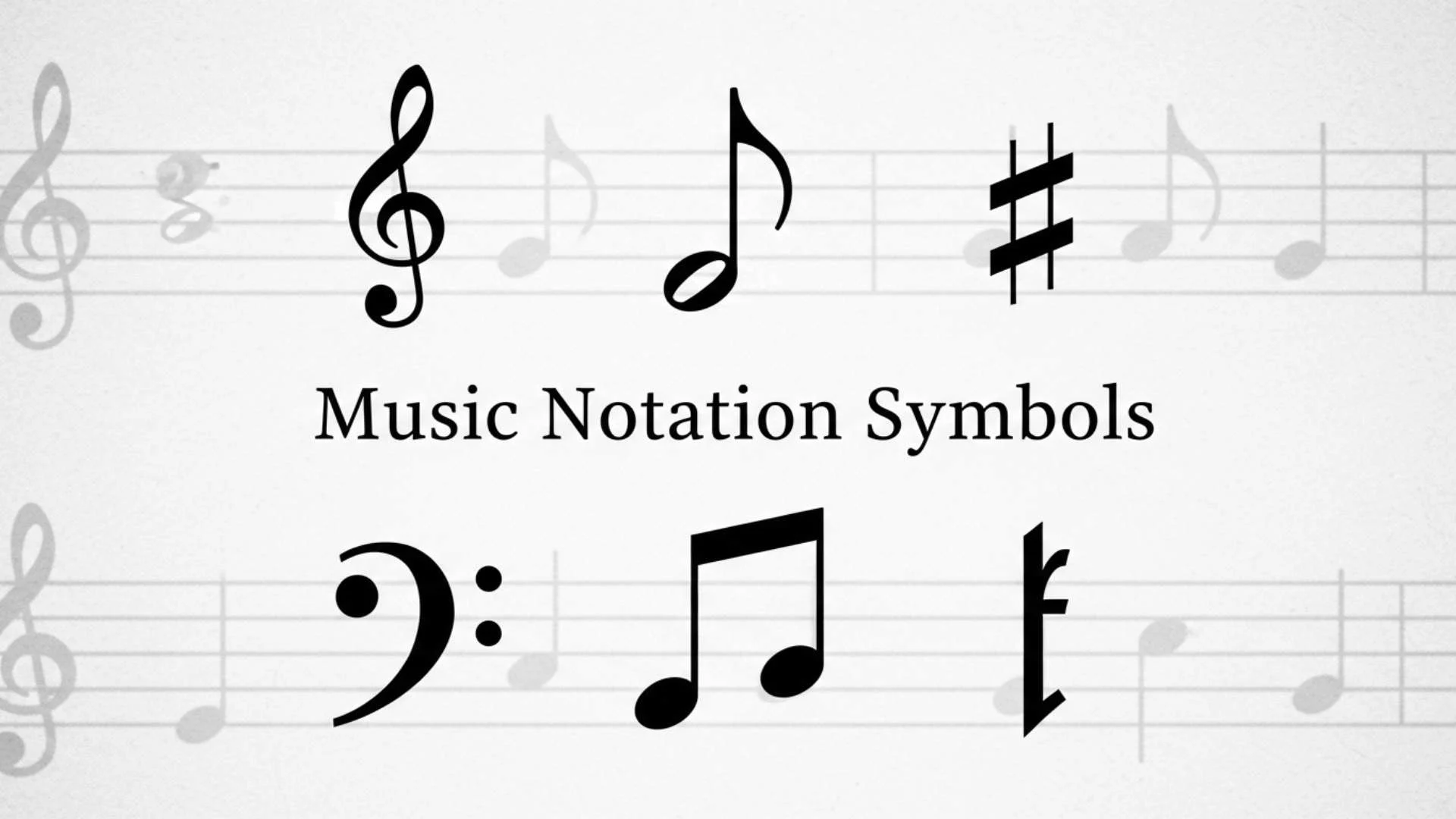
“Music notation symbols” are more than marks on paper, they are the silent language that carries emotion across centuries.
When you look at a musical score, you are not just seeing notes, you are witnessing a conversation between composers, performers and the human soul.
These symbols have shaped symphonies, guided prayers, and expressed feelings words could never hold.
In this article, you will uncover the deeper meanings behind these symbols and why they continue to move hearts around the world.
What Are Music Notation Symbols?
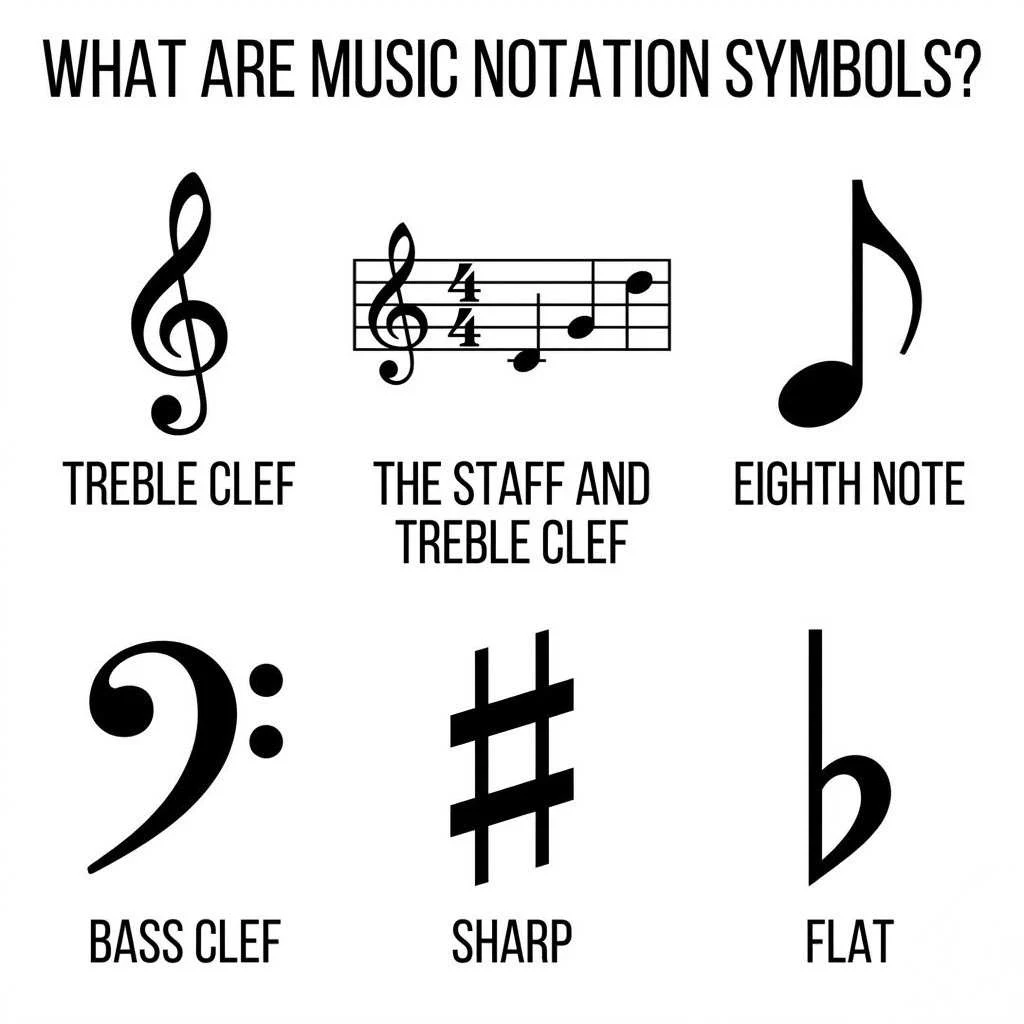
Music notation symbols are visual signs used to represent sound, rhythm, timing, and expression in written music. They allow musicians to read, interpret, and perform compositions exactly as intended by the composer.
These symbols date back to ancient civilizations. Early forms appeared in ancient Greece and evolved through medieval Europe where monks used neumes to record chants. Over time, this system transformed into the modern staff notation we use today.
At their core, music notation symbols are a bridge between silence and sound. They preserve music across time, allowing a piece written centuries ago to still be played with precision and emotion today.
Deep Symbolic Meaning
Spiritual Level
On a spiritual level, music notation symbols represent harmony between the physical and the unseen. A simple note can symbolize divine order, while rhythm reflects the heartbeat of life itself. Many traditions believe music connects humans to a higher realm, and these symbols act as sacred guides in that journey.
Psychological Level
Psychologically, these symbols train the brain to interpret patterns and emotions. When a musician reads a crescendo, they feel a rise in intensity even before playing. The mind begins to associate symbols with emotional states, creating a deep bond between sight and feeling.
Cultural Level
Culturally, music notation symbols are universal. While languages differ, a treble clef or quarter note carries meaning across borders. They represent humanity’s shared desire to communicate beyond words, making them one of the most powerful symbolic systems ever created.
Types / Variations of Music Notation Symbols
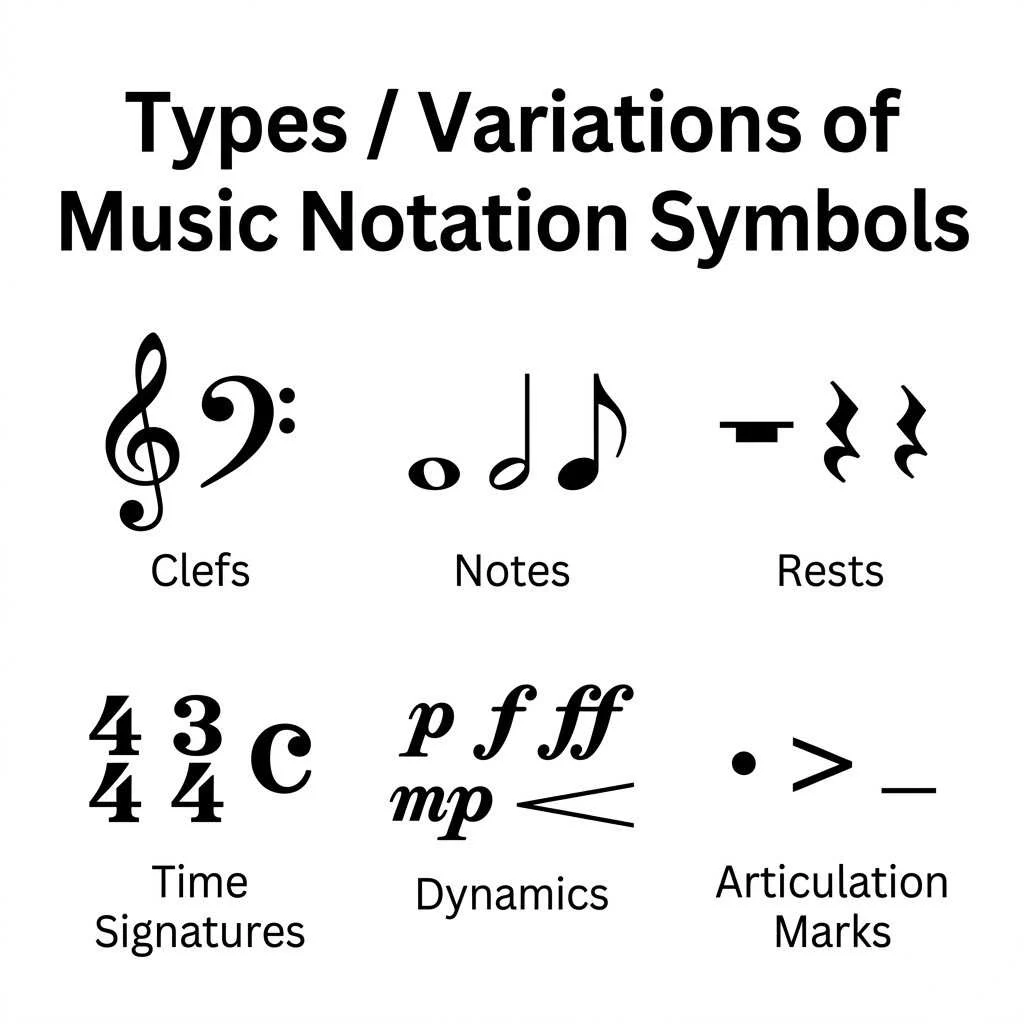
1. Clefs
Visual Description: Curved symbols placed at the beginning of the staff
Meaning: Define pitch range
Where It Appears: Classical music, modern compositions
The treble clef and bass clef guide musicians on how to read notes. They are like keys that unlock the meaning of the staff.
2. Notes
Visual Description: Oval shapes with stems and flags
Meaning: Represent pitch and duration
Where It Appears: All written music
Whole notes, half notes, and quarter notes tell musicians how long to hold a sound. Each note is a moment in time captured visually.
3. Rests
Visual Description: Unique symbols indicating silence
Meaning: Represent pauses
Where It Appears: Musical scores
Rests remind us that silence is as important as sound. Without pauses, music loses its emotional depth.
4. Time Signatures
Visual Description: Numbers at the beginning of a piece
Meaning: Define rhythm structure
Where It Appears: All genres
They act like a heartbeat, guiding the flow and timing of music.
5. Dynamics
Visual Description: Letters like p, f, mf
Meaning: Indicate volume
Where It Appears: Expressive compositions
From soft whispers to powerful climaxes, dynamics bring emotion to life.
6. Articulation Marks
Visual Description: Dots, lines, accents
Meaning: Show how notes are played
Where It Appears: Detailed compositions
They shape the personality of each note, whether sharp, smooth, or detached.
Music Notation Symbols Across Cultures
Ancient Greece
Early notation systems were used to document poetry and music. Symbols represented pitch but were less detailed than modern notation.
Medieval Europe
Monks developed neumes to preserve sacred chants. These symbols carried spiritual importance and were used in religious rituals.
Indian Classical Music
Instead of Western notation, systems like sargam use syllables to represent notes. Though different visually, the symbolic purpose remains the same.
Chinese Music Tradition
Ancient Chinese notation used characters to represent tones and instruments, blending language with music.
Modern Global Culture
Today, Western notation dominates globally, used in everything from orchestras to film scores. It has become a universal language of music.
Music Notation Symbols in Art, Movies and Pop Culture
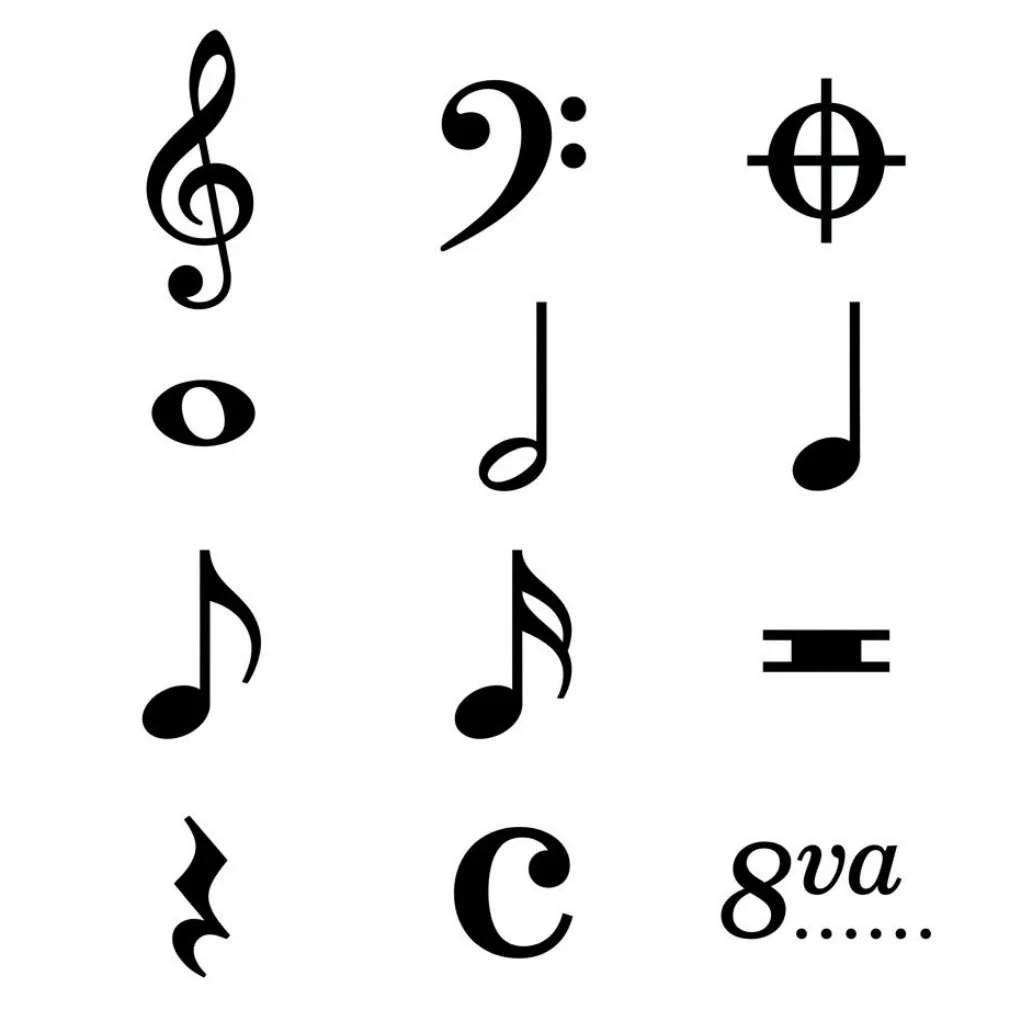
Music notation symbols appear far beyond sheet music. In films, they often symbolize creativity, genius, or emotional depth. A scene showing a handwritten score can instantly convey passion and dedication.
In paintings, composers are frequently depicted surrounded by musical notes, representing inspiration. In books, notation can symbolize hidden messages or emotional expression.
Tattoos of treble clefs or notes are popular choices. People use them to express identity, love for music, or personal stories tied to sound. In fashion, these symbols appear on clothing and accessories, turning music into a visual statement.
Spiritual and Dream Meaning of Music Notation Symbols
Seeing music notation symbols in dreams often reflects emotional expression. It may indicate a desire to communicate feelings you cannot put into words.
Spiritually, these symbols can represent alignment and harmony in life. A flowing melody in a dream may suggest peace, while broken or chaotic notes could signal inner conflict.
For many, these visions feel like messages from the subconscious, guiding them toward balance and self-expression.
Positive vs Negative Meaning
Positive Meaning
Music notation symbols often represent harmony, creativity, and emotional freedom. They symbolize structure with beauty, showing how order can create something deeply moving.
Negative Meaning
On the other side, they can represent pressure, perfectionism, or fear of expression. For some, reading music feels restrictive rather than freeing.
This duality reflects life itself, where structure can either support or limit creativity depending on how it is used.
Why Humans Are Attracted to This Symbol
Humans are naturally drawn to patterns, and music notation symbols offer a perfect blend of order and emotion. They turn invisible sound into something visible and understandable.
There is also a deeper emotional pull. These symbols represent stories, memories, and feelings. A single note on a page can remind someone of a song that changed their life.
Psychologically, they satisfy both logic and creativity. The brain enjoys decoding them, while the heart connects to the music they create.
FAQs
What are the basic music notation symbols?
The basic music notation symbols include clefs, notes, rests, time signatures, and dynamics. These elements form the foundation of written music.
Why are music notation symbols important?
They allow musicians to read and perform music accurately. Without them, preserving complex compositions would be nearly impossible.
Are music notation symbols universal?
Yes, most of the world uses Western notation, making it a universal system for musical communication.
Can beginners learn music notation symbols easily?
Yes, with practice and guidance, beginners can quickly understand and use these symbols effectively.
Conclusion
Music notation symbols are not just tools for musicians, they are a timeless language that speaks directly to the soul.
They carry emotions across generations, turning silence into something meaningful and unforgettable. When you understand these symbols, you begin to see music not just as sound, but as a living, breathing form of human expression that connects us all.

Nora Bennett
Nora Bennett is a storyteller at heart, always finding magic in the everyday moments of life. From a young age, she discovered the joy of weaving emotions into words, creating characters that feel like old friends. Writing, for her, is both an adventure and a sanctuary—a way to explore the world and herself. She loves connecting with readers who share her passion for heartfelt stories and unforgettable journeys. When she’s not crafting her next tale, Nora enjoys quiet mornings with a cup of coffee and a notebook full of ideas. Her stories are meant to inspire, comfort, and spark imagination in everyone who reads them.
Books:
-
Whispers of Yesterday
-
Echoes of Tomorrow