
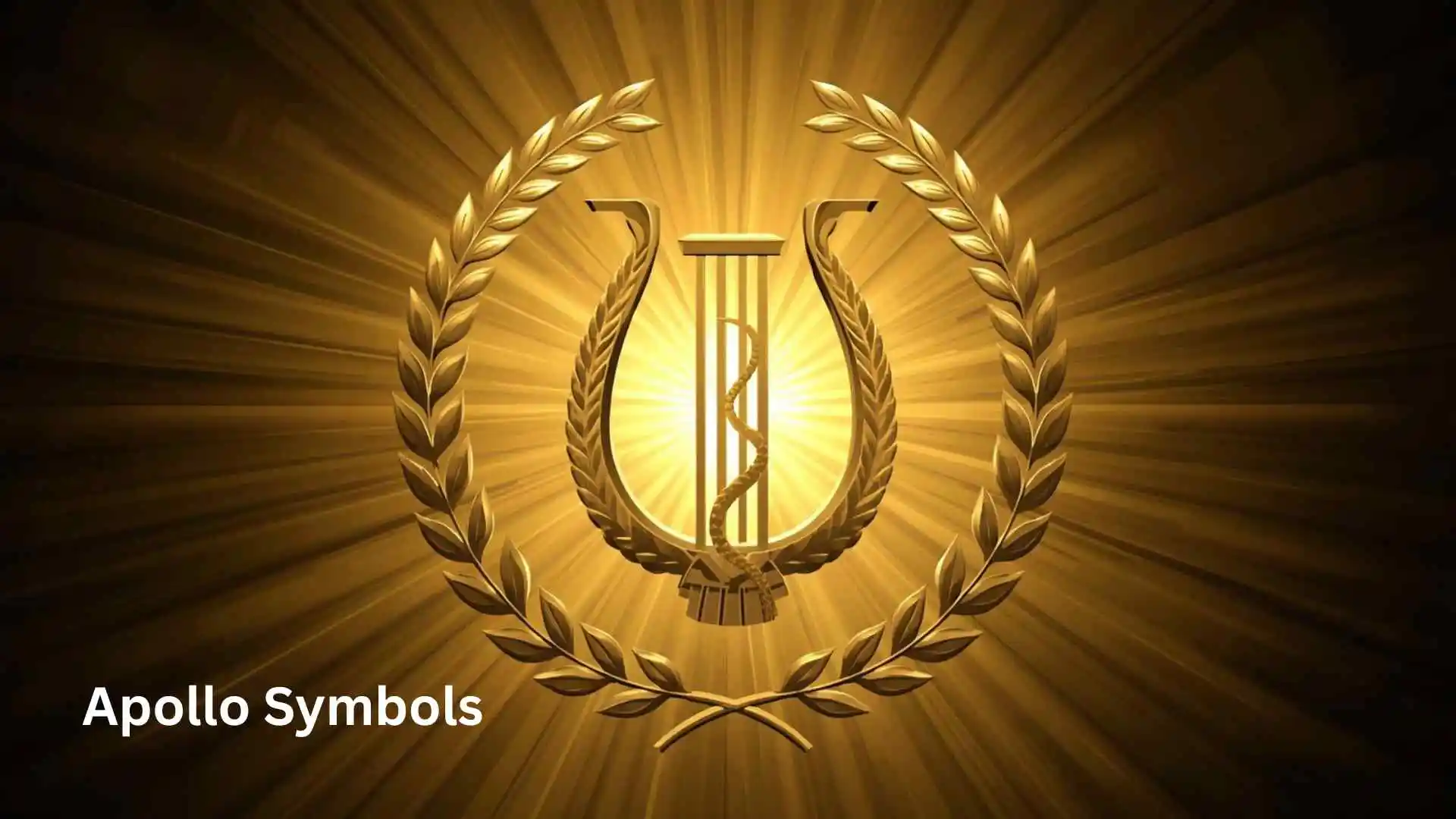
Some symbols don’t just belong to historyn they feel alive, as if they still whisper through time. The symbols of Apollo are among those rare cultural mysteries that continue to inspire awe, curiosity, and emotional connection even today.
From ancient temples in Greece to modern art, movies, and even dreams, Apollo’s symbols carry a strange kind of energy one that feels both human and divine.
In this article, you’ll uncover the deeper meanings behind Apollo’s symbols and why they still shape how we understand beauty, light, truth, and creativity in modern life.
What are Apollo Symbols?
Apollo is one of the most important gods in ancient Greek mythology, associated with the sun, music, prophecy, healing, and knowledge.
Apollo symbols are visual and mythological objects that represent his divine powers and personality. These symbols were used in ancient temples, rituals, art, and storytelling to express his influence over human life and the natural world.
Common Apollo symbols include the sun, laurel wreath, lyre, bow and arrow, raven, and tripod. Each symbol carries a deeper meaning connected to light, truth, harmony, and divine order.
Deep Symbolic Meaning of Apollo Symbols
Spiritual Meaning
On a spiritual level, Apollo symbols represent enlightenment, divine truth, and the journey from darkness to light.
The sun, one of his strongest symbols, represents spiritual awakening—guiding the soul out of confusion into clarity.
The lyre reflects harmony between the human soul and the universe, symbolizing divine music that aligns all existence.
Psychological Meaning
Psychologically, Apollo symbolizes the rational mind, logic, discipline, and creativity.
He represents the part of the human mind that seeks order, meaning, and expression through art and knowledge.
People often associate Apollo’s energy with confidence, clarity of thought, and artistic inspiration.
Cultural Meaning
Culturally, Apollo symbols represent civilization, balance, and intellectual progress.
In ancient Greece, Apollo was seen as the protector of truth, poetry, medicine, and prophecy.
His symbols were not just religious—they were ideals for how humans should live: balanced, intelligent, and creative.
Types / Variations of Apollo Symbols
1. The Sun
- Visual: Radiant golden disk or rays of light
- Meaning: Truth, life, divine clarity
- Appears in: Greek mythology, Roman culture, modern spiritual art
2. The Lyre
- Visual: A small stringed musical instrument
- Meaning: Harmony, music, artistic expression
- Appears in: Ancient Greek festivals, poetry traditions
3. The Laurel Wreath
- Visual: Circular crown made of laurel leaves
- Meaning: Victory, honor, divine favor
- Appears in: Olympic games, Roman emperors, academic ceremonies
4. The Bow and Arrow
- Visual: Golden bow with arrows of light
- Meaning: Precision, truth, protection, divine justice
- Appears in: Mythological battles, stories of prophecy
5. The Raven
- Visual: Black bird associated with prophecy
- Meaning: Messages, foresight, transformation
- Appears in: Ancient Greek myths and oracles
6. The Tripod (Oracle Seat)
- Visual: Three-legged sacred stool
- Meaning: Prophecy, divine communication
- Appears in: Oracle of Delphi rituals
Apollo Symbols Across Cultures
Ancient Greece
In Greek culture, Apollo was the god of light, truth, and prophecy. His symbols represented divine order and intellectual clarity. Temples dedicated to him were centers of wisdom.
Roman Civilization
The Romans adopted Apollo directly, keeping his symbols but emphasizing healing and state authority. He became a symbol of imperial wisdom and control.
Egyptian Influence
In some interpretations, Apollo was associated with solar deities like Ra, representing the sun’s life-giving power and cosmic balance.
Renaissance Europe
During the Renaissance, Apollo became a symbol of artistic perfection and human intellect. Painters and poets used his image to represent creativity and enlightenment.
Modern Culture
Today, Apollo’s symbols appear in science, space missions (NASA’s Apollo program), literature, and even psychology as symbols of rational thought and inspiration.
Apollo Symbols in Art, Movies & Pop Culture
Apollo’s imagery continues to inspire modern creativity.
- Movies: Often represents heroic intelligence, truth-seekers, or divine beings of light
- Paintings: Used to symbolize beauty, balance, and perfection
- Books: Represents enlightenment, prophecy, and artistic genius
- Tattoos: Chosen for inspiration, leadership, and inner strength
- Fashion: Laurel wreaths and sun motifs symbolize victory and elegance
Apollo’s influence is subtle but powerful—it often appears when themes of truth, knowledge, or artistic mastery are involved.
Spiritual & Dream Meaning of Apollo Symbols
Seeing Apollo symbols in dreams or meditation often carries deep spiritual messages:
- The sun may represent awakening or clarity in life decisions
- The lyre may indicate a need for emotional expression or creativity
- The laurel wreath may symbolize success or personal achievement
- The bow and arrow may represent focus and direction in life
Spiritually, these symbols are often seen as signs of alignment—your mind, body, and purpose coming into harmony.
Positive vs Negative Meaning of Apollo Symbols
Positive Meaning
- Enlightenment
- Creativity
- Healing
- Wisdom
- Truth
Negative Meaning
- Cold rationality without emotion
- Perfectionism
- Emotional distance
- Over-control
- Pressure to perform
Apollo’s energy is powerful, but when unbalanced, it can become too rigid or detached from emotion.
Why Humans Are Attracted to Apollo Symbols
Human attraction to Apollo symbols is deeply psychological.
We are naturally drawn to light, order, and meaning in a chaotic world. Apollo represents the part of us that wants to understand everything, create beauty, and find truth.
His symbols trigger a sense of aspiration—becoming better, smarter, more balanced versions of ourselves.
That is why Apollo continues to appear in art, culture, and even modern science—it reflects humanity’s highest ideals.
FAQs About Apollo Symbols
1. What are the main Apollo symbols?
The main symbols include the sun, lyre, laurel wreath, bow and arrow, raven, and tripod.
2. What does the sun symbolize in Apollo mythology?
It represents truth, enlightenment, and divine clarity.
3. Why is Apollo associated with music?
Because the lyre symbolizes harmony, creativity, and artistic expression.
4. What does Apollo mean spiritually?
He represents enlightenment, balance, and connection between mind and spirit.
5. Is Apollo a god of healing?
Yes, Apollo is also associated with healing and medicine in Greek mythology.
6. What does seeing Apollo symbols in dreams mean?
It often suggests clarity, creativity, or a life transformation.
7. Why is Apollo important today?
Because his symbols still represent human ideals like knowledge, truth, and artistic excellence.
Conclusion
Apollo symbols are more than ancient myths—they are reflections of human aspiration, intelligence, and creativity. From the shining sun to the delicate strings of the lyre, each symbol tells a story of balance between logic and beauty.
Even in modern life, Apollo’s presence continues to guide us toward clarity, inspiration, and truth. Understanding these symbols is not just about history—it is about understanding ourselves.
Discover More Topics:
- The Secret Language of Circuits | How Wiring Diagram Symbols Map the Human Need for Order
- Vow of the Disciple Symbols | The Sacred Marks of Eternal Promise

Julian Shaw
I’ve always been fascinated by the small, quiet stories that make life feel magical. Writing allows me to explore worlds that exist just beyond the everyday, where imagination meets reality. Over the years, I’ve found joy in creating characters that feel real and stories that stay with readers long after the last page. When I’m not writing, you can usually find me wandering through city streets, notebook in hand, capturing little sparks of inspiration. I believe every story has the power to connect us, to make us feel a little less alone. Sharing these tales is my way of leaving a mark on the world.
Books:
-
Whispers in the Wind
-
Shadows of Tomorrow