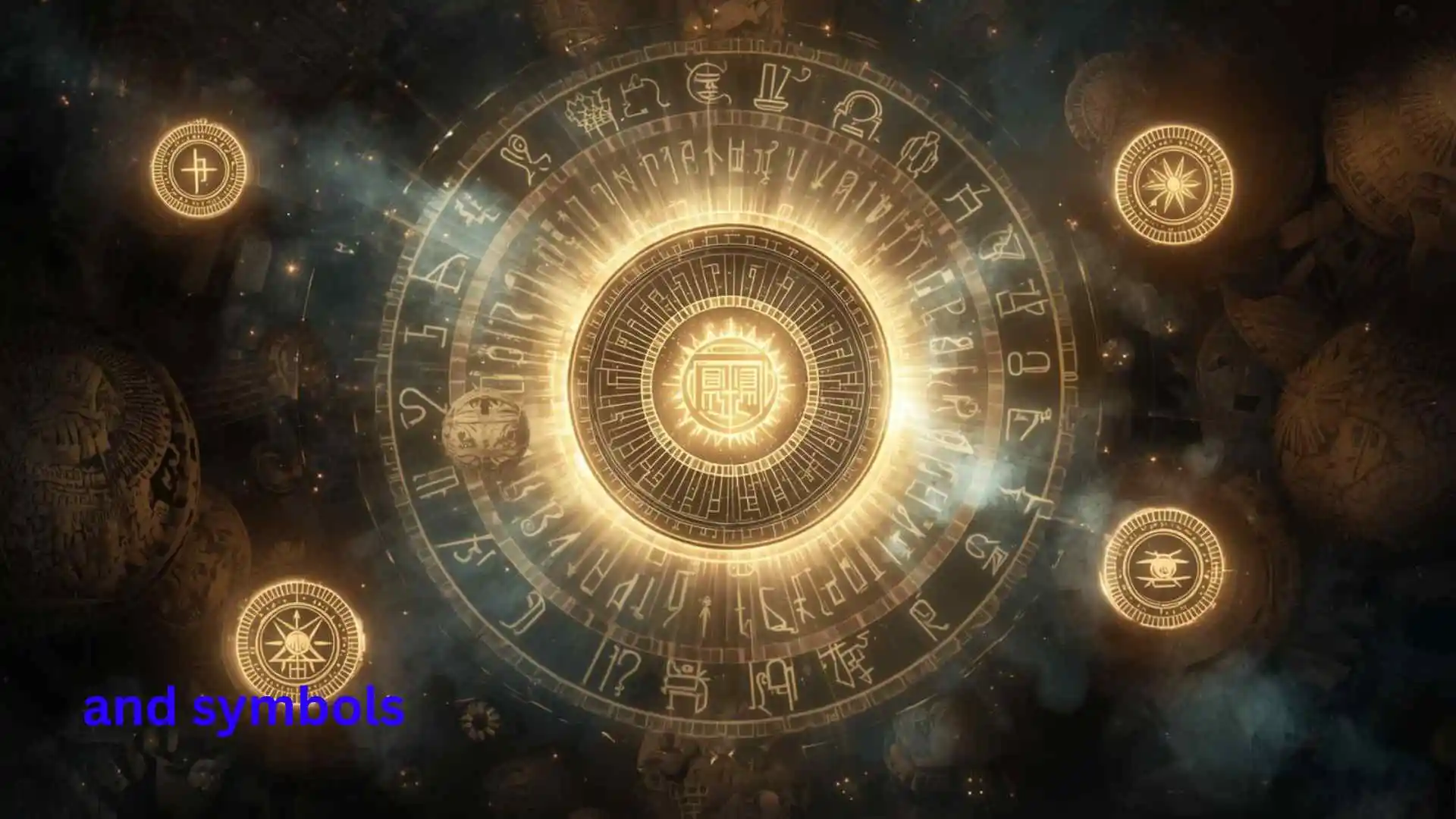
Every time you pause at a red light, share a heart emoji, or notice a raven crossing your path, you are reading and writing in the oldest language on Earth. And symbols are not mere decorative marks.
They are the invisible architecture of human understanding, the bridge between what we see and what we feel, between what we know and what we can only sense. For tens of thousands of years, before written words captured our laws, symbols captured our souls.
And today, in a world drowning in information, the symbols we choose to recognize or ignore still determine how we love, fear, hope, and belong.
This article will take you deeper than any catalog of ancient icons. You will discover why a circle can break your heart, why a mirror terrifies more than a monster, and why your brain cannot escape the pull of certain shapes. By the end, you will never look at a symbol the same way again.
Deep Symbolic Meaning: The Invisible Operating System of the Mind
A symbol is not an image. An image is a thing you see. A symbol is a thing you feel while seeing. The difference between a drawing of a bird and a dove carrying an olive branch is the difference between anatomy and hope.
On a spiritual level, symbols act as doorways. They allow the infinite to speak in finite forms. When a Buddhist gazes at the endless knot, they are not admiring geometry. They are touching the idea that all existence intertwines. When a Christian watches the ichthys fish, they are not identifying seafood. They are whispered a secret of faith from centuries of underground believers.
On a psychological level, Carl Jung called symbols the “primordial images” buried in what he named the collective unconscious. You do not learn to fear snakes or revere the sun. Those responses are inherited memories, ancient software running silently beneath your daily thoughts. Every time you dream of flying or falling, of forests or empty rooms, you are processing a symbol that your ancestors also processed. You are less modern than you believe.
On a cultural level, symbols are the glue of civilization. A flag is cheap fabric until it carries the weight of soldiers’ sacrifices. A wedding ring is common metal until it holds the promise of forever. Symbols allow groups to share invisible truths, to coordinate belief, to weep together at a statue, to riot over a cartoon. They are both the most gentle and most dangerous tools humans possess.
Types and Variations of Symbols Across Human Experience
Not all symbols speak the same way. Some whisper. Some scream. Understanding their variations is like learning the dialects of a hidden continent.
The Universal Archetypes
These appear in every human culture without exception. The Circle represents wholeness, eternity, the womb, the sun, zero, and infinity. A wedding ring, a halo, a mandala, a stone arrangement in a prehistoric field. The Spiral speaks of growth, evolution, the journey inward and outward. Found in Celtic carvings, Navajo sand paintings, and the golden ratio of seashells. The Cross is older than Christianity. It was an emblem of the four directions, the union of heaven and earth, the meeting point of matter and spirit.
The Natural World as Symbol
Trees symbolize connection between underworld, earth, and sky. The Norse Yggdrasil, the Buddhist Bodhi tree, the Celtic Tree of Life. Water represents emotion, purification, unconsciousness, and change. Baptisms, tears, oceans in dreams. Fire is destruction but also creation, passion but also punishment. A hearth means home. A wildfire means apocalypse.
Geometric and Abstract Symbols
The Triangle pointing upward suggests masculine energy, aspiration, fire. Pointing downward suggests feminine energy, water, the descent into mystery. The Hexagram (Star of David) combines two triangles, representing the marriage of opposites, the balance of spirit and flesh. The Eye (whether the Eye of Horus, the evil eye, or the all seeing eye in a pyramid) represents protection, knowledge, surveillance, and divine consciousness.
Color as Symbol
Red is never just red. It is love, war, danger, luck, passion, shame. White is purity in some cultures, mourning in others. Black is death to some, elegance and mystery to others. Every flag, every advertisement, every painted room is a deliberate symbolic statement.
And Symbols Across Cultures: A Journey Through Time and Geography
No symbol means the same thing to everyone. That truth is both beautiful and dangerous.
Ancient Egypt transformed symbols into a written language of gods. The ankh was not merely a cross with a loop. It was the key of life, held to the nostrils of pharaohs to breathe immortality. The scarab beetle represented the sun rolling across the sky, rebirth, and the stubborn miracle of life emerging from dung. To an Egyptian, a symbol did not represent reality. A symbol participated in reality.
Indigenous Australian cultures use symbols in dreamtime stories that map land, law, and ancestry. Concentric circles mark waterholes and campsites. U shapes represent people sitting. Wavy lines are rivers or rain. Their symbols are not art separate from life. They are survival instructions passed across forty thousand years.
Medieval Christianity filled cathedrals with symbols because most believers could not read. A pelican piercing her own breast to feed her young represented Christ’s sacrifice. A lily meant virginity. A skull meant mortality. Even the directions of church architecture symbolized the journey from sin (west) to salvation (east). Every stone, every color, every gesture in mass was a multilayered symbol.
Hindu and Buddhist traditions offer the lotus, growing from mud to bloom unstained, representing spiritual awakening. The swastika, ancient and sacred for five thousand years as a mark of good fortune and the sun’s path, was stolen and poisoned in the twentieth century. This tragedy reveals a profound truth: symbols are innocent. Human intention corrupts them.
Modern digital culture has created the fastest evolving symbol set in history. The skull and crossbones once marked pirates and poison. Now it might mean danger, or on a teenager’s shirt, rebellion, or in a text message, playful death from embarrassment. The thumbs up, a friendly gesture to some, is an insult in parts of the Middle East. Emojis, those tiny yellow faces, are now argued over in courts as binding emotional evidence.
Symbols in Art, Movies, and Pop Culture: The Mirrors We Hold Up to Ourselves
Art without symbols is decoration. Art with symbols is conversation across time.
In painting, Jan van Eyck’s Arnolfini Portrait is a wedding contract encoded entirely in symbols. The single candle in the chandelier represents the presence of God. The little dog represents fidelity. The discarded shoes represent holy ground. The convex mirror in the background shows two figures entering the room, possibly the witnesses to the marriage. Every object is a word in a visual sentence.
In movies, Stanley Kubrick was a master of symbolic obsession. The Shining uses the maze as a symbol of trapped consciousness, the color red as bleeding reality into sanity, the repeated number 42 (a Jack Torrance typed manuscript saying only “All work and no play makes Jack a dull boy” is actually a coded symbol of his mechanical madness). The Matrix turned the red pill and blue pill into modern mythology, symbols so powerful they reshaped political language.
In books, the green light in The Great Gatsby is not a light. It is unreachable longing, class aspiration, the cruel hope of tomorrow. The mockingbird in Harper Lee’s novel is not a bird. It is innocence destroyed by ignorance.
In tattoos, people wear their souls on their skin. A semicolon tattoo represents surviving suicide. A dandelion seed blowing away represents a lost child. Chains breaking represent freedom from addiction or abuse. These are not decorations. They are testimonies written in permanent ink.
In fashion, the safety pin became a symbol of punk rebellion against a polished, lying society. The little black dress, thanks to Coco Chanel, became a symbol of quiet power, mourning, elegance, and sexual independence all at once.
Spiritual and Dream Meaning of Symbols
When symbols visit you in sleep or meditation, they are not random. Neuroscience confirms that dreaming brain activity mirrors waking emotion processing. But spiritually, dreams are the inner world using the universal vocabulary to speak to your specific life.
Seeing water in a dream: calm water means peace with your emotions. Turbulent water means unresolved feelings. Drowning means you feel overwhelmed by something you cannot name while awake.
Seeing a snake terrifies most people. But a snake is also healing (the medical caduceus), transformation (shedding skin), and hidden wisdom (the serpent in the garden spoke truth before the lie). To dream of a snake is to be asked what you are afraid to understand.
Seeing a door means opportunity or escape. An open door welcomes you. A locked door frustrates you. A door you are afraid to open means you know what waits on the other side, and you are not ready.
Seeing the same number repeatedly, like 11:11 or 333, is called apophenia by skeptics and synchronicity by Jung. Whether coincidence or cosmic wink, the meaning is the same: your attention is being asked to focus on the present moment.
In meditation, advanced practitioners report seeing the blue pearl, a tiny luminous dot that represents the seed of the soul. Or the third eye opening as a deep purple lotus between the eyebrows. These symbols are not hallucinated. They are the mind finally quiet enough to perceive its own source.
Positive Versus Negative Meanings: The Double Edged Sword
The most powerful symbols cut both ways.
The sun gives life. It also kills with drought and cancer. Ancient cultures sacrificed to it in fear and danced to it in joy.
The heart symbolizes love, courage, the seat of the soul. A heart on a Valentine is sweet. A human heart ripped from a chest in Aztec sacrifice is terror. The same shape, the same organ, opposite meanings depending on context.
The pentagram, a five pointed star, protects in Wiccan tradition, representing the four elements plus spirit. Inverted, it became associated with satanic worship, though historically the inversion simply meant matter over spirit, not evil.
The skull reminds us we die, which is humbling and wise. But worn by a cartel or a terrorist, it promises murder. In Mexican Day of the Dead celebrations, the skull is joyful, a reunion with ancestors. In a pirate flag, it is a threat.
This duality is not a flaw of symbols. It is their truth. A knife can cut bread for a hungry child or stab a stranger in the dark. The symbol only amplifies what the human holding it intends.
Why Humans Are Irresistibly Attracted to Symbols
You cannot stop yourself from seeing symbols because your brain is a pattern seeking machine. This is not philosophy. This is biology.
Your visual cortex processes shapes before your conscious mind interprets them. A circle triggers calm. A sharp angle triggers alertness. You do not decide this. Your evolutionary ancestors who noticed the shape of a predator in the tall grass survived. Those who saw only grass did not.
Beyond survival, symbols offer compression. A single image can carry a novel’s worth of meaning. The peace sign, designed in 1958 for nuclear disarmament, combines the semaphore signals for N and D (Nuclear Disarmament) inside a circle. That is history, politics, hope, and protest in one inch of ink.
Symbols also offer belonging. Wearing a cross, a Star of David, a crescent moon, a rainbow flag, a black fist, a pink ribbon instantly signals your tribe. In a lonely, crowded world, that signal is a lifeline. You are not alone. Others see what you see.
Most deeply, symbols offer control over the invisible. You cannot see justice, but you can see a blindfolded woman with scales. You cannot see love, but you can see a red heart. You cannot see God, but you can see light, a dove, a hand reaching from clouds. Symbols are how mortals grasp eternity.
Frequently Asked Questions About And Symbols
1. What is the oldest symbol ever discovered by archaeologists?
The oldest known symbolic engraving is a zigzag pattern carved on a freshwater mussel shell found in Java, dated to around 540,000 years ago, created by Homo erectus before modern humans existed. The oldest universally recognized symbol is the red ochre cross found in a South African cave, approximately 77,000 years old.
2. Can a symbol change its meaning over time?
Absolutely and constantly. The swastika is the most painful example, shifting from four thousand years of positive meaning (well being, sun, luck) to horror in one generation. The OK hand sign (thumb and index finger circle) now means white power in certain online hate groups, forcing a reevaluation of a previously harmless gesture.
3. Why do the same symbols appear in unconnected ancient cultures?
Jung argued this proves the collective unconscious, a shared mental inheritance. Skeptics argue that humans share the same bodies, same environment (sun, moon, water, birth, death), and same neurological wiring, so similar symbols naturally emerge. Either way, the convergence is undeniable and haunting.
4. How do symbols affect marketing and advertising?
Every logo is a designed symbol intended to trigger trust, excitement, or desire without conscious thought. The golden arches of McDonald’s are not M’s. They are maternal, welcoming breasts according to some brand psychologists. The Nike swoosh is motion without effort. The Apple logo is forbidden knowledge made friendly. You are being symbolically influenced thousands of times per day.
5. What does it mean if I keep seeing a specific symbol everywhere?
Psychologically, it is frequency illusion (Baader Meinhof phenomenon): your brain notices what you have recently learned about. Spiritually, many traditions would say you are being asked to pause and listen. The symbol appearing is not magic. But your attention being drawn to it repeatedly is a mirror of what already lives inside you.
6. How can I use symbols intentionally in my own life?
Choose three symbols that genuinely move you. Draw them, wear them, place them where you will see them daily. Do not choose what is trendy. Choose what makes your chest tighten or your breath slow. Over months, you will find those symbols begin to change you, not because they have power, but because your repeated attention changes your neural pathways. You become the meaning you meditate on.
Conclusion
We began with a red light and a raven. We end with a truth both simple and vast. And symbols are not relics of superstitious ancestors. They are the software you are running right now, whether you know it or not. Every flag you salute, every logo you trust, every ring you place on a finger, every emoji you send to a loved one is a prayer written in the oldest language of the human heart. The symbols you choose to see, and the ones you choose to become, will shape the only life you get. So look closer. What is whispering to you today?
Discover More Topics:
- Artemis Symbols | The Sacred Icons of the Wilderness Goddess
- Led Zeppelin Symbols | The Hidden Mysteries, Sacred Meanings, and Spiritual Secrets Behind Rock’s Most Famous Icons

Julian Shaw
I’ve always been fascinated by the small, quiet stories that make life feel magical. Writing allows me to explore worlds that exist just beyond the everyday, where imagination meets reality. Over the years, I’ve found joy in creating characters that feel real and stories that stay with readers long after the last page. When I’m not writing, you can usually find me wandering through city streets, notebook in hand, capturing little sparks of inspiration. I believe every story has the power to connect us, to make us feel a little less alone. Sharing these tales is my way of leaving a mark on the world.
Books:
-
Whispers in the Wind
-
Shadows of Tomorrow