
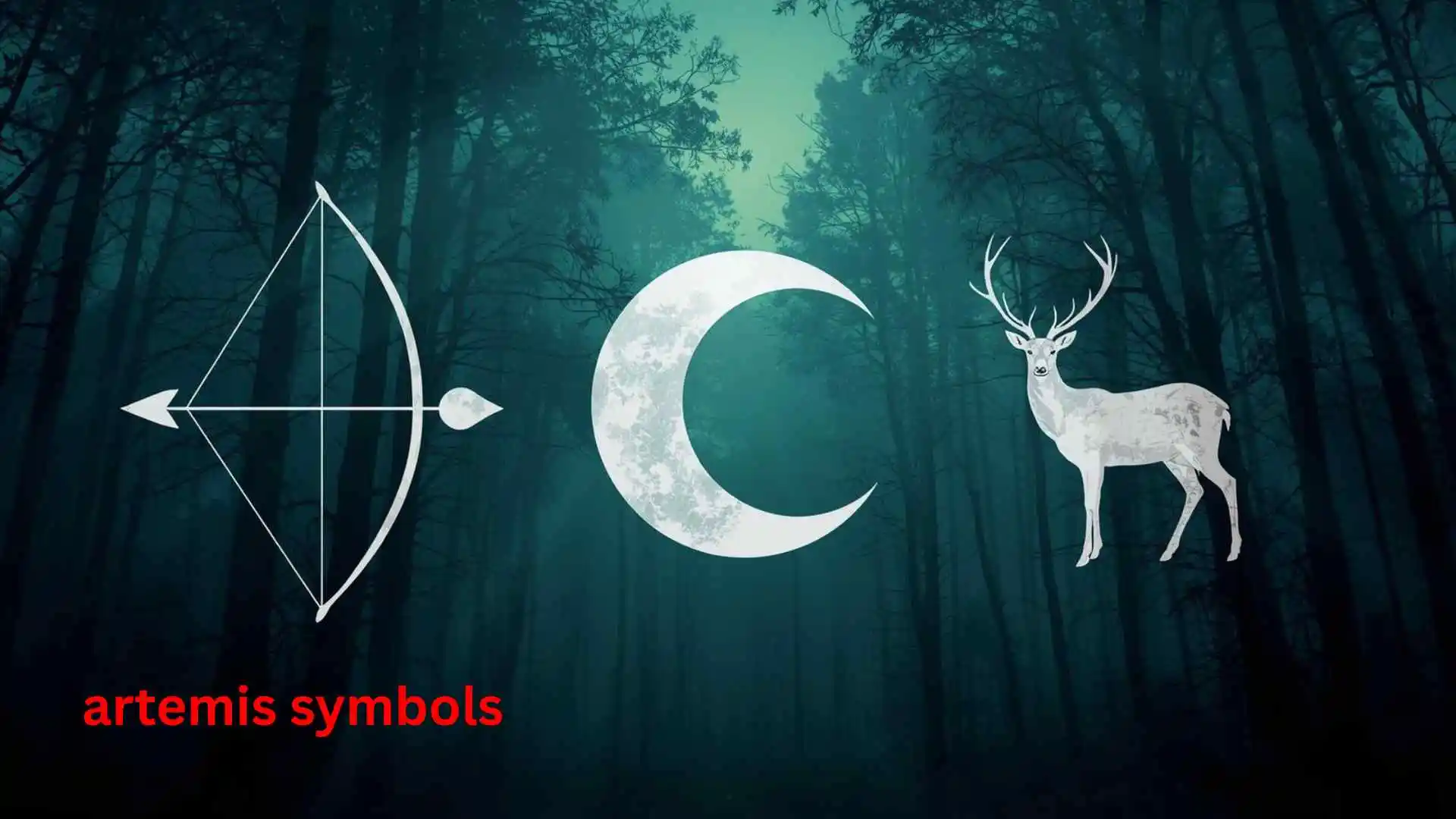
Artemis symbols carry the wild heartbeat of the ancient goddess who refused to be tamed. From the silver bow that never misses its mark to the crescent moon riding the midnight sky, these sacred emblems speak toa something primal inside us all.
Whether you feel called by the hunt, the forest, or the fierce protection of the innocent, understanding artemis symbols unlocks a forgotten language of strength, solitude, and sacred rage.
This journey will reveal why these ancient icons still appear in your dreams, your favorite films, and perhaps even in the quiet places of your own soul.
What Are Artemis Symbols?
Artemis symbols are the visual and natural representations associated with the Greek goddess Artemis, daughter of Zeus and Leto, twin sister of Apollo. She ruled over wild animals, the hunt, virginity, childbirth, and the protection of young girls. Unlike many Olympian gods, Artemis embodied contradiction: a nurturing protector who demanded fierce independence, a healer who unleashed plagues, a virgin who presided over birth.
Historically, Artemis worship spanned from Ephesus (where her temple became one of the Seven Wonders of the Ancient World) to the mountains of Arcadia. Her symbols evolved across centuries, absorbing local traditions while retaining core meanings. In classical art, she appears with specific attributes that immediately identified her to ancient viewers. These objects and animals were not decorative. They told stories of power, boundaries, transformation, and the untamed feminine.
Culturally, her symbols represent the liminal space between civilization and wilderness, childhood and adulthood, life and death. For the ancient Greeks, carrying or depicting these symbols invoked her presence, requested her protection, or honored her domain.
Deep Symbolic Meaning of Artemis Symbols
Spiritual Level
On a spiritual level, Artemis symbols represent the sacredness of the wild. The bow teaches precision and purpose. The moon signifies cycles, intuition, and the hidden light within darkness. The deer embodies grace and sensitivity to unseen dangers. When you encounter these symbols in meditation or sacred space, they often call you to reclaim your own wild nature, to trust instincts over social conditioning, and to protect what is pure without apology.
Psychological Level
Carl Jung and modern depth psychologists would recognize Artemis as an archetype of the autonomous feminine. Her symbols represent the part of the psyche that refuses domestication. The bow and arrow symbolize focused intention and the ability to strike at what threatens your boundaries. The wilderness represents the unconscious, full of both terror and wisdom. For women especially, Artemis symbols can awaken the inner huntress, the self who tracks her own desires and defends her own soul.
Cultural Level
Culturally, Artemis symbols have been reclaimed in modern feminism as icons of independence, bodily autonomy, and resistance against predation. The #MeToo movement, wilderness therapy programs, and young girls choosing archery as a sport all echo her ancient imagery. These symbols also appear in environmental activism, where the protection of forests and endangered species feels deeply aligned with the goddess who punished those who harmed her deer.
Types and Variations of Artemis Symbols
1. The Silver Bow and Arrows
Visual description: A curved hunting bow, often depicted as metallic or glowing, accompanied by a quiver of arrows. In statues, Artemis either holds it relaxed or draws it in mid action.
Meaning: Accuracy, divine justice, the ability to strike from a distance. Her arrows could bring sudden death (especially to women dying in childbirth) or protect the innocent. She once shot the giant Orion for threatening her companion.
Where it appears: Every classical statue of Artemis, from the Louvre to the British Museum. Also appears on Greek pottery showing the death of Niobe’s children, whom Artemis killed after Niobe insulted Leto.
2. The Crescent Moon
Visual description: A curved sliver of moonlight, often worn as a crown or diadem on her head in later Roman depictions (as Diana). Sometimes depicted as a chariot pulled by silver stags.
Meaning: Lunar cycles, feminine mystery, nighttime vision, and the hidden light. Unlike Apollo’s blazing sun, Artemis’ moon represents reflected light, intuition, and the magic of darkness.
Where it appears: Roman statues of Diana, Renaissance paintings, modern neopagan jewelry, and even the logo of the Artemis program (NASA’s return to the Moon).
3. The Deer (especially the Ceryneian Hind)
Visual description: A large doe with golden antlers (a biological impossibility that marked her as divine). In art, often shown pulling Artemis’ chariot or standing beside her.
Meaning: Gentleness, sensitivity, fleetness, and the sacredness of wild creatures. Heracles’ third labor involved capturing this hind without harming it, showing the challenge of respecting what is holy while fulfilling duty.
Where it appears: Greek vases, the Temple of Artemis at Corfu, and modern wildlife conservation logos.
4. The Bear
Visual description: A large, powerful she bear, often standing on hind legs or with cubs.
Meaning: Fierce maternal protection, transformation, and the dangers of the wild. The story of Callisto, a companion of Artemis who was transformed into a bear, links this animal to themes of violated innocence and eventual celestial immortality.
Where it appears: The sanctuary of Artemis at Brauron, where young Athenian girls (arktoi or “little bears”) performed rituals wearing saffron robes to honor the goddess before marriage.
5. The Cypress Tree
Visual description: A tall, slender evergreen tree with dark foliage.
Meaning: Mourning, immortality, and the threshold between worlds. Artemis was associated with sudden death, and cypress groves often marked sacred spaces where the boundary between life and death felt thin.
Where it appears: Ancient sacred groves, funerary art, and literature from Ovid to modern poetry.
6. The Quiver and Hunting Boots
Visual description: A leather or metal container for arrows worn across the back, and laced boots reaching mid calf.
Meaning: Readiness, independence, and the ability to travel freely through rough terrain. Unlike other goddesses who wore sandals or went barefoot, Artemis wore practical gear for the hunt.
Where it appears: Almost every depiction of Artemis from the 5th century BCE onward, including the famous Artemis of Versailles statue.
Artemis Symbols Across Cultures
Ancient Greece
In mainland Greece, Artemis was the protector of young girls until marriage. Her symbols marked the transition from childhood to adult responsibility. At Brauron, girls aged 5 to 10 served as “little bears,” wearing costumes and performing rituals that symbolically tamed the wild feminine before entering civilized marriage. Her bow and deer appeared on coins, temple friezes, and household shrines.
Ephesus (Asia Minor)
The Ephesian Artemis was radically different. Her statue showed a multi breasted figure (or perhaps bull testicles, scholars debate) covered in animal symbols, bees, and zodiac signs. Here, she was a mother goddess of fertility, not a virgin huntress. Her symbols emphasized abundance, nature’s fecundity, and universal protection. Her temple employed hundreds of priestesses and served as a bank and sanctuary for criminals.
Roman Empire
The Romans called her Diana. They merged her with the Italian goddess of the moon and the wild. Her symbols gained legal power: groves dedicated to Diana became protected spaces where slaves could find asylum. The crescent moon crown became more prominent in Roman art, emphasizing her lunar role over the hunt.
Modern Neopaganism
Today, Wiccans, Hellenic polytheists, and eclectic pagans use Artemis symbols in ritual. The bow represents focused will. The moon marks esbats (full moon rituals). The deer appears as a spirit animal in guided meditations. Her symbols are etched onto athames (ritual knives), painted on altars, and worn as jewelry for protection.
Feminist Spirituality
Since the 1970s, Artemis symbols have been reclaimed as icons of lesbian identity, women’s self defense, and body autonomy. The Amazon archer, the lone hunter, the protector of young girls, all speak to women who reject patriarchal control. Organizations like Girl Develop It and wilderness programs for survivors of abuse use deer and moon imagery borrowed directly from her iconography.
Artemis Symbols in Art, Movies, and Pop Culture
Movies
In Hunger Games, Katniss Everdeen is a near perfect Artemis archetype. Her bow, her skill in the forest, her protection of her younger sister, and her refusal to be reduced to a romantic prize all echo the goddess. The mockingjay pin even resembles lunar and bird symbolism linked to Artemis.
In Brave, Merida fights against arranged marriage, excels at archery, and transforms into a bear (directly referencing Callisto). The film’s visual language of forest, moon, and bow is explicitly Artemisian.
In Wonder Woman, Diana of Themyscira shares the name and many symbols: bow, tiara with star (replacing the moon), and fierce protection of innocence.
Paintings
Rembrandt’s Diana Bathing with Her Nymphs shows the goddess surprised by Actaeon, a mortal who saw her naked and was turned into a stag and devoured by his own hounds. The painting uses light and shadow to emphasize the crescent crown and the dangerous power of female nudity.
Bouguereau’s Diana the Huntress (19th century) presents a romanticized but powerful image of the goddess with bow, moon crown, and deer at her feet.
Books
In Rick Riordan’s Percy Jackson series, Artemis appears as a powerful, aloof figure whose hunters are immortal young girls. The series revitalized interest in her symbols for a young adult audience.
In Madeline Miller’s Circe, Artemis is a terrifying background presence, her bow and hunting dogs representing the merciless justice of the wild.
Tattoos
Artemis symbols are among the most requested mythological tattoos for women and queer individuals. Common designs include:
- A crescent moon with a bow crossing it
- A deer with antlers and moon phases inside
- A bear paw print with arrows
- The outline of a cypress tree with a hidden bow in the branches
These tattoos often mark survival, independence, or a commitment to protecting others.
Fashion
Designers like Alexander McQueen and Vivienne Westwood have used Artemis symbols. McQueen’s 2006 collection featured crescent moons, hunting boots, and deerskin textures. Westwood incorporated the bow and quiver into punk inspired jewelry. The “artemis aesthetic” on social media combines utilitarian leather, silver moon jewelry, and forest tones.
Spiritual and Dream Meaning of Artemis Symbols
If you see Artemis symbols in dreams, meditation, or waking life, consider these interpretations:
- A bow or arrow means you need to focus. Something in your life requires precision, not force. Alternatively, an arrow pointed at you suggests guilt or a threat you have been ignoring.
- A deer appearing calmly means grace under pressure. A wounded or running deer suggests you are fleeing something that requires facing. A deer with golden antlers indicates a divine message or a sacred task.
- The moon especially a crescent, signals new beginnings, hidden knowledge, or a secret that will soon be revealed. A full moon with Artemis standing beneath it means completion of a long emotional cycle.
- A bear in dreams is fierce maternal energy. If the bear protects cubs, you need to defend someone vulnerable. If the bear chases you, you have been neglecting your own wild needs.
- Cypress trees lining a path suggest a threshold. You may be approaching a death (literal or symbolic) or a major initiation. Do not turn back.
- Hunting boots mean preparation. You are being asked to walk through difficult terrain. Check your emotional or spiritual readiness.
Meditators who invoke Artemis often see flashes of silver light, hear distant barking of dogs, or feel a sudden cool breeze in a closed room. These are considered confirmations of her presence.
Positive vs. Negative Meanings of Artemis Symbols
Positive Meanings
- Protection of children, young women, and the vulnerable. Her symbols on a home or body are apotropaic (warding off evil).
- Independence and the courage to walk alone. Artemis never married, never compromised her domain.
- Healing of women’s bodies, especially through childbirth (ironic given she never gave birth, but she assisted her mother with Apollo’s delivery).
- Justice against predators. She turned Actaeon into a stag for voyeurism and sent a boar to destroy Calydon when a king forgot to honor her.
Negative Meanings
- Sudden death. Her arrows killed women in childbirth, men who offended her, and entire families (Niobe’s children).
- Jealous rage. She could not tolerate rivals in hunting skill or beauty. The giant Orion, her friend, was killed for threatening to hunt every animal on Earth.
- Vengeance without mercy. Unlike Athena who sometimes negotiated, Artemis punished first and never apologized.
- Exclusion of men. Her sacred spaces forbid male presence. This can represent necessary boundaries but also radical separatism.
The same symbol can mean both things. A bow protects but also kills. A moon lights the path but hides dangers in shadow. A deer is gentle but also a sacrificial animal. Artemis does not ask you to choose one meaning. She asks you to hold both.
Why Humans Are Attracted to Artemis Symbols
Psychologically, we are drawn to Artemis symbols because they represent parts of ourselves we have had to hide. In a world that demands constant availability, the bow represents the right to say no from a distance. In a world that polices female bodies, the deer represents freedom of movement. In a world that sentimentalizes motherhood, the bear represents the rage that comes with real love.
Emotionally, Artemis symbols appeal to anyone who has ever felt unsafe. The quiver full of arrows is preparation. The moon overhead is witness. The cypress tree marks a place where no one can force you to perform happiness.
There is also the attraction of the outsider. Artemis was never popular in the way Aphrodite or Athena were. She demanded solitude, discomfort, and honesty. Her symbols are not pretty. They are useful. And in an age of performance and surveillance, usefulness feels like revolution.
Stories of Artemis in childhood stick with us. The little girl who picks up a bow in a myth or a movie and refuses to be a bride. The young woman who runs into the forest and finds not danger but sisters. The mother who turns into a bear. These are not fantasies. They are memories of a self we are still becoming.
Frequently Asked Questions About Artemis Symbols
1. What is Artemis most famous symbol?
Her most famous symbol is the silver hunting bow and arrows, followed closely by the crescent moon crown. In ancient art, the bow alone was enough to identify her. The moon became more prominent in Roman times and remains popular in modern depictions.
2. What animal is sacred to Artemis?
The deer is most sacred, particularly the Ceryneian Hind with golden antlers. However, she also claimed the bear, the wild boar, the guinea fowl, and all hunting dogs. Unlike Athena who had one animal (the owl), Artemis ruled over all wild creatures.
3. What flower represents Artemis?
The amaranth, a flower that never fades, was associated with Artemis of Ephesus. Also the daisy (for her purity) and the cypress (a tree, not a flower, but sacred). In modern practice, moonflowers that bloom at night are offered to her.
4. Is Artemis a moon goddess or a hunting goddess?
Both, but the hunting aspect came first. In early Greek myth, she was primarily the mistress of animals. The moon association grew over time, especially when she merged with the Roman goddess Diana and the Greek goddess Selene. By the Renaissance, the moon had become equally important.
5. Can men use or wear Artemis symbols?
Yes, though traditionally her sacred spaces excluded adult men. In modern spiritual practice, men who respect her boundaries (no sexual aggression, no hunting for sport, no violence against girls) may carry her symbols. Many gay men and trans men report feeling drawn to her as a protector of outsiders.
6. What does an Artemis tattoo mean?
An Artemis tattoo generally means the wearer values independence, protects the vulnerable, or has survived a situation where they had to be their own hunter. It can also mark a commitment to celibacy, a love of archery, or a connection to wilderness spirituality. Placement matters: a bow on the arm signals readiness, a crescent moon near the heart signals intuition, a deer on the back signals grace under pressure.
Conclusion
Artemis symbols are not relics of a dead religion. They are living language for the wild heart in a domesticated world. The bow reminds you that you have the right to draw a line. The moon reminds you that darkness is not empty. The deer and the bear remind you that tenderness and ferocity can live in the same body. Whatever forest you are walking through tonight, whether it is grief or anger or hope or all three at once, Artemis has already walked it. Her symbols are footprints. Follow them home.

Sophia Reed
Hi, I’m Sophia Reed, a storyteller at heart who finds magic in everyday moments. Ever since I could hold a pen, I’ve been weaving tales that explore love, courage, and the unexpected twists of life. Writing allows me to connect with readers on a deeper level, sharing emotions and experiences that resonate across worlds. When I’m not lost in my stories, you can find me wandering through quiet streets, sipping coffee, or dreaming up my next plot twist. I believe every story has the power to inspire, heal, and transport. Through my books, I hope to leave a piece of my imagination with you.
Books:
-
Whispers of the Heart
-
Shadows and Sunlight