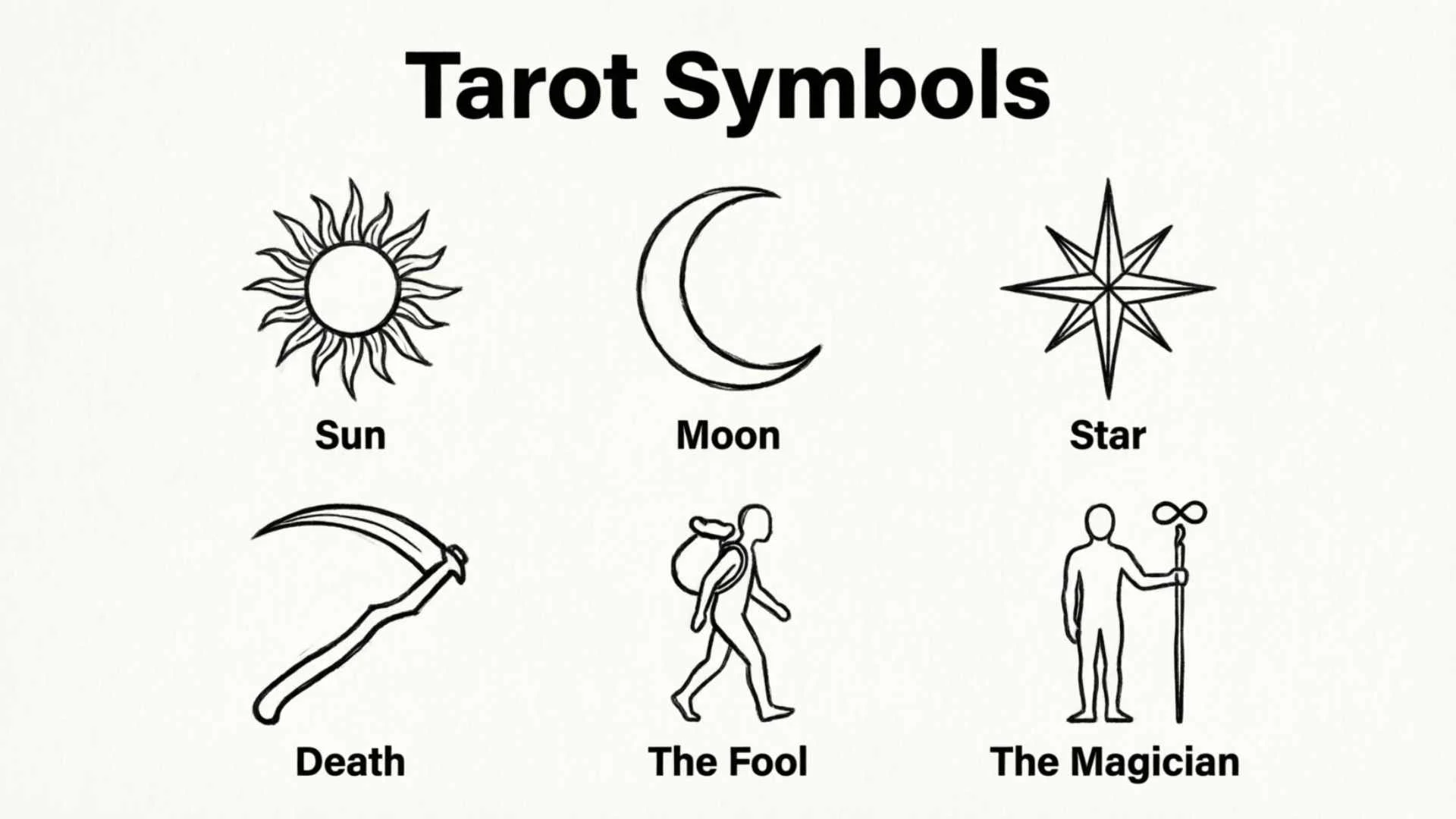
“Tarot symbols” have fascinated human hearts for centuries because they speak directly to emotions, intuition, fears and hidden desires.
A single tarot image can feel like a mirror reflecting secrets buried deep inside the soul. Across history, people have turned to these mysterious symbols for guidance, healing, self discovery and spiritual awakening.
What looks like simple artwork often carries ancient wisdom connected to psychology, mythology, and the human journey.
This article uncovers the deeper meanings behind tarot symbols and reveals why they continue to captivate millions around the world.
What Are Tarot Symbols?
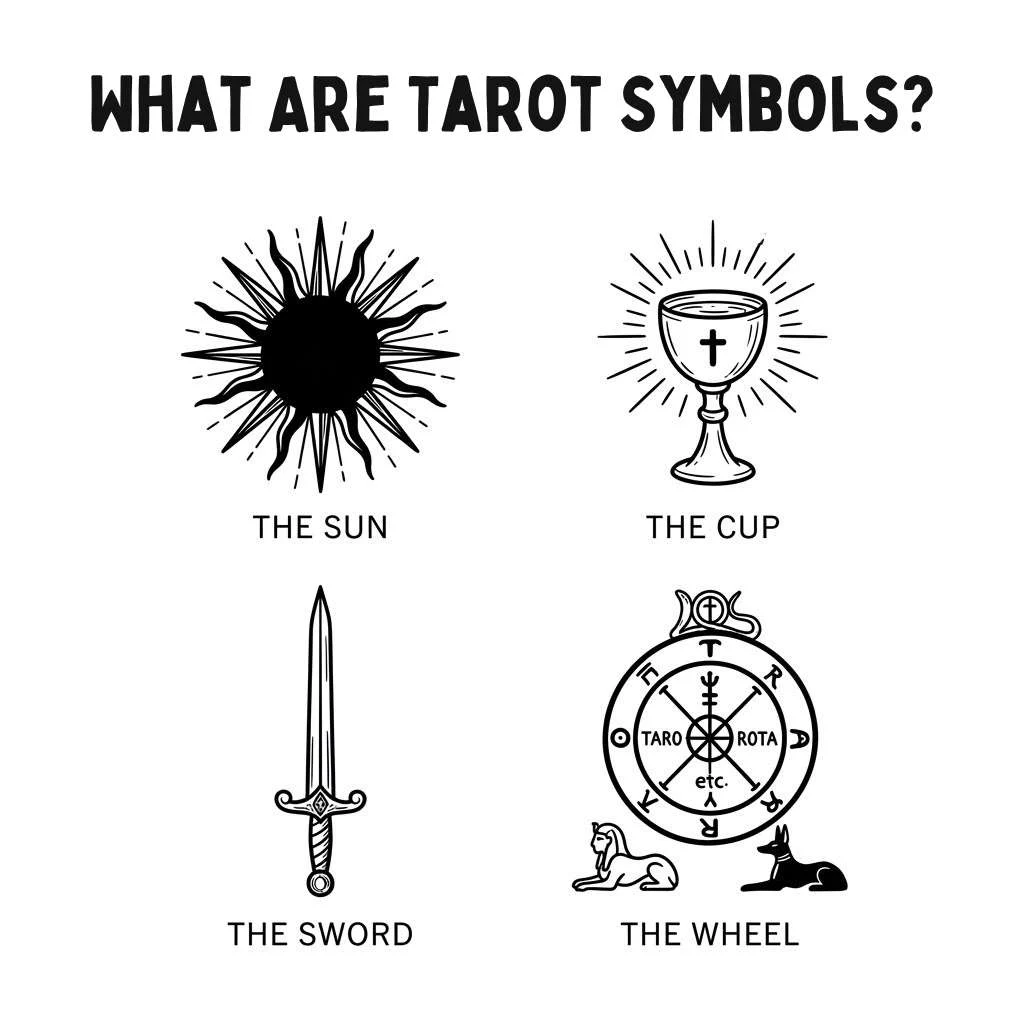
Tarot symbols are visual signs, objects, colors, numbers, animals, and archetypal images found within tarot cards. These symbols help communicate spiritual messages, emotional truths, and psychological insights without using many words. Every detail in a tarot card carries meaning, from a glowing moon in the background to a tiny flower near a character’s feet.
The history of tarot dates back to 15th century Europe where tarot cards first appeared as playing cards in Italy and France. Over time, mystics and spiritual teachers began using tarot for divination and inner guidance. Today, tarot symbols are connected with spirituality, intuition, meditation, shadow work, and personal transformation.
Many tarot symbols come from ancient traditions including astrology, alchemy, Christianity, Egyptian mythology, Kabbalah, and medieval art. This blend of cultures gives tarot its mysterious and timeless power.
The Deep Symbolic Meaning of Tarot Symbols
Spiritual Meaning
On a spiritual level, tarot symbols represent the journey of the soul. The cards often reflect spiritual growth, awakening, karma, divine guidance, and transformation. Symbols like stars, suns, moons, and angels remind people that life is connected to something larger than the physical world.
For example, The Star card symbolizes hope, healing, and divine inspiration. The Hermit represents wisdom gained through solitude and reflection. The Fool symbolizes the soul beginning a new journey filled with faith and possibility.
Many people use tarot symbols during meditation because the imagery helps unlock intuition and inner truth.
Psychological Meaning
Psychologically, tarot symbols act like mirrors for the subconscious mind. Carl Jung’s theory of archetypes strongly connects with tarot imagery. According to Jung, humans share universal symbols and emotional patterns hidden deep within the collective unconscious.
When someone sees a tarot card, their mind naturally responds emotionally to its symbols. A tower collapsing may trigger feelings of fear or sudden change. A bright sun can create warmth, confidence, and optimism.
Tarot symbols often help people understand emotions they struggle to explain with words. This emotional reflection makes tarot deeply personal and powerful.
Cultural Meaning
Culturally, tarot symbols have become symbols of mystery, wisdom, rebellion, and spirituality. Some cultures view tarot as sacred guidance while others once feared it because of misunderstandings around divination.
Today, tarot symbols appear in modern fashion, tattoos, books, films, jewelry, and social media aesthetics. They represent intuition, empowerment, freedom, and self exploration.
The Most Important Tarot Symbols
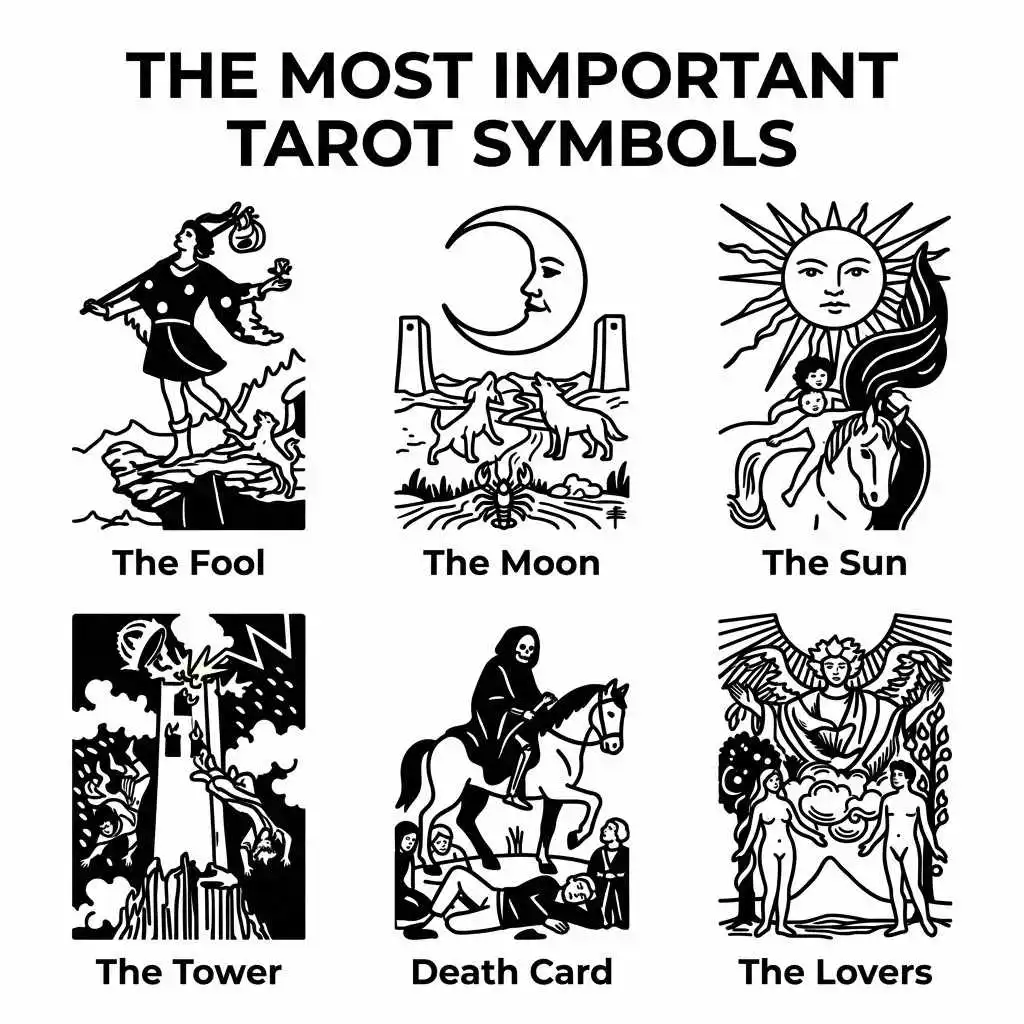
The Fool
Visual Description
A carefree traveler stands near the edge of a cliff holding a small bag while a white dog follows nearby.
Meaning
The Fool symbolizes new beginnings, innocence, adventure, trust, and taking risks.
Where It Appears
The Fool appears in tarot decks worldwide and often represents the beginning of the spiritual journey.
The Moon
Visual Description
A glowing moon shines above dark waters while wolves howl in the distance.
Meaning
The Moon represents illusion, intuition, fear, dreams, confusion, and hidden truths.
Where It Appears
Moon imagery appears in mythology, spiritual rituals, dream interpretation, and mystical art.
The Sun
Visual Description
A radiant sun shines brightly over a joyful child riding a horse.
Meaning
The Sun symbolizes happiness, clarity, success, truth, and life energy.
Where It Appears
Sun symbols exist in ancient religions, royal emblems, paintings, and spiritual practices.
The Tower
Visual Description
Lightning strikes a tall tower while people fall from the burning structure.
Meaning
The Tower represents chaos, destruction, sudden awakening, and dramatic change.
Where It Appears
The image reflects themes found in myths about divine punishment and human pride.
Death Card
Visual Description
A skeleton knight rides a horse while figures kneel before him.
Meaning
Despite its frightening appearance, the Death card symbolizes endings, transformation, rebirth, and renewal.
Where It Appears
Death symbolism appears in spiritual teachings, mythology, literature, and ancient rituals.
The Lovers
Visual Description
Two figures stand beneath divine light surrounded by nature.
Meaning
The Lovers symbolize relationships, choices, harmony, emotional connection, and balance.
Where It Appears
Love symbolism exists across poetry, art, religion, and storytelling traditions worldwide.
Tarot Symbols Across Cultures
Ancient Egyptian Interpretations
Many spiritual scholars believe tarot symbolism connects with ancient Egyptian wisdom. Symbols involving life, death, rebirth, stars, and sacred animals resemble imagery found in Egyptian temples and mythology.
The scarab beetle, the sun disk, and the concept of spiritual resurrection strongly echo themes present in tarot.
Medieval European Symbolism
During medieval times, tarot imagery reflected Christian values, morality, kingship, and social hierarchy. Angels, devils, judgment scenes, and virtues became common symbols in tarot decks.
These images helped communicate lessons about temptation, destiny, and faith.
Celtic Interpretations
Celtic culture connected deeply with nature, cycles, and mysticism. Trees, moons, rivers, and animals found in tarot symbolism align with ancient Celtic beliefs about spiritual energy and the natural world.
The moon especially carried strong mystical importance in Celtic traditions.
Eastern Spiritual Influence
Modern tarot interpretations often blend with Eastern philosophies like Buddhism and Hindu spirituality. Concepts such as karma, enlightenment, balance, and inner awakening appear naturally within tarot readings.
Symbols involving meditation, cycles, and spiritual growth resonate strongly with Eastern teachings.
Modern Western Culture
In modern society, tarot symbols often represent empowerment, intuition, healing, and personal freedom. Many people now use tarot less for fortune telling and more for emotional guidance and self reflection.
Tarot has become part of wellness culture, mindfulness practices, and spiritual communities around the world.
Tarot Symbols in Art, Movies and Pop Culture
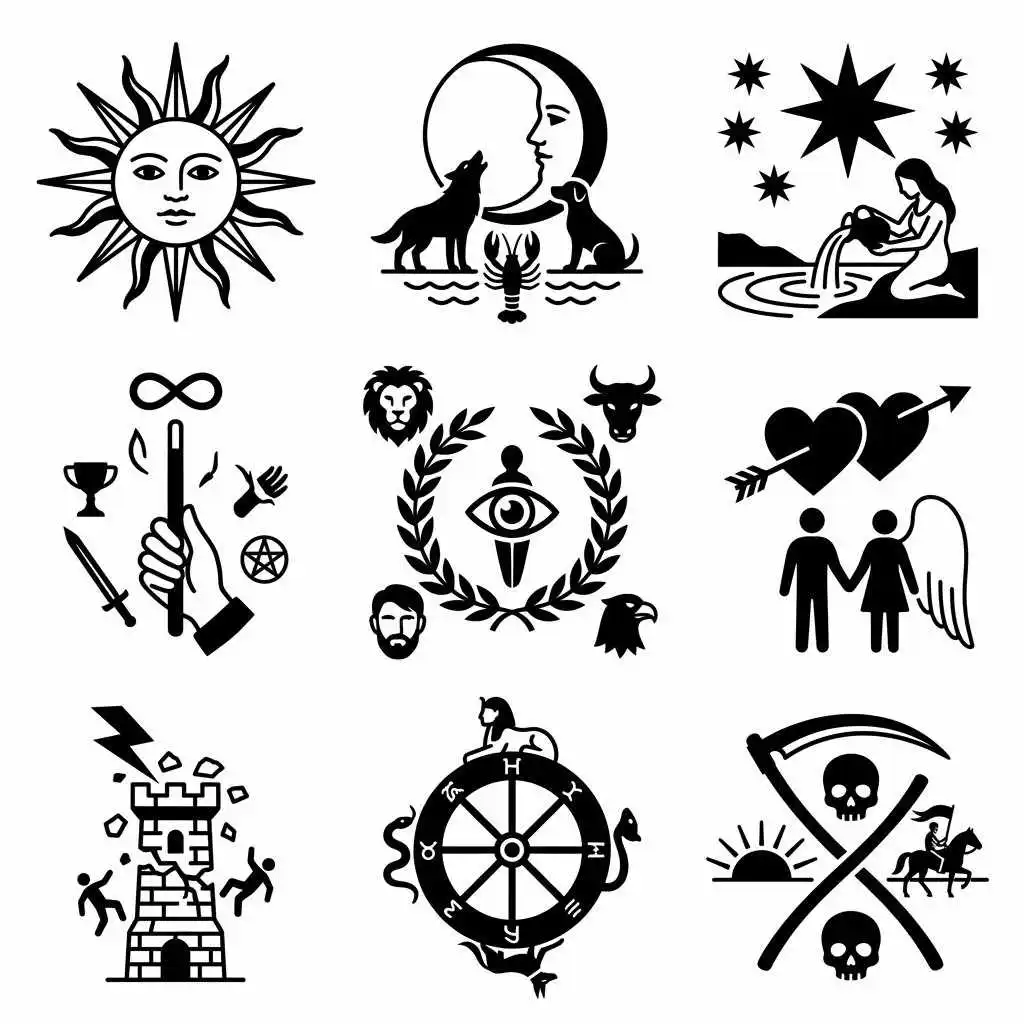
Tarot symbols have become deeply embedded in modern entertainment and creativity because their imagery feels emotional and unforgettable.
Tarot Symbols in Movies
Films often use tarot imagery to create mystery, destiny, and psychological tension. Cards like Death, The Devil, and The Moon frequently appear in horror and fantasy movies because they instantly create emotional impact.
In psychological thrillers, tarot symbols often hint at hidden truths or a character’s inner struggles.
Tarot Symbols in Paintings
Artists have long been fascinated by tarot imagery because of its dramatic symbolism and emotional depth. Painters use tarot inspired themes to explore identity, spirituality, fear, love, and transformation.
The bold colors and mystical figures in tarot create visually powerful storytelling.
Tarot Symbols in Books
Many novels include tarot cards to foreshadow events or reveal hidden emotions. Writers use tarot symbolism to add mystery and spiritual depth to stories.
Fantasy literature especially embraces tarot because the cards naturally represent archetypal journeys and emotional conflicts.
Tarot Tattoos
Tarot tattoos have become extremely popular because they carry deeply personal meanings. Someone may choose The Star for hope after difficult times or The Sun to represent healing and joy.
These tattoos often symbolize transformation, resilience, and identity.
Tarot in Fashion
Fashion designers frequently use tarot imagery on clothing, jewelry, handbags, and accessories. Moon phases, suns, stars, snakes, and mystical eyes inspired by tarot have become part of modern spiritual fashion trends.
Spiritual and Dream Meaning of Tarot Symbols
Many people encounter tarot symbols during dreams, meditation, or spiritual experiences. These symbols often appear during emotional transitions or periods of inner searching.
Dreaming about The Moon card may suggest confusion or hidden emotions. Seeing The Star can symbolize hope after emotional pain. The Tower often appears during times of sudden change or emotional breakdowns.
During meditation, tarot symbols can help people focus on healing, clarity, courage, or spiritual awakening. Some believe these symbols act like gateways connecting the conscious mind with deeper intuition.
People often feel emotionally attached to certain tarot cards because the imagery reflects struggles they cannot easily explain.
Positive and Negative Meanings of Tarot Symbols
One reason tarot symbols feel so powerful is because they contain both light and darkness within the same image.
Positive Meanings
- Growth and transformation
- Healing and hope
- Spiritual awakening
- Emotional clarity
- Love and connection
- Inner wisdom
Negative Meanings
- Fear and confusion
- Illusion and deception
- Loss and heartbreak
- Ego and destruction
- Anxiety and uncertainty
For example, the Death card may frighten some people, but it often represents positive transformation and new beginnings. Similarly, The Devil can symbolize unhealthy attachments but also awareness of personal struggles.
Tarot reminds people that darkness and light often exist together in life.
Why Humans Are Attracted to Tarot Symbols
Humans naturally search for meaning, especially during uncertain moments. Tarot symbols feel powerful because they speak the language of emotion and imagination rather than logic alone.
A person experiencing heartbreak may instantly connect with the imagery of loss in the Three of Swords. Someone beginning a new chapter may feel inspired by The Fool.
Tarot symbols create emotional storytelling that feels personal even when shared universally. This emotional connection explains why people across cultures continue returning to tarot for comfort, reflection, and guidance.
Psychologists believe symbolic images help humans process emotions more deeply than plain language. Stories and symbols allow people to explore fears, hopes, memories, and dreams safely.
Tarot also gives people something modern life often lacks, quiet reflection and emotional honesty.
FAQs
What do tarot symbols mean?
Tarot symbols represent spiritual ideas, emotional states, psychological patterns, and life experiences. Every symbol inside a tarot card carries a deeper message connected to intuition and personal growth.
Why are tarot symbols so powerful?
Tarot symbols feel powerful because they connect deeply with human emotions and subconscious archetypes. The imagery often reflects personal experiences and hidden feelings.
What is the most important tarot symbol?
There is no single most important symbol, but cards like The Fool, The Sun, The Moon, and Death are considered highly meaningful because they represent major stages of life and transformation.
Can tarot symbols appear in dreams?
Yes, many people report seeing tarot like imagery in dreams, especially during emotional or spiritual transitions. These dreams often symbolize inner struggles, guidance, or personal change.
Conclusion
Tarot symbols continue to captivate humanity because they reveal truths hidden beneath everyday life. Their mysterious imagery speaks to fear, hope, transformation, love and the endless search for meaning. Across cultures and centuries, these symbols have guided people through uncertainty, emotional pain, and spiritual awakening.
Whether viewed as sacred wisdom, psychological mirrors, or artistic masterpieces, tarot symbols remain deeply connected to the human soul. The more people explore them, the more they often discover hidden parts of themselves waiting to be understood.

Freddie Wood
Hi! I’m Freddie Wood, a storyteller at heart and a lifelong explorer of ideas. Writing has always been my way of making sense of the world, turning ordinary moments into stories that linger in your mind. I love blending emotions with adventure, and I’m fascinated by the way words can connect people across distances and experiences. When I’m not writing, you’ll find me wandering through nature, listening to music, or sketching out ideas for my next story. My goal is always to create books that stay with readers long after the last page.
Books by Freddie Wood:
-
The Hidden Path
-
Shadows of Tomorrow