
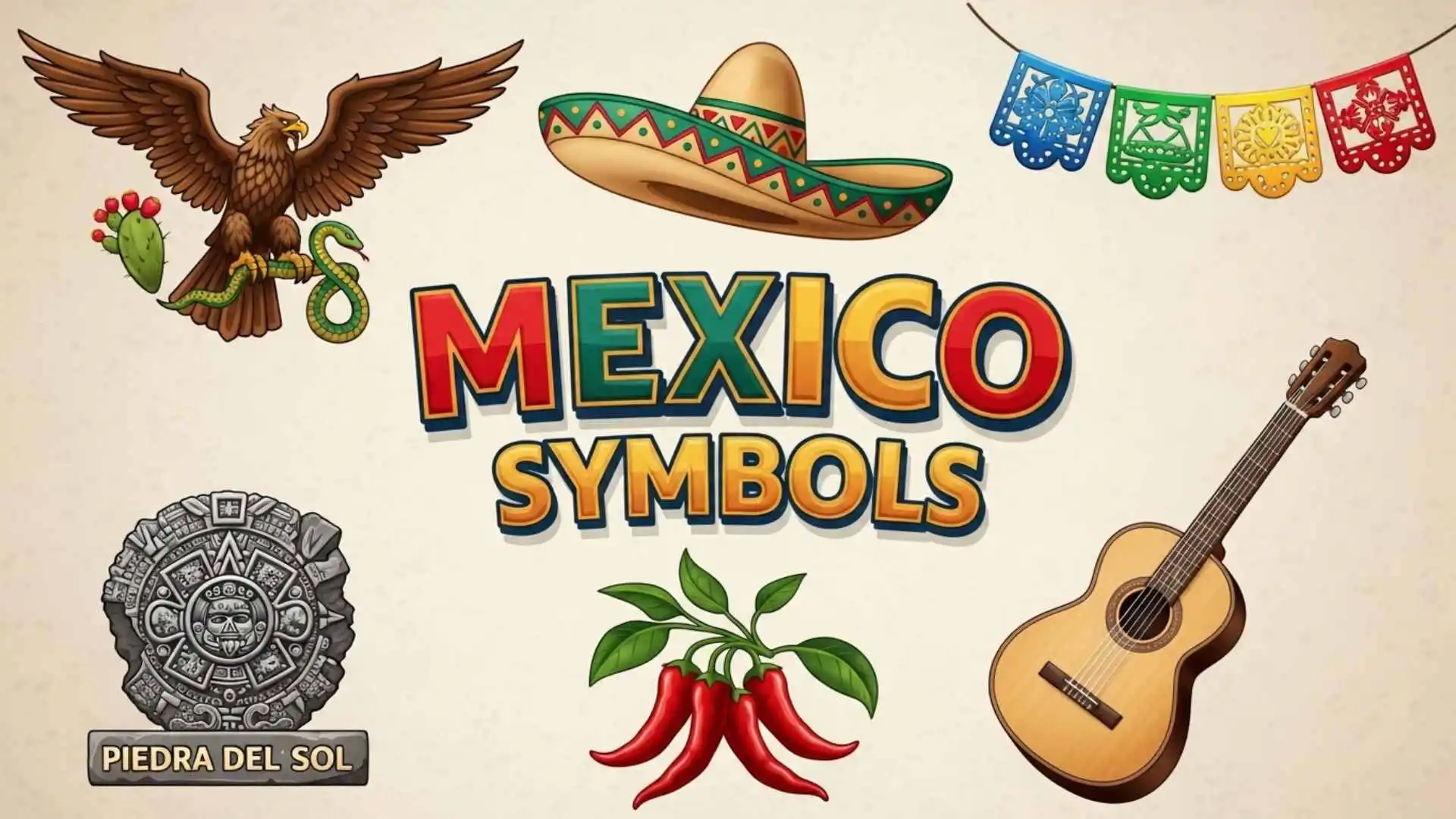
“Mexico symbols” carry centuries of emotion, identity, sacrifice, faith and pride within their shapes and colors.
From the legendary eagle on the Mexican flag to ancient Aztec imagery carved into stone, these symbols tell stories that still live inside millions of hearts today.
They are not just designs or decorations because they represent survival, spirituality, courage, and cultural memory.
Every symbol in Mexico holds a deeper message that connects the past with the modern world in ways most people never notice.
What Are Mexico Symbols?
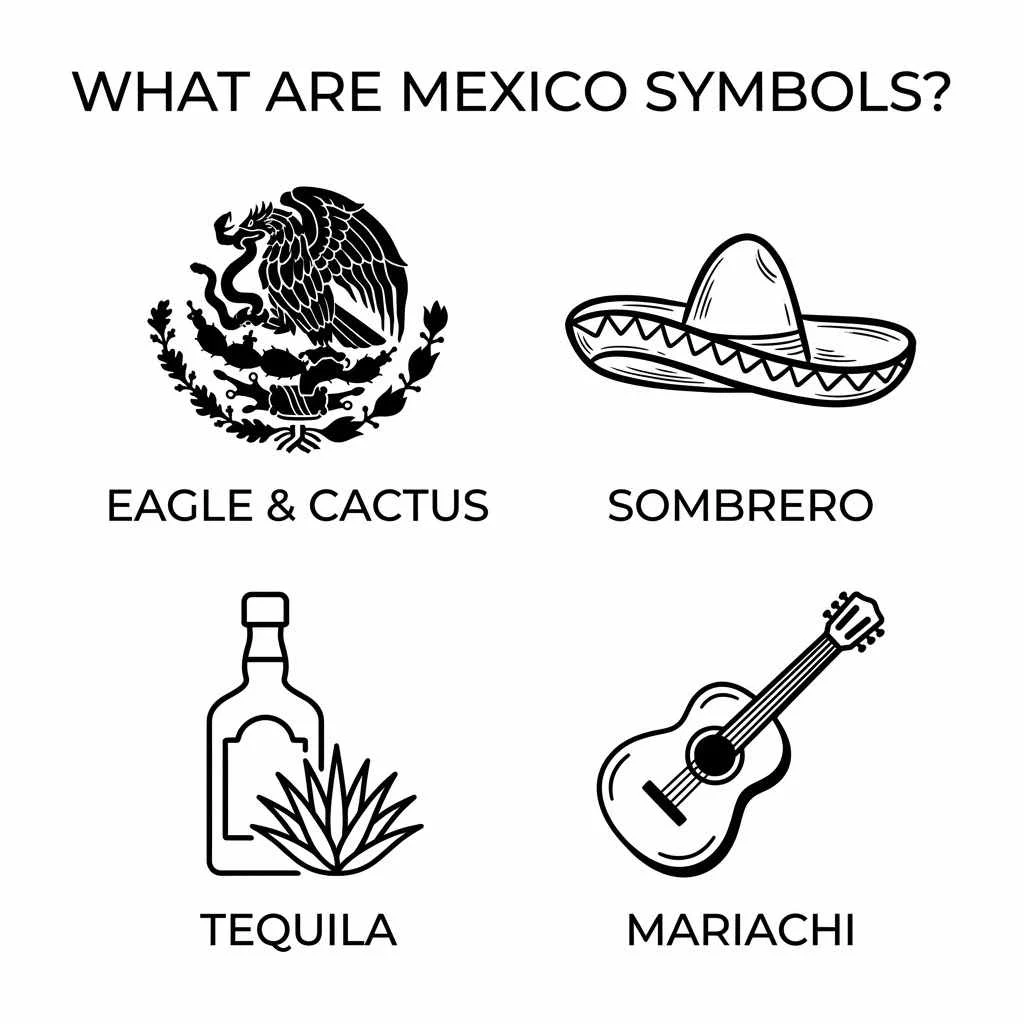
Mexico symbols are visual signs, cultural icons, sacred images, national emblems, and traditional motifs that represent the history, beliefs, values, and spirit of Mexico. These symbols appear in ancient civilizations, religion, politics, art, fashion, celebrations, architecture, and everyday life.
Some symbols are officially recognized by the Mexican government while others come from folklore, mythology, and spiritual traditions passed down for generations. Together, they form a powerful cultural language that helps people understand Mexican identity.
Mexico’s symbols were shaped by several civilizations including the Aztecs, Maya, Olmecs, and Spanish colonial influences. Ancient indigenous cultures used symbols to communicate with gods, describe nature, honor warriors, and preserve stories. Later, Christianity introduced new sacred symbols that blended with native traditions to create something uniquely Mexican.
Today, these symbols continue to appear in tattoos, festivals, paintings, films, clothing, jewelry, and even social movements. They remain alive because they speak to deep human emotions like belonging, hope, strength, and remembrance.
The History Behind Mexico Symbols
The roots of Mexican symbolism go back thousands of years. Long before modern Mexico existed, ancient civilizations used symbols as spiritual maps of life and death.
The Aztecs believed symbols carried divine power. Their temples, weapons, and clothing featured sacred animals like serpents, jaguars, and eagles. These creatures represented gods, cosmic balance, and human destiny.
One of the most famous legends tells how the Aztecs founded Tenochtitlán after seeing an eagle standing on a cactus while holding a serpent. This vision became the foundation of the modern Mexican flag and remains one of the strongest national symbols in the world.
When Spanish colonizers arrived in the 1500s, Catholic imagery mixed with indigenous traditions. This blending created unique Mexican symbols like the Virgin of Guadalupe, who became both a religious and national icon.
Over time, symbols from revolution, independence, folk art, and indigenous heritage joined together to shape modern Mexican identity.
Deep Symbolic Meaning of Mexico Symbols
Spiritual Meaning
On a spiritual level, Mexico symbols often represent transformation, sacrifice, rebirth, and the connection between humanity and the divine. Ancient cultures believed symbols opened pathways between the physical and spiritual worlds.
The serpent symbolized wisdom and cosmic energy. Eagles represented heavenly power and freedom. Skulls reminded people that death is not the end but part of the eternal cycle of existence.
Many Mexican symbols also reflect gratitude toward nature. The sun, moon, maize, flowers, and animals were viewed as sacred forces that sustained life.
Psychological Meaning
Psychologically, these symbols provide emotional grounding and identity. They remind people where they come from and what they stand for.
For many Mexicans, symbols create a sense of pride and resilience. Even during difficult times, these icons remind people of survival, courage, and unity.
Symbols also trigger emotional memories. A marigold flower during Día de los Muertos may remind someone of lost loved ones. The Mexican flag may awaken feelings of patriotism and belonging.
Cultural Meaning
Culturally, Mexico symbols preserve history. They keep ancient stories alive even in the modern digital world.
These symbols appear during celebrations, family traditions, religious ceremonies, dances, and public art. They help younger generations stay connected to their roots while also sharing Mexican culture with the world.
Most Important Types of Mexico Symbols
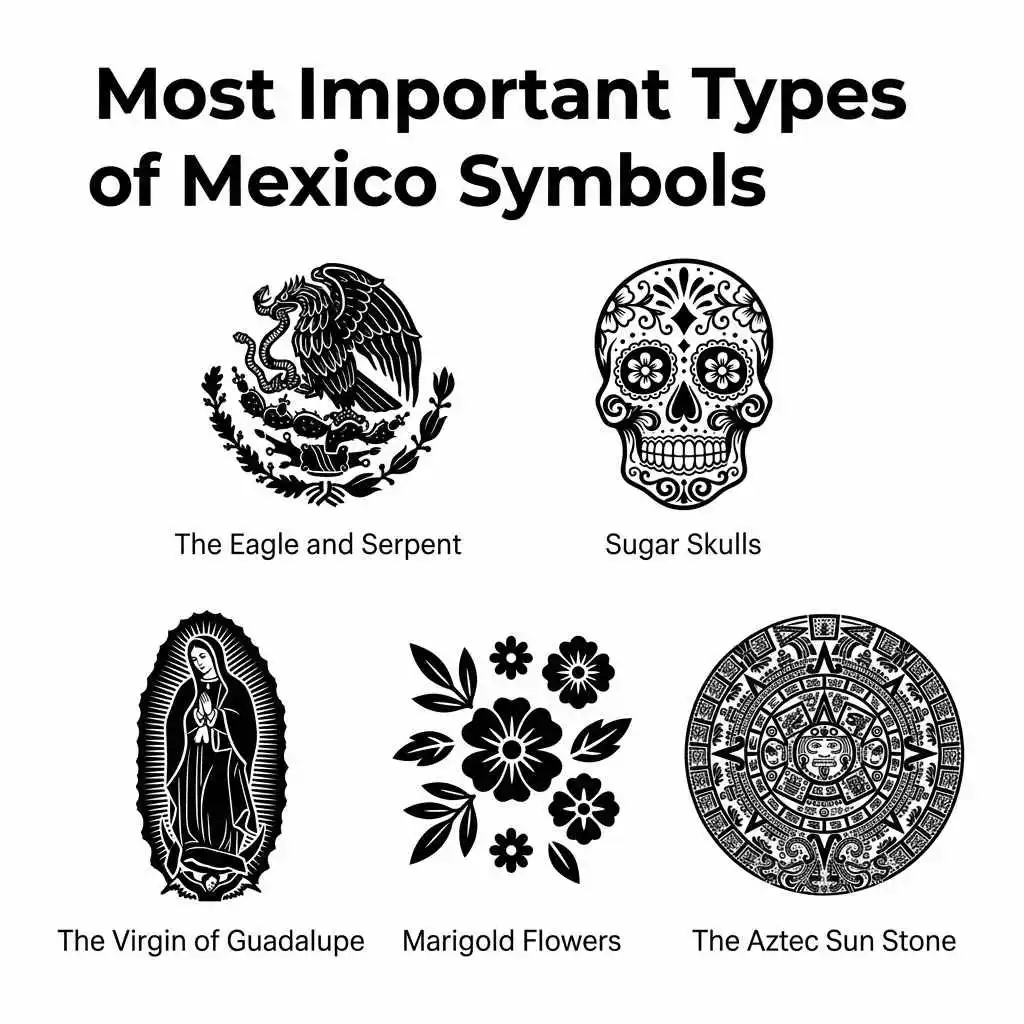
The Eagle and Serpent
Visual Description
An eagle standing proudly on a cactus while holding a serpent in its beak.
Meaning
This symbol represents victory, destiny, strength, and divine guidance.
Where It Appears
It appears on the Mexican flag, government seals, coins, murals, and official documents.
The eagle and serpent symbolize the founding vision of the Aztec empire. Today, it represents the heart and soul of Mexico itself.
Sugar Skulls
Visual Description
Decorated skulls painted with bright colors, flowers, and artistic patterns.
Meaning
Sugar skulls symbolize remembrance, celebration of life, and acceptance of death.
Where It Appears
They are commonly seen during Día de los Muertos celebrations, decorations, tattoos, and artwork.
Unlike fearful representations of death, Mexican skull symbols embrace the beauty of memory and eternal connection.
The Virgin of Guadalupe
Visual Description
A sacred image of the Virgin Mary surrounded by radiant light and stars.
Meaning
She symbolizes hope, protection, compassion, motherhood, and faith.
Where It Appears
Churches, homes, necklaces, candles, murals, and religious festivals.
For millions of people, this symbol represents spiritual comfort during moments of pain and uncertainty.
Marigold Flowers
Visual Description
Bright orange and yellow flowers with soft layered petals.
Meaning
Marigolds symbolize remembrance, guidance for spirits, and the fragile beauty of life.
Where It Appears
Día de los Muertos altars, cemeteries, festivals, and traditional decorations.
People believe the strong scent and vibrant color help guide souls back to their families.
The Aztec Sun Stone
Visual Description
A large circular stone carved with complex ancient symbols and faces.
Meaning
It represents time, cosmic cycles, sacrifice, and the universe.
Where It Appears
Museums, educational materials, tattoos, jewelry, and historical art.
This symbol remains one of the most mysterious and admired artifacts from ancient Mexico.
Mexico Symbols Across Cultures
Aztec Culture
The Aztecs used symbols to communicate with gods and explain the universe. Animals carried sacred energy while celestial symbols represented cosmic order.
Their symbols often reflected war, sacrifice, nature, and spiritual transformation.
Mayan Culture
The Maya created highly detailed symbols connected to astronomy, mathematics, and prophecy. Their glyphs were both artistic and intellectual.
Jaguar imagery held special importance because it symbolized power, mystery, and the spiritual underworld.
Spanish Colonial Influence
Spanish colonization introduced Christian crosses, saints, angels, and biblical imagery. Over time, these symbols blended with indigenous beliefs.
This fusion created unique Mexican spiritual traditions found nowhere else in the world.
Modern Mexican Culture
Today, Mexico symbols represent national pride, artistic creativity, and cultural survival. They appear in sports, activism, fashion, music, and social identity.
Young artists continue reinventing ancient symbols in modern ways while keeping their deeper meaning alive.
Global Interpretation
Outside Mexico, these symbols are often admired for their beauty and emotional depth. Many people around the world connect with themes of remembrance, resilience, and spiritual connection found in Mexican symbolism.
Mexico Symbols in Art, Movies and Pop Culture
Mexican symbols have become globally recognized through films, fashion, music, and visual art.
Movies like Coco introduced millions of viewers to Día de los Muertos symbolism. The marigold bridge, family altars, and colorful skull imagery emotionally touched audiences worldwide.
Mexican muralists like Diego Rivera used national symbols to tell stories about workers, revolution, indigenous identity, and social justice.
In fashion, embroidered flowers, skull patterns, and Aztec motifs appear in modern clothing and jewelry collections. These designs blend ancient tradition with contemporary creativity.
Tattoo culture also embraces Mexican symbolism. People choose sugar skulls, eagles, roses, and Aztec patterns to represent strength, ancestry, memory, or personal transformation.
Books and music often use Mexican symbols to express themes of love, loss, identity, and spiritual awakening.
Spiritual and Dream Meaning of Mexico Symbols
Dreaming about Mexican symbols often reflects emotional transformation and spiritual reflection.
Seeing an eagle in dreams may symbolize personal freedom, courage, or a major life breakthrough. A serpent can represent wisdom, hidden fears, or inner awakening.
Dreams involving marigold flowers or sugar skulls are often connected to remembrance and emotional healing. These dreams may appear when someone misses a loved one or seeks closure.
Spiritually, Mexican symbols remind people to honor both life and death instead of fearing change. Many meditation practices use ancient Mexican imagery to encourage grounding, reflection, and connection with ancestors.
These symbols often appear during periods of emotional growth because they carry strong themes of rebirth and identity.
Positive vs Negative Meaning of Mexico Symbols
Like many powerful symbols, Mexican symbols can represent both beauty and darkness depending on context.
Positive Meanings
- Strength and courage
- National pride
- Spiritual protection
- Family connection
- Wisdom and transformation
- Celebration of life
- Cultural identity
Negative Meanings
- War and sacrifice in ancient history
- Colonial oppression and conflict
- Misinterpretation by outsiders
- Commercialization of sacred traditions
- Fear of death symbols by some cultures
For example, skull imagery may seem frightening to some people. In Mexican culture though, it often represents love, remembrance, and acceptance of mortality.
This duality makes Mexican symbolism emotionally powerful because it reflects the complexity of human existence itself.
Why Humans Are Attracted to Mexico Symbols
People feel drawn to Mexico symbols because they combine emotional truth with visual beauty.
Humans naturally search for meaning through stories and symbols. Mexican imagery speaks deeply to universal experiences like family, loss, hope, identity, and survival.
Bright colors mixed with themes of death create a rare emotional balance. These symbols remind people that life is temporary yet beautiful.
Psychologists believe symbolic imagery helps people process emotions that words cannot fully explain. Mexican symbols achieve this through powerful contrasts between joy and sorrow, darkness and light, memory and renewal.
Many people also feel attracted to the authenticity behind these symbols. They were not invented for trends or marketing because they grew naturally from centuries of human experience.
That emotional honesty gives them lasting power.
Mexico Symbols in Modern Fashion and Tattoos
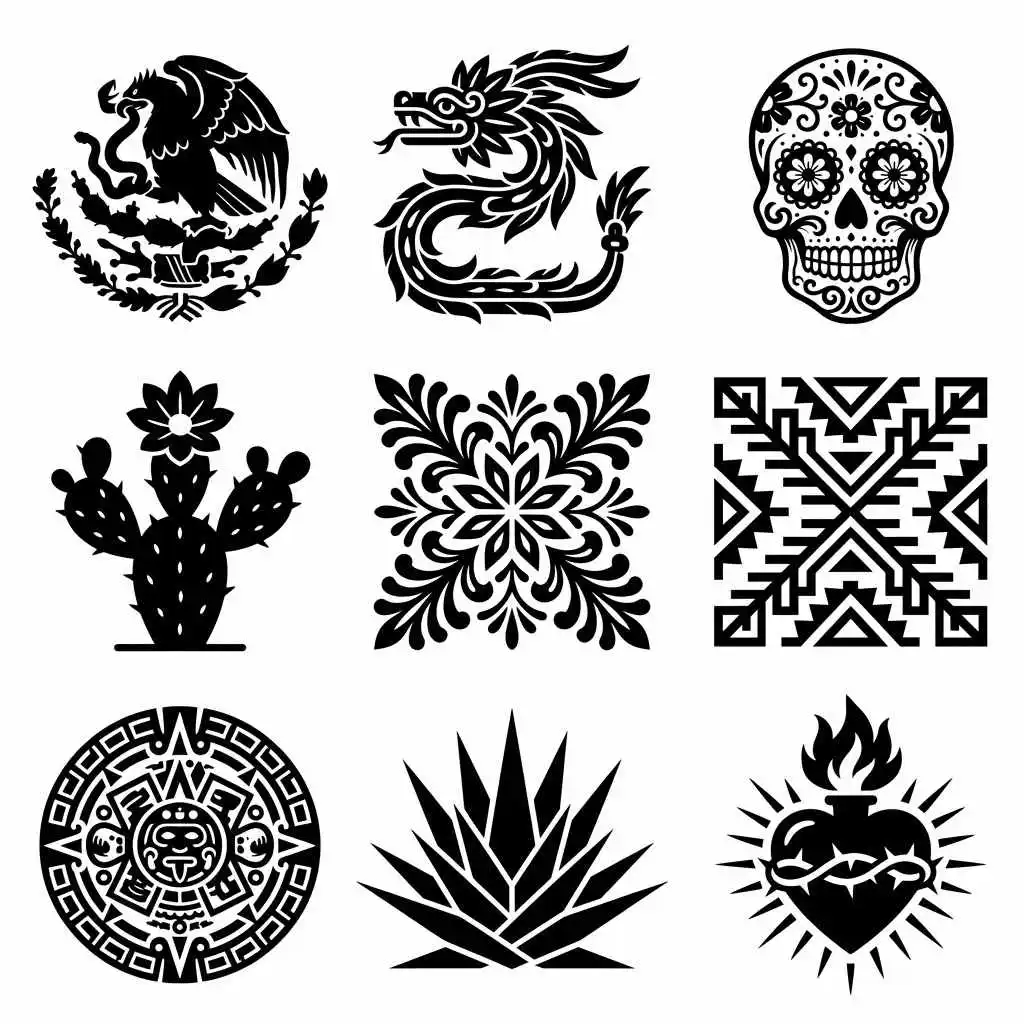
Modern fashion has embraced Mexican symbolism in bold and artistic ways. Floral embroidery, sacred hearts, skull art, and Aztec patterns appear on jackets, dresses, shoes, and accessories worldwide.
Tattoo culture especially values Mexican symbols for their emotional meaning. People often choose:
- Sugar skull tattoos for remembrance
- Eagle tattoos for freedom and power
- Aztec warrior symbols for resilience
- Marigold tattoos for love and memory
- Religious imagery for protection and faith
These tattoos are not only visually striking but also deeply personal. Many people use them to honor family roots, spiritual beliefs, or life experiences.
FAQs About Mexico Symbols
What is the most famous symbol of Mexico?
The most famous symbol of Mexico is the eagle and serpent on the Mexican flag. It represents the legendary founding of the Aztec capital and symbolizes strength, destiny, and national pride.
Why are skulls important in Mexican culture?
Skulls symbolize remembrance and the celebration of life, especially during Día de los Muertos. They remind people that death is a natural part of existence rather than something to fear.
What do marigold flowers symbolize in Mexico?
Marigolds symbolize guidance for spirits, memory, love, and the connection between the living and the dead during spiritual celebrations.
What does the Aztec Sun Stone represent?
The Aztec Sun Stone represents cosmic cycles, time, sacrifice, and the relationship between humanity and the universe.
Conclusion
Mexico symbols are far more than artistic images because they carry the heartbeat of history, spirituality, memory, and human emotion. They tell stories of ancient civilizations, surviving cultures, family traditions, and the eternal connection between life and death.
Every eagle, flower, skull, and sacred carving holds layers of meaning that continue inspiring people across the world. In a fast changing modern age, these symbols remain timeless reminders that identity, courage, and remembrance still matter deeply to the human soul.

Sophia Reed
Hi, I’m Sophia Reed, a storyteller at heart who finds magic in everyday moments. Ever since I could hold a pen, I’ve been weaving tales that explore love, courage, and the unexpected twists of life. Writing allows me to connect with readers on a deeper level, sharing emotions and experiences that resonate across worlds. When I’m not lost in my stories, you can find me wandering through quiet streets, sipping coffee, or dreaming up my next plot twist. I believe every story has the power to inspire, heal, and transport. Through my books, I hope to leave a piece of my imagination with you.
Books:
-
Whispers of the Heart
-
Shadows and Sunlight