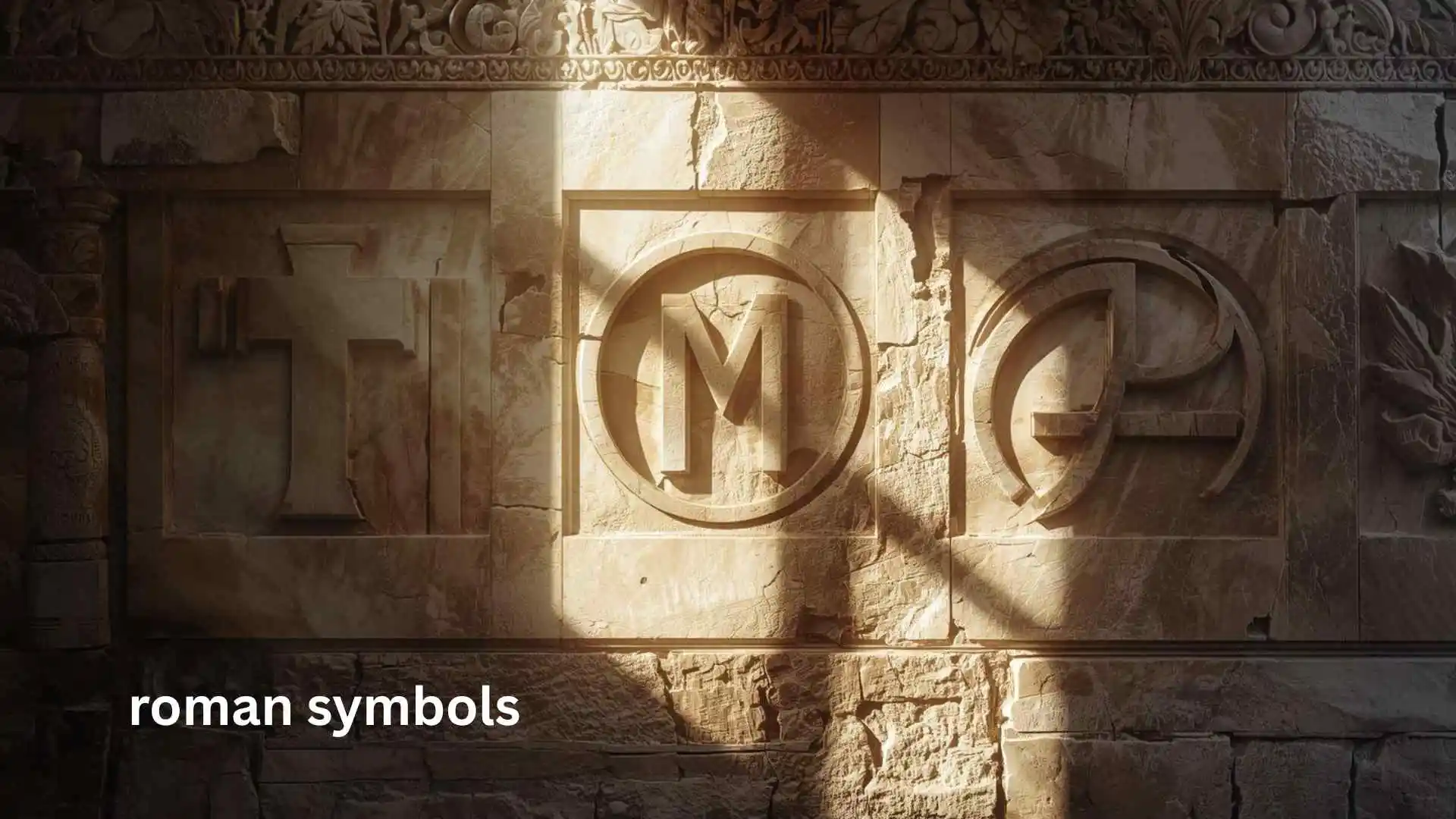
Roman symbols are not just ancient marks carved into stone—they are echoes of a civilization that shaped law, language, architecture, and identity for the modern world.
When you look at these symbols, you are not just seeing letters or signs—you are witnessing the mindset of an empire that still influences how we think, write, and communicate today.
This article uncovers the hidden meanings, emotional depth, and cultural power behind Roman symbols that most people never truly understand.
What are Roman Symbols?
Roman symbols are visual signs, letters, and numeric systems developed and used in Ancient Rome.
The most recognized Roman symbols are the Roman alphabet (A, B, C…) and Roman numerals (I, V, X, L, C, D, M).
These symbols were not created randomly—they were carefully designed for clarity, authority, and long-lasting communication.
They were used in laws, monuments, military records, religious texts, and even on coins that traveled across continents.
At their core, Roman symbols represent structure, power, and permanence—qualities the Roman Empire wanted to project into eternity.
Deep Symbolic Meaning of Roman Symbols
Spiritual Meaning
Spiritually, Roman symbols represent order in chaos.
They reflect humanity’s desire to create meaning, structure, and divine-like control over the world.
Many historians believe Roman inscriptions were placed on temples and monuments to connect human life with higher authority.
Psychological Meaning
Psychologically, Roman symbols trigger a sense of trust and authority.
This is why they are still used in legal documents, branding, and formal typography today.
The brain associates them with stability, tradition, and seriousness.
Cultural Meaning
Culturally, Roman symbols are a bridge between ancient civilization and modern identity.
They represent education, power, law, and intellectual heritage across Europe and beyond.
Types / Variations of Roman Symbols
1. Roman Alphabet
- Description: A structured set of letters (A–Z)
- Meaning: Communication, order, literacy
- Where it appears: Modern languages, books, digital text systems
2. Roman Numerals
- Description: Numeric system using I, V, X, L, C, D, M
- Meaning: Time, measurement, tradition
- Where it appears: Clocks, book chapters, royal titles, architecture
3. Roman Military Symbols
- Description: Standards, eagles, and emblems carried by legions
- Meaning: Power, dominance, unity
- Where it appears: Ancient Roman banners, sculptures, museums
4. Imperial Symbols
- Description: Laurel wreaths, crowns, and imperial seals
- Meaning: Victory, authority, divine leadership
- Where it appears: Coins, statues, historical inscriptions
5. Religious Roman Symbols
- Description: Early Christian-influenced Roman icons like Chi-Rho
- Meaning: Faith, transformation, spiritual authority
- Where it appears: Churches, catacombs, ancient manuscripts
Roman Symbols Across Cultures
Ancient Roman Culture
Roman symbols were used to control communication, law, and empire identity.
They symbolized discipline, expansion, and governance.
Greek Influence
Romans adapted many Greek symbolic ideas, especially in philosophy and architecture.
Greek letters influenced early Roman written systems.
Medieval Europe
Roman numerals dominated medieval churches, manuscripts, and royal records.
They became a symbol of authority and education.
Modern Western Culture
Today, Roman symbols are used in clocks, books, legal systems, and branding.
They represent tradition, professionalism, and historical continuity.
Global Influence
Even outside Europe, Roman symbols appear in academic systems and global typography.
They have become a universal standard of structured communication.
Roman Symbols in Art, Movies & Pop Culture
Roman symbols frequently appear in films like gladiator epics and historical dramas.
They are used to create authenticity and emotional depth in storytelling.
In paintings and sculptures, Roman numerals and inscriptions highlight power and legacy.
Artists use them to connect modern audiences with ancient history.
In tattoos, Roman numerals often represent important dates like births, losses, or milestones.
They symbolize memory and permanence.
In fashion and branding, Roman symbols are used to communicate luxury, strength, and timelessness.
High-end brands often use Roman-inspired typography to elevate prestige.
Spiritual & Dream Meaning of Roman Symbols
Seeing Roman symbols in dreams often represents structure entering your life.
It may indicate a need for discipline, order, or guidance.
Spiritually, Roman numerals can represent life stages or karmic cycles.
They may suggest that you are moving through an important transformation.
In meditation experiences, Roman symbols can appear as messages of ancient wisdom or inner strength.
Positive vs Negative Meaning of Roman Symbols
Positive Meaning
- Strength and authority
- Wisdom and historical knowledge
- Stability and structure
- Achievement and legacy
Negative Meaning
- Rigidity and control
- Old systems that resist change
- Power imbalance in history
- Over-formality or emotional distance
Roman symbols carry both light and shadow depending on context and interpretation.
Why Humans Are Attracted to Roman Symbols
Humans are naturally drawn to Roman symbols because they represent order in a chaotic world.
Our brains love patterns, and Roman numerals and letters feel balanced and structured.
There is also emotional nostalgia attached to them—they remind us of history, empires, and stories of greatness.
Psychologically, they trigger feelings of importance, seriousness, and trust.
This is why even in the digital age, Roman symbols still dominate design, branding, and education systems.
FAQs about Roman Symbols
1. What are Roman symbols used for today?
They are used in clocks, books, tattoos, architecture, and legal systems.
2. Why are Roman numerals still used?
Because they represent tradition, clarity, and formal structure.
3. Are Roman symbols still relevant?
Yes, they are widely used in education, design, and branding worldwide.
4. What is the most common Roman symbol?
The Roman alphabet and Roman numerals are the most widely used.
5. What do Roman symbols represent spiritually?
They represent order, wisdom, and the structure of life cycles.
6. Where did Roman symbols originate?
They originated in Ancient Rome and were influenced by earlier civilizations like the Etruscans and Greeks.
7. Why do tattoos use Roman numerals?
Because they symbolize meaningful dates in a stylish, timeless way.
Conclusion
Roman symbols are far more than ancient writing systems—they are living echoes of human civilization, power, and identity.
From ancient stone inscriptions to modern tattoos and branding, they continue to shape how we understand time, meaning, and authority.
Their beauty lies not only in their structure but in the emotional and historical depth they carry across centuries, reminding us that even symbols can outlive empires and still speak to the human soul today.
Discover More Topics:
- The Secret Language of Circuits | How Wiring Diagram Symbols Map the Human Need for Order
- Vow of the Disciple Symbols | The Sacred Marks of Eternal Promise

Nora Bennett
Nora Bennett is a storyteller at heart, always finding magic in the everyday moments of life. From a young age, she discovered the joy of weaving emotions into words, creating characters that feel like old friends. Writing, for her, is both an adventure and a sanctuary—a way to explore the world and herself. She loves connecting with readers who share her passion for heartfelt stories and unforgettable journeys. When she’s not crafting her next tale, Nora enjoys quiet mornings with a cup of coffee and a notebook full of ideas. Her stories are meant to inspire, comfort, and spark imagination in everyone who reads them.
Books:
-
Whispers of Yesterday
-
Echoes of Tomorrow