
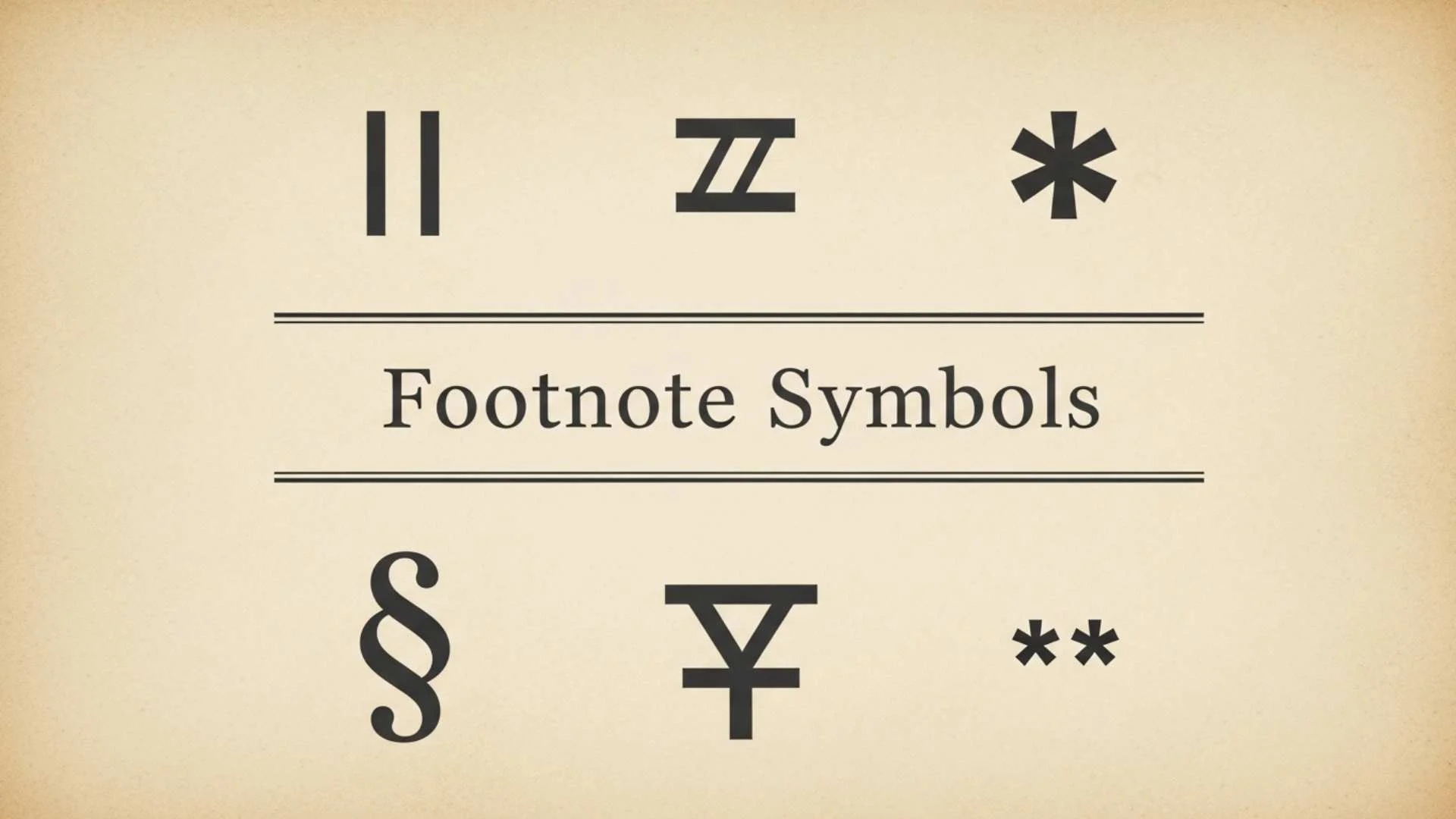
“Footnote symbols” are the silent guides we often ignore, yet they carry layers of meaning beneath every page we read.
They whisper context, reveal truth and connect ideas across time without demanding attention.
From ancient manuscripts to modern research papers, these tiny marks have shaped how humans preserve knowledge and communicate depth.
This article will uncover the powerful, often overlooked world of footnote symbols and the hidden significance they hold in culture, psychology, and human understanding.
What Are Footnote Symbols?
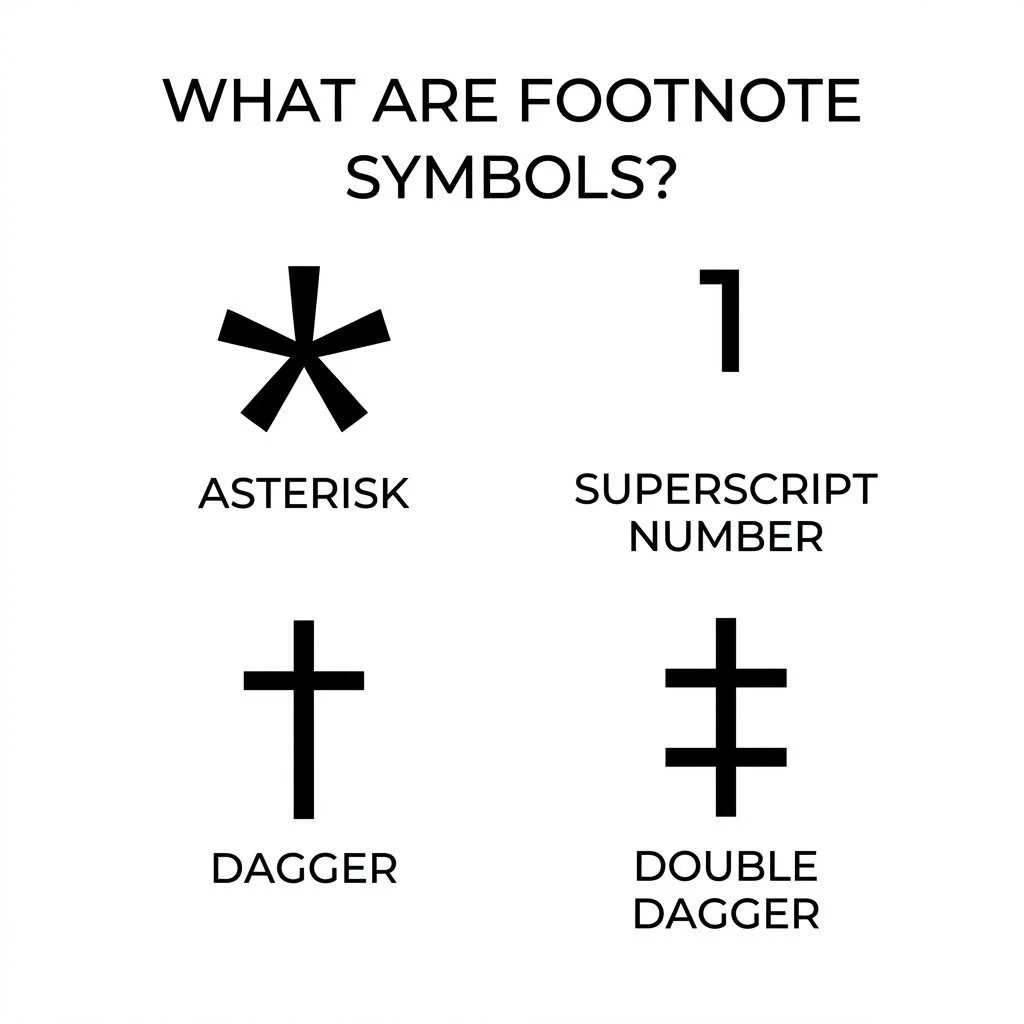
Footnote symbols are small typographic marks used in writing to direct readers to additional information, explanations, or references placed at the bottom of a page or document. They act as bridges between the main text and deeper layers of meaning, allowing authors to expand ideas without interrupting the flow of reading.
Historically, footnote symbols date back to early handwritten manuscripts where scholars needed ways to annotate sacred texts, philosophical works, and legal documents. Before numbering systems became standard, scribes used simple symbols like the asterisk or dagger to guide readers to notes. These symbols were practical tools, but over time, they evolved into a subtle language of their own.
Beyond their technical role, footnote symbols represent humanity’s desire to explain, clarify, and go deeper. They remind us that every idea has a backstory, every statement has context, and every truth can be explored further.
Deep Symbolic Meaning
Footnote symbols are more than marks on a page. They reflect deeper layers of human thought and emotion.
Spiritual Level
On a spiritual level, footnote symbols symbolize hidden wisdom. They represent truths that are not immediately visible but require effort and curiosity to uncover. Much like sacred teachings that reveal meaning only to those who seek it, these symbols guide readers toward deeper understanding.
Psychological Level
Psychologically, footnote symbols mirror the human mind itself. Just as our thoughts often contain layers beneath the surface, footnotes represent the subconscious details behind conscious ideas. They reflect our need to question, analyze, and explore beyond what is immediately presented.
Cultural Level
Culturally, footnote symbols represent authority, credibility, and knowledge. In academic and literary traditions, they signal trust and authenticity. A well-placed footnote can transform a simple claim into a well-supported truth, shaping how information is perceived and valued.
Types and Variations of Footnote Symbols
Footnote symbols come in several classic forms, each with its own visual identity and subtle meaning.
Asterisk (*)
A small star-like symbol often used as the first footnote marker. It represents emphasis and importance. You’ll find it in books, academic papers, and even advertisements.
Dagger (†)
Resembling a small cross, the dagger symbol often follows the asterisk. It carries a slightly serious tone and is sometimes associated with historical or solemn references.
Double Dagger (‡)
This symbol adds another layer when multiple notes are needed. It represents continuation and depth, suggesting that the topic requires further explanation.
Section Sign (§)
Used in legal and formal documents, this symbol indicates structured references. It conveys order, authority, and organization.
Parallel Lines (‖)
Less common but still used in scholarly works, this symbol suggests division or comparison between ideas.
Numbered Footnotes (1, 2, 3…)
Modern writing often uses numbers instead of symbols. These are clear and scalable, but they lack the poetic and historical charm of traditional symbols.
Each of these symbols appears in different contexts such as academic writing, religious texts, legal documents, and even creative literature. Together, they form a system that balances clarity with subtlety.
Footnote Symbols Across Cultures
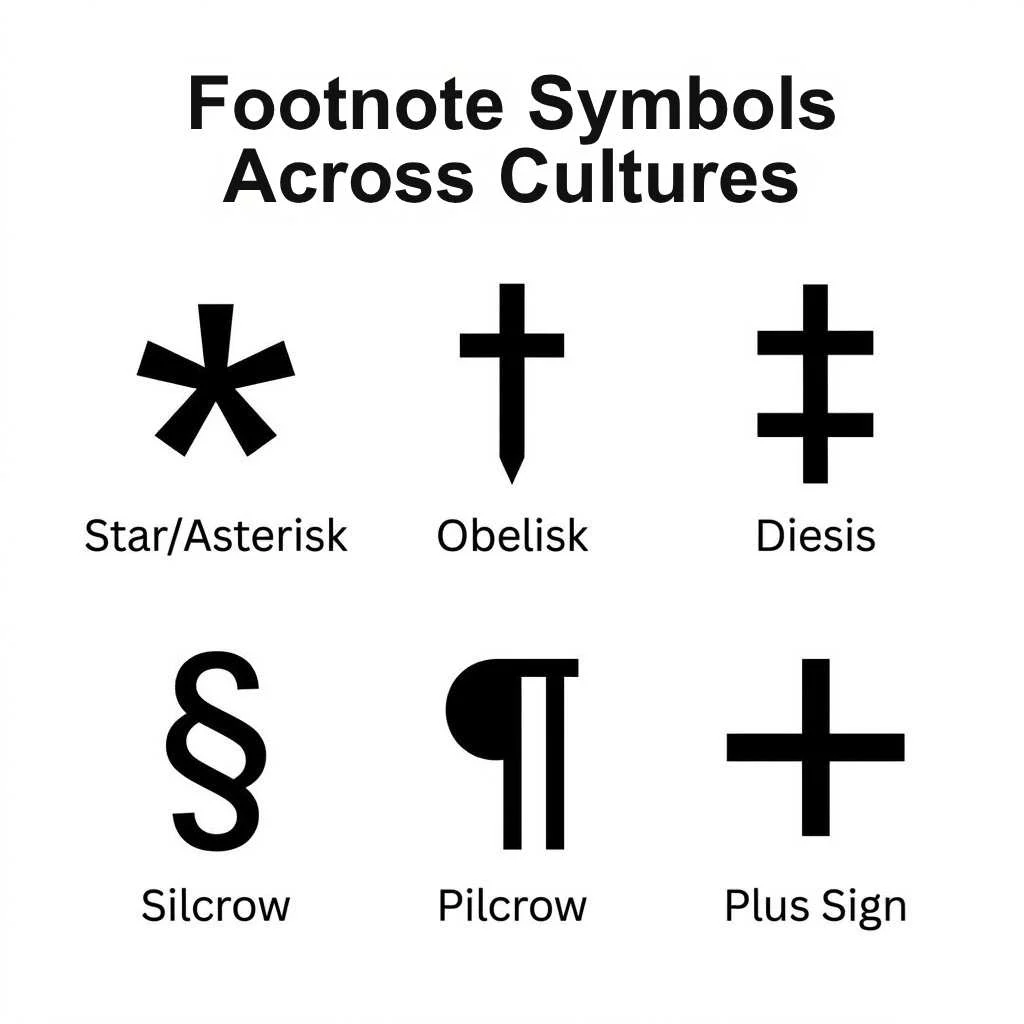
Footnote symbols may seem like a modern invention, but their essence exists across cultures and time.
Ancient Civilizations
In ancient Greece and Rome, scholars annotated texts with marks to explain philosophy, science, and literature. These early systems laid the foundation for modern footnotes.
Medieval Europe
During the medieval period, monks and scribes used symbols to annotate religious manuscripts. These marks often guided interpretation and preserved sacred meanings.
Islamic Scholarship
In classical Islamic texts, scholars used marginal notes and symbolic markers to explain religious teachings and legal interpretations. These annotations were essential for preserving knowledge across generations.
East Asian Traditions
Chinese and Japanese texts included commentary marks that functioned similarly to footnotes. These annotations helped explain classical literature and philosophical ideas.
Modern Global Usage
Today, footnote symbols are universal. Whether in academic journals, legal documents, or online content, they serve as a shared language of reference and credibility.
Across all these cultures, one theme remains constant: the desire to go deeper, to explain, and to preserve knowledge beyond the surface.
Footnote Symbols in Art, Movies and Pop Culture
Footnote symbols have quietly influenced creative expression in surprising ways.
In literature, authors sometimes use footnotes as storytelling tools. They create layers within narratives, offering hidden insights or alternative perspectives. This technique makes readers feel like explorers uncovering secrets.
In films, the concept of footnotes appears through visual cues, hidden messages, or background details that add depth to the story. These subtle elements function like symbolic footnotes, rewarding attentive viewers.
In visual art, annotations and marginal notes often appear in sketches and conceptual pieces. They reveal the artist’s thought process, much like footnotes reveal the author’s intent.
Tattoos inspired by symbols like the asterisk or dagger can represent personal meaning, remembrance, or the idea that there is always more beneath the surface.
In fashion, symbolic prints and typographic designs sometimes incorporate these marks to convey intellectual or minimalist aesthetics.
Spiritual and Dream Meaning of Footnote Symbols
Seeing footnote symbols in dreams or meditation can carry unique meanings.
They often symbolize a message that requires deeper attention. Your mind may be telling you that something important lies beneath the surface of your current situation.
Dreaming of an asterisk might suggest that something in your life needs focus or clarification. A dagger could represent a serious truth or emotional realization. Multiple symbols may indicate complexity, urging you to look beyond first impressions.
Spiritually, these symbols act as reminders that life itself has layers. Not everything is meant to be understood at once. Some truths reveal themselves only when you are ready to seek them.
Hidden Power and Deeper Influence of Footnote Symbols
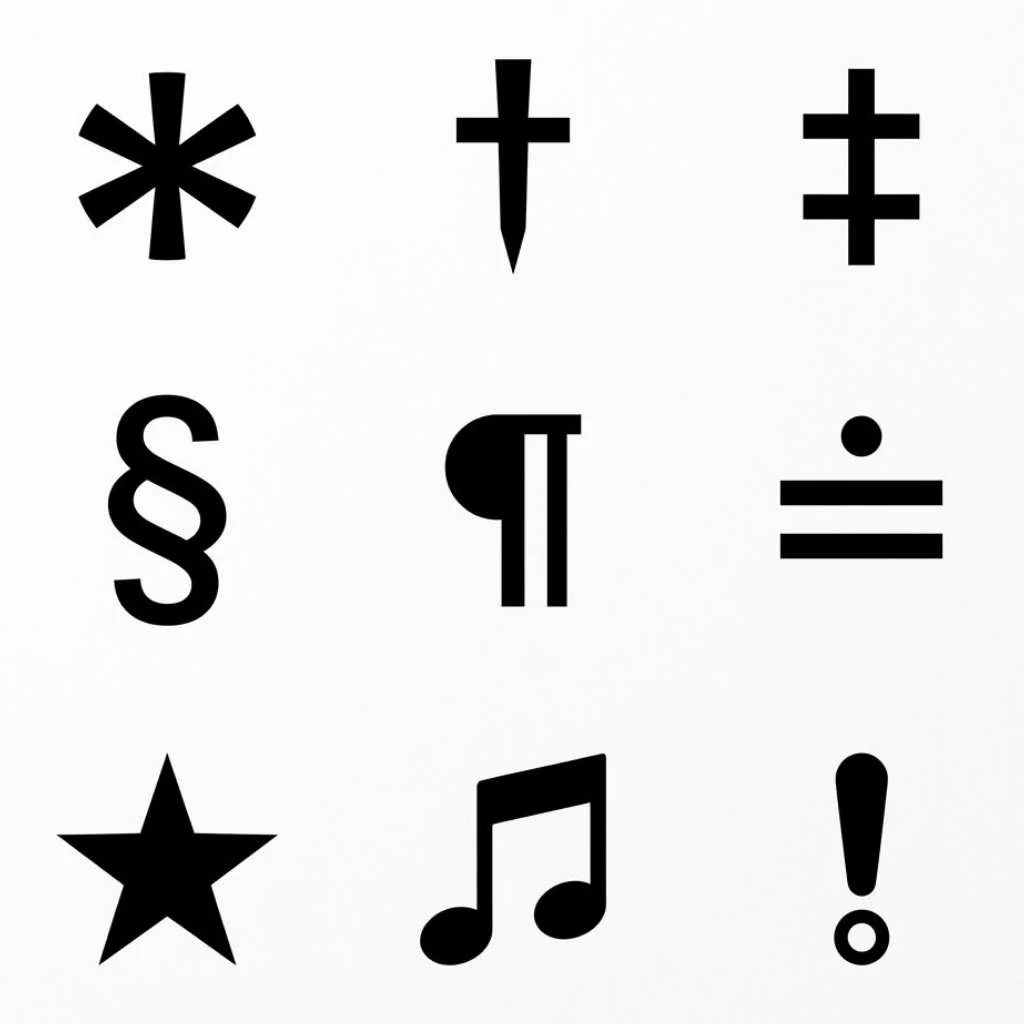
Footnote symbols quietly shape how we understand information without drawing attention to themselves. They guide the reader beyond the surface, adding layers of meaning that transform simple text into something richer and more complete. These small marks act like doors, opening paths to deeper knowledge for those willing to explore.
They influence how we trust content. When readers see clear references and explanations, they feel a stronger sense of reliability and confidence in what they are reading. This subtle reassurance builds a connection between the writer and the reader, making the message more powerful.
At the same time, footnote symbols create a sense of curiosity. They spark the urge to pause, to question, and to discover what lies beneath the main idea. This gentle pull keeps readers engaged and mentally active, turning passive reading into an interactive experience.
In many ways, their true power lies in what they do not say directly. They remind us that every piece of knowledge has depth, every idea has context, and every story holds more than what appears on the surface.
Why Humans Are Attracted to Footnote Symbols
Humans are naturally curious. We are drawn to what is hidden, subtle, and meaningful. Footnote symbols tap into this instinct.
They create a sense of mystery. When you see a small symbol in a text, it invites you to pause and explore. It tells you there is more to discover.
Psychologically, this triggers a reward system in the brain. Finding additional information feels like uncovering a secret. It gives a sense of satisfaction and deeper understanding.
Emotionally, footnote symbols resonate with how we experience life. We know that what we see on the surface is rarely the full story. These symbols mirror that truth, making them quietly powerful.
FAQs About Footnote Symbols
What is the purpose of footnote symbols?
Footnote symbols guide readers to additional information, references, or explanations without interrupting the main text.
Why are symbols used instead of numbers in some cases?
Symbols are often used for shorter texts or when a limited number of notes is needed. They add a traditional and stylistic touch.
What is the most common footnote symbol?
The asterisk is the most widely used symbol, usually appearing as the first footnote marker.
Are footnote symbols still relevant today?
Yes, they remain important in academic, legal, and professional writing. They help maintain clarity and credibility.
How many footnote symbols can be used in a document?
Traditionally, a sequence of symbols is used in a specific order, but modern writing often switches to numbers for clarity when many notes are needed.
Conclusion
Footnote symbols may seem small, but their impact is profound. They connect ideas, preserve knowledge, and invite us to explore beyond the surface. In a world that often values speed and simplicity, these quiet marks remind us to slow down and look deeper.
They teach us that every story has layers, every truth has context, and every idea can expand into something greater. Whether in books, dreams, or life itself, footnote symbols stand as a gentle invitation to seek meaning where others might not look.
And perhaps that is their greatest power. They do not demand attention, yet they reward those who notice them.

Sophia Reed
Hi, I’m Sophia Reed, a storyteller at heart who finds magic in everyday moments. Ever since I could hold a pen, I’ve been weaving tales that explore love, courage, and the unexpected twists of life. Writing allows me to connect with readers on a deeper level, sharing emotions and experiences that resonate across worlds. When I’m not lost in my stories, you can find me wandering through quiet streets, sipping coffee, or dreaming up my next plot twist. I believe every story has the power to inspire, heal, and transport. Through my books, I hope to leave a piece of my imagination with you.
Books:
-
Whispers of the Heart
-
Shadows and Sunlight