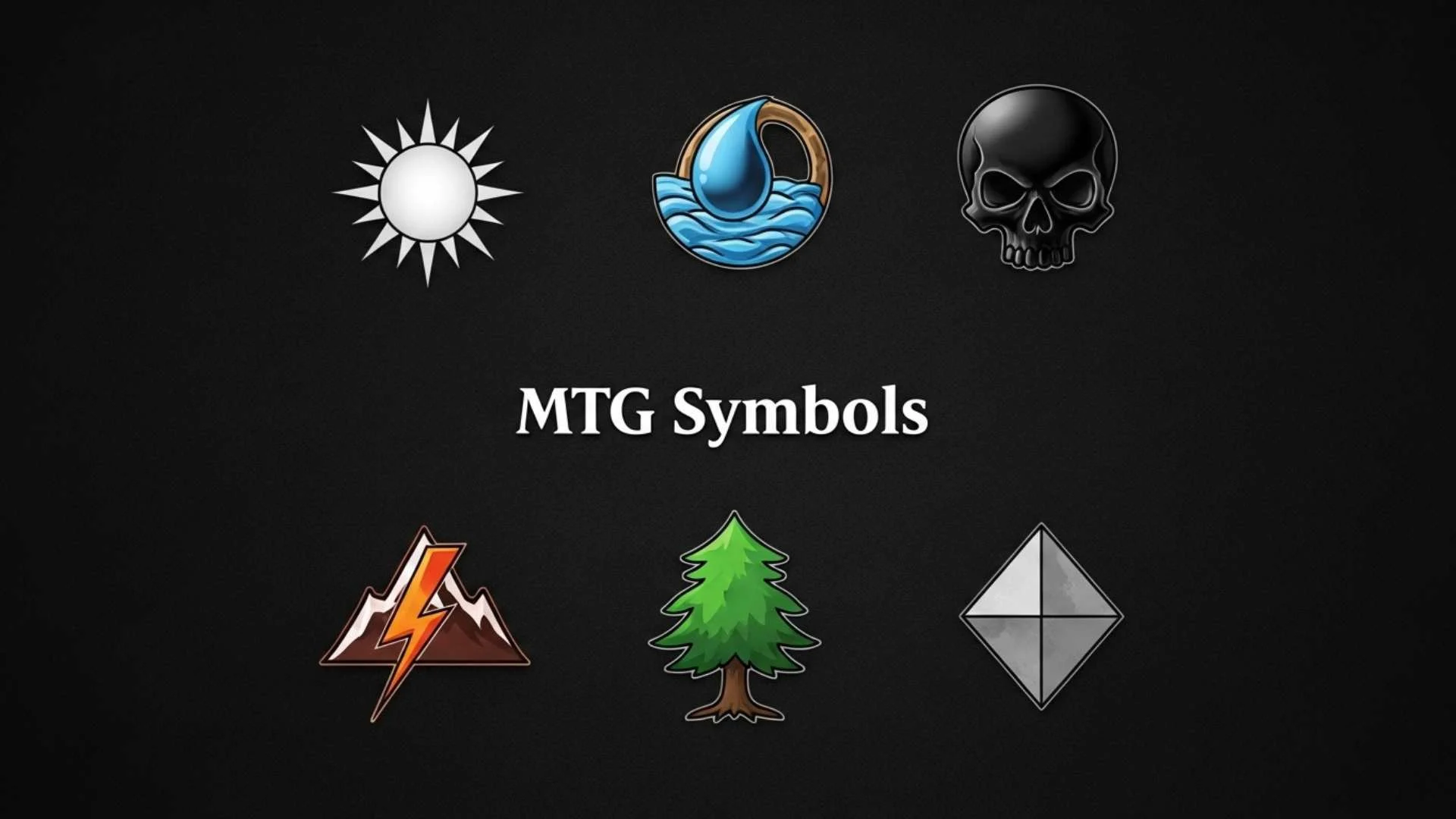
“MTG symbols” are more than simple icons printed on cards, they are a silent language of power, identity, and strategy.
From the first moment you see them, they spark curiosity, almost like ancient runes whispering secrets. These symbols carry emotion, logic and imagination all at once.
In this guide, you will uncover meanings that go far beyond gameplay, reaching into psychology, culture, and the human desire for control and creation.
What Are MTG Symbols?
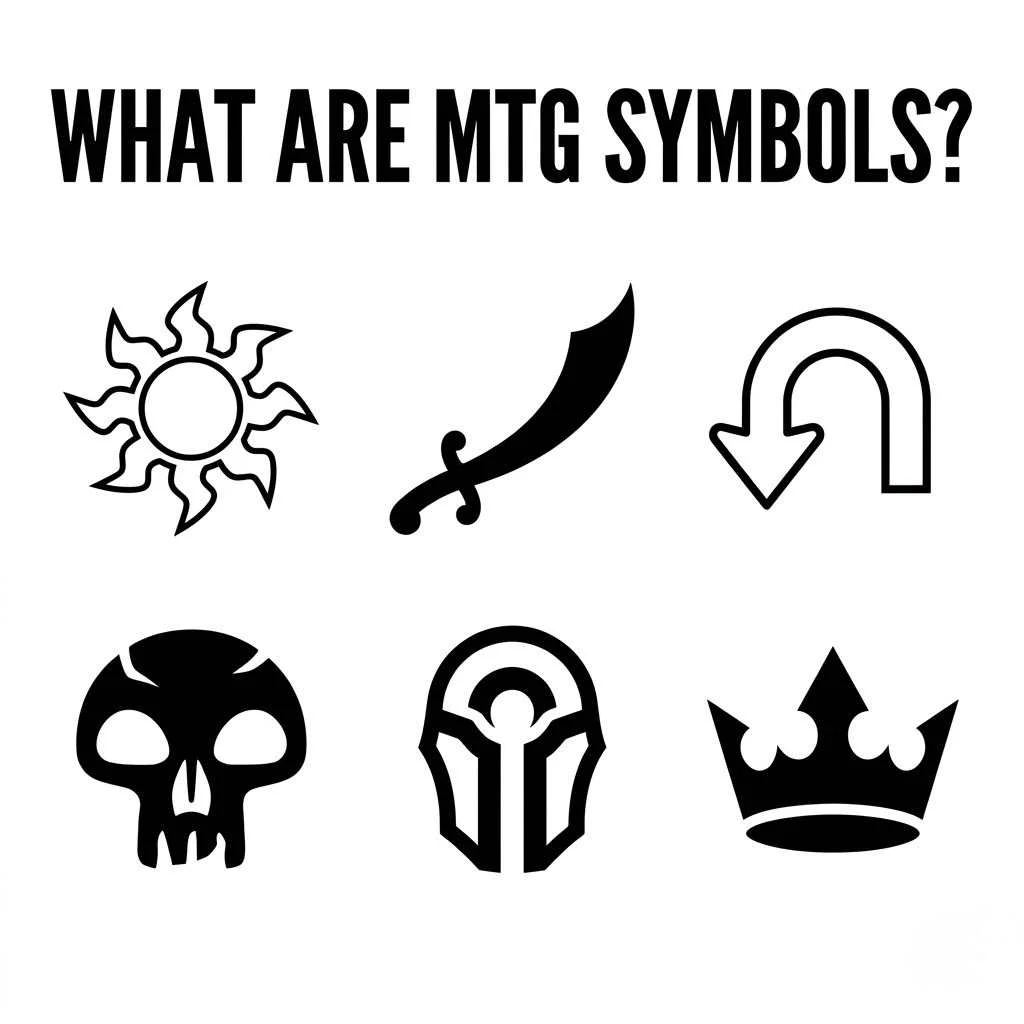
MTG symbols refer to the visual icons used in Magic The Gathering, one of the most iconic trading card games ever created. These symbols primarily represent mana types, costs, abilities, and card mechanics.
At their core, they function as a universal language. Instead of long explanations, a simple symbol tells you what energy a spell needs or what power it holds. This design traces back to the early 1990s when the game was first developed, blending fantasy storytelling with strategic depth.
Each symbol is tied to one of the five core colors of mana: white, blue, black, red, and green. Over time, additional symbols like colorless, hybrid, and phyrexian evolved, reflecting the growing complexity of the game.
But beyond mechanics, these symbols echo ancient traditions. Much like alchemical signs or mystical glyphs, they compress deep meaning into simple forms.
Deep Symbolic Meaning
Spiritual Level
On a spiritual level, MTG symbols mirror the balance of the universe. Each color represents a force of nature or philosophy:
- White stands for order, peace, and divine structure
- Blue reflects knowledge, illusion, and the unseen mind
- Black represents ambition, death, and transformation
- Red symbolizes passion, chaos, and raw emotion
- Green embodies life, growth, and natural harmony
Together, they form a complete cycle of existence. Like elements in ancient belief systems, they suggest that balance between forces creates harmony.
Psychological Level
Psychologically, these symbols connect with human archetypes. You may feel drawn to a certain color without knowing why.
- A person who values control often prefers blue
- Someone driven by emotion leans toward red
- Those who seek power may choose black
This reflects Carl Jung’s idea of archetypes. The symbols become mirrors of your inner world.
Cultural Level
Culturally, MTG symbols act like modern mythology. They bring together ideas from medieval fantasy, folklore, and philosophy. They show how storytelling evolves, turning ancient meanings into interactive experiences.
Types and Variations of MTG Symbols
White Mana Symbol
- Visual: A sun-like circle
- Meaning: Purity, protection, order
- Appears in: Angels, knights, healing spells
Blue Mana Symbol
- Visual: A water droplet
- Meaning: Intelligence, illusion, manipulation
- Appears in: Wizards, spells, mind control effects
Black Mana Symbol
- Visual: A skull
- Meaning: Death, ambition, sacrifice
- Appears in: Zombies, necromancy, dark magic
Red Mana Symbol
- Visual: A flame
- Meaning: Passion, destruction, chaos
- Appears in: Dragons, fire spells, explosive effects
Green Mana Symbol
- Visual: A tree
- Meaning: Growth, nature, instinct
- Appears in: Beasts, forests, life energy
Colorless Symbol
- Visual: A diamond shape
- Meaning: Neutral energy, raw existence
- Appears in: Artifacts, ancient powers
Hybrid Symbols
- Visual: Two colors merged
- Meaning: Flexibility, dual identity
- Appears in: Cards that can use either mana type
Phyrexian Symbols
- Visual: Unique symbol with a dark tone
- Meaning: Corruption, sacrifice, evolution through pain
- Appears in: Dark factions and corrupted beings
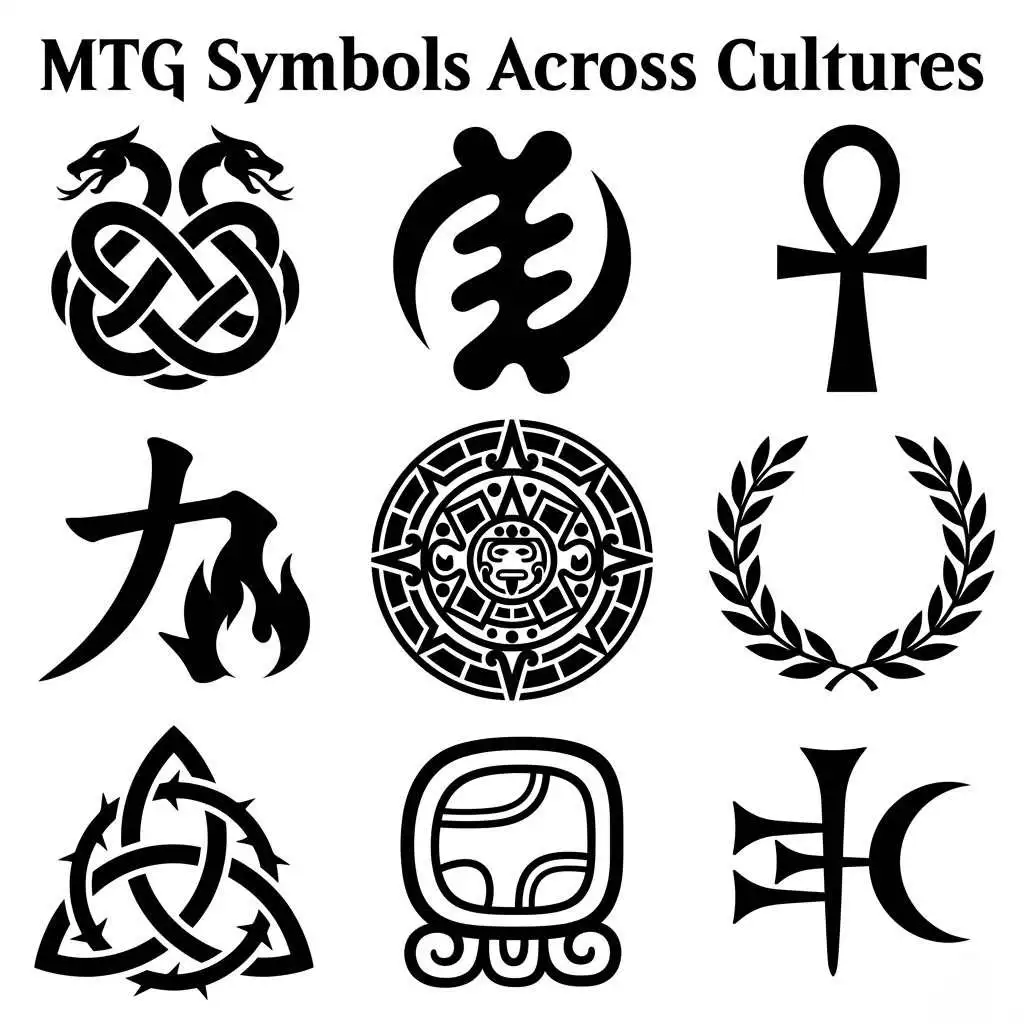
MTG Symbols Across Cultures
Ancient Symbolism
The five colors resemble classical elements found in many civilizations. Green aligns with earth, red with fire, blue with water, white with light, and black with shadow.
Medieval Influence
Knights, dragons, and magic systems reflect European medieval storytelling. The symbols feel like crests or magical seals used in ancient manuscripts.
Eastern Philosophy
Balance between colors echoes ideas from Chinese and Japanese philosophies, where harmony between forces is essential.
Modern Culture
Today, these symbols represent identity within gaming communities. Players express themselves through the colors they choose, much like fashion or art.
Digital Age Meaning
In the modern era, MTG symbols have become icons of strategy and intellect. They show how digital culture still craves symbolic storytelling.
MTG Symbols in Art, Movies and Pop Culture
These symbols have influenced far more than just card games.
- In movies, similar elemental symbols appear in fantasy worlds
- In art, they inspire minimalist designs and modern fantasy illustrations
- In books, they echo magical systems based on elemental power
- In tattoos, fans choose symbols that reflect their personality
- In fashion, subtle prints of mana icons appear in gaming merchandise
They represent identity, creativity, and belonging.
Spiritual and Dream Meaning of MTG Symbols
Seeing MTG symbols in dreams can feel surprisingly powerful.
- A white symbol may suggest a desire for peace or clarity
- A black symbol can indicate transformation or facing fears
- A red symbol might reflect intense emotions or conflict
- A green symbol often connects to healing or growth
- A blue symbol may point to hidden thoughts or intuition
In meditation, these symbols can act like focus points, helping you connect with different aspects of your inner self.
Positive vs Negative Meaning
Every symbol carries both light and shadow.
- White can mean peace but also control
- Blue can mean wisdom but also manipulation
- Black can mean power but also destruction
- Red can mean passion but also chaos
- Green can mean growth but also stagnation
This duality makes them feel real. Just like humans, they are not purely good or bad.
Why Humans Are Attracted to MTG Symbols
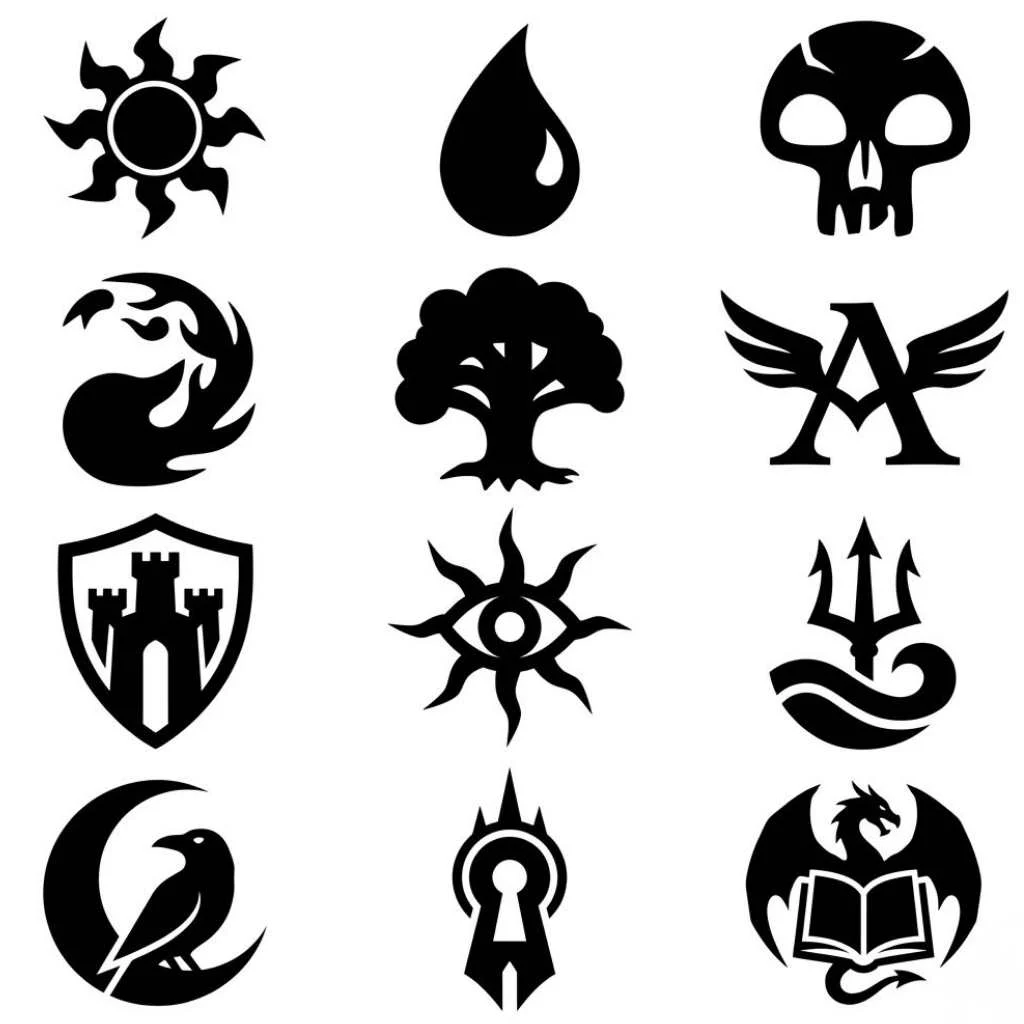
Humans naturally seek patterns and meaning. Symbols simplify complexity into something we can feel and understand instantly.
MTG symbols tap into this deeply. They offer:
- Identity, allowing you to express who you are
- Control, giving structure to choices
- Story, turning strategy into narrative
There is also nostalgia. For many, these symbols connect to memories of discovery, competition, and imagination.
At a deeper level, they remind us of something ancient. A time when symbols were the first language of human thought.
FAQs
What do MTG symbols represent?
They represent different types of mana, abilities, and mechanics used in the game to define how cards function.
Why are MTG symbols important?
They simplify complex rules and create a universal language that players can instantly understand.
What is the rarest MTG symbol?
Symbols like phyrexian or special set icons are often considered rare due to limited appearances.
Can MTG symbols have personal meaning?
Yes, many players connect emotionally with certain colors based on personality and life perspective.
Are MTG symbols based on real world ideas?
Yes, they draw inspiration from elemental systems, mythology, and philosophical concepts.
What does the colorless symbol mean?
It represents neutral or pure energy that exists outside the five traditional colors.
Conclusion
MTG symbols are not just part of a game, they are a bridge between imagination and meaning. They carry echoes of ancient symbols, psychological truths, and personal identity.
When you look at them closely, you begin to see more than shapes. You see stories, emotions, and reflections of yourself. And perhaps that is why they remain so powerful, because they speak a language you already understand deep inside.

Freddie Wood
Hi! I’m Freddie Wood, a storyteller at heart and a lifelong explorer of ideas. Writing has always been my way of making sense of the world, turning ordinary moments into stories that linger in your mind. I love blending emotions with adventure, and I’m fascinated by the way words can connect people across distances and experiences. When I’m not writing, you’ll find me wandering through nature, listening to music, or sketching out ideas for my next story. My goal is always to create books that stay with readers long after the last page.
Books by Freddie Wood:
-
The Hidden Path
-
Shadows of Tomorrow