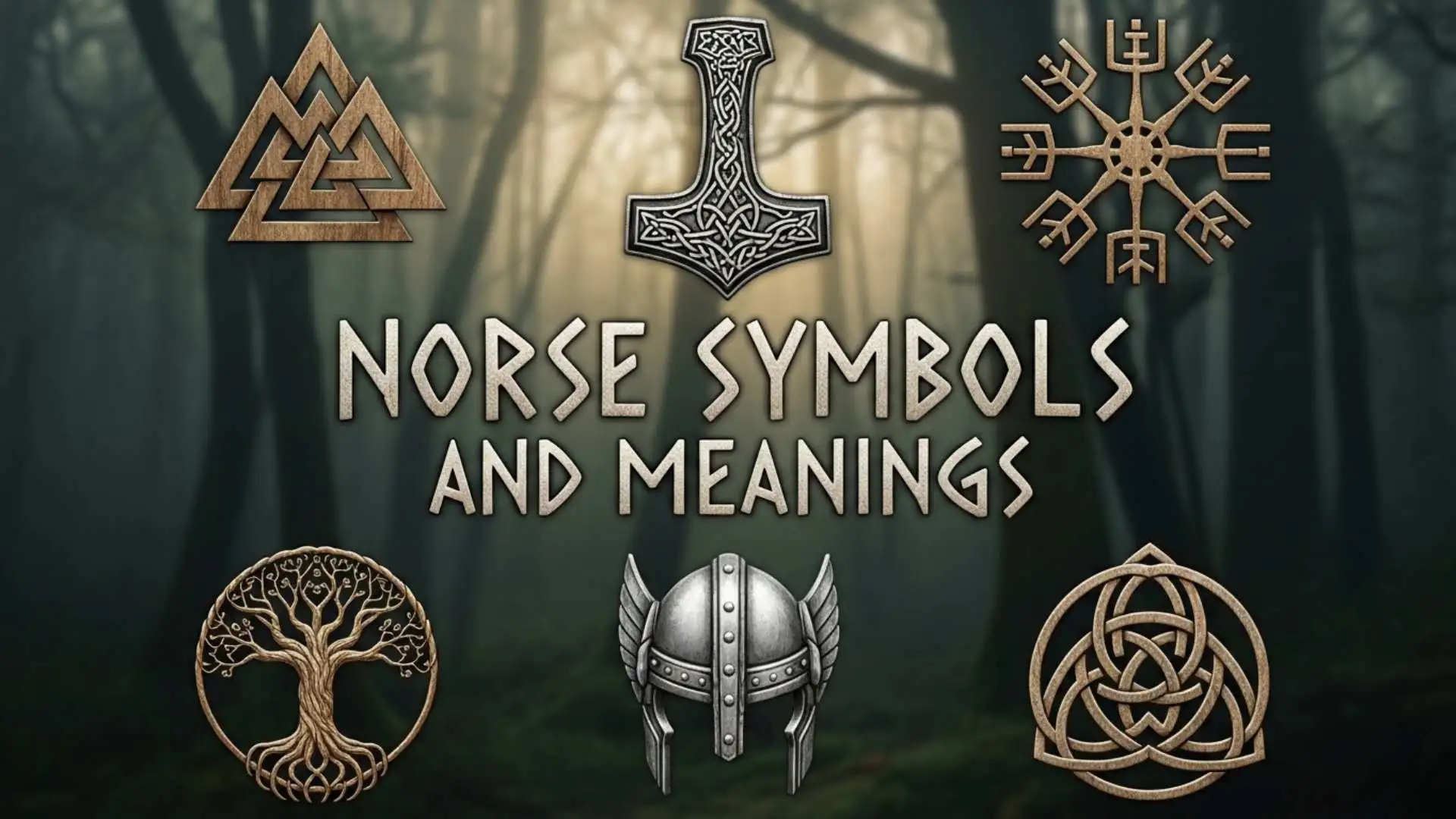
“Norse symbols and meanings” carry a mysterious pull that feels ancient yet deeply personal. They whisper stories of gods, warriors, fate, and the unseen forces guiding human life.
From carved stones to modern tattoos, these symbols have traveled across centuries, holding secrets about courage, destiny, and identity.
This article opens a door into that hidden world, revealing meanings you may have never truly understood.
What Are Norse Symbols and Meanings?
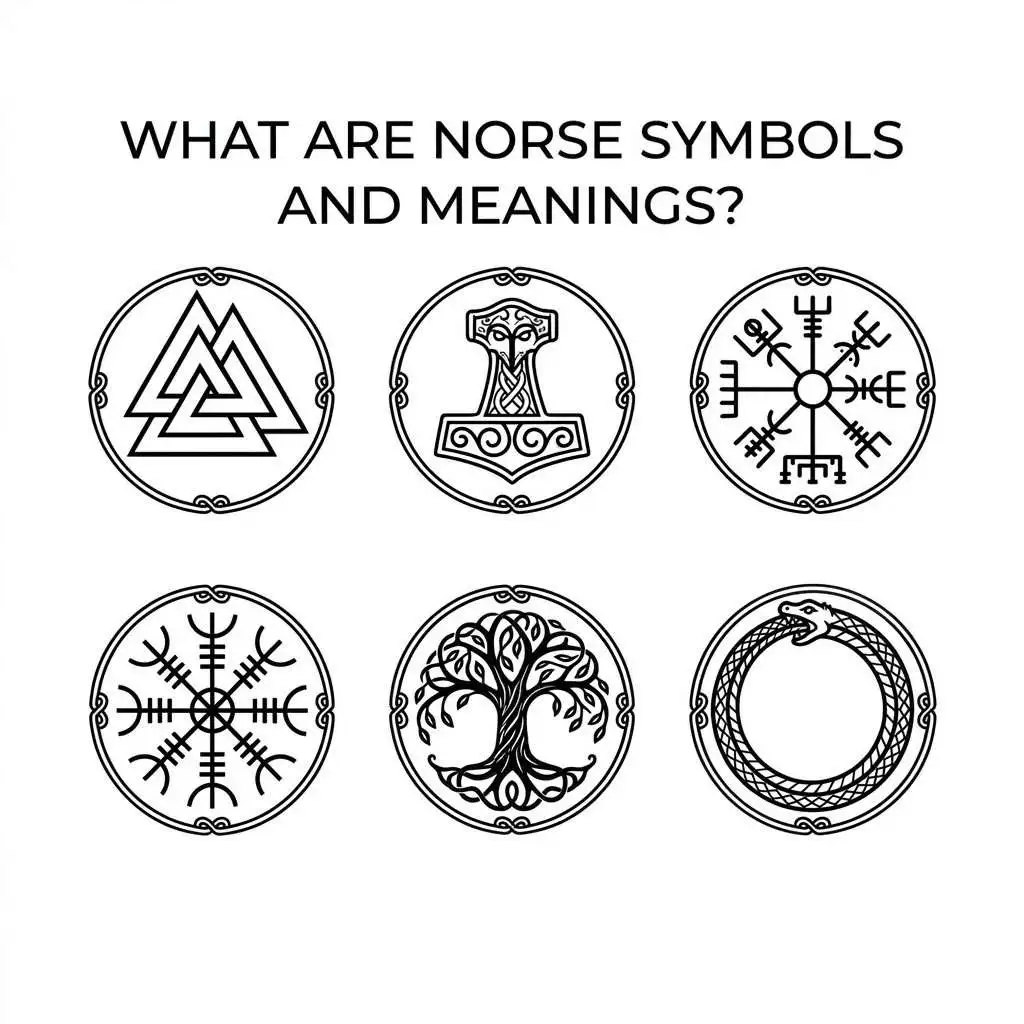
Norse symbols and meanings come from the rich mythology and culture of the ancient Scandinavian people, often called the Vikings. These symbols were not just decorative. They held power, belief, and identity.
The Norse world was deeply spiritual. People believed in gods like Odin, Thor, and Freyja. They also believed in fate, known as wyrd, which shaped every human life. Symbols were used to connect with these forces, offering protection, strength, or guidance.
These symbols appeared on weapons, ships, jewelry, and stones. They were carved into wood and metal, painted on shields, and even worn as amulets. Each symbol carried a deeper meaning, often tied to survival, honor, and the unknown.
Deep Symbolic Meaning
Spiritual Level
On a spiritual level, Norse symbols acted as bridges between humans and the divine. They were believed to channel energy from gods and cosmic forces. For example, symbols like the Valknut were linked to death and the afterlife, guiding souls into the realm of warriors.
Psychological Level
Psychologically, these symbols reflect human struggles and desires. Strength, protection, fear of death, and the need for control over fate are all embedded in them. Wearing or seeing these symbols can create a sense of courage or inner power.
Cultural Level
Culturally, Norse symbols defined identity. They showed loyalty to gods, clans, and traditions. They also told stories. A single carving could represent an entire myth or belief system, making symbols a form of ancient storytelling.
Types / Variations of Norse Symbols and Meanings
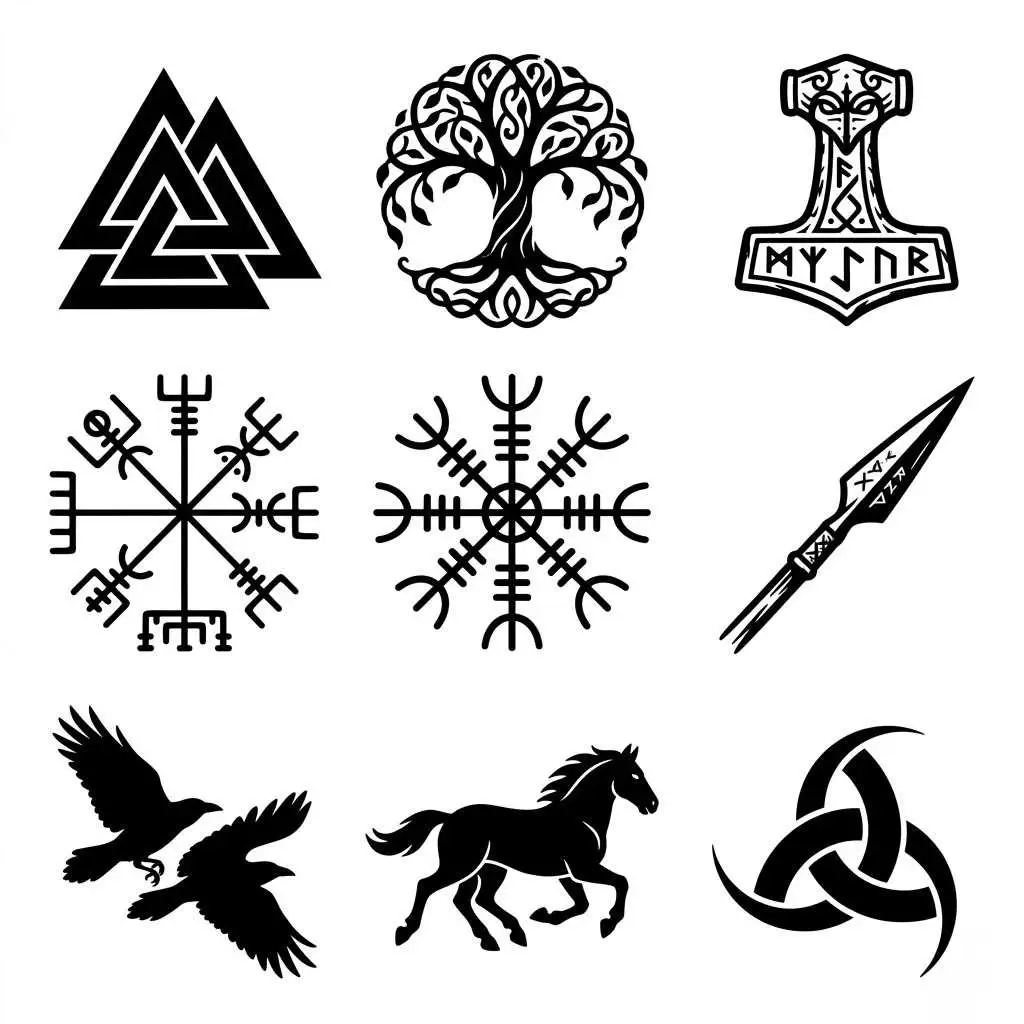
1. Valknut
Visual Description: Three interlocked triangles
Meaning: Death, the afterlife, and the power of Odin
Where It Appears: Burial stones, runestones, warrior artifacts
The Valknut is often called the “knot of the slain.” It represents the connection between life and death, especially for warriors who hoped to enter Valhalla.
2. Yggdrasil
Visual Description: A massive tree with roots and branches extending across worlds
Meaning: The universe, life, and interconnected existence
Where It Appears: Mythology, carvings, spiritual art
Yggdrasil is the World Tree. It connects all nine realms in Norse mythology, symbolizing balance and the cycle of life.
3. Mjölnir (Thor’s Hammer)
Visual Description: A short-handled hammer
Meaning: Protection, strength, blessing
Where It Appears: Jewelry, amulets, Viking graves
Mjölnir was worn for protection. It symbolized the power of Thor, the god who defended both gods and humans.
4. Vegvísir
Visual Description: A compass-like symbol with multiple directional arms
Meaning: Guidance and protection during journeys
Where It Appears: Icelandic manuscripts, tattoos
Known as the Viking compass, Vegvísir was believed to help travelers find their way even in storms or darkness.
5. Helm of Awe (Ægishjálmur)
Visual Description: A circular symbol with spiked arms radiating outward
Meaning: Protection, fearlessness, mental strength
Where It Appears: Magical texts, warrior lore
This symbol was used to create fear in enemies and strengthen the mind of the wearer.
6. Runes
Visual Description: Alphabet-like symbols with sharp lines
Meaning: Communication, magic, fate
Where It Appears: Stones, inscriptions, divination practices
Runes were more than letters. Each rune carried its own energy and meaning, often used for prophecy and magic.
Norse Symbols and Meanings Across Cultures
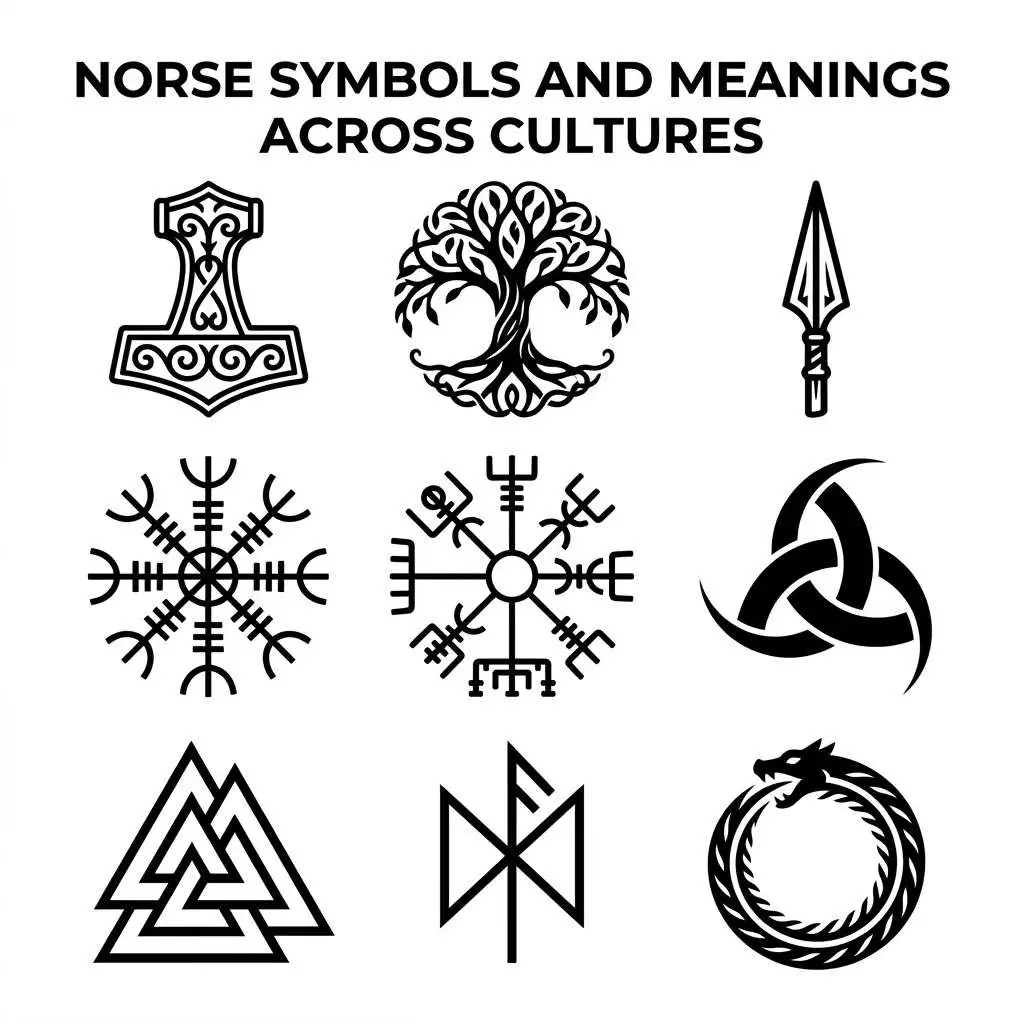
Scandinavian Culture
In their original setting, these symbols were sacred. They represented gods, natural forces, and destiny. People truly believed in their power.
Celtic Influence
Some Norse symbols blended with Celtic traditions, especially in regions where Vikings settled. Knot patterns and spiritual meanings became intertwined.
Medieval Europe
During the medieval period, many Norse symbols were reinterpreted or suppressed as Christianity spread. However, some survived in folklore and art.
Modern Western Culture
Today, Norse symbols appear in tattoos, fashion, and personal identity. They often represent strength, independence, and connection to ancient roots.
New Age Spirituality
In modern spiritual practices, these symbols are used for meditation, manifestation, and personal growth. People see them as tools for inner transformation.
Norse Symbols and Meanings in Art, Movies & Pop Culture
Norse symbols have made a strong comeback in modern storytelling.
Movies
Films inspired by Viking culture often use these symbols to represent power and mythology. Thor’s hammer, for example, has become a global icon of strength.
Books
Fantasy novels draw heavily from Norse mythology. Symbols like runes and world trees appear in stories about magic and destiny.
Tattoos
Many people choose Norse symbols as tattoos to express identity, resilience, or spiritual belief. A Vegvísir tattoo might symbolize finding one’s path in life.
Fashion
Clothing brands use these symbols for their bold and mysterious aesthetic. They evoke a sense of ancient strength and rebellion.
Art
Modern artists reinterpret these symbols in paintings and digital designs, blending ancient meaning with contemporary style.
Spiritual & Dream Meaning of Norse Symbols and Meanings
Seeing Norse symbols in dreams or meditation can feel intense and meaningful.
- Valknut in dreams: Transformation, endings, or a major life shift
- Yggdrasil: Growth, connection, and life balance
- Runes: Messages from the subconscious or intuition
- Mjölnir: Need for protection or inner strength
Spiritually, these symbols often appear when a person is searching for direction or facing a challenge. They act like signs from the deeper mind.
Positive vs Negative Meaning
Norse symbols are powerful because they are not purely good or bad.
Positive Meanings
- Strength and courage
- Protection and guidance
- Wisdom and knowledge
- Connection to higher forces
Negative Meanings
- Fear of death or fate
- Obsession with power
- Misuse of spiritual energy
- Cultural misunderstanding or misuse
For example, the Valknut can represent honor in death, but also the inevitability of mortality. It depends on how you interpret it.
Why Humans Are Attracted to This Symbol
Humans are naturally drawn to Norse symbols because they speak to something deep and ancient within us.
These symbols reflect universal emotions. Fear, hope, courage, and destiny. They remind us that people thousands of years ago faced the same struggles.
There is also a sense of mystery. Norse symbols feel like puzzles waiting to be understood. They invite curiosity and exploration.
Psychologically, they give a sense of control. Wearing a symbol of protection or guidance can make someone feel stronger and more confident.
Emotionally, they connect us to stories. Every symbol carries a narrative, and humans are wired to respond to stories.
FAQs
What are the most powerful Norse symbols and meanings?
The most powerful include Valknut, Mjölnir, Vegvísir, and the Helm of Awe. Each represents strength, protection, or connection to the divine.
Are Norse symbols still used today?
Yes, they are widely used in tattoos, jewelry, art, and spiritual practices.
What do Norse runes mean?
Runes are letters with individual meanings, often used for communication and divination.
Is it okay to wear Norse symbols?
Yes, but it is important to understand and respect their cultural and historical significance.
Conclusion
Norse symbols and meanings are more than ancient carvings. They are echoes of human experience, shaped by fear, hope, and the search for meaning. They remind us that life is a journey filled with uncertainty, yet guided by unseen forces.
When you look at these symbols, you are not just seeing history. You are seeing yourself. Your struggles, your strength, your destiny. That is why they continue to captivate hearts even today.

Freddie Wood
Hi! I’m Freddie Wood, a storyteller at heart and a lifelong explorer of ideas. Writing has always been my way of making sense of the world, turning ordinary moments into stories that linger in your mind. I love blending emotions with adventure, and I’m fascinated by the way words can connect people across distances and experiences. When I’m not writing, you’ll find me wandering through nature, listening to music, or sketching out ideas for my next story. My goal is always to create books that stay with readers long after the last page.
Books by Freddie Wood:
-
The Hidden Path
-
Shadows of Tomorrow