
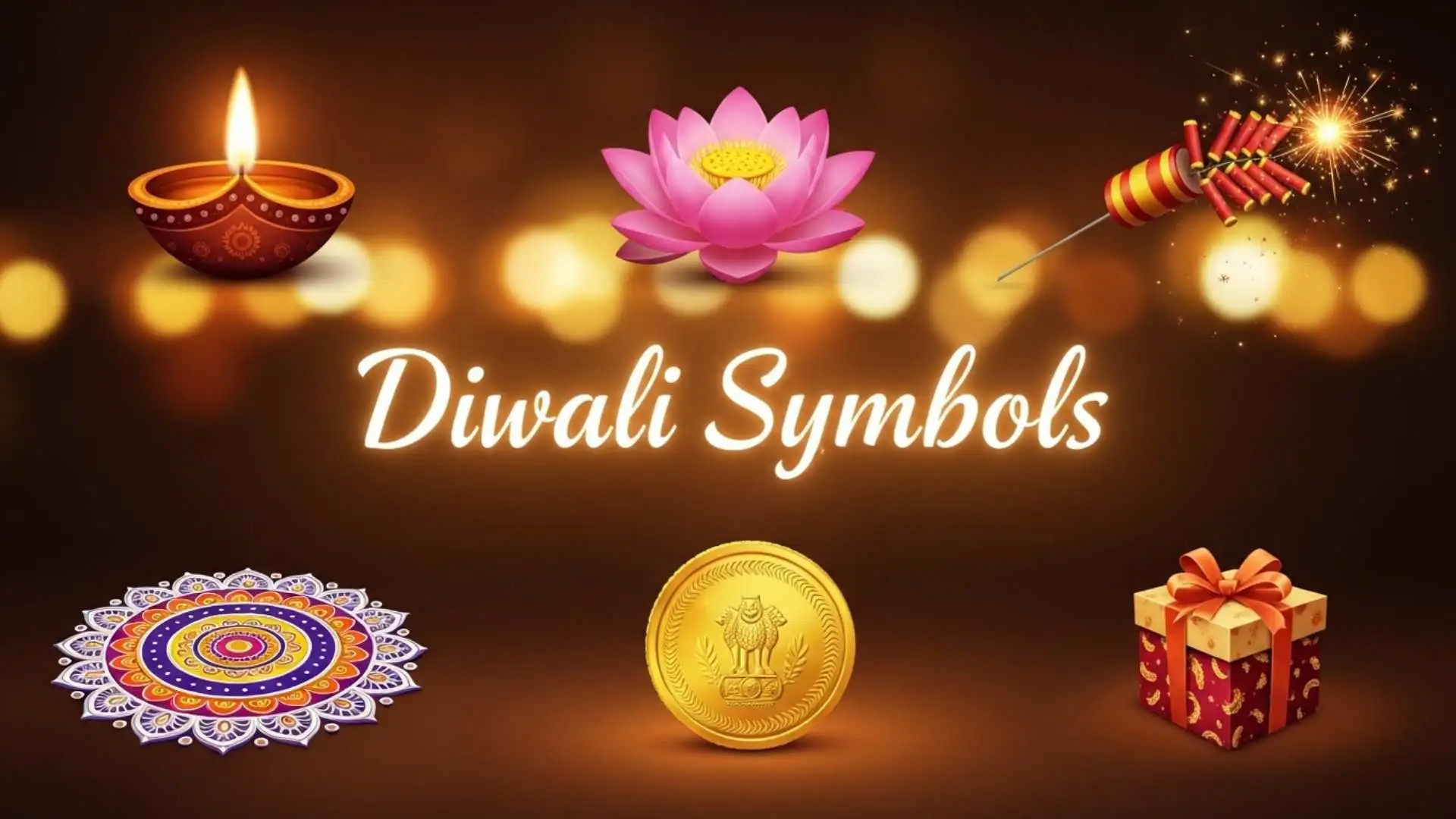
“Diwali symbols” carry the glowing essence of hope, light and renewal, touching millions of hearts every year.
These powerful signs are not just decorative elements but deep expressions of faith, victory and inner transformation.
From flickering lamps to vibrant patterns, each symbol tells a story that connects humanity to something greater.
In this guide, you will discover the hidden meanings behind Diwali symbols and why they continue to inspire across generations.
What Are Diwali Symbols?
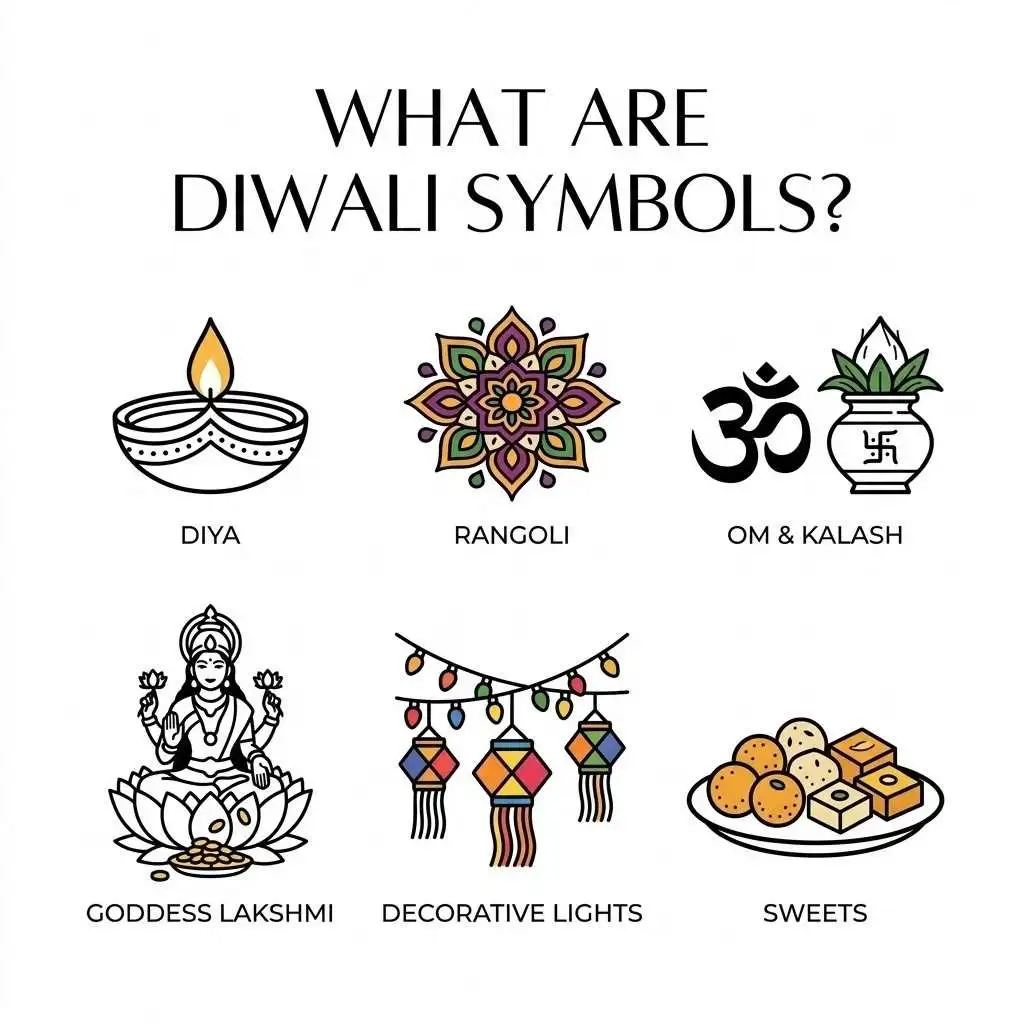
Diwali symbols are sacred and cultural icons associated with the festival of Diwali, widely celebrated in India and across the world. These symbols are used in rituals, decorations, and traditions to represent light over darkness, good over evil, and knowledge over ignorance.
Historically, these symbols emerged from ancient Hindu traditions and scriptures. They are closely linked to stories like the return of Lord Rama to Ayodhya, the worship of Goddess Lakshmi, and the spiritual awakening of the soul. Over time, Diwali symbols have become universal expressions of joy, prosperity, and divine blessing.
They are not just visual elements. They are emotional, spiritual, and deeply meaningful reminders of hope and renewal.
Deep Symbolic Meaning
Diwali symbols hold profound significance beyond their physical appearance.
Spiritual Level
Spiritually, these symbols represent the triumph of light over darkness. They remind us to remove negativity from our lives and embrace inner peace, wisdom, and divine energy.
Psychological Level
On a psychological level, Diwali symbols evoke feelings of warmth, happiness, and belonging. The light of a diya or the beauty of rangoli patterns can uplift the mind and create a sense of calm and positivity.
Cultural Level
Culturally, these symbols represent unity, celebration, and tradition. They bring families together and preserve ancient customs that have been passed down for centuries.
Types and Variations of Diwali Symbols
Diwali symbols come in many beautiful forms, each with its own unique meaning and purpose.
Diya (Oil Lamp)
A small clay lamp filled with oil and lit with a wick.
Meaning: Light over darkness, knowledge over ignorance.
Where it appears: Homes, temples, entrances during Diwali celebrations.
Rangoli
Colorful patterns made on the ground using powders, flowers, or rice.
Meaning: Welcoming prosperity and positive energy.
Where it appears: Doorsteps, courtyards, and festive spaces.
Lakshmi Feet (Paduka)
Footprints symbolizing the arrival of Goddess Lakshmi.
Meaning: Wealth, prosperity, and divine blessings entering the home.
Where it appears: Floors, entrances, and prayer areas.
Lotus Flower
A sacred flower often associated with purity and divinity.
Meaning: Spiritual growth, beauty, and enlightenment.
Where it appears: Art, decorations, and religious rituals.
Firecrackers
Bright and loud fireworks used during celebrations.
Meaning: Driving away evil spirits and celebrating joy.
Where it appears: Outdoor festivities and celebrations.
Candles and Lights
Modern alternatives to traditional diyas.
Meaning: Illumination, hope, and positivity.
Where it appears: Homes, streets, and public places.
Each of these symbols plays a vital role in expressing the spirit of Diwali.
Diwali Symbols Across Cultures
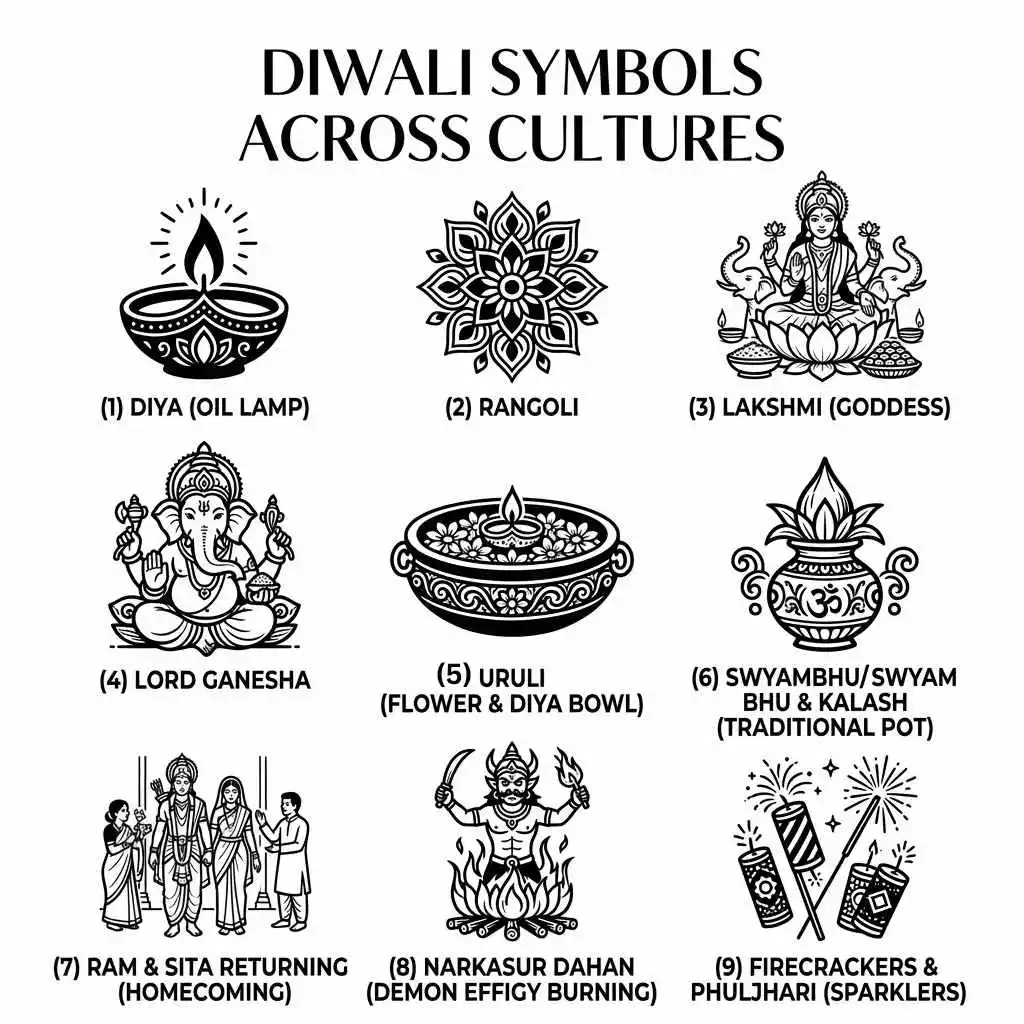
Diwali symbols may have Hindu origins, but their meanings have spread across cultures.
Hindu Tradition
In Hinduism, Diwali symbols are deeply spiritual. Diyas and Lakshmi symbols represent divine blessings and the victory of good over evil.
Jain Tradition
For Jains, Diwali marks the spiritual liberation of Lord Mahavira. Symbols focus on enlightenment and inner peace.
Sikh Tradition
Sikhs celebrate Bandi Chhor Divas during Diwali. Light symbolizes freedom and justice.
Buddhist Influence
In some Buddhist communities, lights represent wisdom and the removal of ignorance.
Modern Global Culture
Today, Diwali symbols are used worldwide as signs of celebration, unity, and cultural beauty. Even people outside these traditions embrace them as symbols of joy and positivity.
Diwali Symbols in Art, Movies and Pop Culture
Diwali symbols have become visually iconic in modern creativity.
In movies, glowing diyas and fireworks often represent celebration, love, and emotional turning points. They create magical scenes filled with warmth and connection.
In art, rangoli designs and lotus motifs are used to express beauty, balance, and spirituality. Artists use these symbols to blend tradition with modern aesthetics.
In literature, Diwali symbols often symbolize new beginnings, hope, and transformation.
In tattoos, people choose diyas or lotus flowers to represent personal growth, light, and resilience.
In fashion, Diwali-inspired designs include intricate patterns, bright colors, and symbolic motifs that reflect celebration and elegance.
Spiritual and Dream Meaning of Diwali Symbols
Seeing Diwali symbols in dreams or meditation can carry powerful messages.
A diya may symbolize guidance or clarity in your life. It suggests that you are moving toward truth and understanding.
Rangoli patterns may represent harmony and balance. They can indicate that positive energy is entering your life.
The lotus flower in a dream often symbolizes personal growth and spiritual awakening.
Fireworks may reflect excitement, emotional release, or celebration of achievements.
Spiritually, these symbols remind you that even in darkness, light always exists.
Positive vs Negative Meaning
Diwali symbols carry both uplifting and cautionary meanings.
Positive Meaning
They represent joy, prosperity, light, and renewal. They inspire hope and encourage positivity. They also strengthen cultural identity and family bonds.
Negative Meaning
In some contexts, excessive use of fireworks may symbolize chaos or environmental harm. Over-commercialization can also reduce the deeper spiritual meaning of these symbols.
This balance shows that symbols depend on how humans use and interpret them.
Why Humans Are Attracted to Diwali Symbols
Humans are naturally drawn to light, color, and meaning.
Diwali symbols combine all three. The warm glow of a diya creates comfort. The vibrant colors of rangoli spark joy. The deeper meanings behind these symbols connect with our desire for purpose and belonging.
Psychologically, these symbols trigger positive emotions and memories. They remind people of family, celebration, and togetherness.
Emotionally, they offer hope. In a world filled with uncertainty, the idea that light can overcome darkness is deeply comforting.
FAQs About Diwali Symbols
What is the most important symbol of Diwali?
The diya is considered the most important symbol, representing light, knowledge, and the victory of good over evil.
Why are rangoli designs made during Diwali?
Rangoli is created to welcome guests and invite positive energy and prosperity into the home.
Are Diwali symbols only religious?
No, they are both cultural and spiritual. Many people use them for decoration and celebration regardless of religious beliefs.
What does the lotus symbolize in Diwali?
The lotus represents purity, spiritual growth, and enlightenment.
Why are lights used so much during Diwali?
Lights symbolize hope, positivity, and the removal of darkness and negativity.
Conclusion
Diwali symbols are more than festive decorations. They are powerful reminders of hope, light, and transformation. Each flame, pattern, and motif carries a story that connects the past with the present and the human soul with something divine.
They teach us that even the smallest light can overcome darkness. That beauty can exist in simplicity. And that traditions, when understood deeply, can guide us toward a more meaningful life.
In the glow of these symbols, we do not just celebrate a festival. We celebrate the eternal power of light within ourselves.

Julian Shaw
I’ve always been fascinated by the small, quiet stories that make life feel magical. Writing allows me to explore worlds that exist just beyond the everyday, where imagination meets reality. Over the years, I’ve found joy in creating characters that feel real and stories that stay with readers long after the last page. When I’m not writing, you can usually find me wandering through city streets, notebook in hand, capturing little sparks of inspiration. I believe every story has the power to connect us, to make us feel a little less alone. Sharing these tales is my way of leaving a mark on the world.
Books:
-
Whispers in the Wind
-
Shadows of Tomorrow