
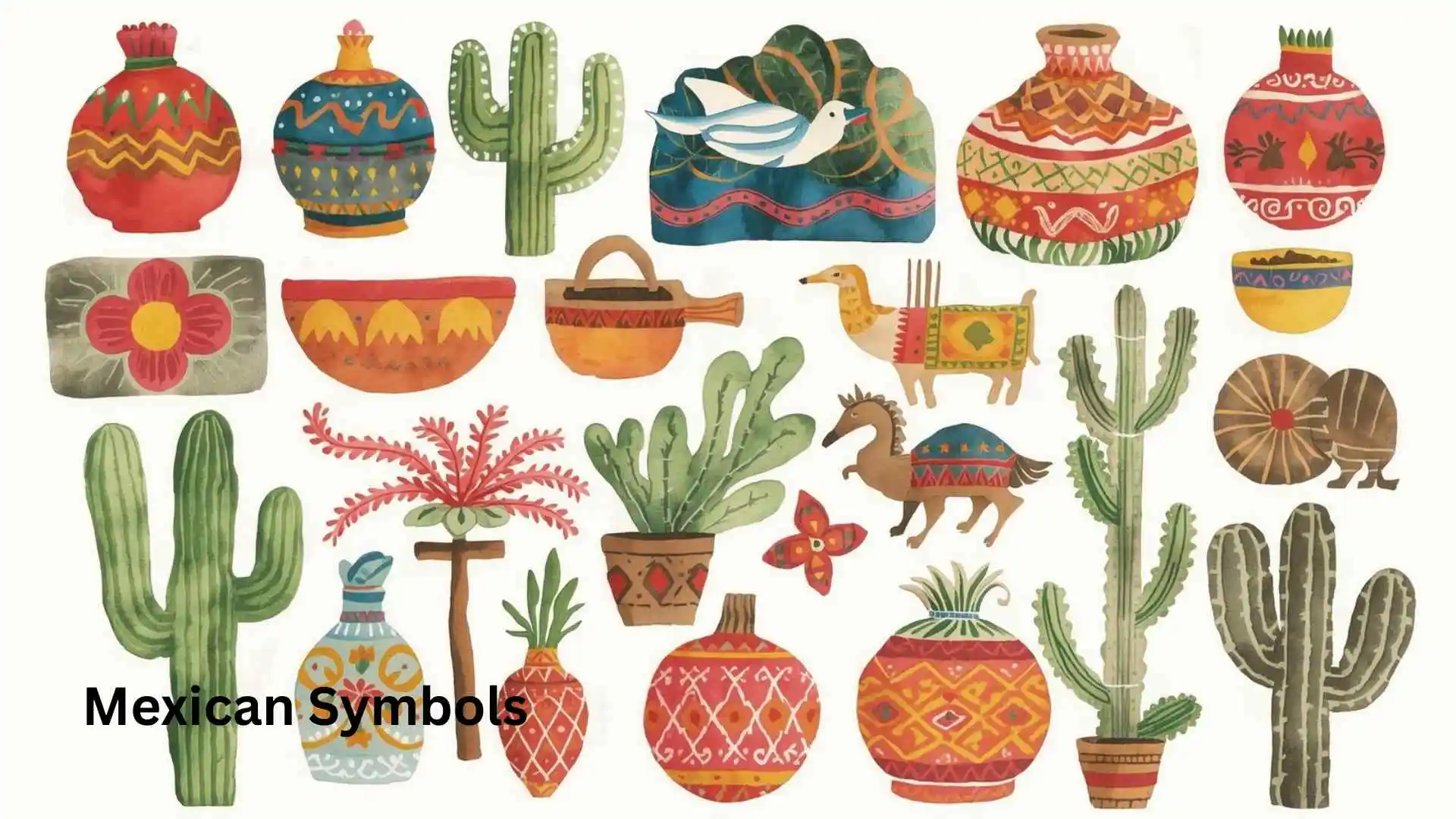
Mexican symbols are more than just art, patterns, or ancient drawings. they are living memories of a civilization that spoke through colors, myths, and sacred meanings.
From the roaring eagle on a cactus to the delicate marigold flowers of the afterlife, each symbol carries emotional weight that connects past and present.
When you truly understand these symbols, you begin to see how deeply human identity, spirituality, and history are woven into them.
This article will uncover the hidden meanings behind Mexican symbols in a way most explanations never do—through culture, psychology, and spiritual depth.
What are Mexican Symbols?
Mexican symbols are visual and spiritual representations that come from the rich history of ancient Mesoamerican civilizations such as the Aztecs and Mayans, blended later with Spanish colonial influence and Catholic traditions.
They appear in mythology, architecture, art, festivals, and even national identity.
One of the most iconic examples is the eagle devouring a snake on a cactus, a powerful emblem tied to the founding of modern Mexico. Another is the sacred imagery of death used in celebrations like Day of the Dead, where death is not feared but honored as part of life’s cycle.
These symbols are not random—they are coded stories passed through generations.
Deep Symbolic Meaning of Mexican Symbols
Spiritual Meaning
Spiritually, Mexican symbols often represent the balance between life and death, light and darkness, and the human connection with nature and gods.
For example, the Aztec worldview saw the universe as cyclical, where destruction and rebirth are part of divine order.
Psychological Meaning
Psychologically, these symbols help people process fear, identity, and mortality.
The colorful celebration of death reflects a deep human coping mechanism: transforming fear into acceptance and beauty.
Cultural Meaning
Culturally, Mexican symbols preserve indigenous identity despite colonization.
They are acts of resistance, memory, and pride—keeping ancient wisdom alive in modern society.
Types / Variations of Mexican Symbols
1. Eagle and Snake on Cactus
- Description: An eagle eating a snake while perched on a cactus
- Meaning: Founding of Mexico, triumph of spirit over chaos
- Where it appears: National flag of Mexico
2. Quetzalcoatl (Feathered Serpent)
- Description: A serpent covered in feathers
- Meaning: Wisdom, wind, creation, and divine knowledge
- Where it appears: Aztec and Mayan mythology
- Related figure: Quetzalcoatl
3. Aztec Sun Stone
- Description: A massive carved circular stone calendar
- Meaning: Time cycles, cosmic order, and universe structure
- Where it appears: Ancient Aztec civilization
- Artifact: Aztec Sun Stone
4. Marigold Flower (Cempasúchil)
- Description: Bright orange-yellow flower
- Meaning: Guide for spirits returning to the living world
- Where it appears: Day of the Dead altars
5. Sugar Skulls
- Description: Decorative skulls made of sugar
- Meaning: Celebration of death, not fear of it
- Where it appears: Festivals and home altars
Mexican Symbols Across Cultures
1. Aztec Civilization
Symbols represented gods, war, sacrifice, and cosmic balance. Everything had divine meaning.
2. Mayan Culture
Mayan symbols focused on astronomy, time cycles, and sacred mathematics.
3. Spanish Colonial Era
Catholic symbols merged with indigenous beliefs, creating hybrid spiritual imagery like saints combined with native rituals.
4. Modern Western Culture
Mexican symbols are now used in fashion, tattoos, and global art as expressions of identity and rebellion.
5. Indigenous Modern Communities
They still use symbols to preserve language, rituals, and ancestral storytelling.
Mexican Symbols in Art, Movies & Pop Culture
Mexican symbols appear everywhere in global culture today.
In films like Coco, the imagery of marigolds and altars represents family love beyond death.
In tattoos, skulls and serpents represent strength, rebirth, and survival.
In fashion, designers use Aztec patterns to symbolize heritage and bold identity.
In paintings, especially Mexican muralism, symbols tell political and social struggles of the people.
These symbols are not decoration—they are storytelling tools.
Spiritual & Dream Meaning of Mexican Symbols
When Mexican symbols appear in dreams, they often carry powerful messages:
- Eagles may represent freedom or personal transformation
- Snakes can symbolize healing or hidden fears
- Skulls often represent acceptance of change or life transitions
- Flowers may indicate spiritual communication or remembrance
In spiritual practices, these symbols are seen as messages from ancestors or subconscious awakening.
Positive vs Negative Meaning
Like all ancient symbols, Mexican symbols carry dual meanings.
Positive Meanings
- Protection
- Wisdom
- Life cycles
- Spiritual guidance
Negative Meanings
- Sacrifice and suffering
- War and conquest
- Fear of death
- Chaos before creation
The meaning depends on context, intention, and cultural interpretation.
Why Humans Are Attracted to Mexican Symbols
Humans are naturally drawn to symbols because the brain processes images faster than words.
Mexican symbols especially attract people because they combine:
- Mystery of ancient civilizations
- Strong emotional themes like death and rebirth
- Bright, powerful visual designs
- Deep spiritual storytelling
Psychologically, they help people understand life’s biggest questions—who we are, where we come from, and what happens after death.
FAQs
1. What are the most famous Mexican symbols?
The eagle and snake, sugar skulls, marigold flowers, and Aztec carvings are among the most iconic.
2. What does the Mexican eagle symbol mean?
It represents the founding of Mexico and victory over struggle.
3. Why are skulls used in Mexican culture?
They represent celebration of life and remembrance of ancestors, not fear.
4. What is the meaning of Quetzalcoatl?
It symbolizes wisdom, creation, and divine knowledge in Aztec mythology.
5. What is the Day of the Dead symbol?
It represents honoring deceased loved ones with joy and remembrance.
6. Are Mexican symbols religious?
Some are spiritual, some mythological, and others cultural blends of indigenous and Catholic beliefs.
7. Why are Mexican symbols popular in tattoos?
Because they represent strength, identity, transformation, and cultural pride.
Conclusion
Mexican symbols are not just ancient drawings or festival decorations—they are emotional bridges between past and present, life and death, human and divine.
They carry stories of survival, spirituality, and identity that continue to shape modern culture in powerful ways.
When we look beyond their surface beauty, we find something deeply human: a desire to understand existence itself through symbols that never stop speaking to the heart.
Discover More Topics:
- The Secret Language of Circuits | How Wiring Diagram Symbols Map the Human Need for Order
- Vow of the Disciple Symbols | The Sacred Marks of Eternal Promise

Julian Shaw
I’ve always been fascinated by the small, quiet stories that make life feel magical. Writing allows me to explore worlds that exist just beyond the everyday, where imagination meets reality. Over the years, I’ve found joy in creating characters that feel real and stories that stay with readers long after the last page. When I’m not writing, you can usually find me wandering through city streets, notebook in hand, capturing little sparks of inspiration. I believe every story has the power to connect us, to make us feel a little less alone. Sharing these tales is my way of leaving a mark on the world.
Books:
-
Whispers in the Wind
-
Shadows of Tomorrow