
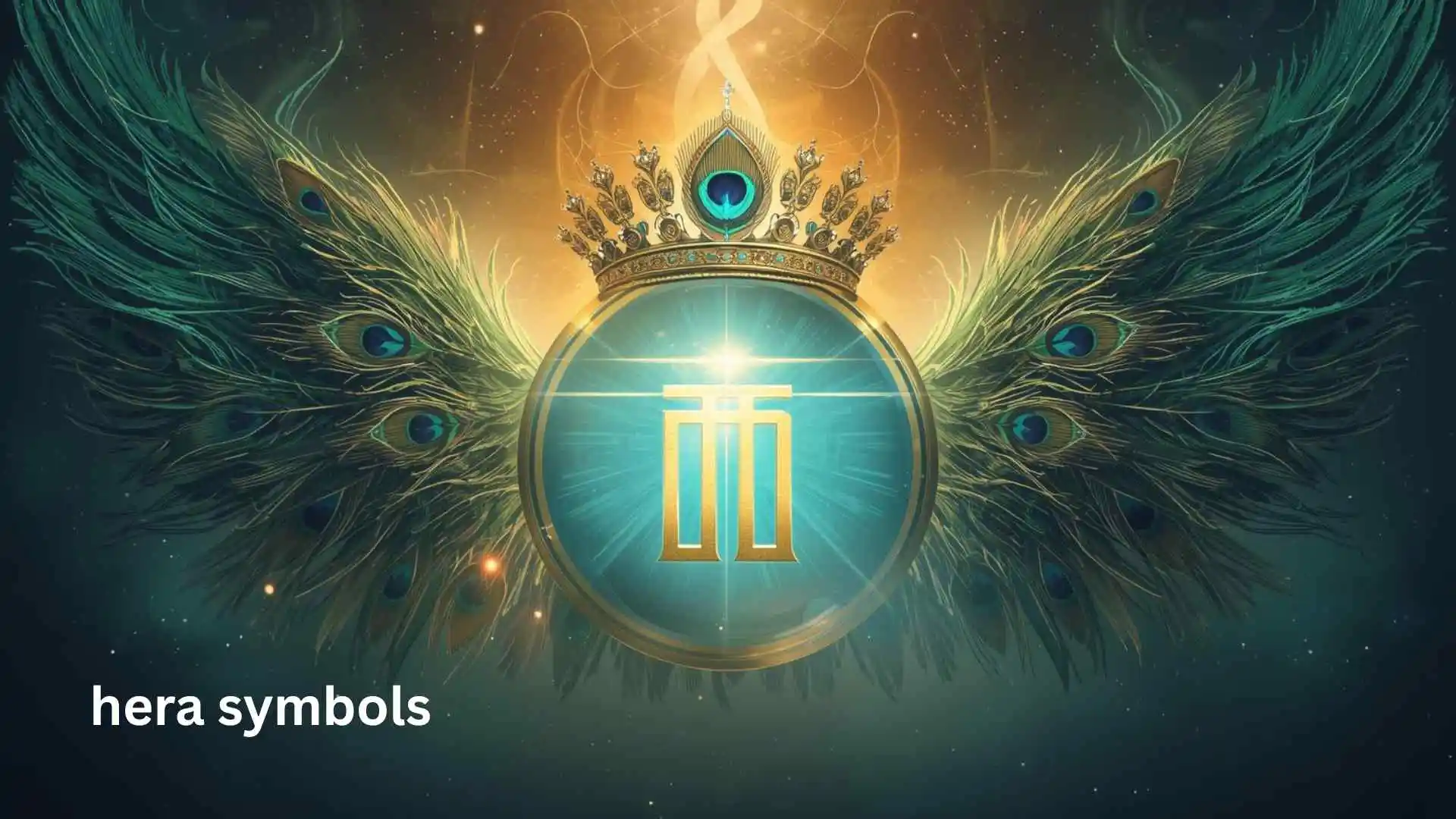
The hera symbols carry whispers of a power so ancient and profound that they still echo through marriage ceremonies, psychological archetypes, and the quiet corners of every woman who has ever fought to hold her kingdom together.
When you gaze upon a peacock’s shimmering tail, a pomegranate split open in winter, or a crown that presses heavy with responsibility, you are not looking at random artifacts from a forgotten myth.
You are staring into the mirror of the divine feminine as protector, wife, mother, and jealous guardian of boundaries. This article will walk you through those sacred emblems not as distant relics but as living languages of loyalty, power, pain, and sovereignty.
What Are Hera Symbols?
In the rich tapestry of Greek mythology, Hera stands as the Queen of the Olympian gods, wife of Zeus, and goddess of marriage, women, childbirth, and family. Her symbols are the tangible and visual keys that unlock her complex identity. Unlike the war regalia of Ares or the love roses of Aphrodite, Hera’s symbols are deeply rooted in domestic authority, regal duty, and the fierce protection of covenant. Historically, these emblems appeared on ancient pottery, temple friezes, coins, and household altars across Greece, especially in her major cult centers at Argos, Samos, and Mycenae. Culturally, they represented not just a goddess but the ideal and terror of matrimonial power. A woman in ancient Greece might pray to Hera holding a pomegranate for fertility or a lotus staff for sovereignty. Today, these hera symbols have resurfaced in neo pagan rituals, feminist reinterpretations of mythology, and even in the logos of organizations dedicated to marriage counseling and women’s leadership.
Deep Symbolic Meaning of Hera Symbols
To understand Hera’s symbols is to understand the architecture of commitment itself.
Spiritual level: On a spiritual plane, the pomegranate represents the blood of life and death. It is the fruit of the underworld, eaten by Persephone, but also held by Hera as a promise of fertility and cyclic renewal. The peacock’s eyes symbolize the all seeing watchfulness of the goddess over sacred vows. Spiritually, these symbols remind us that nothing sacred is ever unguarded. They call us to honor our promises as if the cosmos itself were watching.
Psychological level: Carl Jung might have called Hera the archetype of the Great Wife. Psychologically, her symbols speak to the human need for secure attachment, the rage of betrayal, and the resilience required to remain dignified after humiliation. The crown represents the self respect that refuses to crumble. The scepter with the cuckoo atop it reminds us that even queens must sometimes tolerate unbearable violations. For modern readers, hera symbols mirror the internal struggle between wanting to trust completely and needing to protect one’s territory.
Cultural level: Across ancient Greece, Hera’s symbols reinforced social structures. The veil (another overlooked symbol) signified a woman’s transition from maiden to wife. The lotus staff, often depicted in her hands on classical vases, symbolized divine authority over life’s blooming and fading. In Argos, her annual festival of the Heraia included processions carrying her sacred emblems to re consecrate the city’s protection. Culturally, these symbols legitimized the queen’s role as the backbone of both heaven and earth.
Types and Variations of Hera Symbols
Let us examine the most powerful hera symbols one by one, as if uncovering jewels from a sacred chest.
1. The Peacock (Tavos)
Visual description: A large bird with iridescent blue green feathers and a tail marked by hundreds of luminous “eyes.” Meaning: Watchfulness, vanity, eternal vigilance, and the starry sky. Where it appears: On Hera’s chariot, in the myth of Argus Panoptes (the hundred eyed giant she turned into a peacock), in Roman mosaics, Renaissance paintings, and modern bridal jewelry. The eyes represent Hera’s ability to see all infidelities. In dreams, a peacock can warn of jealousy or announce that someone is watching your actions closely.
2. The Pomegranate
Visual description: A round red fruit with a crown like calyx, bursting with ruby seeds. Meaning: Fertility, blood, marriage’s indissoluble bond, and death’s hidden sweetness. Where it appears: In Hera’s statue by Polykleitos at Argos, in wedding rituals, on Greek coins, and in the Persephone myth where Hera subtly orchestrates the seasons. Psychologically, the pomegranate represents the bittersweet truth that love requires sacrifice.
3. The Crown (Polos or Diadem)
Visual description: A tall cylindrical crown or jeweled headband. Meaning: Sovereignty, legitimacy, and the burden of public dignity. Where it appears: Every classical depiction of Hera seated on her throne, in Byzantine empress iconography, and in modern pageantry. Unlike Zeus’s lightning bolt, the crown does not attack. It simply sits, and its presence commands.
4. The Scepter with Cuckoo
Visual description: A long staff topped with a small cuckoo bird. Meaning: Zeus’s disguise to woo her, the irony of sacred marriage born from deception, and the goddess’s reluctant acceptance. Where it appears: In the Heraion of Samos, on engraved gems, and in stories told by Pausanias. This symbol carries painful honesty: even divine unions have messy origins.
5. The Lotus Staff
Visual description: A wand tipped with a lotus flower. Meaning: Fertility, regeneration, and gentle authority. Where it appears: In classical reliefs of Hera as “Parthenos” (Maiden) and in syncretic Greco Egyptian art. The lotus blooms in mud, symbolizing how marriage can rise from life’s messiness.
6. The Veil (Kredemnon)
Visual description: A draped cloth covering the head and shoulders. Meaning: Modesty, mystery, and the hidden power of the wife. Where it appears: In Homer’s Iliad when Hera seduces Zeus wearing the “Kestos himas” (embroidered girdle) and a veil. In ancient Greek weddings, brides wore veils to honor Hera. Today, the bridal veil carries her silent blessing and warning.
Hera Symbols Across Cultures
No symbol lives in isolation. The hera symbols traveled, transformed, and whispered across civilizations.
Ancient Greece: Here, the symbols were literal and legal. Hera’s peacock appeared on coins of Samos. The pomegranate was buried with brides. The crown was a real object in temples. Hera was Teleia (Fulfilled) and Chera (Widow), showing how her symbols adapted to life stages.
Ancient Rome: The Romans called her Juno. Her symbols became even more domestic and political. The peacock remained sacred, but Juno’s goose (a vigilant bird that saved Rome) joined the list. The pomegranate became a symbol of married women’s legal status. Juno Regina’s crown was worn by empresses to legitimize their rule.
Near East and Egypt: Hera was syncretized with Isis and Astarte. The lotus staff clearly borrowed from Egyptian iconography of divine birth. In Phoenician cities, Hera’s pomegranate merged with Tanit’s symbols of fertility and death. This cross pollination shows how marriage goddesses universally need symbols of blood, fruit, and sky.
Medieval Christian Europe: The peacock was adopted as a symbol of immortality (because its flesh was thought not to decay) and of pride, one of the seven deadly sins. Hera herself was demonized as a jealous pagan queen, but her symbols lived on in bestiaries and heraldry. Some noble families used the peacock to boast of their watchfulness.
Modern Neopagan and Feminist Movements: Today, hera symbols have been reclaimed. Wiccans and Hellenic polytheists use peacock feathers on altars for protection and marriage spells. Feminist retellings (like Madeline Miller’s novels) reinterpret Hera’s crown not as submission but as the weight a woman carries when she refuses to leave a broken system. The pomegranate has become a tattoo symbol for survivors of marital betrayal who chose to stay and transform.
Hera Symbols in Art, Movies, and Pop Culture
You have seen hera symbols even when you did not know her name.
Movies: In Disney’s Hercules (1997), Hera is absent but her peacocks roam Olympus. In Percy Jackson & the Olympians, Hera’s symbols appear as clues: a pomegranate in the Underworld, a peacock feather on a villain’s hat. More subtly, in The Crown (TV series), Queen Elizabeth II’s rigid adherence to duty and her jeweled crowns directly echo Hera’s iconography. The show uses peacock imagery in state banquet scenes to signal watchfulness.
Paintings: Peter Paul Rubens’ Juno and Argus (1610) drips with peacock feathers and pomegranates. More modern, Frida Kahlo’s self portraits with thorn necklaces and fruit evoke Hera’s painful fertility symbols. In Klimt’s The Kiss, the woman’s crown like halo and the rich red fruit motifs whisper Hera’s presence.
Books: In Rick Riordan’s The Titan’s Curse, Hera’s symbol of the cuckoo is a plot twist revealing her complex loyalty to Zeus despite his betrayals. In Margaret Atwood’s The Penelopiad, Hera’s veil is rewritten as the shroud of silent female rage. The pomegranate appears in contemporary poetry as a symbol of the marriage that kills and nurtures simultaneously.
Tattoos and Fashion: A peacock feather tattoo often means “I see everything” or “I have survived infidelity.” Pomegranate tattoos are increasingly popular among women who have endured divorce yet remain fertile in spirit. On runways, Alexander McQueen used Hera’s crown shapes in his “Dangerous Liaisons” collection. Beyoncé’s “Lemonade” visual album includes a peacock fan and a pomegranate smashed on a table during a scene about betrayal. These are not coincidences. They are hera symbols bleeding into modern iconography.
Spiritual and Dream Meaning of Hera Symbols
When these symbols appear outside of museums or textbooks, pay attention.
Dreaming of a peacock: If a peacock spreads its tail in your dream, ask who is watching you. It can be a warning of gossip or a validation that your dignity remains intact despite humiliation. A peacock with closed tail means hidden secrets you are not ready to face.
Dreaming of a pomegranate: To open a pomegranate in a dream is to accept a difficult binding. To eat the seeds is to enter a covenant you cannot break. For centuries, dream interpreters have linked this hera symbol to pregnancy, marriage, or a creative project that will consume years of your life.
Meditating on the crown: If during meditation you feel the weight of a crown on your head, you are being asked to stop apologizing for your authority. Hera’s crown does not ask for permission. It simply rules. This vision often comes to women who have been soft for too long.
Seeing the veil in a spiritual experience: A veil lifting means hidden knowledge or a previous betrayal will be revealed. A veil descending means it is time to protect your inner world from public scrutiny. Hera’s veil is a boundary. Respect it.
Positive vs Negative Meanings of Hera Symbols
Every symbol holds a double edge. Hera’s emblems are no different.
Positive meanings: The peacock represents beauty, immortality, and fierce protection. The pomegranate means fertility, abundance, and the sweetness that comes after blood sacrifice. The crown dignifies. The veil honors mystery. The lotus staff blooms hope from muddy beginnings. For women who have built families, forgiven partners, or ruled households with grace, these symbols feel like medals.
Negative meanings: The same peacock’s eyes represent paranoia, jealousy, and the exhausting labor of watching a partner you cannot trust. The pomegranate’s seeds can trap you like Persephone in an underworld of obligation. The crown isolates. The veil hides pain. The cuckoo atop the scepter mocks the goddess with the lie that began her marriage. For those trapped in toxic vows, hera symbols become prison bars painted gold.
The lesson? A symbol’s meaning depends on the soil of your life. Hera herself was both protector of women and punisher of Zeus’s victims. Her symbols carry that same ambivalence.
Why Humans Are Attracted to Hera Symbols
Psychologically, we are drawn to hera symbols because they answer a primal question: How do I commit without losing myself? The peacock’s eyes offer the fantasy of total surveillance. If you could just see everything your partner does, you would finally feel safe. The pomegranate offers control over fertility, the one power women have held across millennia. The crown offers the dignity that betrayal cannot steal.
Emotionally, these symbols resonate because Hera’s story is the most painfully human of all the gods. Zeus rapes, cheats, lies. Hera stays, schemes, rages, and endures. Her symbols are not about victory. They are about survival inside imperfect vows. A woman holding a peacock feather is saying: I see the truth, and I am still here. A bride holding a pomegranate is saying: I accept both the sweetness and the blood that will come.
This is the deep attraction. In a culture that glorifies easy romance and disposable marriages, Hera’s symbols remind us that real love, the kind that outlasts betrayal and grief, requires the eyes of a peacock, the seeds of a pomegranate, and the weight of a crown. We do not just study hera symbols. We wear them, dream them, and tattoo them because deep down, we all want to be queens of our own difficult kingdoms.
Frequently Asked Questions About Hera Symbols
1. What is Hera’s most powerful symbol?
The peacock is considered her most powerful and recognizable symbol because of its mythological origin in the hundred eyed giant Argus, whom Hera immortalized in the bird’s tail. It represents her all seeing, unwavering vigilance over marriage vows.
2. Why is the pomegranate a symbol of Hera?
The pomegranate symbolizes fertility, blood, and the indissoluble bond of marriage. In ancient Greece, brides ate pomegranate seeds to honor Hera and ensure fertility. It also connects her to the underworld through Persephone’s myth, showing that marriage touches both life and death.
3. What does Hera’s crown represent?
Her crown represents sovereignty, legitimate authority, and the burden of public dignity. Unlike a warrior’s helmet, the crown is passive yet commanding. It reminds us that true power does not need to attack; it simply sits and is respected.
4. Is the cuckoo a positive or negative symbol for Hera?
It is ambivalent. Positively, it recalls Zeus’s courtship of Hera. Negatively, it reminds us that their marriage began with deception. The cuckoo on Hera’s scepter is a quiet symbol of compromise and the lies we accept for love.
5. What does a peacock feather mean in modern spirituality?
In modern spirituality, a peacock feather often symbolizes protection against the evil eye, self confidence, and the ability to see through illusions. It is used in rituals for fidelity, truth seeking, and reclaiming dignity after betrayal.
6. Can Hera’s symbols be used in wedding ceremonies today?
Absolutely. Many modern Hellenic polytheists and even secular couples incorporate pomegranates in wedding centerpieces, peacock feathers in bouquets, or crown imagery in rings and decor as a tribute to enduring, watchful love.
Conclusion
The hera symbols are not dead museum artifacts. They are living, bleeding, feathering emblems that still walk beside us at every wedding, every betrayal, every morning a woman puts on her armor of dignity and faces a world that asks her to forgive what cannot be forgotten. The peacock’s eyes will always watch. The pomegranate’s seeds will always bind. The crown will always weigh just right. To study these symbols is to understand that marriage, in all its broken glory, is the oldest human magic. May you carry your own crown with Hera’s fierce grace.

Nora Bennett
Nora Bennett is a storyteller at heart, always finding magic in the everyday moments of life. From a young age, she discovered the joy of weaving emotions into words, creating characters that feel like old friends. Writing, for her, is both an adventure and a sanctuary—a way to explore the world and herself. She loves connecting with readers who share her passion for heartfelt stories and unforgettable journeys. When she’s not crafting her next tale, Nora enjoys quiet mornings with a cup of coffee and a notebook full of ideas. Her stories are meant to inspire, comfort, and spark imagination in everyone who reads them.
Books:
-
Whispers of Yesterday
-
Echoes of Tomorrow