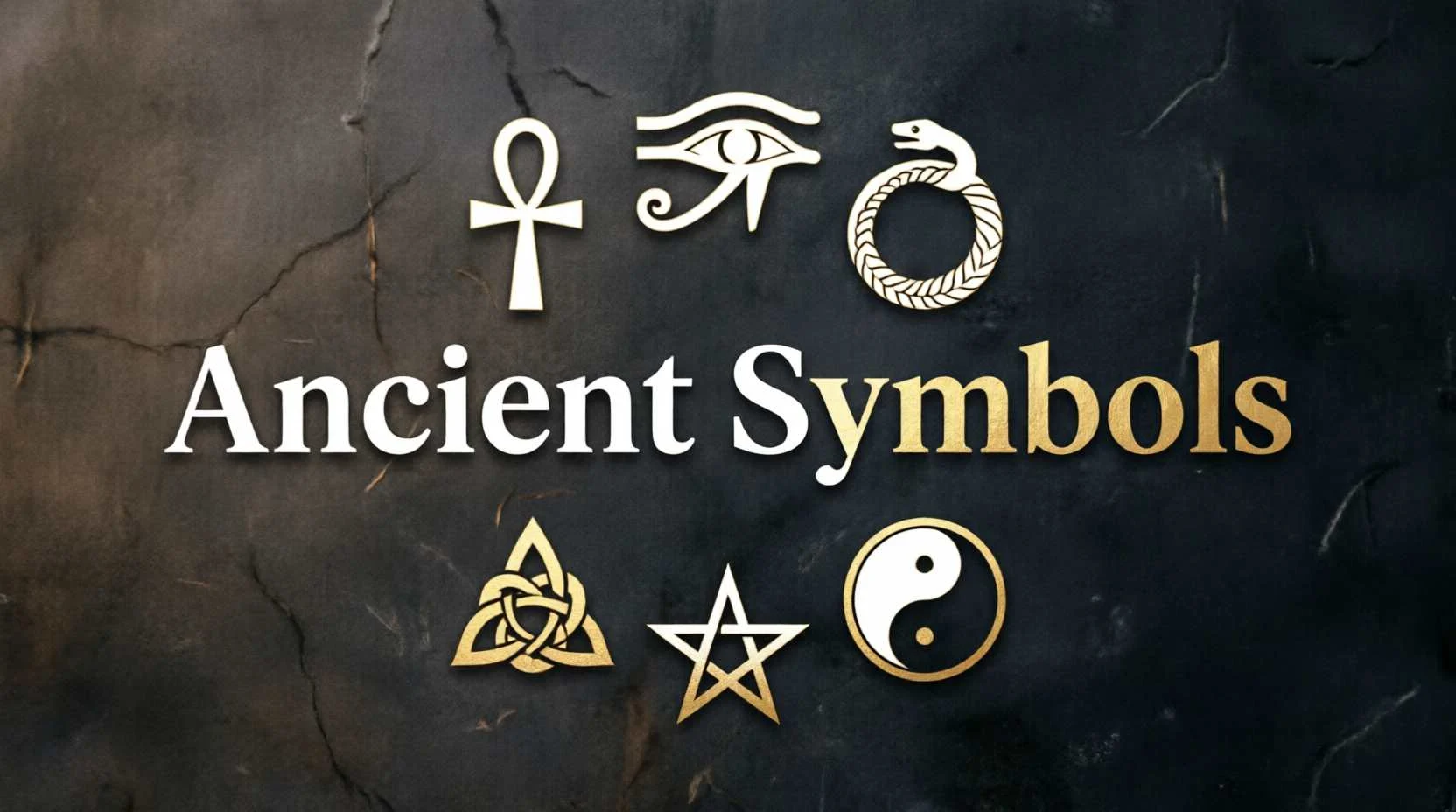
“Ancient symbols” have guided human emotions, beliefs, fears and dreams for thousands of years.
Long before modern language existed people carved mysterious signs into caves, temples, stones and sacred objects to express truths that words could not fully explain.
These symbols carried stories of life, death, protection, love, rebirth and spiritual awakening. Even today many people feel strangely connected to them without fully understanding why.
Hidden inside these ancient symbols are pieces of human history that still whisper to the soul.
What Are Ancient Symbols?
Ancient symbols are visual signs or sacred marks created by early civilizations to represent ideas, spiritual beliefs, natural forces, emotions, gods, or cosmic mysteries. These symbols appeared in ancient cultures such as Egypt, Greece, Rome, Mesopotamia, China, India, the Celtic world, and Native traditions.
Before written language became common symbols served as a universal form of communication. A single mark carved into stone could represent power, fertility, wisdom, protection, or eternal life. Ancient people believed symbols carried energy and spiritual influence. Many symbols were painted on walls, worn as jewelry, used in rituals, or placed inside tombs to guide souls into the afterlife.
Today ancient symbols continue to appear in art, architecture, tattoos, meditation practices, fashion, films, and spiritual teachings. Their meanings still inspire curiosity because they connect modern people to something older and deeper than ordinary life.
Why Ancient Symbols Still Fascinate People
Ancient symbols touch the human mind in a powerful way because they speak through emotion and imagination. A person may look at a spiral, an eye, or a sacred cross and instantly feel mystery, peace, fear, or wonder.
Psychologists often explain this attraction through archetypes. Certain images repeatedly appear across human history because they reflect universal experiences. The circle represents unity. The serpent symbolizes transformation. The tree reflects growth and connection between heaven and earth.
People are drawn to ancient symbols because they feel timeless. They remind humanity that generations before us searched for meaning just like we do today.
Deep Symbolic Meaning of Ancient Symbols
Spiritual Meaning
On a spiritual level ancient symbols were believed to connect humans with divine forces. Many cultures used sacred signs during prayer, healing ceremonies, and meditation. Symbols acted like bridges between the physical world and the unseen spiritual realm.
For example the lotus flower symbolized spiritual awakening in Eastern traditions because it rises beautifully from muddy water. The Ankh represented eternal life in ancient Egypt. Sacred geometry symbols reflected cosmic balance and divine order.
Many spiritual seekers still use ancient symbols today to feel grounded, protected, and connected to higher consciousness.
Psychological Meaning
Ancient symbols also reflect hidden emotions and subconscious desires. Carl Jung believed symbols emerge from the collective unconscious shared by all humans. This explains why people from completely different cultures create similar symbols.
A labyrinth may represent the emotional journey through confusion toward self discovery. A phoenix symbolizes hope after suffering. The moon reflects mystery, intuition, and emotional cycles.
Symbols help people process feelings that are difficult to express through ordinary speech.
Cultural Meaning
Every civilization gave symbols unique cultural meaning. Ancient warriors painted symbols on shields for courage. Kings used sacred signs to show authority. Families carved protective symbols above doorways to guard against evil spirits.
These symbols became part of cultural identity and storytelling. They carried traditions from one generation to another long before books preserved history.
Most Powerful Types of Ancient Symbols
The Ankh
Visual Description
A cross with a loop at the top.
Meaning
The Ankh symbolizes eternal life, divine wisdom, and spiritual immortality.
Where It Appears
Ancient Egyptian temples, tombs, jewelry, and artwork.
The Ankh was one of the most sacred Egyptian symbols. Gods and pharaohs were often shown holding it as a sign of eternal existence. Many people today wear the Ankh as a symbol of spiritual protection and everlasting energy.
The Eye of Horus
Visual Description
A stylized human eye with elegant markings beneath it.
Meaning
Protection, healing, intuition, and divine awareness.
Where It Appears
Egyptian mythology, amulets, modern tattoos, and spiritual jewelry.
The Eye of Horus came from the story of the Egyptian god Horus who lost his eye during battle. After healing it became a sacred sign of restoration and protection against danger.
The Ouroboros
Visual Description
A serpent or dragon eating its own tail.
Meaning
Infinity, rebirth, cycles of life, and transformation.
Where It Appears
Greek philosophy, alchemy, mystical teachings, and modern spirituality.
This powerful symbol reminds people that endings and beginnings are connected. Life constantly renews itself through change and transformation.
The Celtic Knot
Visual Description
Interwoven lines with no visible beginning or ending.
Meaning
Eternity, interconnectedness, loyalty, and spiritual unity.
Where It Appears
Celtic art, medieval manuscripts, jewelry, and tattoos.
The endless loops reflect the belief that life and spirit continue forever. Many people use Celtic knots to symbolize eternal love and family bonds.
The Lotus Flower
Visual Description
A blooming flower rising above water.
Meaning
Purity, enlightenment, inner peace, and rebirth.
Where It Appears
Hinduism, Buddhism, meditation art, and yoga traditions.
The lotus became sacred because it blooms beautifully despite growing in muddy water. It teaches that people can rise above suffering and become spiritually stronger.
The Tree of Life
Visual Description
A large tree with deep roots and spreading branches.
Meaning
Growth, wisdom, balance, and connection between worlds.
Where It Appears
Norse mythology, Celtic culture, religious texts, and spiritual art.
The Tree of Life represents the relationship between heaven, earth, and the underworld. It also reflects the human journey through growth and self discovery.
Ancient Symbols Across Different Cultures
Ancient Egypt
Egyptian civilization filled temples and tombs with sacred symbols connected to gods, death, protection, and the afterlife. Symbols were believed to contain magical power. The scarab beetle symbolized rebirth while the Eye of Ra represented divine authority and solar energy.
Egyptians treated symbols as living spiritual forces instead of simple decoration.
Ancient Greece
Greek symbols focused on wisdom, heroism, fate, and cosmic order. The laurel wreath represented victory and honor. The labyrinth symbolized difficult journeys and hidden truths.
Greek myths used symbolic creatures such as the phoenix and Medusa to reflect human emotions, fear, temptation, and transformation.
Celtic Culture
The Celts believed nature contained sacred energy. Their symbols reflected harmony between humans and the natural world. Spirals represented growth and spiritual evolution while knotwork symbolized eternal connection.
Celtic symbols still remain popular in jewelry and tattoo art because of their timeless beauty.
Ancient China
Chinese symbols often focused on balance, luck, wisdom, and harmony. The Yin Yang symbol became famous for representing the balance between opposite forces such as light and darkness or masculine and feminine energy.
Dragons symbolized strength, prosperity, and divine protection in Chinese culture.
Hindu and Buddhist Traditions
Eastern spiritual traditions used symbols to represent enlightenment and inner awakening. The Om symbol represented universal consciousness and sacred sound. Mandalas reflected cosmic unity and meditation.
These symbols continue to guide millions of spiritual practitioners around the world today.
Ancient Symbols in Art, Movies and Pop Culture
Ancient symbols appear everywhere in modern entertainment and design because they instantly create emotional depth and mystery.
Movies
Films often use ancient symbols to hint at hidden knowledge, destiny, or supernatural power. Adventure and fantasy movies frequently include sacred artifacts, magical symbols, and ancient scripts to create suspense and wonder.
The Eye symbol commonly appears in mystery films to represent secret societies or hidden truth. Labyrinth imagery often symbolizes emotional struggle and transformation.
Paintings and Literature
Artists throughout history have used ancient symbols to communicate spiritual ideas and hidden meanings. Renaissance painters filled artwork with symbolic objects such as skulls, roses, snakes, and celestial shapes.
Writers also use symbols to add emotional depth to stories. A raven may symbolize death while fire often represents rebirth or passion.
Tattoos
Ancient symbols remain extremely popular in tattoo culture because they carry personal meaning. Many people choose symbols like the Ankh, rune symbols, lotus flower, or Celtic knot to reflect identity, healing, resilience, or spiritual growth.
Unlike trends that fade quickly ancient symbolic tattoos often feel timeless and deeply personal.
Fashion and Jewelry
Luxury fashion brands frequently use ancient motifs inspired by mythology and sacred geometry. Jewelry featuring ancient symbols gives people a feeling of mystery, elegance, and emotional connection to history.
Symbols transform ordinary objects into meaningful expressions of identity.
Spiritual and Dream Meaning of Ancient Symbols
People often report seeing ancient symbols during dreams, meditation, or intense emotional experiences. Spiritual teachers believe symbols appear when the subconscious mind tries to communicate important truths.
Dreaming about an eye may suggest intuition or hidden awareness. A serpent can symbolize transformation or healing. Spirals may reflect personal growth and emotional evolution.
Some people believe ancient symbols emerge during spiritual awakening because they activate deep memories stored within the human psyche.
Meditation practices often include sacred symbols because visual focus helps calm the mind and deepen spiritual awareness.
Positive and Negative Meanings of Ancient Symbols
One fascinating aspect of ancient symbols is that the same symbol can hold both positive and negative meaning depending on culture and context.
The serpent symbolizes healing and wisdom in some traditions yet temptation and danger in others. Fire represents purification and rebirth but can also symbolize destruction and chaos.
The skull may reflect mortality and fear though it can also remind people to value life and spiritual transformation.
This dual nature makes ancient symbols emotionally powerful because they reflect the complexity of human experience itself.
Why Humans Feel Deeply Connected to Ancient Symbols
Humans naturally search for meaning. Ancient symbols satisfy this emotional need because they transform invisible feelings into visible form.
A grieving person may connect with the phoenix because it represents rising after pain. Someone seeking protection may wear the Eye of Horus. A spiritual seeker may meditate on sacred geometry to feel connected to the universe.
Symbols create emotional comfort because they remind people they are part of a much larger human story stretching across thousands of years.
Even in modern society filled with technology ancient symbols continue to survive because the human soul still longs for mystery, meaning, and connection.
Ancient Symbols and Sacred Geometry
Sacred geometry is one of the most fascinating areas connected to ancient symbolism. Ancient civilizations believed geometric patterns reflected the structure of the universe itself.
Shapes such as circles, triangles, spirals, and hexagons appeared in temples, pyramids, and religious artwork. These forms represented harmony, balance, and cosmic intelligence.
The Flower of Life became one of the most famous sacred geometry symbols because many believed it contained the blueprint of creation itself.
Modern spiritual communities still study sacred geometry to explore consciousness, energy, and universal patterns.
Are Ancient Symbols Still Relevant Today?
Ancient symbols remain deeply relevant because human emotions have not changed as much as technology has. People still seek love, protection, identity, healing, wisdom, and purpose.
That is why ancient symbols continue to appear in therapy, spirituality, branding, fashion, gaming, movies, and personal rituals. They connect modern life to ancient human experience.
In a world moving faster every day ancient symbols offer something rare. They invite people to slow down, reflect, and reconnect with deeper meaning.
FAQs About Ancient Symbols
What is the oldest known ancient symbol?
Some of the oldest known symbols include spiral carvings found in prehistoric caves and stone monuments dating back thousands of years before written language.
Why did ancient civilizations use symbols?
Ancient civilizations used symbols to communicate spiritual beliefs, emotions, cultural identity, divine power, and important ideas before modern writing systems developed.
Are ancient symbols connected to religion?
Many ancient symbols have religious origins though others represent cultural traditions, natural forces, or universal human emotions.
Why are ancient symbols popular in tattoos?
People choose ancient symbol tattoos because they carry deep emotional meaning related to protection, strength, spirituality, rebirth, or personal identity.
Can ancient symbols appear in dreams?
Many people report seeing ancient symbols in dreams. Psychologists and spiritual teachers often interpret these images as messages from the subconscious mind.
Do ancient symbols still have power today?
Many people believe ancient symbols still hold emotional, spiritual, or psychological power because they continue to inspire strong feelings and personal transformation.
Conclusion
Ancient symbols are far more than forgotten marks from distant civilizations. They are emotional echoes from humanity’s deepest memories, fears, hopes, and spiritual dreams. Across temples, myths, art, and modern culture these sacred signs continue to guide people toward meaning and self discovery.
Their mystery survives because they speak directly to the human heart in ways words often cannot. Even after thousands of years ancient symbols still remind humanity that some truths never fade.

Freddie Wood
Hi! I’m Freddie Wood, a storyteller at heart and a lifelong explorer of ideas. Writing has always been my way of making sense of the world, turning ordinary moments into stories that linger in your mind. I love blending emotions with adventure, and I’m fascinated by the way words can connect people across distances and experiences. When I’m not writing, you’ll find me wandering through nature, listening to music, or sketching out ideas for my next story. My goal is always to create books that stay with readers long after the last page.
Books by Freddie Wood:
-
The Hidden Path
-
Shadows of Tomorrow