
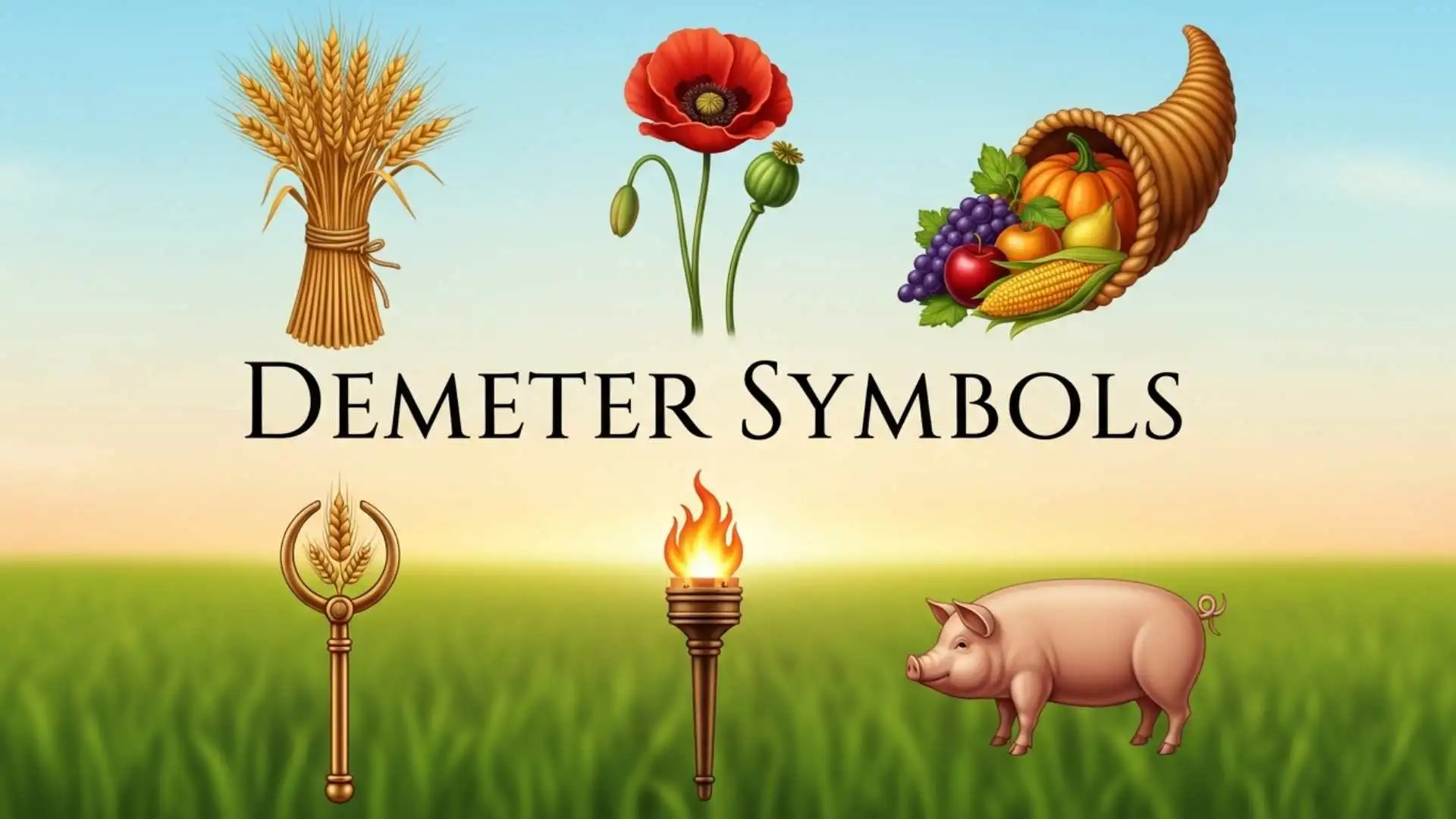
“Demeter symbols” carry the quiet power of the earth itself, whispering stories of growth, loss and rebirth that every human heart understands.
From golden fields to sacred torches, these symbols connect us to ancient emotions we still feel today.
Across centuries, they have shaped how people understand life’s cycles, grief, and hope.
In this guide, you will uncover meanings so deep they may change how you see nature, motherhood, and even your own inner seasons.
What Are Demeter Symbols?
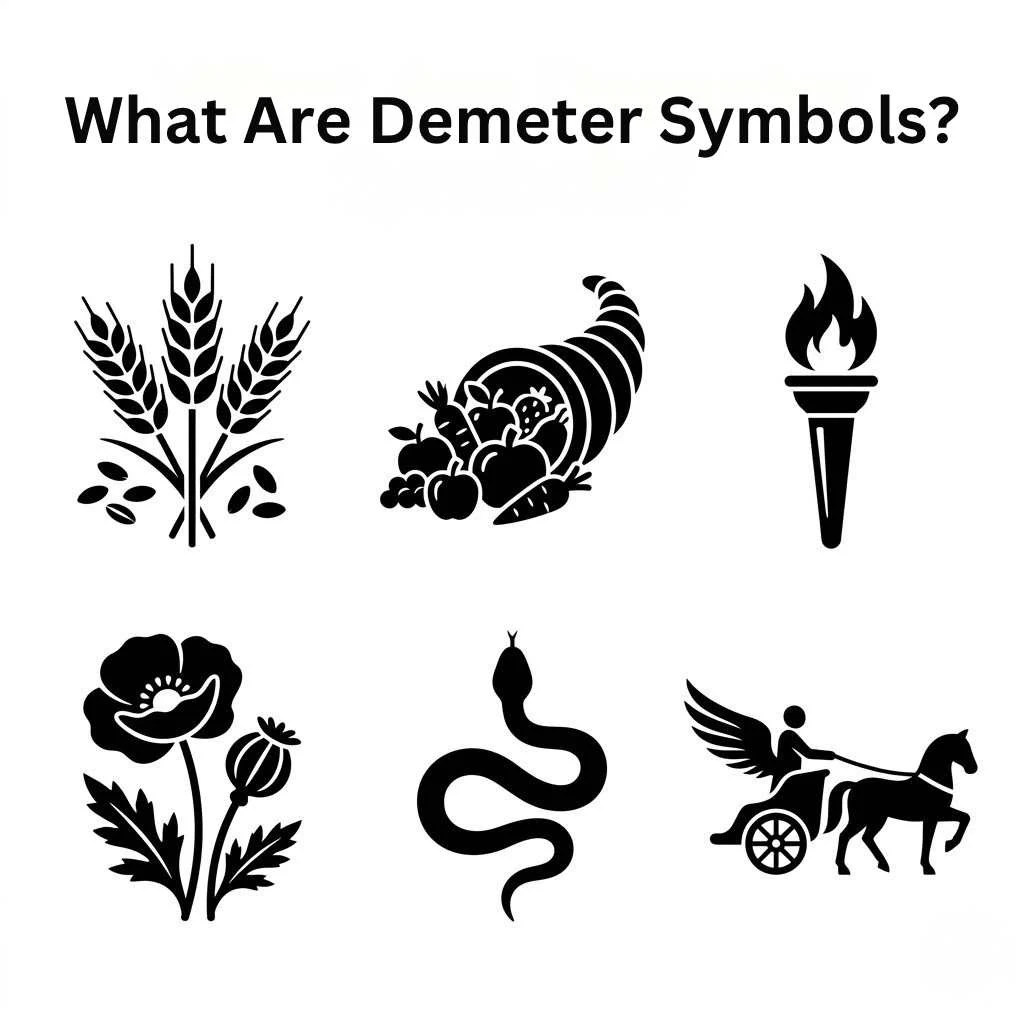
Demeter symbols are sacred objects, images, and motifs associated with Demeter, the ancient Greek goddess of agriculture, fertility, and the harvest. In Greek mythology, Demeter represents the nurturing force of the earth, the one who feeds humanity and governs the cycles of life and death.
Historically, these symbols emerged from agrarian societies that depended entirely on the land. Crops meant survival. Seasons meant life or death. So people turned to Demeter, honoring her through rituals, art, and symbolic imagery that reflected her power.
At the heart of these symbols lies a deeply human story, the bond between Demeter and her daughter Persephone. When Persephone was taken to the underworld, Demeter’s grief caused the earth to wither. When she returned, the land blossomed again. This myth shaped the meaning behind nearly every Demeter symbol.
Deep Symbolic Meaning
Spiritual Level
On a spiritual level, Demeter symbols represent life cycles, divine motherhood, and sacred nourishment. They remind us that growth requires both light and darkness. Just as seeds must be buried before they bloom, human transformation often begins in unseen places.
Psychological Level
Psychologically, these symbols reflect attachment, grief, and healing. Demeter’s story mirrors the emotional journey of loss and reunion. Many people resonate with her pain, her longing, and her eventual acceptance. Her symbols become mirrors of our own inner struggles.
Cultural Level
Culturally, Demeter symbols represent agriculture, survival, and community. Ancient civilizations built entire festivals and rituals around these symbols, celebrating harvests and honoring the earth’s generosity.
These meanings are not just ancient ideas. They still live within us every time we plant something, wait patiently, or heal from loss.
Types / Variations of Demeter Symbols
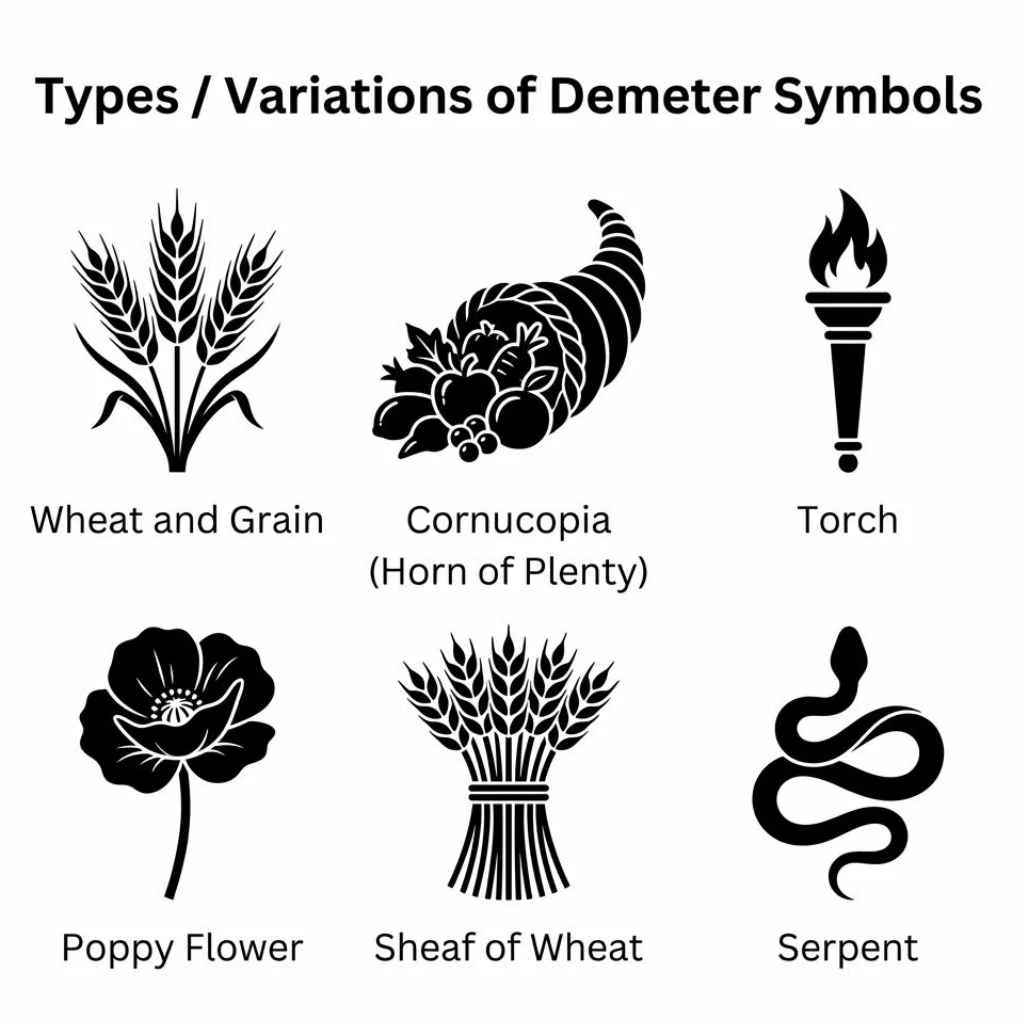
1. Wheat and Grain
Visual Description: Golden stalks of wheat or bundles of grain
Meaning: Fertility, abundance, nourishment
Where It Appears: Ancient art, harvest festivals, modern tattoos
Wheat is the most powerful symbol of Demeter. It represents life itself. Every grain carries the promise of sustenance and survival. In ancient Greece, offering wheat to Demeter was a sacred act of gratitude.
2. Cornucopia (Horn of Plenty)
Visual Description: A horn overflowing with fruits and vegetables
Meaning: Endless abundance, prosperity
Where It Appears: Western art, Thanksgiving imagery, mythology
The cornucopia reflects Demeter’s generosity. It symbolizes a world where the earth provides more than enough, a comforting idea in uncertain times.
3. Torch
Visual Description: A burning torch held in hand
Meaning: Search, hope, guidance through darkness
Where It Appears: Mythological depictions of Demeter searching for Persephone
The torch tells a story of love and determination. Demeter wandered the earth holding a torch, refusing to give up on her daughter. It symbolizes hope even in the darkest moments.
4. Poppy Flower
Visual Description: Red or orange delicate flowers
Meaning: Sleep, death, renewal
Where It Appears: Ancient Greek art, symbolism related to rest and rebirth
Poppies grew in wheat fields, linking them to Demeter. They represent the delicate balance between life and rest, reminding us that endings are not always final.
5. Sheaf of Wheat
Visual Description: Tied bundle of wheat stalks
Meaning: Harvest, unity, reward for labor
Where It Appears: Farming traditions, symbolic rituals
This symbol emphasizes collective effort. It reflects how communities come together to survive and thrive.
6. Serpent
Visual Description: Coiled or slithering snake
Meaning: Transformation, earth energy, rebirth
Where It Appears: Ancient religious symbolism
The serpent connects Demeter to the deeper forces of the earth. It symbolizes cycles that go beyond human understanding.
Demeter Symbols Across Cultures
Ancient Greece
In Greece, Demeter symbols were central to life. Festivals like the Eleusinian Mysteries used these symbols to teach spiritual truths about life, death, and rebirth.
Roman Culture
The Romans worshipped Demeter as Ceres. Her symbols remained largely the same but became tied to state power and food security.
Egyptian Parallels
Though not directly linked, Egyptian deities like Osiris shared similar symbolism of death and rebirth through agriculture.
Medieval Europe
Many Demeter symbols blended into Christian imagery, especially harvest themes and bread as sacred nourishment.
Modern Interpretations
Today, these symbols appear in eco-spirituality, feminist movements, and wellness practices. They represent connection to nature and inner healing.
Demeter Symbols in Art, Movies & Pop Culture
Demeter symbols have quietly influenced creative expression for centuries.
Paintings
Artists often depict Demeter holding wheat or a torch, emphasizing her nurturing and searching aspects.
Movies
In films inspired by Greek myths, Demeter-like figures represent protective mothers and the pain of separation.
Books
Writers use Demeter symbolism to explore themes of loss, seasonal change, and emotional rebirth.
Tattoos
People choose wheat, poppies, or torches as tattoos to symbolize resilience, growth, and personal transformation.
Fashion
Earth tones, floral patterns, and harvest imagery echo Demeter’s essence in modern design.
Spiritual & Dream Meaning of Demeter Symbols
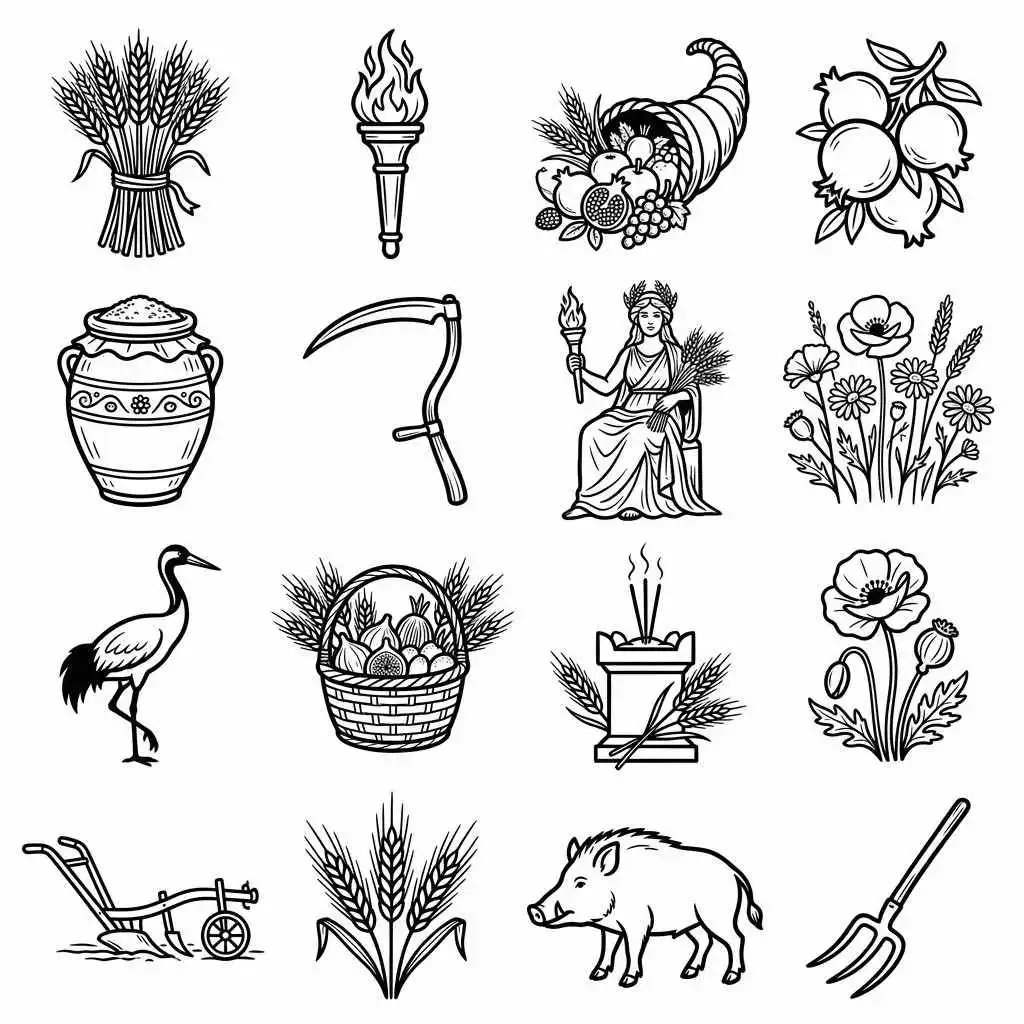
Seeing Demeter symbols in dreams or meditation often carries deep personal messages.
- Wheat: You are entering a period of growth or reward
- Torch: You are searching for something important in your life
- Poppy: You need rest or emotional healing
- Serpent: Transformation is happening beneath the surface
Spiritually, these symbols invite you to trust life’s timing. Even when things feel lost, renewal is on its way.
Positive vs Negative Meaning
Positive Meanings
- Growth and abundance
- Nurturing love
- Renewal and hope
- Emotional healing
Negative Meanings
- Over-attachment
- Fear of loss
- Emotional stagnation
- Dependency
Demeter symbols reflect duality. Just as the earth can nourish or fail, these symbols remind us that balance is essential.
Why Humans Are Attracted to This Symbol
Humans are drawn to Demeter symbols because they reflect something deeply personal, our relationship with life itself.
We all experience cycles. We grow, we lose, we heal, and we begin again. Demeter’s story feels real because it mirrors our own emotional journeys.
There is also comfort in these symbols. Wheat fields, warm colors, and natural imagery create a sense of safety and belonging. They remind us that even in chaos, life continues.
On a deeper level, these symbols connect us to the earth. In a fast, modern world, they pull us back to something simple and essential.
FAQs
What is the most important symbol of Demeter?
The most important symbol is wheat, as it represents fertility, nourishment, and the foundation of life.
What does the torch symbolize in Demeter mythology?
The torch symbolizes Demeter’s search for Persephone and represents hope, persistence, and guidance through darkness.
Are Demeter symbols still relevant today?
Yes, they appear in art, spirituality, and personal symbolism, especially in themes of growth, healing, and connection to nature.
What does seeing wheat in a dream mean spiritually?
It often represents abundance, success, and the rewards of patience and hard work.
How are Demeter and Persephone connected symbolically?
Their relationship represents the cycle of seasons, life, death, and rebirth, one of the most powerful symbolic stories in mythology.
Conclusion
Demeter symbols are more than ancient images carved into history. They are living reminders of what it means to be human. They teach us that loss is not the end, that growth takes time, and that even the darkest seasons carry the seeds of renewal.
When you see wheat swaying in the wind or a flame glowing in the night, you are witnessing the same symbols that guided ancient hearts. They still speak, quietly but powerfully, reminding you that life moves in cycles and you are always part of its story.

Sophia Reed
Hi, I’m Sophia Reed, a storyteller at heart who finds magic in everyday moments. Ever since I could hold a pen, I’ve been weaving tales that explore love, courage, and the unexpected twists of life. Writing allows me to connect with readers on a deeper level, sharing emotions and experiences that resonate across worlds. When I’m not lost in my stories, you can find me wandering through quiet streets, sipping coffee, or dreaming up my next plot twist. I believe every story has the power to inspire, heal, and transport. Through my books, I hope to leave a piece of my imagination with you.
Books:
-
Whispers of the Heart
-
Shadows and Sunlight