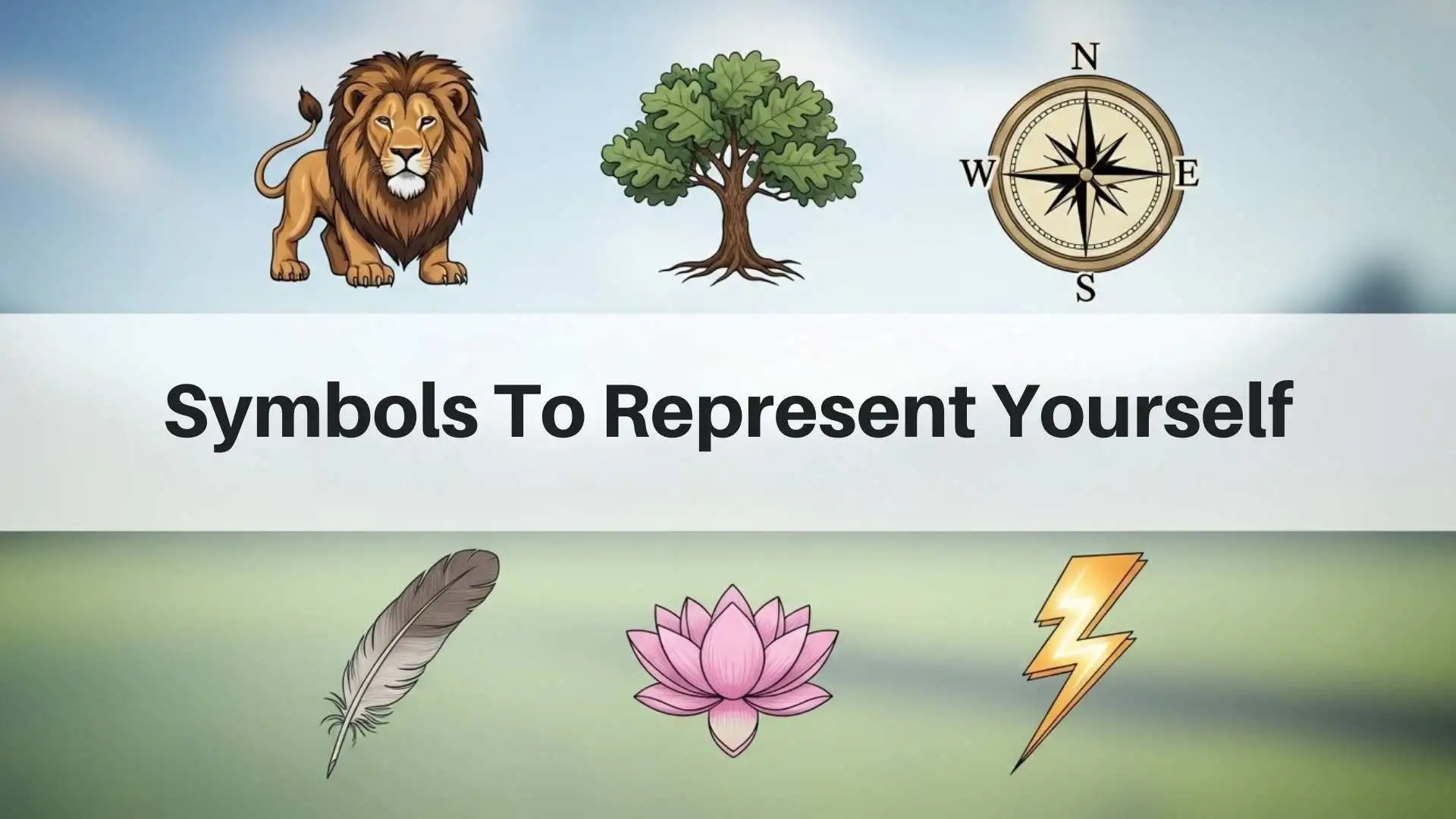
“Symbols to represent yourself” have existed for thousands of years because human beings have always searched for meaningful ways to express identity, emotions, beliefs and inner truth.
A single symbol can silently tell a story that words often fail to explain.
From ancient warriors carving signs onto shields to modern people choosing tattoos and personal emblems, symbols carry deep emotional power.
Hidden inside these timeless marks are messages about courage, love, transformation, fear, wisdom and the soul itself.
What Are Symbols To Represent Yourself?
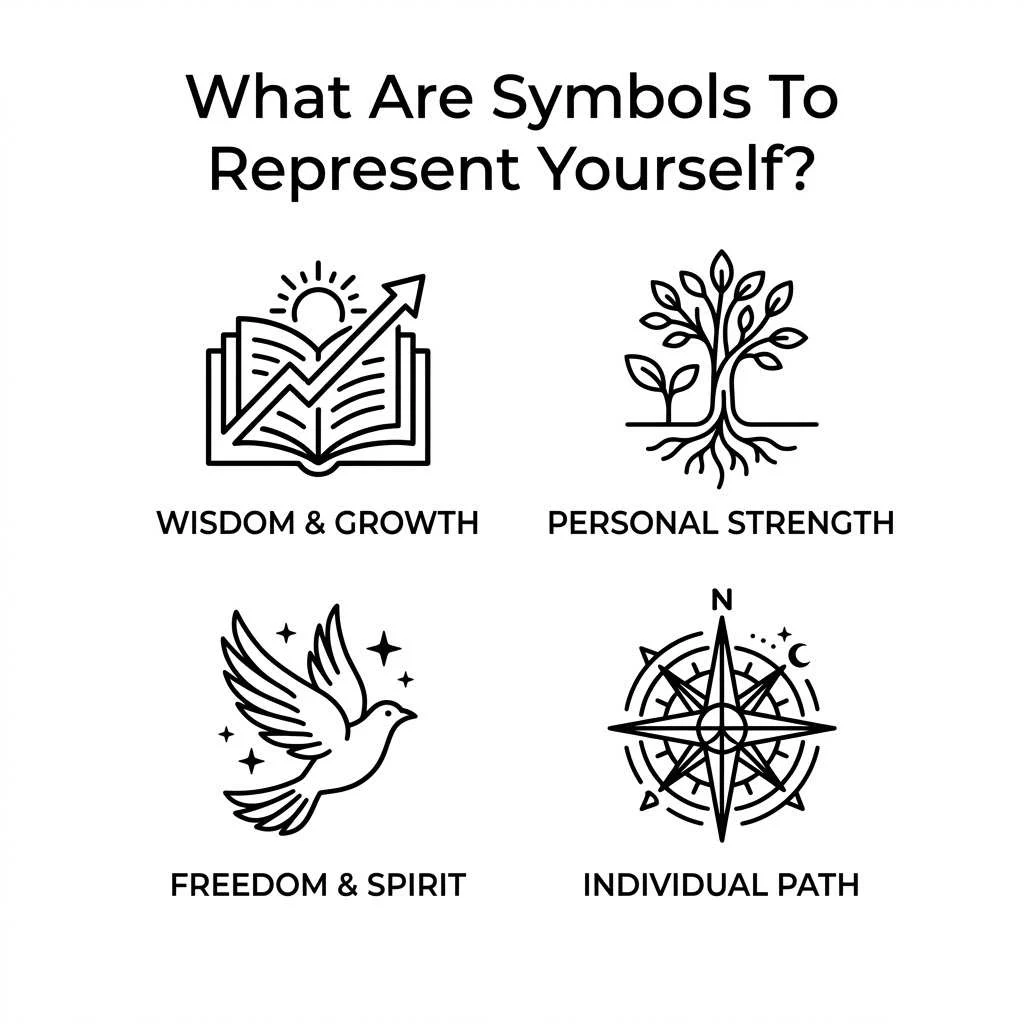
Symbols to represent yourself are visual signs, shapes, or objects used to express personality, values, emotions, spiritual beliefs, or life experiences. These symbols act like mirrors of identity. They communicate who a person is without needing long explanations.
Since ancient civilizations, people have used symbols as personal markers. Egyptian pharaohs wore sacred symbols to show divine power. Tribal communities painted symbols on the body to express belonging and protection. Medieval knights carried family crests that represented honor and courage. Today, people use symbols in tattoos, jewelry, art, social media, fashion, and spiritual practices to reflect their inner world.
A symbol becomes powerful because humans naturally connect emotions with images. When someone sees a lion, they often think of bravery. When they see a butterfly, they think of transformation. These associations are deeply rooted in culture, memory, and psychology.
Personal symbols can represent:
- Identity
- Strength
- Freedom
- Healing
- Love
- Spiritual awakening
- Mystery
- Protection
- Creativity
- Rebirth
The beauty of symbols lies in their ability to speak directly to the heart.
Deep Symbolic Meaning
Spiritual Meaning
On a spiritual level, symbols help people connect with something larger than themselves. Many believe symbols carry energy and sacred meaning. A lotus flower, for example, rises from muddy water yet blooms beautifully. Spiritually, it represents enlightenment and purity through struggle.
People often choose spiritual symbols during emotional turning points in life. Someone recovering from pain may connect with the phoenix because it symbolizes rebirth after destruction. Others choose stars, moons, or sacred geometry to feel connected with the universe.
Symbols become spiritual companions. They remind people of faith, purpose, and hope during difficult times.
Psychological Meaning
Psychologists believe symbols reveal hidden parts of the human mind. Carl Jung explained that symbols emerge from the subconscious and connect people through universal archetypes.
A person drawn to wolves may secretly value independence and loyalty. Someone obsessed with keys may desire freedom or hidden knowledge. Even dreams often contain symbols that reflect emotional struggles and desires.
Humans emotionally attach themselves to symbols because images create stronger emotional reactions than plain words. A broken chain instantly feels like freedom. A dark crow can create feelings of mystery or fear.
Symbols help people understand emotions they cannot easily explain.
Cultural Meaning
Every culture gives different meanings to symbols. In some societies, dragons symbolize wisdom and protection. In others, they represent danger and chaos. The same symbol can carry opposite meanings depending on history and belief systems.
Cultural symbols unite communities and preserve traditions. They carry stories from one generation to another. Many people choose cultural symbols to honor ancestry, religion, or family heritage.
Types And Variations Of Symbols To Represent Yourself
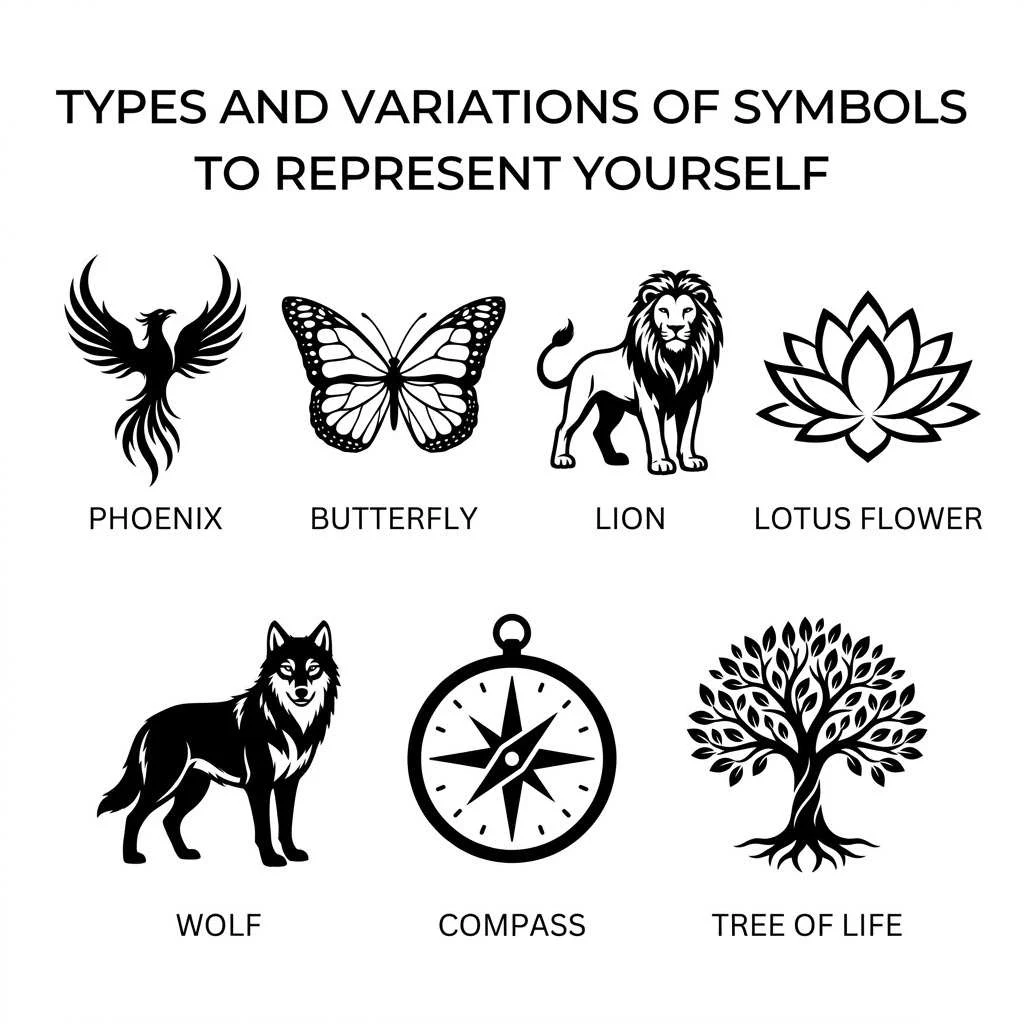
Phoenix
Visual Description
A fiery mythical bird rising from flames.
Meaning
Rebirth, resilience, transformation, survival.
Where It Appears
Greek mythology, tattoos, fantasy movies, spiritual teachings.
The phoenix is one of the strongest personal symbols because it represents rising after suffering. People who survived heartbreak, trauma, or major life changes often feel emotionally connected to it.
Butterfly
Visual Description
A delicate winged insect with colorful patterns.
Meaning
Transformation, growth, freedom, beauty.
Where It Appears
Nature symbolism, dreams, art, jewelry, literature.
The butterfly reflects personal evolution. It reminds people that painful stages in life can eventually lead to beauty and freedom.
Lion
Visual Description
A majestic wild cat with a powerful mane.
Meaning
Courage, leadership, confidence, protection.
Where It Appears
Royal emblems, mythology, films, spiritual traditions.
Many people choose the lion as a symbol because it represents fearless strength and inner authority.
Lotus Flower
Visual Description
A flower blooming above muddy water.
Meaning
Purity, enlightenment, spiritual awakening.
Where It Appears
Buddhism, Hinduism, meditation practices, tattoos.
The lotus teaches that difficult experiences can still produce wisdom and beauty.
Wolf
Visual Description
A wild canine often shown under the moon.
Meaning
Loyalty, instinct, intelligence, independence.
Where It Appears
Native traditions, folklore, fantasy stories, dreams.
The wolf attracts people who feel deeply connected to freedom and emotional intuition.
Compass
Visual Description
A circular navigation tool with directional arrows.
Meaning
Guidance, purpose, life direction.
Where It Appears
Travel culture, tattoos, adventure symbolism.
People often choose the compass during uncertain periods in life because it symbolizes finding the right path.
Tree Of Life
Visual Description
A large tree with deep roots and spreading branches.
Meaning
Connection, family, growth, balance.
Where It Appears
Ancient mythology, spiritual art, religious traditions.
This symbol reminds people that strength comes from both roots and growth.
Symbols To Represent Yourself Across Cultures
Ancient Egypt
Ancient Egyptians believed symbols carried magical and spiritual power. The Ankh symbol represented life and immortality. Scarabs symbolized rebirth and protection. These symbols appeared in temples, jewelry, tombs, and sacred writings.
Egyptian culture treated symbols as bridges between humans and the divine world.
Chinese Culture
Chinese symbolism often focuses on harmony, luck, balance, and wisdom. Dragons represent power and prosperity rather than destruction. The Yin Yang symbol expresses balance between opposite forces like darkness and light.
Many Chinese symbols emphasize emotional and spiritual balance in life.
Native American Traditions
Native American tribes used animal symbols to express spiritual identity and guidance. Eagles represented vision and freedom. Bears symbolized strength and protection. Wolves reflected loyalty and instinct.
These symbols connected people deeply with nature and ancestral wisdom.
Celtic Culture
Celtic symbols often feature endless knots and circular patterns. The Celtic knot symbolizes eternity because it has no beginning or end. Trees and spirals represented life cycles and spiritual growth.
These ancient symbols still appear in jewelry, tattoos, and modern spiritual practices.
Japanese Culture
Japanese symbolism blends beauty with emotional depth. Cherry blossoms symbolize the temporary nature of life because they bloom beautifully for only a short time. Koi fish represent perseverance and determination.
Japanese culture often uses symbols to express emotional awareness and acceptance of change.
Symbols To Represent Yourself In Art, Movies And Pop Culture
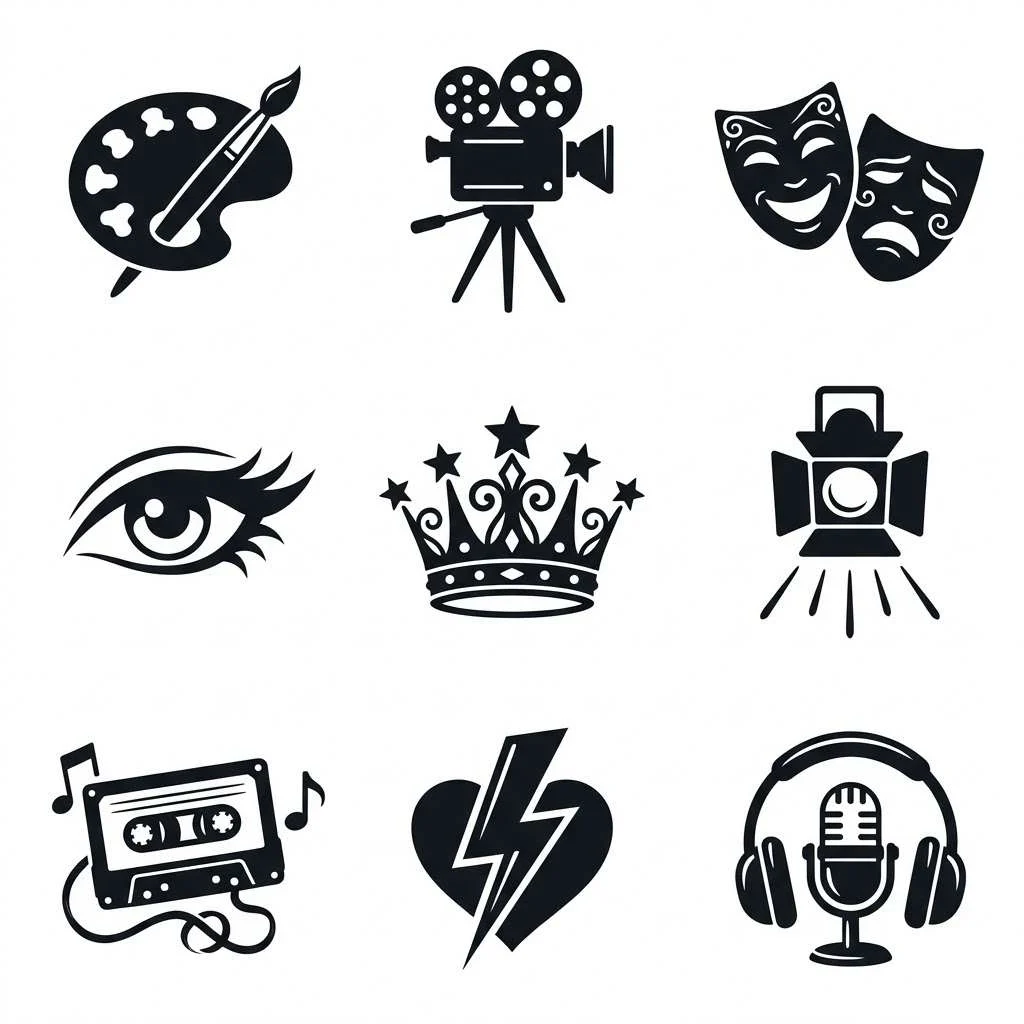
Symbols appear everywhere in modern life because they instantly create emotional meaning.
Movies
Films heavily rely on symbolism to create emotional impact. Superheroes often carry symbolic emblems that represent hope, justice, or fear. Dark masks symbolize hidden identity. White clothing may symbolize innocence while shadows represent mystery or danger.
The phoenix appears in fantasy stories as a sign of resurrection and hope. Wolves often represent loneliness or inner wildness.
Paintings
Artists use symbols to express emotions beyond words. A stormy ocean may symbolize emotional chaos. Broken mirrors can represent identity struggles. Flowers often symbolize beauty, love, or mortality.
Great art speaks through symbolism because emotions are often visual.
Books
Writers use recurring symbols to deepen stories. In literature, light often represents truth while darkness reflects uncertainty or fear. Birds symbolize freedom. Roads symbolize life journeys.
Readers emotionally remember stories because symbols create powerful mental images.
Tattoos
Personal tattoos are one of the most common ways people use symbols to represent themselves. Many choose symbols connected to survival, family, spirituality, or personal growth.
A tattoo often becomes a permanent emotional reminder of identity and experience.
Fashion
Fashion also uses symbolic imagery. Crowns represent confidence. Snakes symbolize mystery and transformation. Celestial symbols like stars and moons reflect dreams and spiritual curiosity.
People often wear symbols because they want their outer appearance to reflect their inner world.
Spiritual And Dream Meaning Of Symbols To Represent Yourself
Symbols frequently appear in dreams because the subconscious mind communicates through imagery rather than direct language.
Dreaming about water may symbolize emotional healing or uncertainty. Flying birds often represent freedom or spiritual growth. Fire can symbolize destruction or transformation depending on the dream context.
During meditation or spiritual experiences, people sometimes repeatedly see certain symbols. Many believe this happens because the mind or soul is trying to communicate an important emotional truth.
For example:
- Seeing butterflies may signal personal transformation.
- Seeing wolves may suggest trusting instincts.
- Seeing keys may symbolize new opportunities.
- Seeing circles may reflect unity and completion.
Spiritual seekers often use symbols during meditation because visual imagery creates deeper emotional focus.
Positive Vs Negative Meaning
One fascinating aspect of symbols is that they can represent both light and darkness.
Snake
Positive meaning:
Healing, wisdom, rebirth.
Negative meaning:
Deception, temptation, danger.
Fire
Positive meaning:
Passion, purification, transformation.
Negative meaning:
Destruction, anger, chaos.
Crow
Positive meaning:
Intelligence, mystery, spiritual guidance.
Negative meaning:
Death, fear, bad omens.
Moon
Positive meaning:
Intuition, femininity, emotional depth.
Negative meaning:
Illusion, emotional instability, secrecy.
Human emotions are complex, so symbols naturally carry layered meanings. The same image can inspire hope in one person and fear in another.
Why Humans Are Attracted To This Symbol
Humans are emotional creatures who naturally search for meaning. Symbols help simplify emotions that feel too deep for words.
A person going through heartbreak may feel instantly connected to the phoenix because it represents survival after pain. Someone feeling lost may find comfort in a compass symbol because it represents direction and purpose.
Psychologically, symbols create emotional safety. They help people organize feelings, memories, fears, and hopes into understandable images.
Stories throughout human history also strengthened symbolic attraction. Children grow up hearing stories about dragons, heroes, stars, and magical creatures. These images become emotionally embedded in the mind.
Symbols also give people identity. Wearing or displaying a symbol helps someone silently communicate their personality, values, or emotional journey to the world.
That emotional connection is why symbols remain timeless across every civilization.
FAQs About Symbols To Represent Yourself
What Is The Best Symbol To Represent Yourself?
The best symbol depends on your personality, experiences, and emotional connection. Many people choose symbols like butterflies, lions, wolves, phoenixes, or lotus flowers because they reflect transformation and strength.
Why Do Humans Connect Emotionally With Symbols?
Humans process images emotionally and psychologically faster than words. Symbols create deep emotional meaning because they connect with memory, culture, and subconscious feelings.
Can Symbols Change Meaning Over Time?
Yes. Symbols evolve through history and culture. A symbol that once represented fear may later symbolize power or wisdom depending on societal beliefs.
What Symbol Represents Personal Growth?
Butterflies, phoenixes, lotus flowers, and trees are commonly associated with personal growth, healing, and transformation.
Are Symbols Important In Spirituality?
Yes. Many spiritual traditions use symbols to express divine truths, emotional healing, enlightenment, and inner awakening.
Why Are Symbols Popular In Tattoos?
People choose symbolic tattoos because they permanently express identity, memories, emotions, beliefs, and personal journeys.
Conclusion
Symbols to represent yourself are far more than simple images. They are emotional languages carried through history, culture, spirituality and the human soul. A single symbol can hold pain, hope, transformation, courage or identity within its shape.
Across ancient civilizations and modern life, people continue searching for symbols because they help express truths that words cannot fully capture. The symbols people choose often reveal hidden parts of their hearts, reminding them who they are, where they came from, and who they hope to become.

Julian Shaw
I’ve always been fascinated by the small, quiet stories that make life feel magical. Writing allows me to explore worlds that exist just beyond the everyday, where imagination meets reality. Over the years, I’ve found joy in creating characters that feel real and stories that stay with readers long after the last page. When I’m not writing, you can usually find me wandering through city streets, notebook in hand, capturing little sparks of inspiration. I believe every story has the power to connect us, to make us feel a little less alone. Sharing these tales is my way of leaving a mark on the world.
Books:
-
Whispers in the Wind
-
Shadows of Tomorrow