
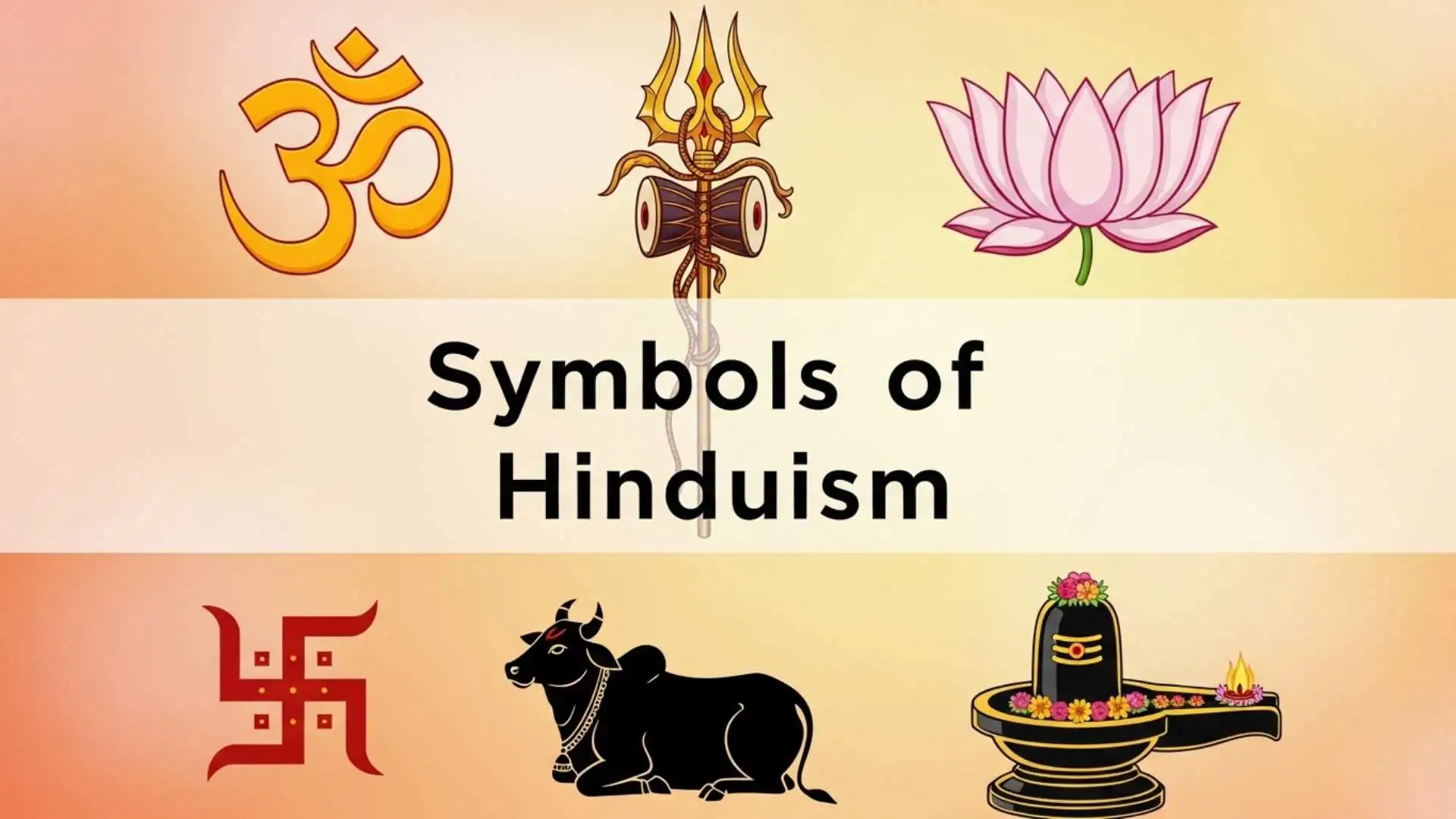
“Symbols of Hinduism” are not just artistic designs, they are living energies that whisper ancient truths into the human soul.
From temple walls to quiet moments of prayer, these symbols guide, protect, and awaken something deep within us. They carry stories older than history itself, touching both the heart and the mind.
When you truly understand them, you begin to see life differently, with more meaning, connection and wonder.
What Are Symbols of Hinduism?
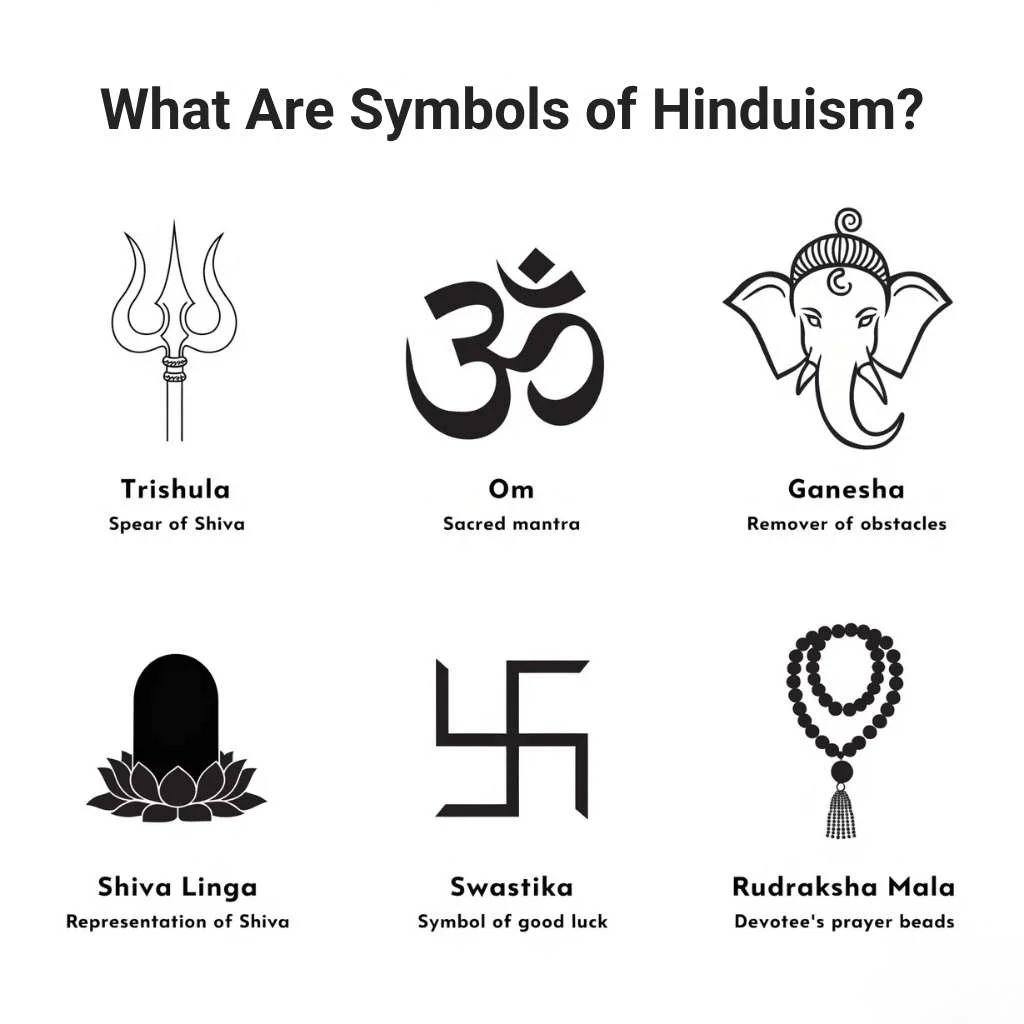
Symbols of Hinduism are sacred visual representations that express complex spiritual ideas, cosmic truths, and divine energies in simple, powerful forms. In a tradition as vast and ancient as Hinduism, these symbols serve as bridges between the visible world and the invisible realm of consciousness.
Historically, these symbols date back thousands of years to the Indus Valley Civilization and the Vedic period. They appear in temples, scriptures, rituals, art, and daily life. Each symbol carries layers of meaning, often connected to creation, destruction, balance, karma, and enlightenment.
Unlike ordinary signs, Hindu symbols are not just seen, they are experienced. They invite reflection, meditation, and inner transformation.
Deep Symbolic Meaning
Spiritual Level
On a spiritual level, symbols of Hinduism represent the divine forces that govern the universe. They remind us that everything is interconnected, from the smallest atom to the vast cosmos. For example, the Om symbol is believed to be the sound of the universe itself, the vibration from which all existence emerges.
Psychological Level
Psychologically, these symbols act as anchors for the mind. They calm chaos, focus attention, and create a sense of inner peace. When someone meditates on a symbol like the lotus, it helps them visualize growth, purity, and rising above challenges.
Cultural Level
Culturally, these symbols are woven into everyday life in India and beyond. They appear in festivals, clothing, architecture, and rituals. They carry identity, tradition, and shared beliefs across generations.
Types / Variations of Symbols of Hinduism

Om (Aum)
Visual Description
A curved symbol with a crescent and dot above it
Meaning
Represents the universal sound, the essence of ultimate reality
Where It Appears
Meditation, chants, temples, yoga practices
Swastika
Visual Description
A cross with four arms bent at right angles
Meaning
Symbolizes auspiciousness, prosperity, and good fortune
Where It Appears
Homes, entrances, religious ceremonies, festivals
Lotus (Padma)
Visual Description
A blooming flower rising from muddy water
Meaning
Represents purity, spiritual awakening, and enlightenment
Where It Appears
Art, temples, depictions of deities like Lakshmi and Saraswati
Trishula
Visual Description
A three-pronged spear
Meaning
Represents creation, preservation, and destruction
Where It Appears
Associated with Lord Shiva, temples, spiritual iconography
Chakra
Visual Description
A spinning wheel with multiple spokes
Meaning
Represents the cycle of life, dharma, and cosmic order
Where It Appears
Sacred texts, temples, and also in the Ashoka Chakra on the Indian flag
Tilak
Visual Description
A mark on the forehead, often vertical or horizontal
Meaning
Represents spiritual focus and the third eye
Where It Appears
Daily rituals, festivals, and religious ceremonies
Symbols of Hinduism Across Cultures
Ancient India
In ancient India, these symbols were deeply spiritual and philosophical. They were used in rituals, meditation, and temple architecture to represent cosmic truths.
Buddhist Traditions
Many Hindu symbols like the lotus and chakra were adopted into Buddhism, where they symbolize enlightenment and the path to liberation.
Western Interpretations
In modern Western culture, symbols like Om are often associated with yoga and mindfulness. However, their deeper meanings are sometimes simplified or misunderstood.
Southeast Asia
Countries like Thailand, Indonesia, and Cambodia use Hindu symbols in temples and art, blending them with local traditions.
Modern Global Culture
Today, these symbols are used worldwide in fashion, tattoos, and design. While their aesthetic appeal attracts many, their spiritual depth continues to inspire those who seek meaning.
Sacred Use of Symbols of Hinduism in Daily Life
Symbols of Hinduism are not confined to temples or ancient texts, they live and breathe in everyday life. From the moment a person wakes up to the rituals performed before sleep, these symbols quietly shape thoughts, actions, and intentions.
In many homes, the Om symbol is placed at entrances to invite peace and positive energy. The swastika is drawn during festivals and शुभ occasions as a sign of prosperity and divine blessings. These are not mere decorations, they are seen as protectors of the household.
During prayer rituals, or puja, symbols become tools of connection. The tilak applied on the forehead is believed to activate spiritual awareness and focus the mind. The lotus is often offered to deities, symbolizing purity of heart and devotion.
Even daily habits reflect symbolic meaning. Lighting a lamp represents the removal of darkness and ignorance. Rangoli patterns drawn at doorsteps often include sacred symbols, welcoming both guests and positive energies.
These practices show that symbols of Hinduism are not distant or abstract. They are deeply personal. They guide choices, inspire mindfulness, and remind people of a higher purpose in the middle of ordinary life.
Spiritual and Dream Meaning of Symbols of Hinduism

When these symbols appear in dreams or meditation, they often carry powerful messages. Seeing a lotus may indicate personal growth or overcoming difficulties. Encountering Om might suggest a need for inner peace or spiritual awakening.
Spiritually, these symbols act as guides. They point the way toward self realization and deeper understanding of life.
Positive vs Negative Meaning
Symbols of Hinduism are deeply powerful, but like all symbols, they can carry both positive and misunderstood meanings.
Positive Meaning
They represent harmony, growth, protection, and divine energy
Negative or Misinterpreted Meaning
Some symbols, like the swastika, have been misused in history, especially in the West, leading to negative associations. However, in Hinduism, it remains a sacred and positive symbol.
This contrast shows how context shapes meaning.
Why Humans Are Attracted to Symbols of Hinduism
Humans are naturally drawn to symbols because they simplify complex emotions and ideas. Symbols of Hinduism go even deeper, they connect us to something timeless.
Psychologically, they provide comfort and clarity. Emotionally, they inspire hope and transformation. Spiritually, they awaken a sense of purpose.
Imagine looking at a lotus blooming in muddy water. It reminds you that beauty can rise from struggle. That simple image can change how you see your own life.
FAQs
What are the most important symbols of Hinduism?
Some of the most important symbols include Om, swastika, lotus, trishula, and chakra. Each represents different aspects of life and spirituality.
Why is Om considered sacred?
Om is believed to be the original sound of the universe, representing ultimate reality and consciousness.
Is the swastika always negative?
No. In Hinduism, the swastika is a positive symbol of good fortune and prosperity. Its negative meaning comes from its misuse in modern history.
Can non Hindus use these symbols?
Yes, but it is important to understand and respect their cultural and spiritual significance.
Conclusion
Symbols of Hinduism are more than ancient markings, they are living expressions of truth, beauty, and consciousness. They guide the human spirit through confusion toward clarity, through darkness toward light.
When you look beyond their surface, you discover a world of meaning that speaks directly to your soul. And perhaps, in understanding them, you begin to understand yourself a little more deeply.

Julian Shaw
I’ve always been fascinated by the small, quiet stories that make life feel magical. Writing allows me to explore worlds that exist just beyond the everyday, where imagination meets reality. Over the years, I’ve found joy in creating characters that feel real and stories that stay with readers long after the last page. When I’m not writing, you can usually find me wandering through city streets, notebook in hand, capturing little sparks of inspiration. I believe every story has the power to connect us, to make us feel a little less alone. Sharing these tales is my way of leaving a mark on the world.
Books:
-
Whispers in the Wind
-
Shadows of Tomorrow