
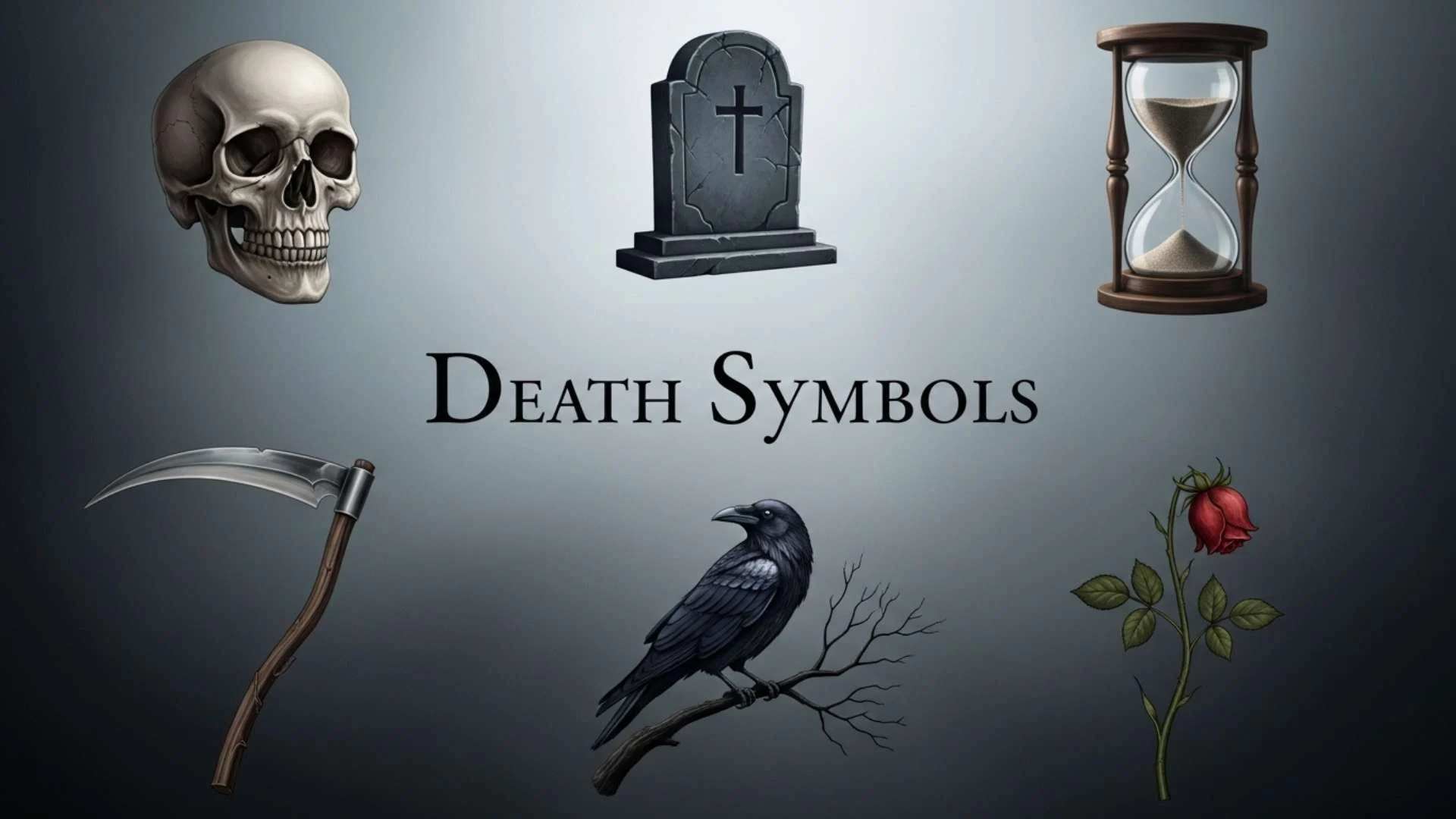
“Death symbols” have always stirred something deep inside us, a quiet mix of fear, curiosity and wonder.
From ancient tombs to modern tattoos, these symbols speak a language older than words. They remind us of endings, yet whisper about transformation and rebirth.
In this guide, you’ll uncover the hidden meanings behind death symbols and why they continue to captivate human hearts across time.
What Are Death Symbols?
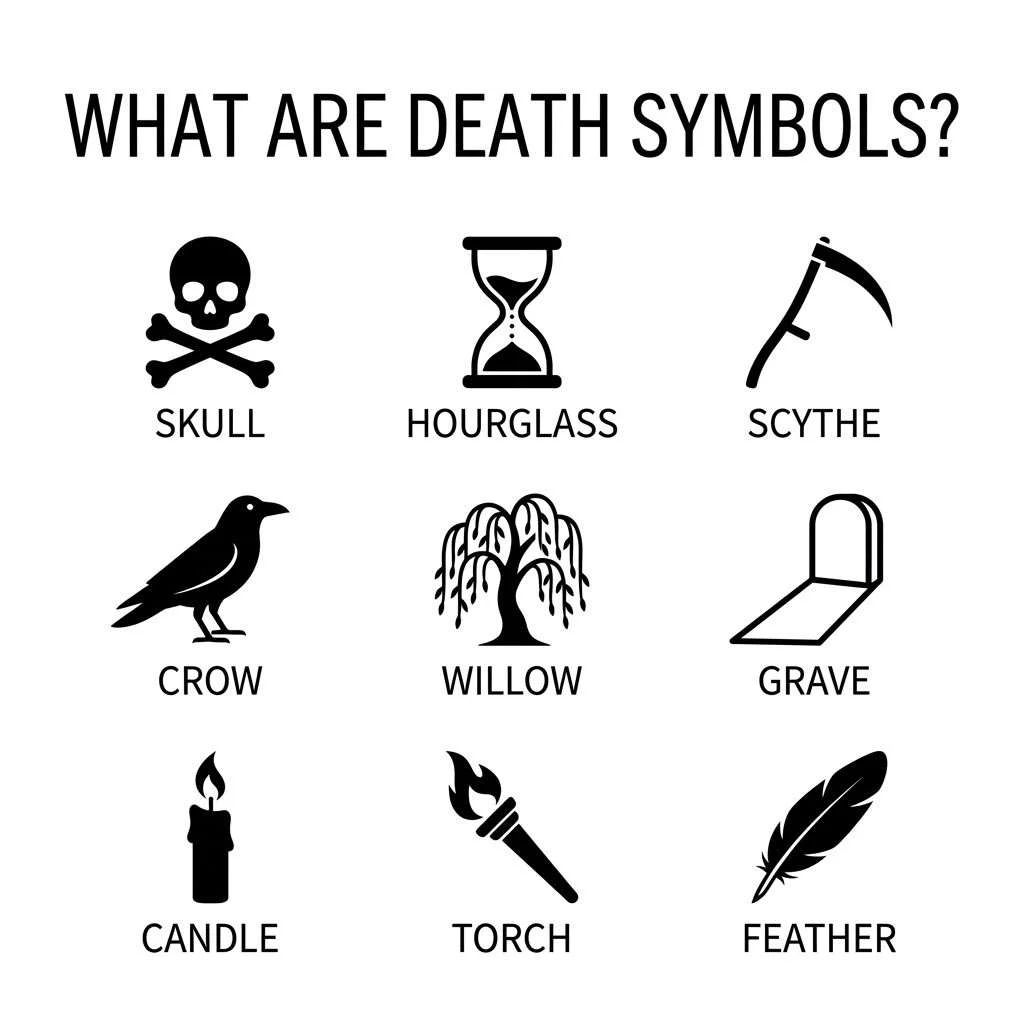
Death symbols are visual, cultural, or spiritual representations associated with mortality, the afterlife, and the transition between life and death. They appear in myths, religions, art, and even dreams, often carrying layered meanings that go far beyond physical death.
Historically, civilizations used death symbols to make sense of the unknown. Ancient cultures believed death was not an end but a doorway. These symbols helped people cope with grief, honor the dead, and understand the cycle of existence. Over time, they evolved into powerful icons seen in literature, rituals, and personal expression.
Deep Symbolic Meaning
Spiritual Level
On a spiritual level, death symbols rarely mean literal death. Instead, they represent transformation, rebirth, and the soul’s journey. Just like a sunset signals the end of a day but promises a new dawn, death symbols often carry hope hidden beneath darkness.
Psychological Level
Psychologically, these symbols reflect our inner fears and acceptance of mortality. Seeing or using them can help people process grief, confront change, or let go of the past. They act as emotional anchors during life’s most difficult transitions.
Cultural Level
Culturally, death symbols unite communities through shared rituals and beliefs. Whether carved into ancient stones or worn as jewelry, they preserve stories about life, loss, and what comes next.
Types / Variations of Death Symbols
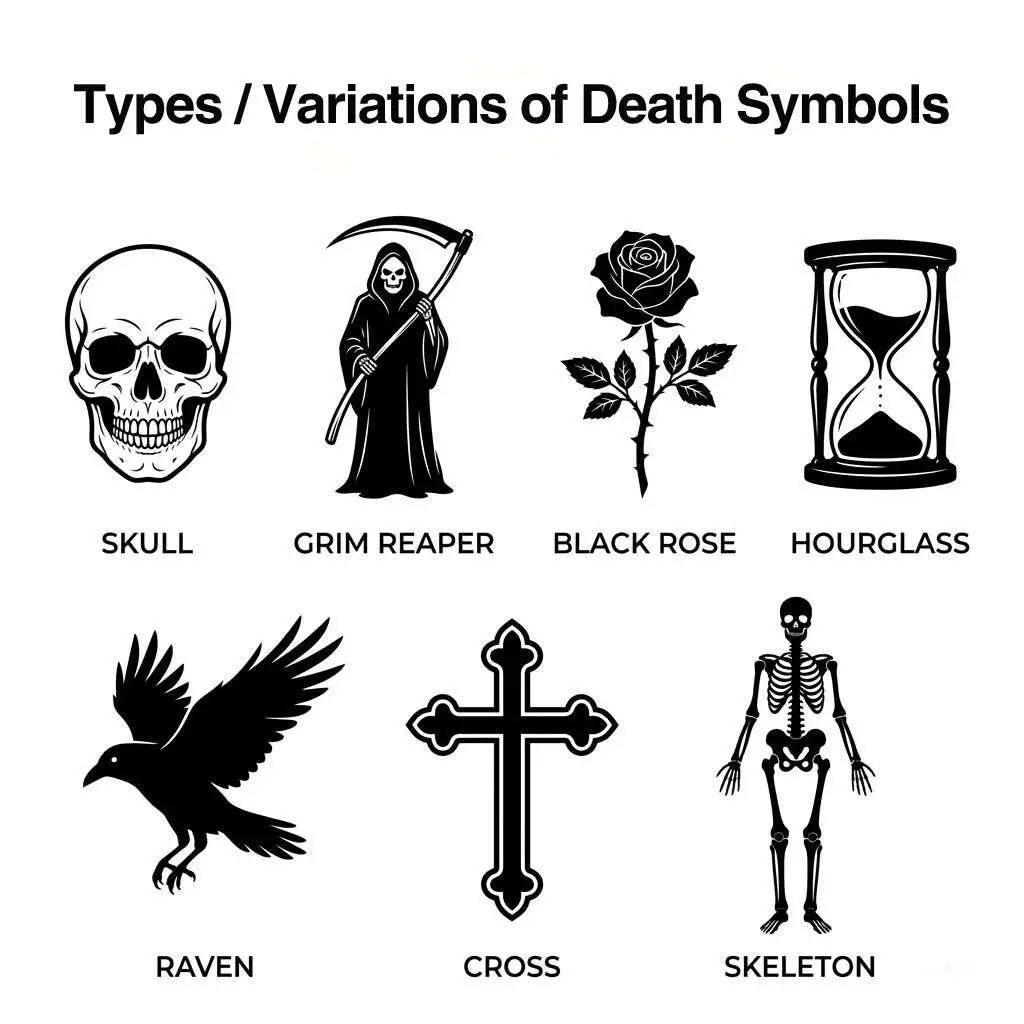
Skull
Visual Description: A human skull, often bare or stylized
Meaning: Mortality, the inevitability of death, and the fragility of life
Where It Appears: Pirate flags, tattoos, ancient rituals, modern fashion
Grim Reaper
Visual Description: A cloaked figure holding a scythe
Meaning: The collector of souls, the final moment of life
Where It Appears: Western folklore, movies, literature
Black Rose
Visual Description: A dark or black-colored rose
Meaning: Mourning, loss, and tragic endings
Where It Appears: Funerals, poetry, gothic art
Hourglass
Visual Description: Sand flowing between two glass bulbs
Meaning: Time running out, life’s limited duration
Where It Appears: Paintings, tattoos, philosophical art
Raven
Visual Description: A black bird with sharp features
Meaning: Mystery, death, and messages from the beyond
Where It Appears: Mythology, literature, especially gothic works
Cross
Visual Description: A vertical and horizontal intersecting line
Meaning: Death and resurrection, especially in Christianity
Where It Appears: Churches, graves, religious art
Skeleton
Visual Description: Full human bone structure
Meaning: The universal fate of all humans
Where It Appears: Festivals, horror themes, cultural rituals
Death Symbols Across Cultures
Ancient Egypt
In Egyptian belief, death was a transition to the afterlife. Symbols like the Ankh represented eternal life, showing that death was only the beginning of a new journey.
Greek Mythology
The Greeks saw death as a passage to the underworld ruled by Hades. Symbols like rivers, gates, and shadowy figures reflected the mystery of what lies beyond.
Mexican Culture
In Mexico, death is celebrated rather than feared. During Día de los Muertos, skulls and skeletons are colorful and joyful, symbolizing remembrance and connection with ancestors.
Hindu Traditions
In Hindu philosophy, death is part of a cycle called rebirth. Symbols often reflect karma, transformation, and the soul’s continuous journey.
Medieval Europe
Death symbols in medieval times were darker and more fearful. Art often showed skeletons, decay, and judgment, reminding people of life’s fragility and moral consequences.
Death Symbols in Art, Movies and Pop Culture
Death symbols appear everywhere in modern life, often carrying deeper meanings than we realize.
In movies, the Grim Reaper or skull imagery signals danger, endings, or transformation. In paintings, artists use dark tones and symbolic objects like candles or ravens to explore mortality.
Books often describe death symbols to create emotional depth, especially in gothic or philosophical stories.
Tattoos use skulls, roses, and hourglasses to express personal experiences such as loss, survival, or change.
In fashion, death symbols have become bold statements, blending rebellion with artistic expression.
Spiritual and Dream Meaning of Death Symbols
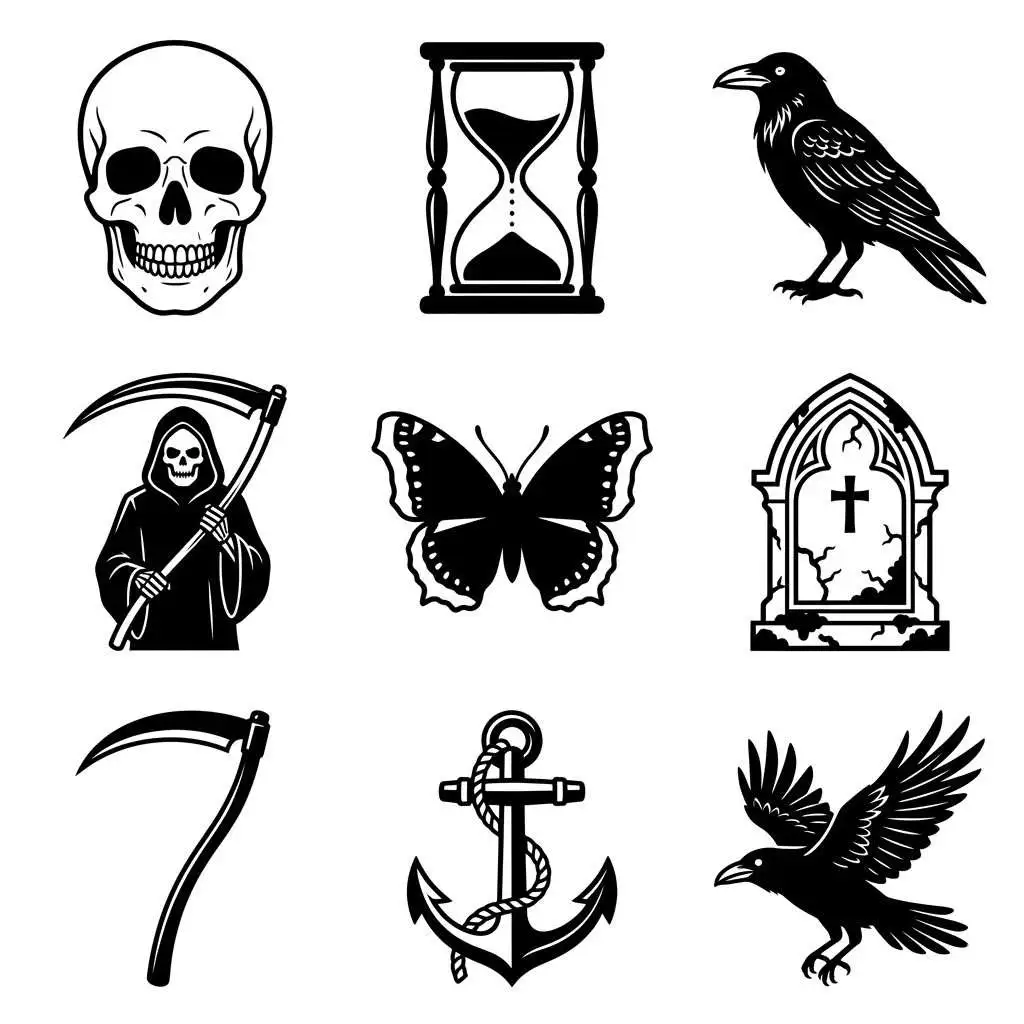
Seeing death symbols in dreams does not usually mean physical death. Instead, it often signals transformation.
For example
- A skull in a dream may represent letting go of old habits
- An hourglass may suggest urgency or limited time
- A black rose could reflect emotional healing after loss
Spiritually, these symbols can appear during moments of awakening, guiding individuals through change and personal growth.
Positive vs Negative Meaning
Death symbols carry both light and darkness.
Negative Meaning
- Fear of the unknown
- Loss and grief
- Endings and separation
Positive Meaning
- Transformation and rebirth
- New beginnings
- Acceptance and peace
This duality is what makes death symbols so powerful. They mirror life itself, where every ending creates space for something new.
Why Humans Are Attracted to This Symbol
Humans are naturally drawn to death symbols because they touch our deepest questions. What happens after life? Why do we exist? What does it all mean?
These symbols offer a way to explore those questions safely. They turn fear into understanding and chaos into meaning.
Emotionally, they help people cope with loss. Psychologically, they provide a sense of control over the unknown. Spiritually, they connect us to something larger than ourselves.
In a strange way, death symbols remind us to live more fully.
FAQs
What do death symbols really mean?
They represent more than death. Most symbolize transformation, endings, and new beginnings.
Are death symbols always negative?
No, many cultures see them as positive signs of rebirth and spiritual growth.
Why do people use death symbols in tattoos?
People use them to express personal loss, strength, change, or acceptance of life’s cycle.
What does it mean to dream about death symbols?
It usually reflects internal change, emotional release, or personal transformation.
Which death symbol is the most common?
The skull is one of the most widely recognized symbols of mortality worldwide.
Conclusion
Death symbols are not just about endings. They are quiet storytellers of transformation, resilience, and the eternal cycle of life. They remind us that every ending holds the seed of a beginning, and every loss carries a deeper meaning waiting to be understood.
When you look beyond the surface, these symbols stop being frightening and start becoming profound reflections of what it truly means to be human.

Sophia Reed
Hi, I’m Sophia Reed, a storyteller at heart who finds magic in everyday moments. Ever since I could hold a pen, I’ve been weaving tales that explore love, courage, and the unexpected twists of life. Writing allows me to connect with readers on a deeper level, sharing emotions and experiences that resonate across worlds. When I’m not lost in my stories, you can find me wandering through quiet streets, sipping coffee, or dreaming up my next plot twist. I believe every story has the power to inspire, heal, and transport. Through my books, I hope to leave a piece of my imagination with you.
Books:
-
Whispers of the Heart
-
Shadows and Sunlight