
There is something quietly powerful about a coat of arms.
At first glance, it may look like an old decorative emblem shields, animals, crowns but beneath that surface lies a story of identity, struggle, honor and belonging. For centuries, humans have used symbols not just to decorate, but to define who they are.
A coat of arms is more than art, it’s a mirror of the soul, a coded language of heritage and values passed down through generations.
In this article, you’ll uncover the deep meanings behind coat of arms symbols and discover why they still resonate so strongly in our modern world.
What are Coat of Arms Symbols?
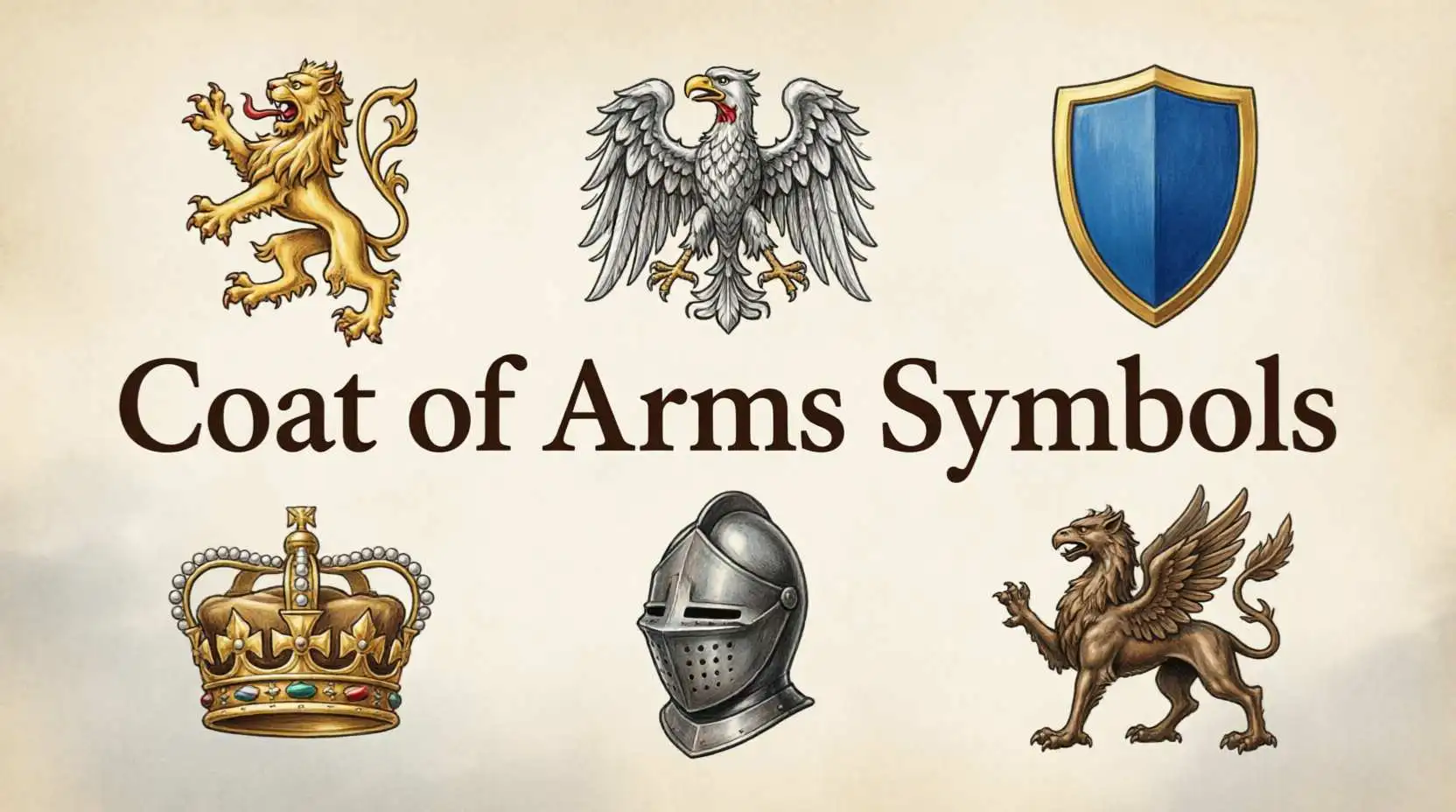
A coat of arms is a unique heraldic design displayed on a shield, often accompanied by additional elements like a crest, supporters, motto, and helmet. These symbols originated in medieval Europe, where knights needed a way to identify themselves on the battlefield.
Over time, coat of arms symbols evolved into something far more meaningful. They became a representation of family lineage, social status, achievements, and personal values. Kings, nobles, cities, and even institutions adopted them as visual identities.
Each element in a coat of arms carries significance. Nothing is random—every color, shape, and figure tells a story.
Deep Symbolic Meaning
Spiritual Level
On a spiritual level, coat of arms symbols represent legacy and continuity. They remind us that we are part of something larger than ourselves—a lineage, a history, a chain of human experience stretching through time.
Symbols like lions, crosses, or eagles often point to divine strength, protection, or guidance. They suggest that identity is not just physical but deeply spiritual.
Psychological Level
Psychologically, these symbols tap into our need for identity and belonging. Humans crave meaning, and coat of arms provide a visual shorthand for who we are or who we aspire to be.
A shield symbolizes protection. A sword represents courage. These images speak directly to the subconscious, shaping how individuals see themselves and their place in the world.
Cultural Level
Culturally, coat of arms symbols act as story archives. They preserve history—battles fought, alliances formed, virtues admired. In many societies, they are still used to express pride, heritage, and collective identity.
Types / Variations of Coat of Arms Symbols
1. The Shield (Escutcheon)
- Description: Central element, often divided into sections
- Meaning: Protection, identity, and foundation
- Where it appears: All heraldic traditions
2. The Lion
- Description: Standing or roaring lion
- Meaning: Courage, strength, royalty
- Where it appears: European heraldry, especially England and Scotland
3. The Eagle
- Description: Spread-wing bird, sometimes double-headed
- Meaning: Power, vision, dominance
- Where it appears: Roman Empire, Byzantine Empire, Germany
4. The Crown
- Description: Ornamental royal headpiece
- Meaning: Authority, sovereignty, honor
- Where it appears: Royal and noble families
5. The Cross
- Description: Various cross designs
- Meaning: Faith, sacrifice, protection
- Where it appears: Christian heraldry, medieval Europe
6. The Helmet
- Description: Positioned above the shield
- Meaning: Rank and status
- Where it appears: Knightly and noble arms
7. The Crest
- Description: Decorative symbol above the helmet
- Meaning: Personal achievement or identity
- Where it appears: Individual family arms
8. Supporters
- Description: Animals or figures on either side of the shield
- Meaning: Strength and guardianship
- Where it appears: Royal or high-ranking coats of arms
9. Motto
- Description: A phrase or slogan
- Meaning: Guiding principle or belief
- Where it appears: Family and national arms
10. Colors (Tinctures)
- Gold (Or): Generosity
- Silver (Argent): Peace
- Red (Gules): Courage
- Blue (Azure): Loyalty
- Green (Vert): Hope
Coat of Arms Symbols Across Cultures
Medieval Europe
The birthplace of heraldry, where coat of arms symbols defined nobility, lineage, and battlefield identity.
Ancient Rome
Though not identical, Roman standards and emblems influenced later heraldic designs—especially the eagle as a symbol of empire.
Japan
Instead of coats of arms, families used kamon, simple yet elegant symbols representing lineage and identity.
Islamic World
While avoiding figurative imagery, Islamic emblems used calligraphy, geometry, and symbolic motifs to represent authority and faith.
Modern Nations
Today, many countries still use coats of arms as national symbols, blending tradition with modern identity.
Coat of Arms Symbols in Art, Movies & Pop Culture
Coat of arms symbols continue to appear everywhere—often without us even noticing.
- Movies: Fantasy films like Game of Thrones use heraldry to define houses and loyalties
- Books: Medieval literature and modern fantasy rely heavily on symbolic crests
- Tattoos: People choose coat of arms designs to express identity and heritage
- Fashion: Luxury brands use crest-like logos to convey prestige
- Art: Renaissance paintings frequently include heraldic symbols to signify patrons
These symbols still communicate power, legacy, and belonging—just in new forms.
Spiritual & Dream Meaning of Coat of Arms Symbols
Seeing a coat of arms in a dream or meditation often reflects a search for identity and purpose.
- A strong, clear symbol may suggest confidence and self-awareness
- A damaged or unclear coat of arms may indicate confusion about identity
- Discovering a new crest can symbolize personal growth or transformation
Spiritually, it may be a reminder to honor your roots while shaping your own path.
Positive vs Negative Meaning
Positive
- Identity and belonging
- Strength and protection
- Honor and legacy
- Pride in heritage
Negative
- Elitism or exclusion
- Obsession with status
- Rigid identity or tradition
- Conflict tied to lineage
Like all symbols, coat of arms can represent both unity and division depending on how they are used.
Why Humans Are Attracted to Coat of Arms Symbols
Humans are storytelling creatures. We don’t just want to exist—we want to mean something.
Coat of arms symbols provide a visual story of who we are, where we come from, and what we stand for. They offer a sense of permanence in a changing world.
Psychologically, they satisfy deep emotional needs:
- The need for identity
- The desire for recognition
- The longing for legacy
Even today, people create personal logos, social media identities, and family symbols. The instinct hasn’t changed—only the medium has.
FAQs
1. What do coat of arms symbols represent?
They represent identity, family history, values, achievements, and social status.
2. Are coat of arms still used today?
Yes, they are used by countries, institutions, and individuals for symbolic identity.
3. Can anyone create a coat of arms?
Traditionally, they were granted by authorities, but today people often design personal versions.
4. What is the most common symbol in a coat of arms?
The lion is one of the most common, symbolizing courage and strength.
5. What do colors mean in coat of arms symbols?
Each color has meaning, such as red for bravery and blue for loyalty.
6. Is a family crest the same as a coat of arms?
Not exactly. The crest is just one part of the full coat of arms.
Conclusion
Coat of arms symbols are not relics of the past they are living expressions of what it means to be human. They capture our desire to belong, to be remembered, to stand for something greater than ourselves.
Behind every shield and symbol lies a story of courage, identity, struggle, and hope. And perhaps that’s why they still captivate us today.
Because in the end, we are all searching for our own emblem… something that tells the world who we are without saying a word.

Freddie Wood
Hi! I’m Freddie Wood, a storyteller at heart and a lifelong explorer of ideas. Writing has always been my way of making sense of the world, turning ordinary moments into stories that linger in your mind. I love blending emotions with adventure, and I’m fascinated by the way words can connect people across distances and experiences. When I’m not writing, you’ll find me wandering through nature, listening to music, or sketching out ideas for my next story. My goal is always to create books that stay with readers long after the last page.
Books by Freddie Wood:
-
The Hidden Path
-
Shadows of Tomorrow