
“Hand symbols” have shaped human history long before written language ever existed. A raised palm can bless or curse, protect or warn, love or command.
Across temples, caves, paintings, and modern emojis, the human hand carries silent messages that move hearts instantly.
In this guide, you will uncover the deep meanings, spiritual power, and psychological secrets behind hand symbols that most people never notice.
What Are Hand Symbols?
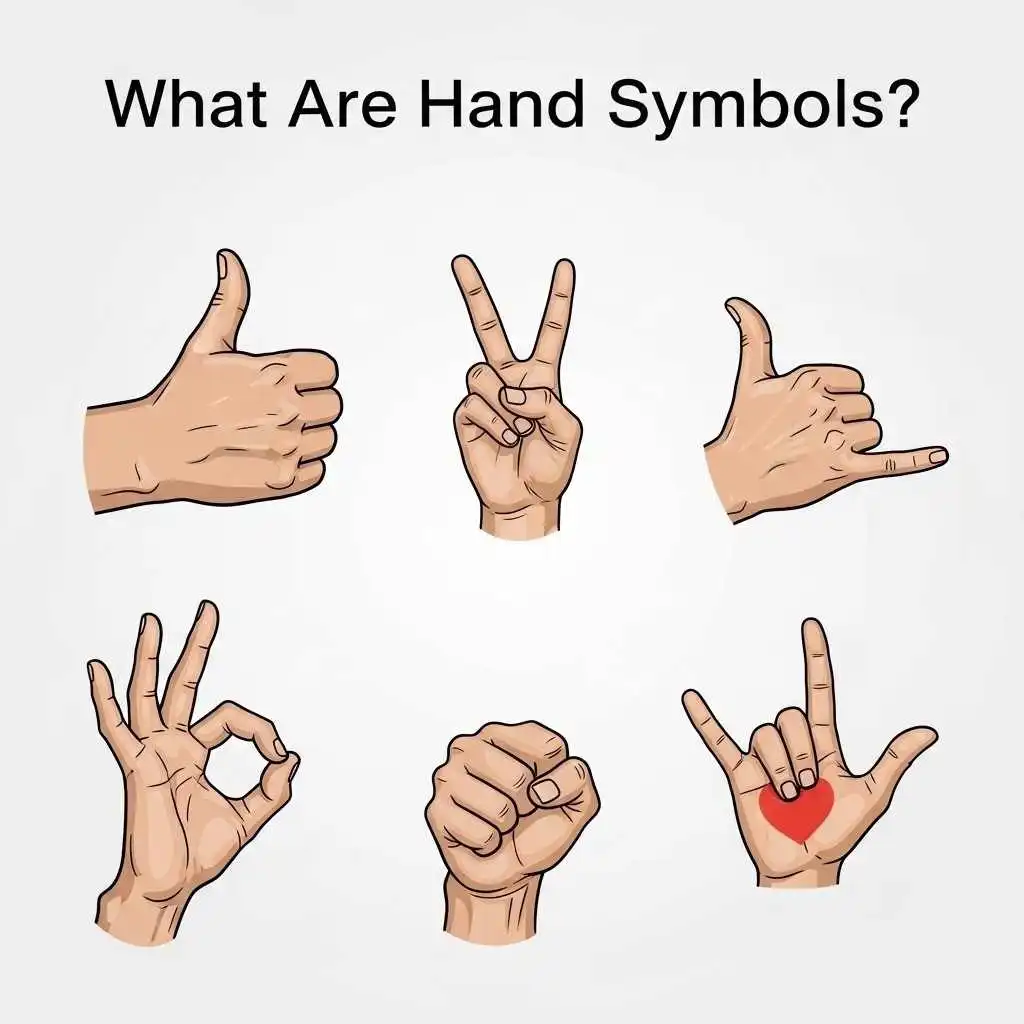
Hand symbols are meaningful gestures or images of hands that communicate ideas, emotions, beliefs, or power without words. They appear in ancient cave art, religious icons, royal ceremonies, street culture, and digital communication.
Thousands of years ago, early humans pressed painted hands onto cave walls. These prints were not random marks. They represented identity, presence, protection, and even spiritual connection. The hand was proof that someone existed.
In ancient civilizations like Ancient Egypt and Ancient Rome, hand gestures symbolized authority and divine power. Priests lifted their hands in blessing. Rulers extended palms to show control.
The hand became a universal language because it is the tool we use to touch, build, protect, and express. It is deeply human.
Deep Symbolic Meaning of Hand Symbols
Spiritual Level
Spiritually, hand symbols often represent divine protection, blessing, healing, and energy flow. Many traditions believe the hands carry spiritual force. When placed in prayer, meditation, or ritual positions, they align the body with higher consciousness.
Open palms symbolize surrender and trust. Closed fists represent strength and resistance. Two hands joined symbolize unity and devotion.
In many mystical traditions, the right hand represents giving and action. The left hand represents receiving and intuition.
Psychological Level
Psychologically, hands reveal emotion faster than words. Think about it.
Clenched fists show anger. Open hands show honesty. Hands covering the face show shame or grief.
Humans instinctively read hand gestures to determine safety. An open palm signals that no weapon is present. This ancient survival instinct still lives in our brains.
When someone reaches out a hand, it creates connection. When someone withdraws their hands, it creates distance. The meaning is immediate and emotional.
Cultural Level
Culturally, hand symbols carry collective memory. They represent identity, faith, rebellion, unity, and social belonging.
A single gesture can unite thousands of people at a protest. Another can signal peace across continents.
Hand symbols become powerful because communities agree on their meaning.
Types and Variations of Hand Symbols
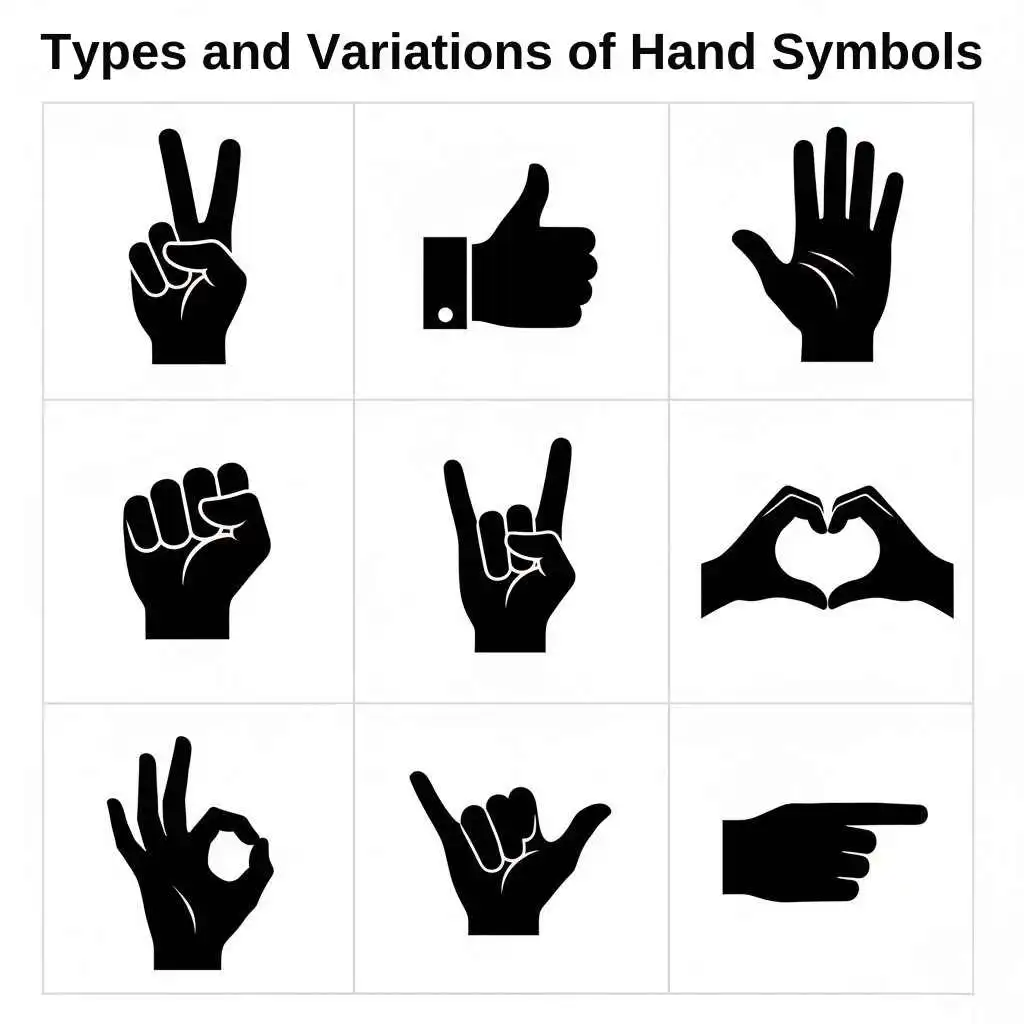
Below are some of the most powerful and widely recognized hand symbols across history.
1. Hamsa Hand
Visual Description
An open palm with an eye in the center.
Meaning
Protection against evil and negative energy.
Where It Appears
Middle Eastern and North African cultures, Islamic and Jewish traditions.
The Hamsa is believed to ward off the evil eye and bring blessings, power, and strength.
2. Mudras
Visual Description
Specific finger positions used during meditation and yoga.
Meaning
Channeling spiritual energy and balancing the body.
Where It Appears
Hinduism and Buddhism.
In Hindu and Buddhist iconography, deities like Buddha are often shown with symbolic hand gestures. These mudras represent fearlessness, teaching, compassion, or enlightenment.
3. Raised Fist
Visual Description
A tightly closed fist lifted upward.
Meaning
Resistance, solidarity, power.
Where It Appears
Political movements, civil rights protests, activism.
The raised fist became globally recognized during movements for equality and justice.
4. Peace Sign
Visual Description
Index and middle fingers raised in a V shape.
Meaning
Peace, victory, harmony.
Where It Appears
1960s counterculture, anti war movements, modern photography.
It gained popularity during the Vietnam War protests and became a global symbol of nonviolence.
5. Handshake
Visual Description
Two hands grasping each other.
Meaning
Trust, agreement, equality.
Where It Appears
Business, diplomacy, everyday greetings.
The handshake dates back to ancient times as a sign that neither person carried a weapon.
6. Open Palm Blessing
Visual Description
Palm facing outward, fingers extended.
Meaning
Divine protection, blessing.
Where It Appears
Christian art, statues of saints, religious paintings.
In Christian imagery, figures like Jesus Christ are often depicted blessing with raised hands.
Hand Symbols Across Cultures
Ancient Civilizations
In Ancient Egypt, hand gestures symbolized life force and divine power. Hieroglyphs often included hands performing actions that represented authority.
In Ancient Greece, hands appeared in sculpture to show philosophical thought and dramatic emotion.
South Asian Traditions
In India and Nepal, mudras remain central to spiritual practice. Classical dance forms use detailed hand gestures to tell entire stories without speech.
Middle Eastern Cultures
The Hamsa remains a sacred protective amulet worn as jewelry or displayed in homes.
Western Culture
In modern Western societies, hand symbols dominate pop culture. From courtroom gestures to concert signs, they define group identity.
East Asian Symbolism
In Japan and China, specific hand gestures in martial arts represent discipline and inner balance.
Hand Symbols in Art, Movies and Pop Culture
Hand symbols appear constantly in visual storytelling.
In the film Titanic, the famous scene of hands pressed against glass symbolizes love and separation.
In Michelangelo’s painting The Creation of Adam, the nearly touching hands represent the spark of life between human and divine.
Superhero films use hand gestures to signal power. Villains often clench fists. Heroes extend open hands to protect.
Tattoos featuring the Hamsa or praying hands represent faith and protection. Fashion brands use minimalist hand symbols to suggest unity and creativity.
Even emojis rely heavily on hand gestures. A thumbs up can approve. Folded hands can express gratitude or prayer.
Spiritual and Dream Meaning of Hand Symbols
When hand symbols appear in dreams, they often represent control, connection, or vulnerability.
Dreaming of open hands may suggest readiness to receive something new. Dreaming of injured hands can indicate feeling powerless.
In meditation, visualizing glowing hands often relates to healing energy and compassion.
Many spiritual seekers report seeing symbolic hands during deep prayer or reflection. These visions often feel comforting and protective.
Positive vs Negative Meaning of Hand Symbols
The power of hand symbols lies in duality.
An open hand can mean blessing. It can also mean surrender.
A raised fist can symbolize justice. It can also represent aggression.
Hands joined together can mean unity. They can also mean dependence.
The same symbol changes meaning based on context, intention, and culture.
This dual nature makes hand symbols powerful. They reflect the complexity of human emotion.
Why Humans Are Attracted to Hand Symbols
Humans are drawn to hand symbols because hands are extensions of identity.
From birth, we reach for connection. A baby grabs a finger. A child waves goodbye. A lover holds hands in silence.
Hands are memory.
Neurologically, the human brain dedicates a large area to hand movement and sensation. This makes hand gestures deeply wired into our awareness.
We respond to them instantly because they signal safety, threat, love, or power within seconds.
On an emotional level, hand symbols feel personal. They remind us of touch, and touch is the first language we ever learned.
FAQs About Hand Symbols
What do hand symbols mean spiritually?
Spiritually, hand symbols often represent protection, blessing, healing energy, and divine presence. Different traditions assign specific meanings to different gestures.
Why are hand gestures powerful?
Hand gestures communicate emotion instantly. They trigger deep psychological responses rooted in survival and social bonding.
What is the most protective hand symbol?
The Hamsa is widely considered one of the most protective hand symbols across cultures.
Are hand symbols universal?
Some meanings are nearly universal, such as open palms representing peace. Others vary depending on culture and historical context.
Why do religions use hand symbols?
Religions use hand symbols because they visually communicate teachings, blessings, and sacred power without words.
Conclusion
Hand symbols are more than gestures. They are ancient messages carved into human consciousness. They connect cave painters to modern activists, monks to filmmakers, lovers to strangers.
Every time you raise your hand, extend your palm, or clasp another person’s fingers, you participate in a language older than speech.
The next time you notice a simple hand symbol, pause. It may be carrying centuries of belief, emotion, and hidden meaning within its silent shape.

Nora Bennett
Nora Bennett is a storyteller at heart, always finding magic in the everyday moments of life. From a young age, she discovered the joy of weaving emotions into words, creating characters that feel like old friends. Writing, for her, is both an adventure and a sanctuary—a way to explore the world and herself. She loves connecting with readers who share her passion for heartfelt stories and unforgettable journeys. When she’s not crafting her next tale, Nora enjoys quiet mornings with a cup of coffee and a notebook full of ideas. Her stories are meant to inspire, comfort, and spark imagination in everyone who reads them.
Books:
-
Whispers of Yesterday
-
Echoes of Tomorrow