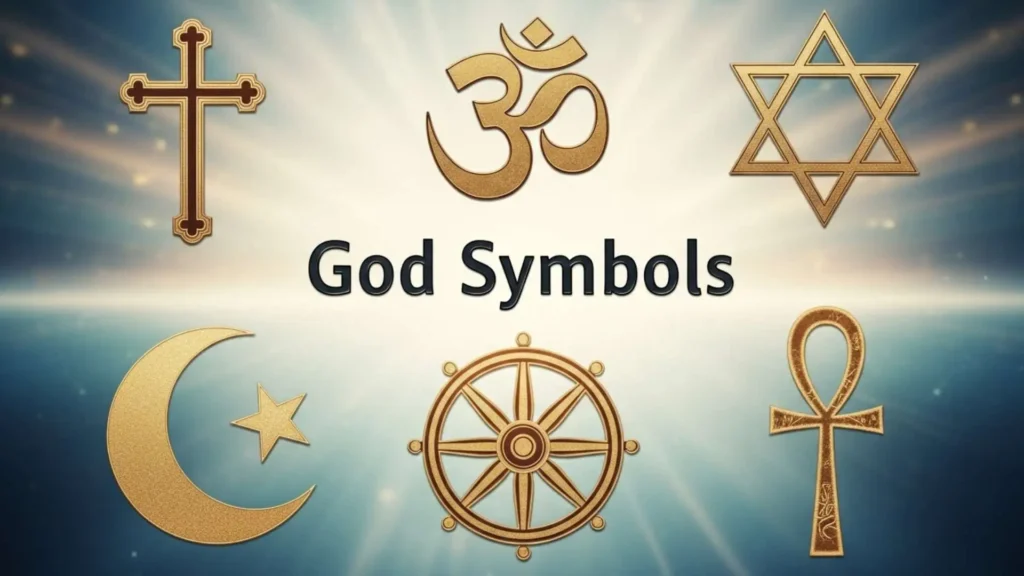
“God symbols”have guided human hearts for thousands of years. Before written language, before temples of stone, people carved sacred signs into caves and whispered their meanings under the stars.
These symbols were not decoration. They were bridges between earth and heaven. In every culture, god symbols carry mysteries about creation, power, fear, hope, and destiny.
They shape civilizations, inspire art, and influence the way you understand life itself.
This article uncovers the deeper truths behind these sacred signs and reveals meanings many people never notice.
What Are God Symbols?
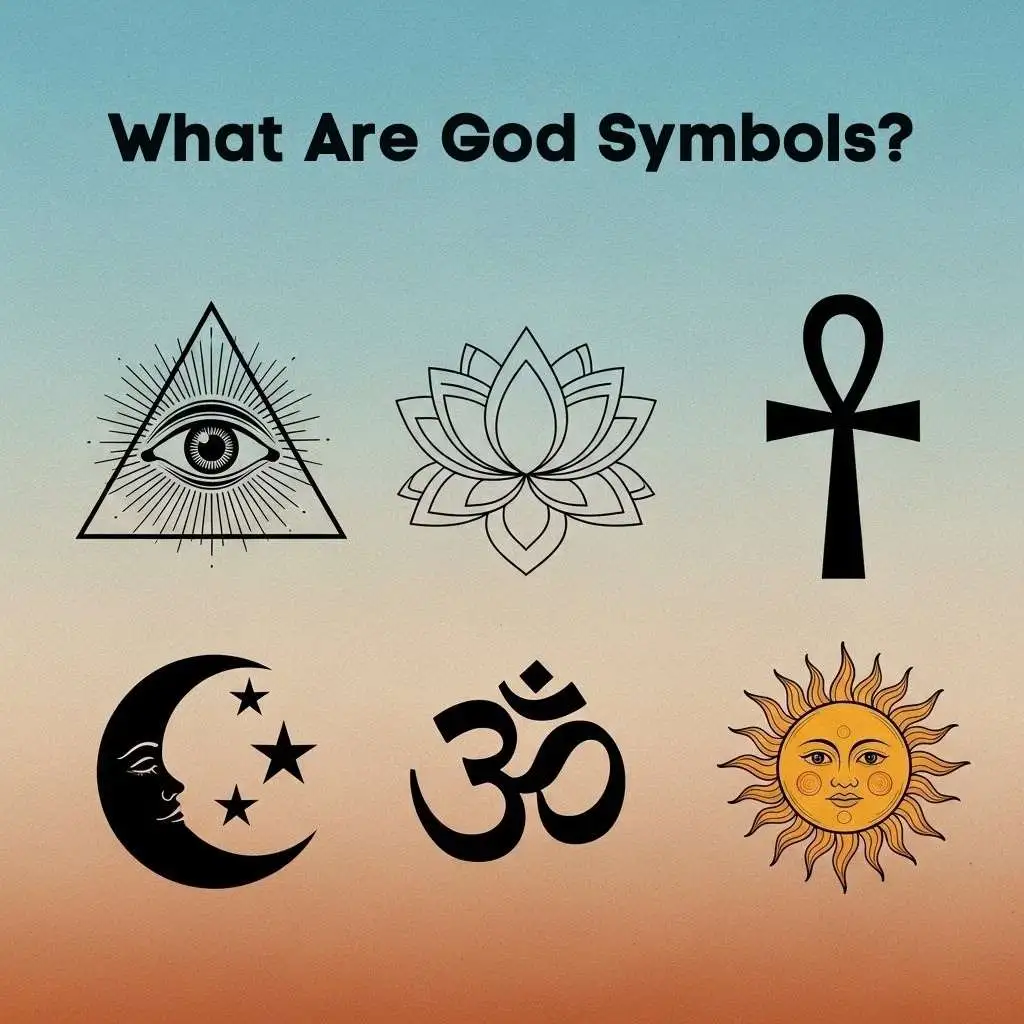
God symbols are visual representations used to express the presence, power, or nature of a deity. They act as sacred shorthand. Instead of describing divine forces with long stories, a single sign can capture divine authority, protection, creation, destruction, love, or wisdom.
Long before organized religion, early humans used sacred imagery to explain natural forces. The sun, the moon, animals, geometric shapes, and celestial patterns became symbolic language for divine energy. Over time, these evolved into complex religious iconography seen in temples, scriptures, and art.
God symbols matter because they speak to something older than words. They operate through image and emotion. Even today, a sacred symbol can make you feel calm, powerful, protected, or inspired without anyone explaining why.
Deep Symbolic Meaning of God Symbols
On a Spiritual Level
Spiritually, god symbols represent divine presence. They are considered portals. When believers meditate on a sacred symbol, they believe they connect with higher consciousness or divine energy.
For example, a circle often symbolizes eternity because it has no beginning and no end. When used as a god symbol, it expresses infinite divine existence.
Sacred geometry, light imagery, and celestial symbols all communicate transcendence. They remind people that life is more than material reality.
On a Psychological Level
Psychologist Carl Jung believed that universal symbols live in the collective unconscious. God symbols activate deep archetypes within the human mind. They trigger emotions of awe, fear, reverence, or belonging.
When you see a powerful divine symbol, your brain responds to patterns linked to authority and protection. That is why sacred imagery feels intense even if you are not religious.
Symbols simplify the complex. They give shape to invisible forces like destiny, morality, and cosmic order.
On a Cultural Level
Culturally, god symbols unify communities. They appear on flags, jewelry, architecture, clothing, and sacred texts. They help define identity.
In ancient times, a single sacred sign could signal loyalty to a tribe or kingdom. Today, religious symbols still shape cultural norms, laws, and traditions.
God symbols carry collective memory. They preserve stories across generations.
Types and Variations of God Symbols
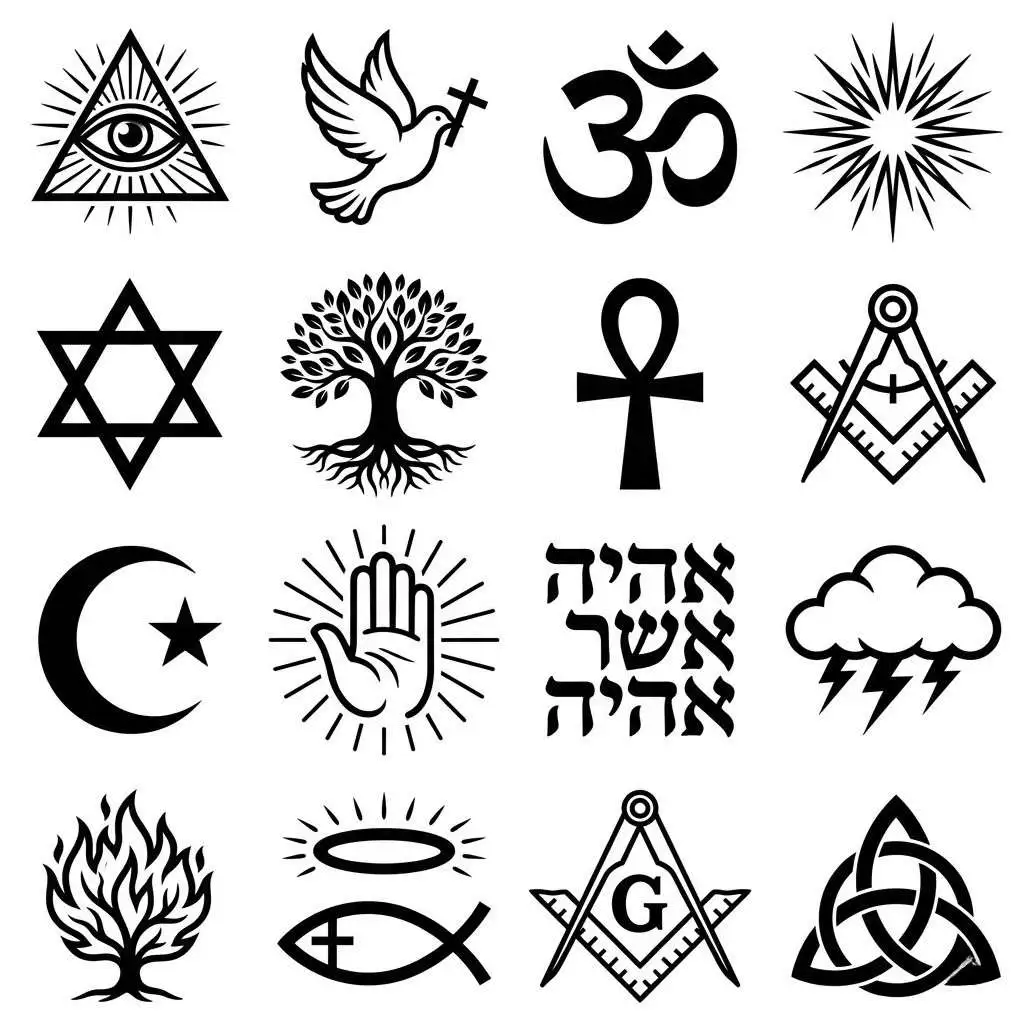
Below are some of the most powerful and historically significant god symbols across civilizations.
1. The Ankh
Associated with ancient Egypt, the Ankh looks like a cross with a loop at the top.
Meaning: Eternal life, divine power, rebirth.
Where it appears: Egyptian temples, tomb art, amulets.
The Ankh was linked to gods such as Ra and Isis. It symbolized the life force granted by divine authority.
2. The Eye of Horus
A stylized human eye with markings.
Meaning: Protection, healing, royal authority.
Where it appears: Egyptian artifacts, jewelry, protective charms.
The symbol represents Horus and his mythological battle restoring cosmic balance.
3. Om
A sacred Sanskrit symbol.
Meaning: Primordial sound of the universe.
Where it appears: Hindu scriptures, meditation practices, temple art.
Om is connected to deities like Brahma, Vishnu, and Shiva.
It represents creation, preservation, and transformation.
4. The Cross
A simple intersecting vertical and horizontal line.
Meaning: Sacrifice, salvation, divine love.
Where it appears: Churches, necklaces, Christian art.
The cross is central to Christianity and represents the crucifixion of Jesus Christ.
5. The Star of David
Two overlapping triangles forming a hexagram.
Meaning: Divine protection, unity of heaven and earth.
Where it appears: Jewish synagogues, the Israeli flag, religious texts.
Strongly linked with Judaism and King David.
6. The Crescent and Star
A crescent moon with a star beside it.
Meaning: Guidance, divine light in darkness.
Where it appears: Mosques, Islamic art, national flags.
Often associated with Islam and linked culturally to the Ottoman Empire.
7. Thor’s Hammer
A short-handled hammer symbol.
Meaning: Protection, strength, blessing.
Where it appears: Viking jewelry, Norse carvings.
Represents Thor.
God Symbols Across Cultures
Ancient Egypt
Egyptians believed symbols carried actual power. The Ankh and Eye of Horus were not decorative. They were spiritual tools used for protection in life and after death.
Ancient Greece
Gods like Zeus were represented by lightning bolts. These symbols conveyed authority and divine judgment.
India
Hinduism uses sacred geometry, mantras, and deity symbols to express cosmic balance. Om remains central in meditation and temple rituals.
Abrahamic Traditions
In Christianity, Judaism, and Islam, symbols express faith, divine covenant, and guidance. They often emphasize moral law and divine unity.
Norse and Celtic Cultures
Symbols like Thor’s Hammer and knotwork designs reflected divine protection and eternal cycles of life.
Across civilizations, god symbols evolved but the emotional core remained the same. Humans sought connection with something greater.
God Symbols in Art, Movies and Pop Culture
God symbols dominate visual storytelling.
In Renaissance paintings, artists like Michelangelo used halos and light imagery to represent divine presence.
Films often use celestial light, sacred geometry, or glowing sigils to suggest divine intervention. Movies such as The Passion of the Christ rely heavily on the cross as a central visual motif.
In fantasy literature like The Lord of the Rings, symbolic objects carry divine or supernatural authority.
Tattoos featuring god symbols represent faith, strength, identity, or protection. Fashion brands use sacred motifs to evoke mystery and power.
These symbols continue evolving but their emotional impact remains powerful.
Spiritual and Dream Meaning of God Symbols
Seeing god symbols in dreams often represents:
- Spiritual awakening
- Seeking protection
- Desire for guidance
- Inner transformation
For example, dreaming of a bright cross or glowing Om symbol may indicate personal growth or reconnection with faith.
During meditation, visualizing sacred symbols can focus the mind and deepen spiritual awareness. Many people report feelings of peace, clarity, and strength.
Positive vs Negative Meaning
God symbols can represent both light and shadow.
Positive meanings:
- Protection
- Love
- Guidance
- Eternal life
Negative interpretations:
- Fear of divine judgment
- Religious conflict
- Control or power misuse
For example, a cross can symbolize salvation for one person but oppression for another, depending on historical context.
Symbols are powerful. Their meaning depends on belief and experience.
Why Humans Are Attracted to God Symbols
Humans crave meaning. We seek patterns in chaos.
Sacred symbols provide emotional anchors. They answer deep questions about life and death. They offer comfort during uncertainty.
From a psychological perspective, symmetrical shapes, radiant light imagery, and sacred geometry activate feelings of harmony and order.
On an emotional level, god symbols tell you that you are not alone. They suggest protection and purpose.
They endure because they speak to universal fears and hopes.
FAQs About God Symbols
What are the oldest god symbols in history?
Some of the oldest include sun discs, fertility figures, and early sacred geometry found in prehistoric caves.
Are god symbols universal?
Many themes such as light, circles, and celestial imagery appear across cultures, suggesting shared human archetypes.
Can god symbols have different meanings?
Yes. The same symbol may represent protection in one culture and power in another.
Is it disrespectful to wear god symbols?
It depends on context and cultural sensitivity. Understanding their meaning shows respect.
Do god symbols have power?
Believers say yes because they connect to divine energy. Psychologically, they hold power through meaning and emotional association.
Conclusion
God symbols are more than images. They are emotional languages carved into human history. They hold stories of creation, fear, hope, and eternity. Across cultures and centuries, these sacred signs continue to guide, protect, and inspire.
When you look at a god symbol, you are seeing thousands of years of belief compressed into one image. You are witnessing humanity’s deepest desire to understand the divine.
And perhaps the reason they still move you today is simple. Somewhere inside, you are still searching for meaning, connection, and light.

Nora Bennett
Nora Bennett is a storyteller at heart, always finding magic in the everyday moments of life. From a young age, she discovered the joy of weaving emotions into words, creating characters that feel like old friends. Writing, for her, is both an adventure and a sanctuary—a way to explore the world and herself. She loves connecting with readers who share her passion for heartfelt stories and unforgettable journeys. When she’s not crafting her next tale, Nora enjoys quiet mornings with a cup of coffee and a notebook full of ideas. Her stories are meant to inspire, comfort, and spark imagination in everyone who reads them.
Books:
-
Whispers of Yesterday
-
Echoes of Tomorrow