Voodoo symbols have long stirred curiosity, fear, and fascination in the human heart.
They appear in whispered stories, sacred ceremonies, and misunderstood myths, yet few people truly know what they mean.
Across centuries, these powerful signs carried prayers, protection, and spiritual force.
If you have ever felt drawn to their mysterious shapes, this guide will reveal the deeper truth behind voodoo symbols and the sacred worlds they represent.
What Are Voodoo Symbols?
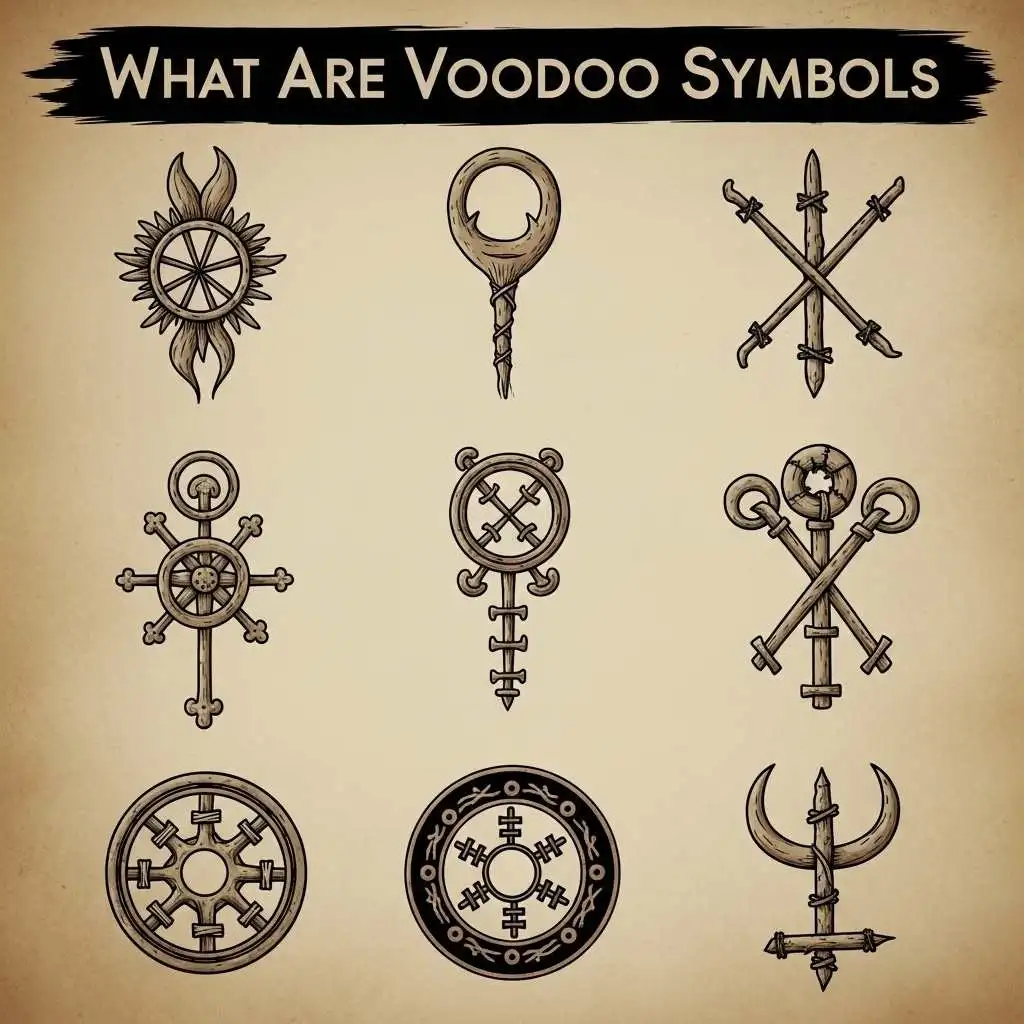
Voodoo symbols, more accurately known as veves, are sacred ritual drawings used in the religion of Haitian Vodou and related African diaspora traditions. These intricate line designs serve as spiritual gateways. Practitioners draw them on the ground using cornmeal, ash, flour, or powder during ceremonies.
The word voodoo itself comes from the Fon word vodun, meaning spirit or deity. The religion developed in Haiti during the colonial period when enslaved Africans blended West African spiritual systems with elements of Catholicism. Despite Hollywood myths, Vodou is not about dark magic or curses. It is a complex spiritual system rooted in healing, ancestor reverence, and community.
Each voodoo symbol represents a specific spirit called a Lwa. When a veve is drawn, it invites that spirit into the ceremony. Think of it as dialing a sacred number. The symbol becomes the spiritual address.
Deep Symbolic Meaning
On a Spiritual Level
Spiritually, voodoo symbols are bridges between the visible and invisible worlds. Practitioners believe that when the veve is drawn with intention and prayer, it opens a pathway for divine energy. The symbol is not just art. It is a living spiritual signature.
For example, the veve of Papa Legba represents the guardian of crossroads. Before any ceremony begins, his symbol is drawn first. Without him, communication with other spirits cannot happen. The crossroads itself symbolizes choice, destiny, and spiritual transition.
On a Psychological Level
Psychologically, symbols speak to the unconscious mind. The human brain naturally responds to patterns, repetition, and geometry. Voodoo symbols combine curves, crosses, circles, and sacred symmetry. These shapes trigger emotional reactions.
When someone sees a veve, they may feel awe, curiosity, or even fear. That reaction reveals how deeply symbols influence perception. Carl Jung called this the power of archetypes. Voodoo symbols tap into ancient human memory, where lines and shapes meant survival, protection, or divine presence.
On a Cultural Level
Culturally, voodoo symbols represent resilience. Enslaved Africans were stripped of language and homeland, yet they preserved their spiritual identity through symbols. Veves became silent resistance. They carried memory when words were forbidden.
Every line drawn in cornmeal held history. Every curve whispered survival.
Types and Variations of Voodoo Symbols
Each voodoo symbol corresponds to a specific Lwa. Here are some of the most important ones.
1. Papa Legba Veve
Visual Description: A crossroad shape combined with a walking cane, keys, and sometimes a sun.
Meaning: Gatekeeper of the spirit world, opener of doors.
Where It Appears: Haitian Vodou ceremonies, ritual drawings, spiritual altars.
Papa Legba stands at every spiritual doorway. His symbol reflects balance between worlds. The crossroad reminds us that every decision shapes destiny.
2. Erzulie Freda Veve
Associated with Erzulie Freda
Visual Description: A heart shape adorned with intricate curls and sometimes a crown.
Meaning: Love, beauty, luxury, feminine power.
Where It Appears: Love rituals, relationship blessings, artistic interpretations.
Her veve often resembles a decorated heart. It reflects romantic longing and emotional depth.
3. Baron Samedi Veve
Linked to Baron Samedi
Visual Description: A cross combined with a coffin shape and skull motifs.
Meaning: Death, transformation, rebirth, humor in darkness.
Where It Appears: Funerary rites, spiritual art, popular culture imagery.
Despite fear based stereotypes, Baron Samedi represents the natural cycle of life and death. His symbol acknowledges mortality while honoring spiritual continuity.
4. Damballa Veve
Connected to Damballa
Visual Description: Two intertwined serpents forming curves and loops.
Meaning: Creation, purity, wisdom, ancestral power.
Where It Appears: Ceremonial spaces, sacred drawings, spiritual tattoos.
The serpent here is not evil. It symbolizes life force and cosmic energy.
5. Ogou Veve
Related to Ogou
Visual Description: A sword or machete combined with geometric lines.
Meaning: War, strength, protection, leadership.
Where It Appears: Protection rituals, cultural art, symbolic jewelry.
Ogou represents courage and action. His symbol radiates authority.
Voodoo Symbols Across Cultures
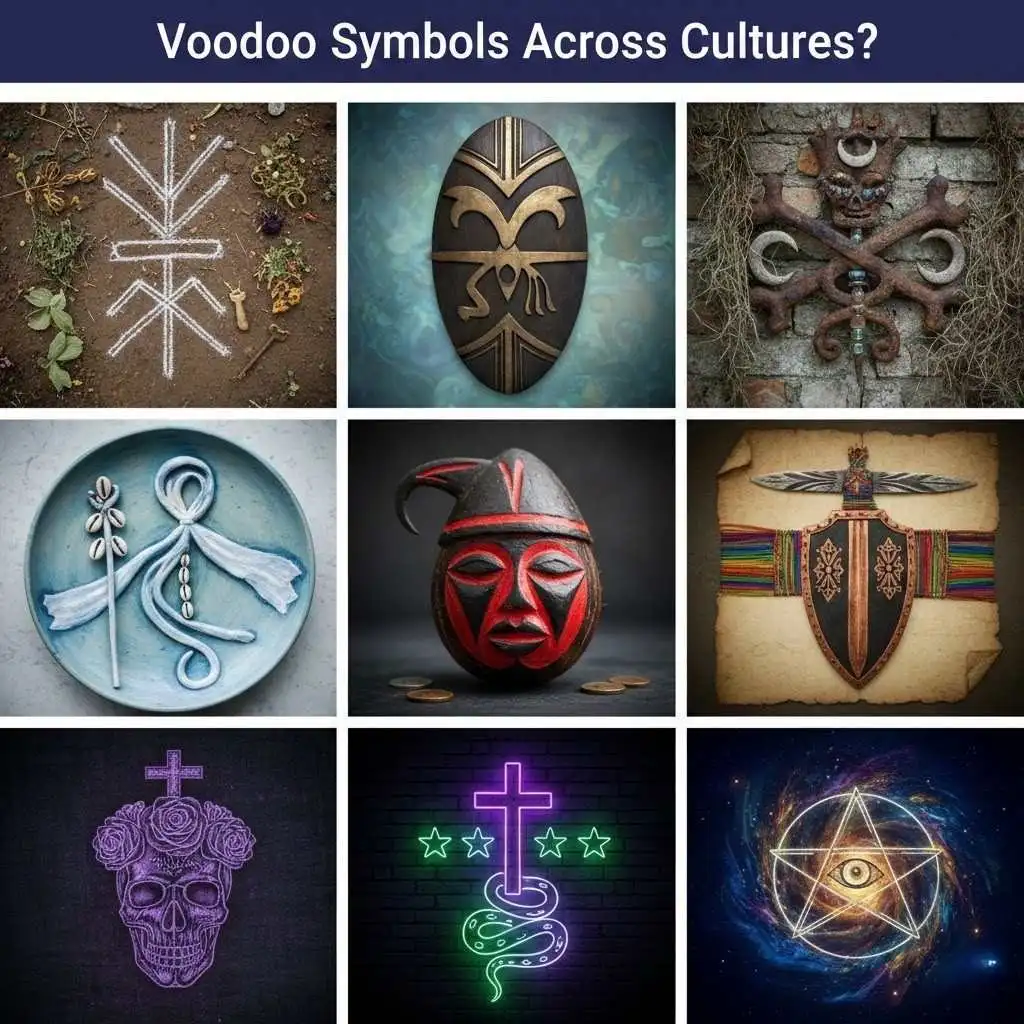
West Africa
Vodun began in regions such as modern day Benin and Togo. Symbols there honored nature spirits, ancestors, and divine forces. These signs were part of daily life, not secret magic.
Haiti
In Haiti, Vodou merged African spirituality with Catholic imagery. Saints became visual parallels for Lwa. For example, Papa Legba is often associated with Saint Peter because both hold keys.
Louisiana
In New Orleans, voodoo blended with folk magic traditions. Figures like Marie Laveau became cultural legends. Symbols appeared in charms, rituals, and spiritual services.
Caribbean and Brazil
In Cuba and Brazil, related traditions like Santería and Candomblé use sacred markings similar in function though visually distinct. The core idea remains the same. Symbols channel divine energy.
Modern Global Spirituality
Today, voodoo symbols appear worldwide. Some people use them respectfully in spiritual practice. Others adopt them as artistic motifs without understanding their sacred roots.
Voodoo Symbols in Art, Movies and Pop Culture
Hollywood has often misrepresented voodoo symbols. Films portray them as tools of dark magic. This stereotype shaped global misunderstanding.
However, artists and scholars now reclaim their beauty and spiritual depth. Voodoo symbols appear in:
- Fantasy films as mystical markings
- Gothic fashion as mysterious patterns
- Tattoos representing protection or transformation
- Contemporary paintings exploring identity and ancestry
- Books that explore Afro Caribbean spirituality
In pop culture, Baron Samedi’s image influenced characters in films like Live and Let Die. Yet the cinematic portrayal often exaggerates darkness while ignoring sacred meaning.
When used respectfully, voodoo symbols in art celebrate heritage. When used carelessly, they distort truth.
Spiritual and Dream Meaning of Voodoo Symbols
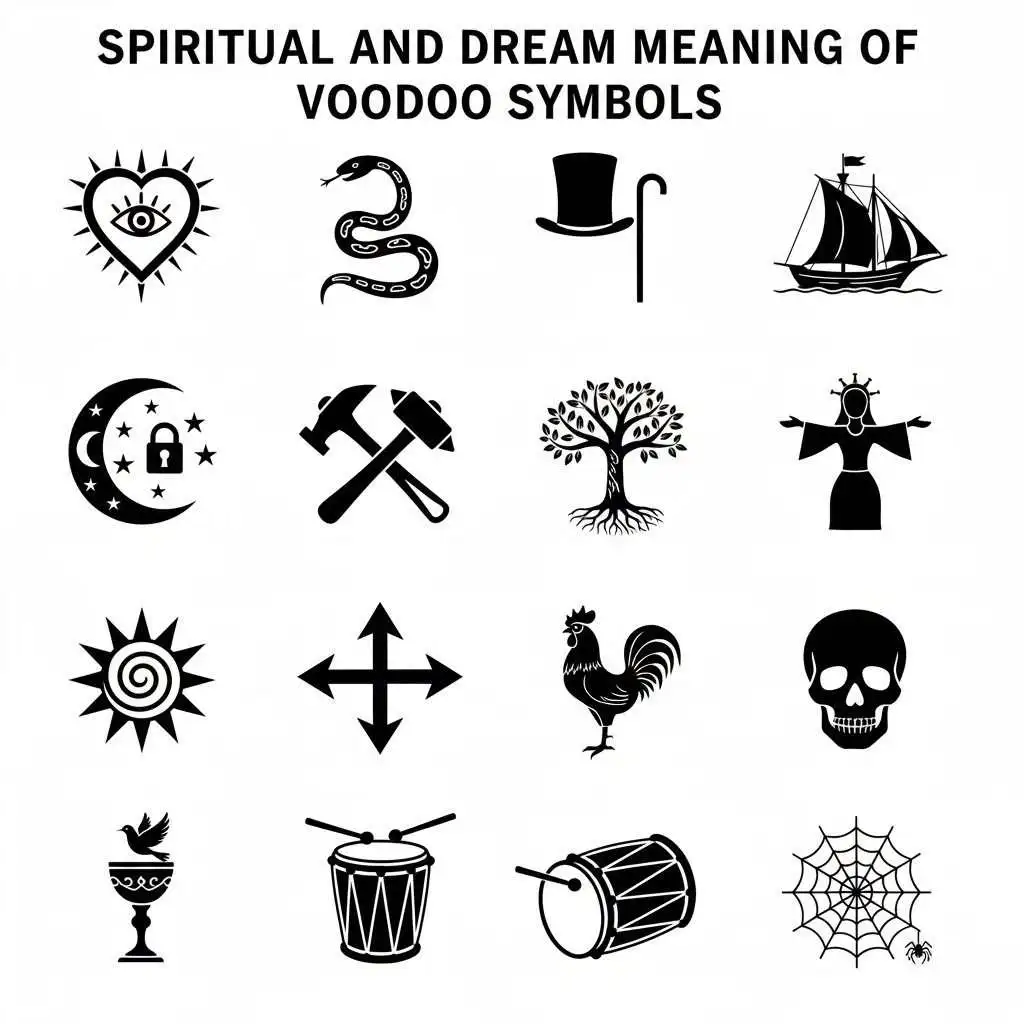
Seeing voodoo symbols in dreams often reflects spiritual awakening or confrontation with hidden emotions.
- A crossroads symbol may signal an important life decision.
- A serpent veve may symbolize healing or transformation.
- A coffin or cross may represent endings that lead to new beginnings.
During meditation, some people report visualizing sacred geometric patterns similar to veves. The mind naturally creates symbols to process spiritual experience.
The key is intention. In Vodou practice, a symbol without intention is only powder on the ground. With intention, it becomes sacred.
Positive vs Negative Meaning
Like many spiritual symbols, voodoo symbols hold dual interpretation.
Positive Meaning
- Protection
- Healing
- Love
- Guidance
- Ancestral connection
Negative Interpretation
- Fear due to cultural misunderstanding
- Association with curses in popular media
- Colonial narratives that demonized African spirituality
The symbol itself is neutral. Meaning depends on belief, context, and intention.
Why Humans Are Attracted to Voodoo Symbols
Humans are drawn to mystery. We are wired to search for hidden patterns.
Voodoo symbols combine:
- Sacred geometry
- Spiritual storytelling
- Cultural resilience
- Emotional depth
They feel ancient because they are. They feel powerful because generations poured faith into them.
There is also a psychological thrill in exploring what society once labeled forbidden. When people research voodoo symbols, they are often seeking deeper connection, identity, or empowerment.
At the core, these symbols remind us that the unseen world still matters.
Frequently Asked Questions About Voodoo Symbols
Are voodoo symbols evil
No. Voodoo symbols are sacred ritual designs in Haitian Vodou. Misconceptions largely come from movies and colonial propaganda.
What are veves in voodoo
Veves are ceremonial drawings that represent specific Lwa spirits. They serve as spiritual invitations during rituals.
Can anyone draw voodoo symbols
While anyone can copy the design, in traditional practice they are drawn by trained practitioners within sacred ceremony.
What does the voodoo cross mean
The cross in Vodou often represents crossroads and spiritual connection, not the Christian concept of suffering.
Are voodoo symbols used for protection
Yes. Many veves are used for protection, healing, love, and guidance depending on the Lwa invoked.
Conclusion
Voodoo symbols are not shadows of darkness but living echoes of faith, survival, and spiritual wisdom. They carry the memory of ancestors who refused to let their beliefs disappear. Each line drawn in powder tells a story of resilience and sacred connection.
When you look at a voodoo symbol now, you no longer see mystery alone. You see history, psychology, culture, and spirit woven together. And perhaps you see something even deeper. A reminder that symbols shape human destiny, and that the invisible world has always spoken through signs.

Freddie Wood
Hi! I’m Freddie Wood, a storyteller at heart and a lifelong explorer of ideas. Writing has always been my way of making sense of the world, turning ordinary moments into stories that linger in your mind. I love blending emotions with adventure, and I’m fascinated by the way words can connect people across distances and experiences. When I’m not writing, you’ll find me wandering through nature, listening to music, or sketching out ideas for my next story. My goal is always to create books that stay with readers long after the last page.
Books by Freddie Wood:
-
The Hidden Path
-
Shadows of Tomorrow