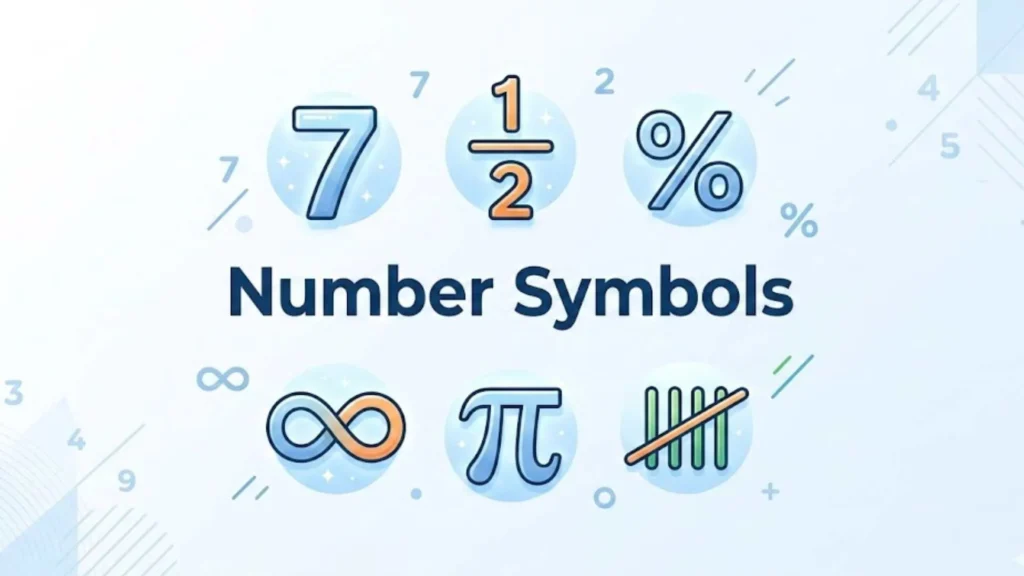
“Number symbols” shape your life more than you realize. From the moment you glance at a clock to the numbers printed on a door, they quietly whisper patterns, destiny, order and meaning.
Across history, number symbols have carried spiritual messages, sacred geometry, and powerful psychological influence.
This guide uncovers the hidden layers behind numbers and reveals meanings you may have felt but never fully understood.
What Are Number Symbols?
Number symbols are visual representations of numerical values that carry both mathematical function and symbolic meaning. At the simplest level, they are digits like 0, 1, 2, 3, and so on. But beyond counting and calculation, humans have attached stories, emotions, and spiritual significance to them for thousands of years.
Ancient civilizations did not see numbers as mere tools. In places like Ancient Egypt and Ancient Greece, numbers represented cosmic order. Philosophers such as Pythagoras believed numbers formed the foundation of reality itself. To him, numbers were sacred vibrations that shaped the universe.
Over time, number symbols evolved across cultures, religions, mathematics, mysticism, and art. They became bridges between logic and mystery.
Deep Symbolic Meaning
Spiritual Level
On a spiritual level, number symbols represent divine structure. Many belief systems see numbers as messages from a higher consciousness.
- 1 symbolizes unity and divine source.
- 3 often represents harmony of mind, body, and spirit.
- 7 is linked to spiritual awakening and divine completion.
- 8 reflects infinity and cosmic balance.
Sacred texts, rituals, and architecture use numbers deliberately. Repetition of certain numbers in prayer or meditation creates rhythm and meaning.
Psychological Level
Psychologically, humans crave patterns. Numbers provide predictability in a chaotic world. When someone repeatedly notices a specific number, such as 11 or 444, it feels personal. The brain seeks significance and assigns meaning.
Numbers offer comfort. They suggest structure. They create a sense of destiny. That emotional pull is powerful.
Cultural Level
Culturally, number symbols reflect shared beliefs.
In some cultures, 13 represents bad luck. In others, 8 symbolizes wealth and prosperity. These meanings influence decisions, building designs, wedding dates, and even phone numbers.
Numbers shape traditions quietly yet deeply.
Types and Variations of Number Symbols
1. Single Digit Symbols
Visual Description: 0 through 9
Meaning: Core archetypes of human experience
Where They Appear: Numerology, astrology, sacred geometry
Each single digit carries symbolic depth. For example:
- 0 represents emptiness and potential.
- 1 represents leadership.
- 2 symbolizes duality.
- 3 stands for creativity.
- 4 reflects stability.
- 5 signifies freedom.
- 6 connects to responsibility.
- 7 symbolizes spirituality.
- 8 represents abundance.
- 9 reflects completion.
2. Master Numbers
Visual Description: 11, 22, 33
Meaning: Heightened spiritual vibration
Where They Appear: Numerology systems
Master numbers are considered powerful because they amplify the energy of their base digits. 11 symbolizes intuition. 22 represents mastery and manifestation. 33 reflects compassion and spiritual service.
3. Sacred Numbers
Visual Description: Numbers repeatedly appearing in sacred texts
Meaning: Divine order and cosmic alignment
Where They Appear: Religious scripture, architecture
Examples include 3, 7, 12, and 40.
4. Mathematical Symbols with Hidden Meaning
Symbols like ∞ also carry symbolic weight. The infinity sign reflects eternal flow and endless cycles of existence.
Number Symbols Across Cultures
Ancient Egypt
In Ancient Egypt, numbers represented cosmic balance. The number 3 symbolized completeness. Architecture of pyramids reflected numerical harmony.
Ancient Greece
Philosophers like Pythagoras believed the universe operated through mathematical ratios. Music, geometry, and astronomy followed numerical law.
China
In China, number symbolism remains powerful. The number 8 sounds like prosperity in Mandarin. Buildings and phone numbers featuring 8 are highly valued.
India
In India, numbers connect to karma, cosmic cycles, and sacred texts. The number 108 appears frequently in meditation beads and spiritual practices.
Western Culture
In Western societies, 7 symbolizes luck and perfection. Meanwhile, 13 often carries fear due to historical superstition.
Across cultures, number symbols serve as emotional anchors.
Number Symbols in Art, Movies and Pop Culture
Numbers appear everywhere in storytelling.
In literature and film, certain numbers signal mystery or fate. The number 3 shapes fairy tales. Heroes often face three trials. The number 7 appears in titles and themes that imply destiny.
In tattoos, number symbols often represent birthdates, angel numbers, or life turning points. Athletes wear numbers that shape identity. Fashion brands use numbers to create symbolism and exclusivity.
Even blockbuster movies embed hidden number patterns to create suspense and deeper meaning.
Numbers silently shape narrative structure.
Spiritual and Dream Meaning of Number Symbols
When numbers appear in dreams, many interpret them as subconscious signals.
Dreaming of 1 may suggest independence. Seeing repeating numbers may symbolize alignment or guidance. Spiritual seekers often interpret recurring number patterns as intuitive messages.
In meditation, focusing on number repetition calms the mind and strengthens awareness. Sacred chants use numerical cycles to create rhythm and depth.
Numbers become bridges between the conscious and subconscious.
Positive vs Negative Meaning
Number symbols carry dual energy.
- 8 can symbolize wealth but also material obsession.
- 13 can represent transformation yet trigger fear.
- 9 symbolizes completion but may signal endings.
The same number can inspire hope or anxiety depending on context and belief.
Numbers themselves are neutral. Meaning emerges from human perception.
Why Humans Are Attracted to Number Symbols
Humans seek order. The universe appears chaotic, yet numbers create predictability.
From childhood, we count steps, candles, birthdays. Numbers measure growth and mark time. They become emotional milestones.
Psychologists suggest that pattern recognition helped humans survive. When we see repeating numbers, we instinctively pay attention. It feels significant.
Numbers promise structure. Structure feels safe.
That emotional reassurance explains our deep attraction to number symbols.
FAQs About Number Symbols
What do number symbols represent spiritually?
They represent divine order, cosmic balance, and energetic vibrations tied to spiritual growth.
Why do I keep seeing repeating numbers?
Many believe repeating numbers signal alignment, intuition, or subconscious awareness of patterns.
Are number symbols universal?
Basic digits are universal, but symbolic meanings vary across cultures and belief systems.
What is the most powerful number symbol?
It depends on tradition. In numerology, master numbers like 11 and 22 hold strong spiritual influence.
Do numbers have psychological effects?
Yes. Humans naturally attach emotional meaning to patterns, which can influence perception and behavior.
Conclusion
Number symbols are more than mathematical marks. They are emotional codes, spiritual metaphors, and cultural mirrors. They connect logic with mystery. They shape architecture, art, belief, and identity.
When you notice a number repeating in your life, pause. Ask what it might mean to you. Beneath every digit lies a story waiting to be discovered.
Numbers may count time, but they also count meaning.

Julian Shaw
I’ve always been fascinated by the small, quiet stories that make life feel magical. Writing allows me to explore worlds that exist just beyond the everyday, where imagination meets reality. Over the years, I’ve found joy in creating characters that feel real and stories that stay with readers long after the last page. When I’m not writing, you can usually find me wandering through city streets, notebook in hand, capturing little sparks of inspiration. I believe every story has the power to connect us, to make us feel a little less alone. Sharing these tales is my way of leaving a mark on the world.
Books:
-
Whispers in the Wind
-
Shadows of Tomorrow