KKK symbols carry a heavy emotional weight that reaches far beyond shapes or colors.
They reflect fear, power, identity and trauma woven into human history.
Understanding these symbols is not about glorifying hate but about uncovering how imagery can shape minds, manipulate emotions and leave scars across generations.
What Are KKK Symbols?
KKK symbols refer to the visual signs, emblems, and imagery historically used by the Ku Klux Klan, a white supremacist extremist group formed in the United States after the Civil War. These symbols were designed to communicate power, unity, intimidation, and ideological control without words.
From burning crosses to secret emblems, these images played a central role in spreading fear, enforcing racial hierarchy, and creating a shared identity among members. Over time, they became widely recognized markers of hatred and racial violence.
Deep Symbolic Meaning
Spiritual Level
On a spiritual level, KKK symbols often twist sacred imagery into tools of domination. For example, the misuse of the cross strips it of compassion and turns it into an object of terror. This distortion reflects how spirituality can be corrupted when power replaces empathy.
Psychological Level
Psychologically, these symbols rely on fear conditioning. Repeated exposure links an image to threat and violence, embedding trauma deeply into collective memory. For supporters, the symbols create a false sense of belonging and superiority.
Cultural Level
Culturally, KKK symbols represent oppression, exclusion, and historical injustice. They are reminders of how visual language can reinforce social systems and normalize cruelty when left unchallenged.
Types and Variations of KKK Symbols
The Burning Cross
Visual description: A large wooden cross set on fire
Meaning: Intimidation and terror masked as religious authority
Where it appears: Historical acts of violence, propaganda, collective memory
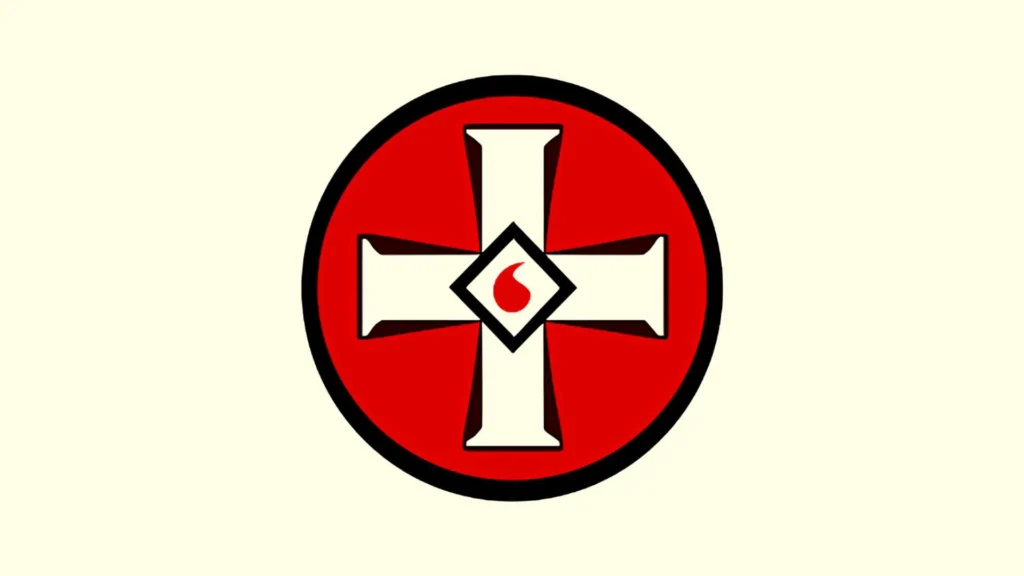
The Blood Drop Cross
Visual description: A red drop centered within a cross
Meaning: A distorted claim of sacrifice and racial purity
Where it appears: KKK flags, robes, and printed materials
White Robes and Hoods
Visual description: Full white garments with pointed hoods
Meaning: Anonymity, false purity, and group identity
Where it appears: Public marches, photographs, films
Klan Emblems and Seals
Visual description: Circular seals with crosses and slogans
Meaning: Authority, secrecy, and internal hierarchy
Where it appears: Membership documents, banners, insignia
KKK Symbols Across Cultures
In the United States, these symbols are inseparable from racial terror and segregation. In Europe, they are widely viewed as extremist hate imagery tied to imported ideologies. In modern global culture, they often appear in academic contexts as warnings about radicalization. In digital spaces, they serve as signals within extremist networks. Across cultures, the meaning remains overwhelmingly negative and cautionary.
KKK Symbols in Art, Movies, and Pop Culture
Films and literature often use KKK symbols to portray evil, injustice, or historical trauma. Artists reframe them to expose hypocrisy and provoke reflection. In fashion and tattoos, their appearance sparks controversy and social rejection, reinforcing how symbols carry consequences beyond personal intent.
Spiritual and Dream Meaning of KKK Symbols
When these symbols appear in dreams or meditation, they usually reflect inner conflict, fear, unresolved trauma, or confrontation with injustice. Psychologists interpret such imagery as the mind processing threats or moral tension rather than spiritual guidance.
Positive vs Negative Meaning
There is no positive meaning rooted in the original intent of KKK symbols. Any attempt to reinterpret them positively ignores the harm they represent. Their negative meaning comes from lived history, violence, and suffering, not abstract symbolism.
Why Humans Are Drawn to Symbols Like These
Humans are drawn to symbols because they simplify complex ideas into powerful images. Extremist groups exploit this instinct, using symbols to create identity, loyalty, and emotional control. Understanding this attraction helps societies resist manipulation and protect vulnerable minds.
FAQs
What do KKK symbols represent today?
They represent hate, racial violence, and extremist ideology.
Are KKK symbols illegal?
Laws vary by country, but many places restrict their use in public spaces.
Why is the burning cross so powerful?
It combines religious imagery with fear, amplifying psychological impact.
Do KKK symbols still appear today?
Yes, mostly in extremist circles, online spaces, and historical references.
Can these symbols have innocent meanings?
No, their historical context defines their meaning.
Why study KKK symbols at all?
Education helps prevent repetition of harm and counters extremism.
Conclusion
KKK symbols are not just relics of the past. They are lessons written in fear, pain, and resistance.
By understanding their meaning, we reclaim power from hate and choose awareness over ignorance. Knowledge does not erase history, but it helps ensure history does not repeat itself.

Nora Bennett
Nora Bennett is a storyteller at heart, always finding magic in the everyday moments of life. From a young age, she discovered the joy of weaving emotions into words, creating characters that feel like old friends. Writing, for her, is both an adventure and a sanctuary—a way to explore the world and herself. She loves connecting with readers who share her passion for heartfelt stories and unforgettable journeys. When she’s not crafting her next tale, Nora enjoys quiet mornings with a cup of coffee and a notebook full of ideas. Her stories are meant to inspire, comfort, and spark imagination in everyone who reads them.
Books:
-
Whispers of Yesterday
-
Echoes of Tomorrow