
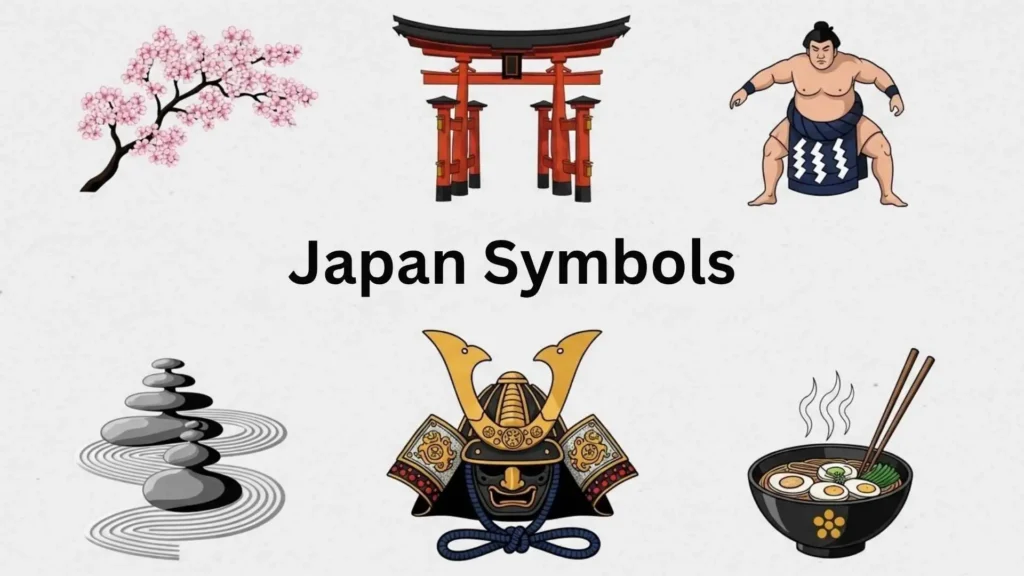
“Japan symbols” carry a quiet magic that speaks to the soul in ways words often cannot.
From ancient shrines to modern tattoos, these symbols whisper stories of honor, nature, and inner strength. They shape how people see life, death, love, and destiny.
In this guide, you will uncover meanings so deep and beautiful that you may never look at Japan the same way again.
What Are Japan Symbols?
Japan symbols are visual signs, motifs, and emblems deeply rooted in Japanese history, religion, and daily life. They appear in art, architecture, clothing, literature, and even modern design.
Many of these symbols come from ancient traditions such as Shinto and Buddhism. Others evolved through centuries of storytelling, nature worship, and cultural refinement.
In Japan, symbols are not just decorative. They carry meaning, emotion, and identity. A single flower, animal, or pattern can represent life’s fleeting beauty or a warrior’s unbreakable spirit.
Deep Symbolic Meaning
Japan symbols are layered with meaning that touches every part of human experience.
Spiritual Level
Many symbols connect humans to the divine. For example, the torii gate marks the boundary between the physical world and the sacred realm. It reminds people that something greater exists beyond what we see.
Psychological Level
Symbols like the cherry blossom reflect the fragile nature of life. They teach acceptance, helping people cope with change, loss, and growth.
Cultural Level
These symbols shape identity. They appear in festivals, family crests, and national identity, influencing how people see themselves and their place in the world.
Types of Japan Symbols
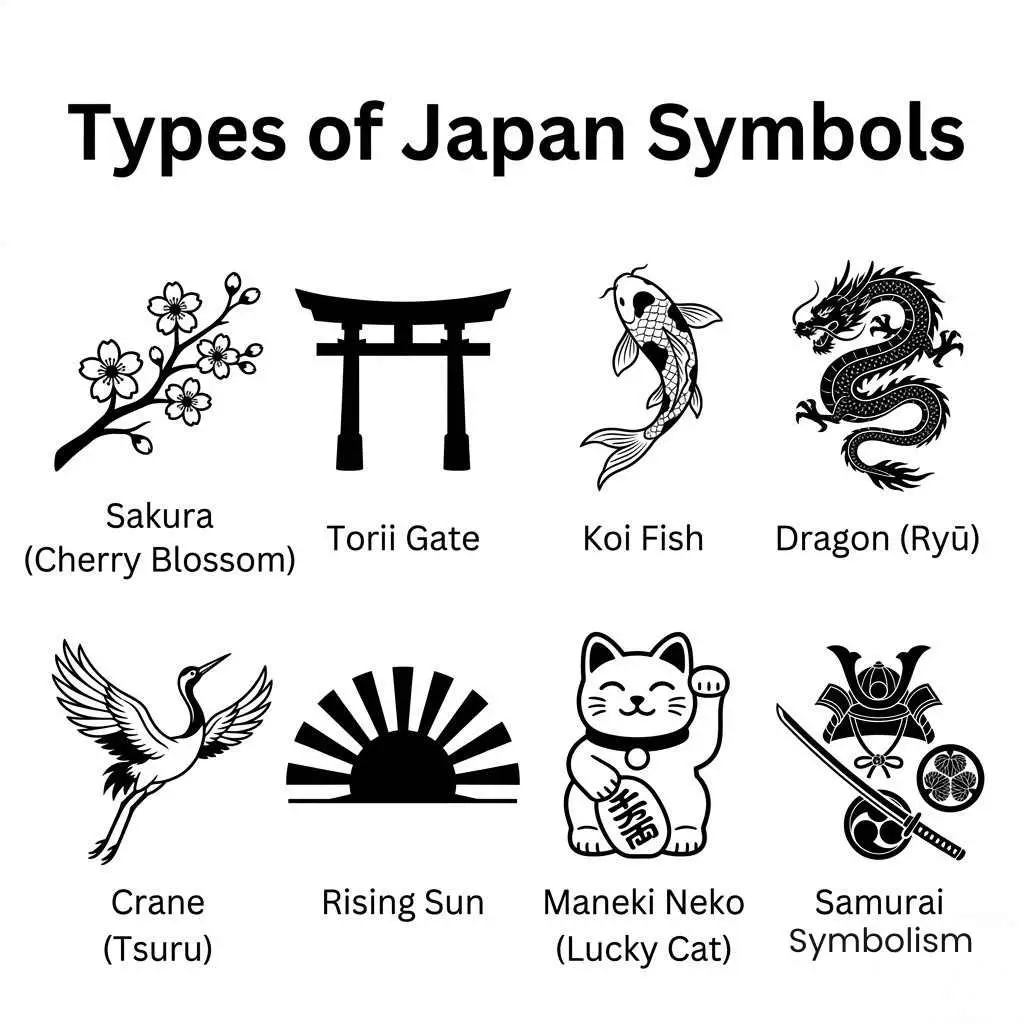
Japan has hundreds of symbols, but some stand out for their deep meanings and widespread use.
1. Sakura (Cherry Blossom)
- Visual: Soft pink or white blossoms
- Meaning: Beauty, impermanence, new beginnings
- Where It Appears: Festivals, art, poetry, tattoos
The sakura blooms briefly, then falls. It reflects life’s fleeting moments and encourages people to live fully.
2. Torii Gate
- Visual: Two vertical pillars with a horizontal top beam
- Meaning: Transition from ordinary to sacred
- Where It Appears: Shrines, especially in Japan
Walking through a torii feels like stepping into another world.
3. Koi Fish
- Visual: Colorful, flowing fish
- Meaning: Perseverance, courage, transformation
- Where It Appears: Tattoos, gardens, mythology
A koi swimming upstream symbolizes overcoming life’s struggles.
4. Dragon (Ryū)
- Visual: Serpentine creature with claws
- Meaning: Power, wisdom, protection
- Where It Appears: Temples, folklore, art
Unlike Western dragons, Japanese dragons are often protectors, not destroyers.
5. Crane (Tsuru)
- Visual: Elegant white bird with long wings
- Meaning: Longevity, peace, good fortune
- Where It Appears: Origami, weddings, folklore
Legend says folding 1,000 cranes grants a wish.
6. Rising Sun
- Visual: Red sun with rays
- Meaning: Energy, renewal, national identity
- Where It Appears: Flag, historical imagery
It reflects Japan’s nickname as the Land of the Rising Sun.
7. Maneki Neko (Lucky Cat)
- Visual: Cat with raised paw
- Meaning: Luck, wealth, prosperity
- Where It Appears: Shops, homes, businesses
This friendly figure invites success and good fortune.
8. Samurai Symbolism
- Visual: Armor, swords, crests
- Meaning: Honor, discipline, loyalty
- Where It Appears: History, films, literature
The spirit of the samurai still shapes modern values.
Japan Symbols Across Cultures
Japan symbols have influenced and been interpreted by many cultures.
China
Dragons and koi fish originated in Chinese mythology but gained unique meanings in Japan, emphasizing harmony rather than dominance.
Korea
Shared Buddhist symbols often represent enlightenment and balance, though with regional artistic differences.
Western Culture
Cherry blossoms now symbolize mindfulness and self-reflection, especially in modern wellness culture.
Ancient Japan
Symbols were tied to nature and gods, especially in Shinto beliefs.
Modern Global Culture
Today, Japanese symbols appear in tattoos, branding, and digital art, often representing strength and beauty.
Japan Symbols in Art, Movies and Pop Culture
Japan symbols have become global icons through storytelling and media.
Movies
Films like Spirited Away use spirits, nature symbols, and mythological creatures to express transformation and identity.
Art
Traditional ukiyo-e prints often feature waves, cranes, and landscapes filled with symbolism.
Books
Japanese literature uses symbols to explore themes of loss, honor, and fleeting beauty.
Tattoos
Koi fish, dragons, and cherry blossoms are popular tattoo designs representing personal journeys.
Fashion
Modern fashion blends traditional patterns with contemporary style, keeping symbols alive in everyday life.
Spiritual and Dream Meaning of Japan Symbols
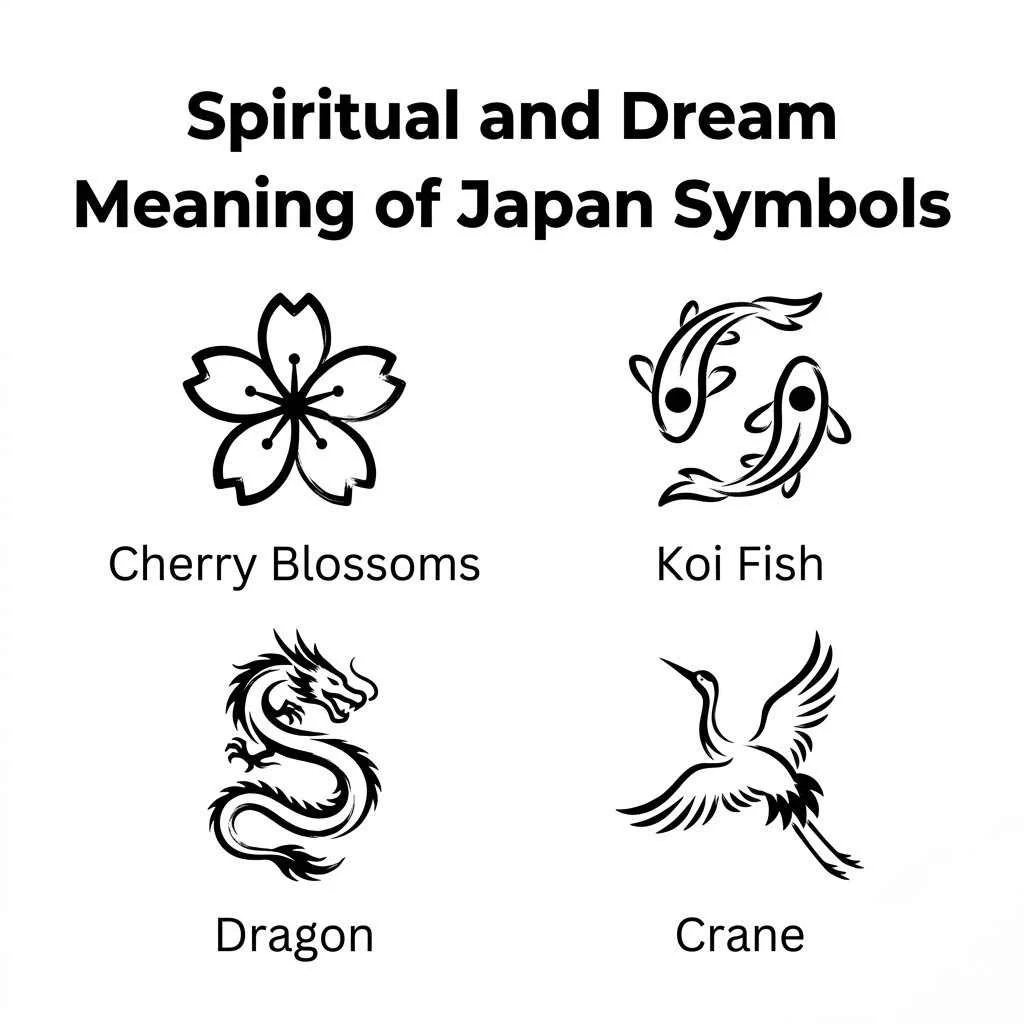
Seeing Japan symbols in dreams or meditation often carries deep personal meaning.
- Cherry Blossoms: A reminder that life is short, urging appreciation of the present
- Koi Fish: You are overcoming challenges or entering a transformation
- Dragon: Inner strength is awakening
- Crane: Peace, healing, or long life is approaching
These symbols often appear during emotional turning points in life.
Positive vs Negative Meaning
Every symbol carries both light and shadow.
| Symbol | Positive Meaning | Negative Meaning |
| Sakura | Beauty, renewal | Fragility, loss |
| Dragon | Power, protection | Destruction if uncontrolled |
| Koi Fish | Perseverance | Endless struggle |
| Rising Sun | Hope, energy | Aggression in historical context |
This duality reflects life itself, where meaning depends on perspective.
Why Humans Are Attracted to Japan Symbols
Humans are drawn to Japan symbols because they feel alive.
They connect deeply with nature, something modern life often lacks. A simple flower or fish becomes a mirror of our emotions.
Psychologically, symbols help us process complex feelings. Instead of explaining pain, we see it in falling petals. Instead of describing strength, we imagine a dragon rising.
Emotionally, these symbols offer comfort. They remind us that change is natural, struggle has purpose, and beauty exists even in endings.
FAQs
What is the most famous Japan symbol?
The cherry blossom is one of the most iconic symbols, representing beauty and the fleeting nature of life.
What does the koi fish symbolize in Japan?
It symbolizes perseverance, strength, and transformation, especially when facing challenges.
Are Japanese symbols religious?
Many come from Shinto and Buddhism, but they are also widely used in everyday culture.
Why are cranes important in Japan?
Cranes symbolize peace, longevity, and hope, often linked to wishes and healing.
What does the dragon mean in Japanese culture?
It represents wisdom, power, and protection rather than danger.
Conclusion
Japan symbols are more than images. They are quiet storytellers, carrying centuries of wisdom in their shapes and forms. They teach us that life is both fragile and powerful, fleeting yet meaningful.
When you look at a falling cherry blossom or a rising dragon, you are not just seeing art. You are witnessing a reflection of your own journey, your struggles, and your growth.
And perhaps that is why these symbols never fade. They live on because they live within us.

Julian Shaw
I’ve always been fascinated by the small, quiet stories that make life feel magical. Writing allows me to explore worlds that exist just beyond the everyday, where imagination meets reality. Over the years, I’ve found joy in creating characters that feel real and stories that stay with readers long after the last page. When I’m not writing, you can usually find me wandering through city streets, notebook in hand, capturing little sparks of inspiration. I believe every story has the power to connect us, to make us feel a little less alone. Sharing these tales is my way of leaving a mark on the world.
Books:
-
Whispers in the Wind
-
Shadows of Tomorrow