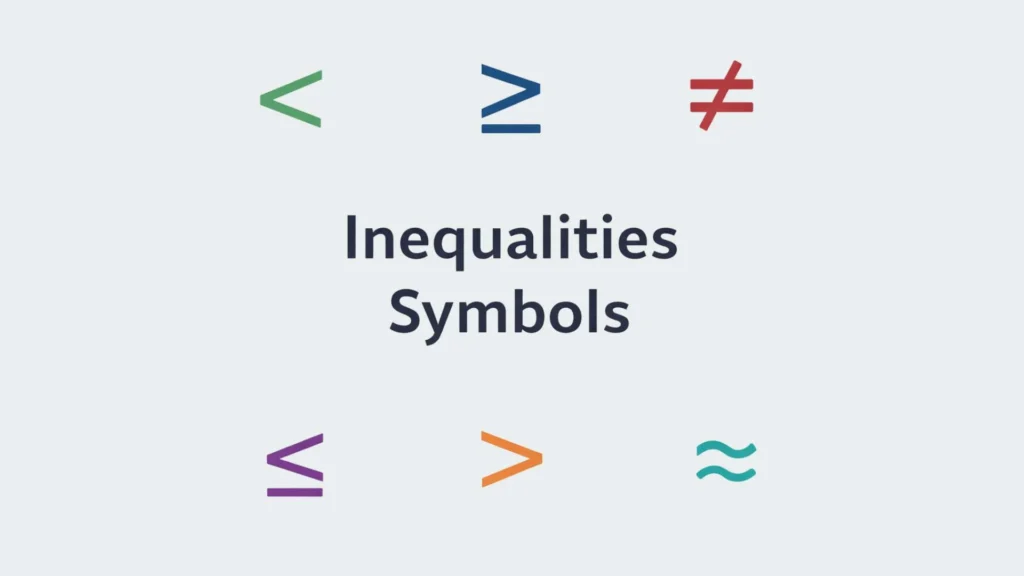
“Inequalities Symbols”quietly shape the way you understand fairness, power, success and limitation from the classroom to real life.
From ancient philosophies to modern mathematics and social justice movements, these simple signs carry emotional weight far beyond numbers.
This article uncovers the deep meanings behind inequalities symbols and reveals why they continue to influence how humans think, feel and judge the world around them.
What Are Inequalities Symbols?
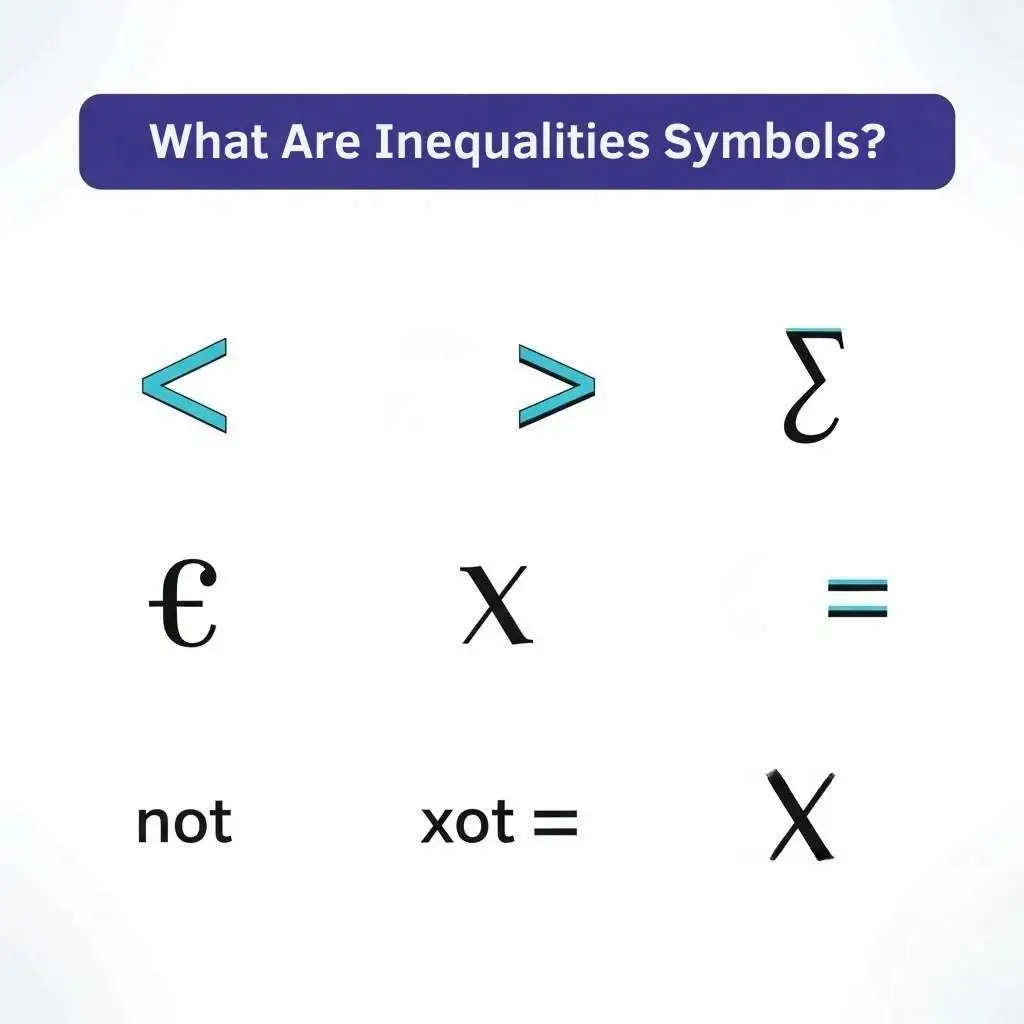
Inequalities symbols are visual signs used to show that two values or ideas are not equal in size, power, status, or worth. In mathematics, they compare numbers. In culture and psychology, they express imbalance, dominance, exclusion, and desire.
Historically, these symbols evolved as humans began measuring land, trade, time, and social rank. Ancient civilizations needed ways to show more and less, higher and lower, enough and not enough. Over time, inequalities symbols became a universal language that reflects both logic and emotion.
They matter because inequality is not just a math concept. It is a human experience.
Deep Symbolic Meaning of Inequalities Symbols
Spiritual Meaning
On a spiritual level, inequalities symbols represent imbalance in energy and consciousness. They remind you that growth often begins when something feels uneven. Many spiritual traditions teach that awareness starts when harmony breaks and forces reflection and change.
Psychological Meaning
Psychologically, inequalities symbols tap into comparison. The human mind constantly measures progress, success, and worth. Seeing greater than or less than triggers feelings of ambition, insecurity, motivation, or fear. These symbols mirror the inner dialogue people carry every day.
Cultural Meaning
Culturally, inequalities symbols reflect power structures. They appear wherever society ranks people, ideas, or values. From wealth gaps to social hierarchies, these symbols quietly echo stories of privilege and struggle.
Types and Variations of Inequalities Symbols
1. Greater Than Symbol
Visual description: A pointed angle opening to the right
Meaning: One side holds more value or power
Where it appears: Mathematics, economics, social commentary, tattoos symbolizing ambition
2. Less Than Symbol
Visual description: A pointed angle opening to the left
Meaning: Limitation, humility, or lack
Where it appears: Education, philosophy, minimalist art, personal growth symbolism
3. Greater Than or Equal To Symbol
Visual description: Greater than sign with a line beneath
Meaning: Achievement with stability or minimum fulfillment
Where it appears: Science, law, contracts, ethical boundaries
4. Less Than or Equal To Symbol
Visual description: Less than sign with a line beneath
Meaning: Acceptance, restraint, or defined limits
Where it appears: Meditation concepts, legal frameworks, design logic
5. Not Equal Symbol
Visual description: Equal sign crossed by a diagonal line
Meaning: Rebellion, uniqueness, rejection of sameness
Where it appears: Activism, art movements, fashion statements
Inequalities Symbols Across Cultures
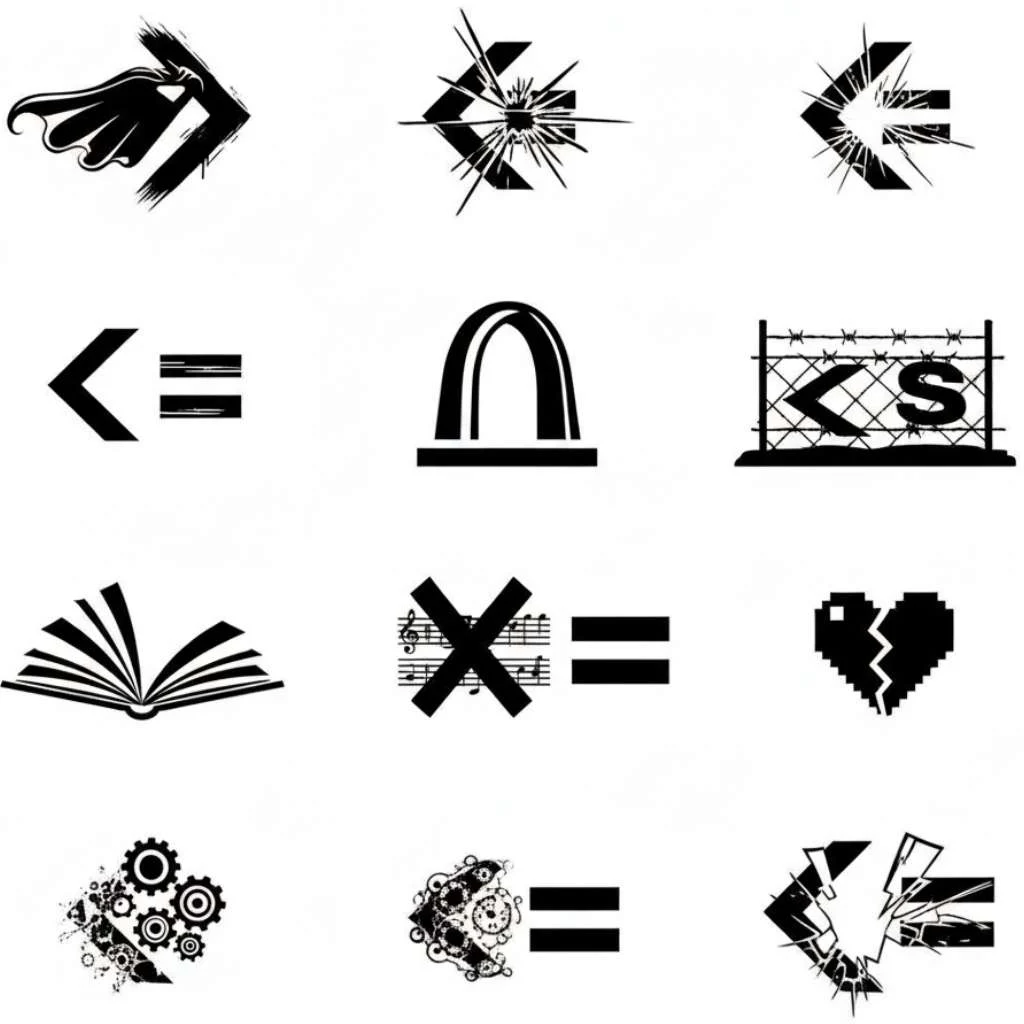
Ancient Greece
Greek philosophers viewed inequality as natural order. Greater and lesser reflected balance in nature and reason.
Ancient China
In Taoist thought, imbalance drives transformation. Inequality was seen as movement rather than failure.
Medieval Europe
Inequality symbols aligned with class systems and divine order. Hierarchy was considered sacred and fixed.
Indigenous Cultures
Many Indigenous traditions emphasized imbalance as a warning sign. Harmony was the goal and inequality signaled disruption.
Modern Global Culture
Today, inequalities symbols often represent social justice issues, economic gaps, and calls for equity and awareness.
Inequalities Symbols in Art, Movies, and Pop Culture
In films, inequality often drives conflict. Stories thrive on imbalance between power and vulnerability. Visual cues echo greater and lesser themes through lighting, framing, and character arcs.
Artists use inequality symbols to challenge norms and provoke emotion. A crossed equal sign in street art can represent resistance. In tattoos, these symbols express ambition, humility, or personal boundaries.
Fashion embraces inequality through asymmetry, intentionally breaking balance to create meaning and identity.
Spiritual and Dream Meaning of Inequalities Symbols
Seeing inequalities symbols in dreams often reflects internal comparison. It can signal feeling undervalued or striving for more. In meditation, these symbols may appear as reminders to restore balance or accept limits.
Spiritually, they suggest a lesson unfolding. Growth comes from recognizing imbalance and responding with awareness.
Positive vs Negative Meaning of Inequalities Symbols
Positive meanings include motivation, progress, and self awareness. They can inspire growth and clarity.
Negative meanings include division, injustice, and emotional insecurity. They may reflect fear of inadequacy or unfair treatment.
The meaning depends on perception and context rather than the symbol alone.
Why Humans Are Attracted to Inequalities Symbols
Humans are drawn to inequalities symbols because comparison is wired into survival. Early humans needed to judge more food, less danger, higher ground. Today, the same instinct fuels ambition, creativity, and emotional storytelling.
These symbols simplify complex feelings into clear visuals. They make invisible struggles visible and understandable.
Frequently Asked Questions About Inequalities Symbols
What do inequalities symbols mean in simple terms?
They show that two things are not the same and one has more or less value.
Are inequalities symbols only used in math?
No. They appear in psychology, art, culture, and social commentary.
Why do inequalities symbols feel emotional?
They trigger comparison, ambition, and self worth instincts.
What does the not equal symbol represent culturally?
It often represents individuality, resistance, and nonconformity.
Can inequalities symbols have spiritual meaning?
Yes. They often symbolize imbalance that leads to growth.
Why are inequalities symbols popular in tattoos?
People use them to express ambition, limits, or personal values.
Conclusion
Inequalities symbols are far more than mathematical tools. They reflect how humans see difference, value, power, and growth.
These simple shapes carry centuries of emotional, cultural, and spiritual meaning. When you notice them again, you may see not just numbers but a mirror of human experience itself.

Julian Shaw
I’ve always been fascinated by the small, quiet stories that make life feel magical. Writing allows me to explore worlds that exist just beyond the everyday, where imagination meets reality. Over the years, I’ve found joy in creating characters that feel real and stories that stay with readers long after the last page. When I’m not writing, you can usually find me wandering through city streets, notebook in hand, capturing little sparks of inspiration. I believe every story has the power to connect us, to make us feel a little less alone. Sharing these tales is my way of leaving a mark on the world.
Books:
-
Whispers in the Wind
-
Shadows of Tomorrow