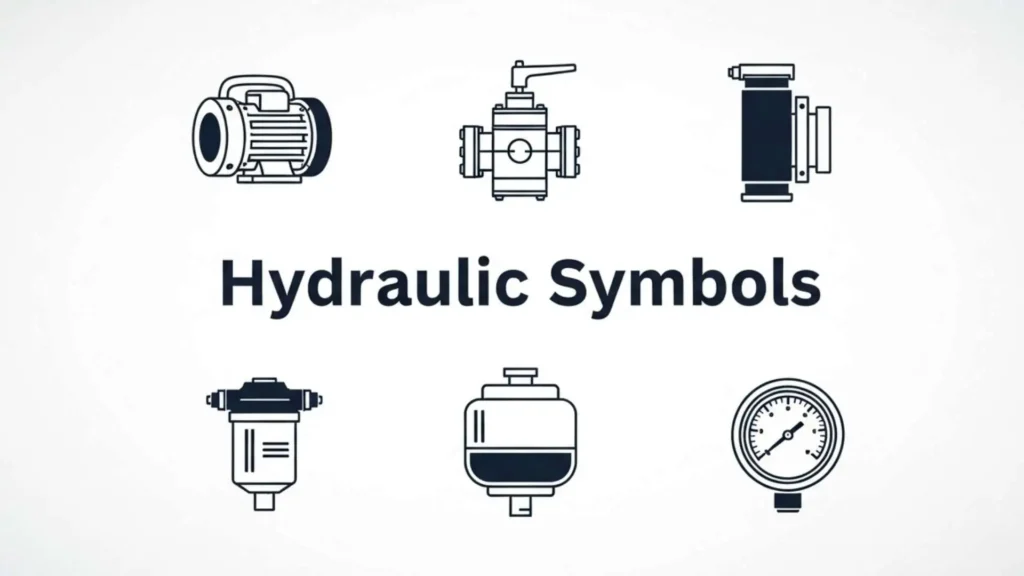
“Hydraulic symbols” quietly run the systems that move our world, yet most people never notice them.
From massive construction machines to delicate medical tools, these tiny drawings guide powerful forces.
They are more than technical marks, they are a universal language of motion, control, and precision.
Once you understand them, you begin to see the hidden intelligence behind everyday machines.
What Are Hydraulic Symbols?
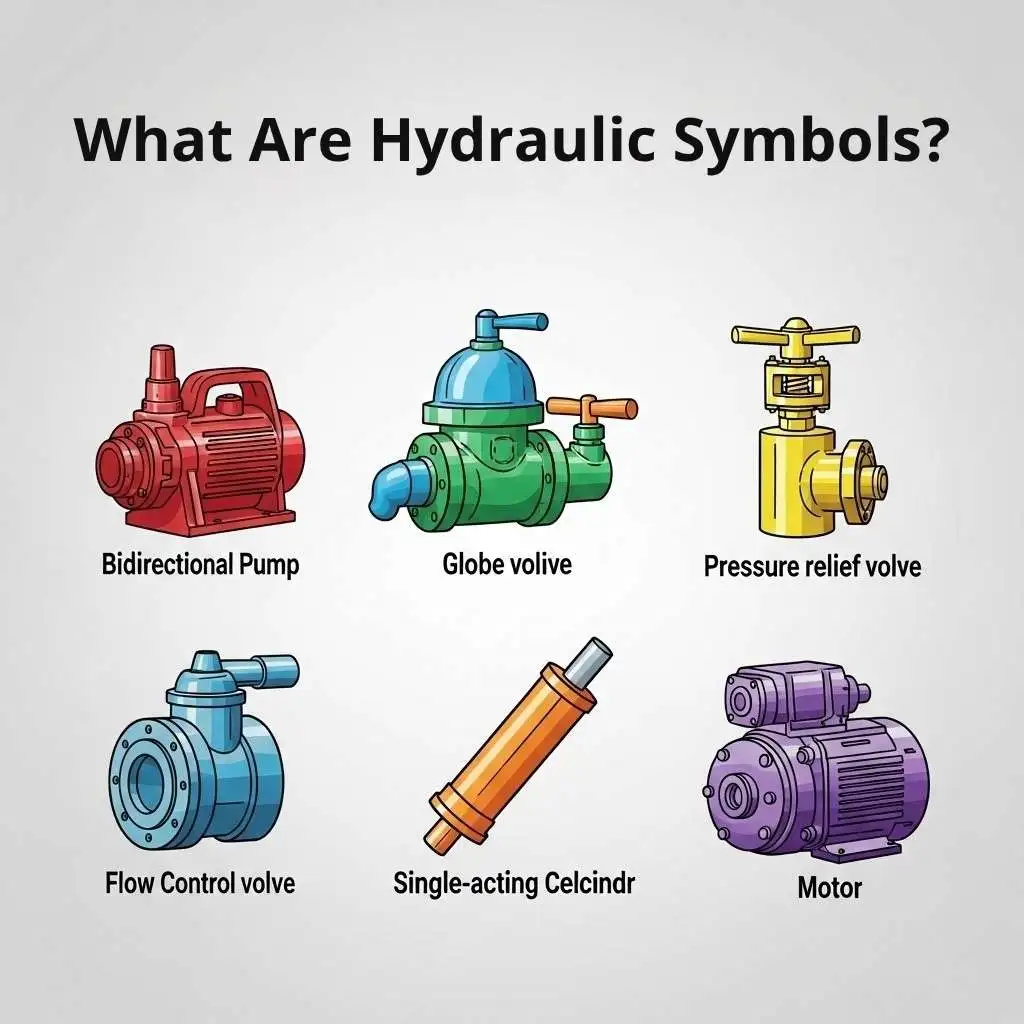
Hydraulic symbols are simple graphical representations used to describe components and systems in hydraulic engineering. Instead of writing long explanations, engineers use these symbols to show how fluids flow, where pressure builds, and how machines operate.
They date back to the industrial revolution when complex machinery needed a clear and universal way to communicate design. Over time, organizations like ISO standardized these symbols so engineers across the world could understand each other without confusion.
In simple terms, hydraulic symbols are the blueprint language of fluid power systems. They turn complex mechanical ideas into clean, readable diagrams.
Deep Symbolic Meaning
At first glance, hydraulic symbols seem purely technical. But when you look deeper, they reflect something much more human.
On a spiritual level, they represent flow, balance, and unseen energy. Just like water moves through pipes, life energy moves through us. When flow is blocked, systems fail. When it moves freely, everything works in harmony.
On a psychological level, hydraulic systems mirror human emotions. Pressure builds when feelings are suppressed. Release valves act like emotional expression, preventing breakdown. Control valves reflect decision making, guiding direction and outcome.
Culturally, these symbols represent human progress. They show how we learned to control nature, harness power, and build civilizations. They are proof of human creativity and problem solving.
Types and Variations of Hydraulic Symbols
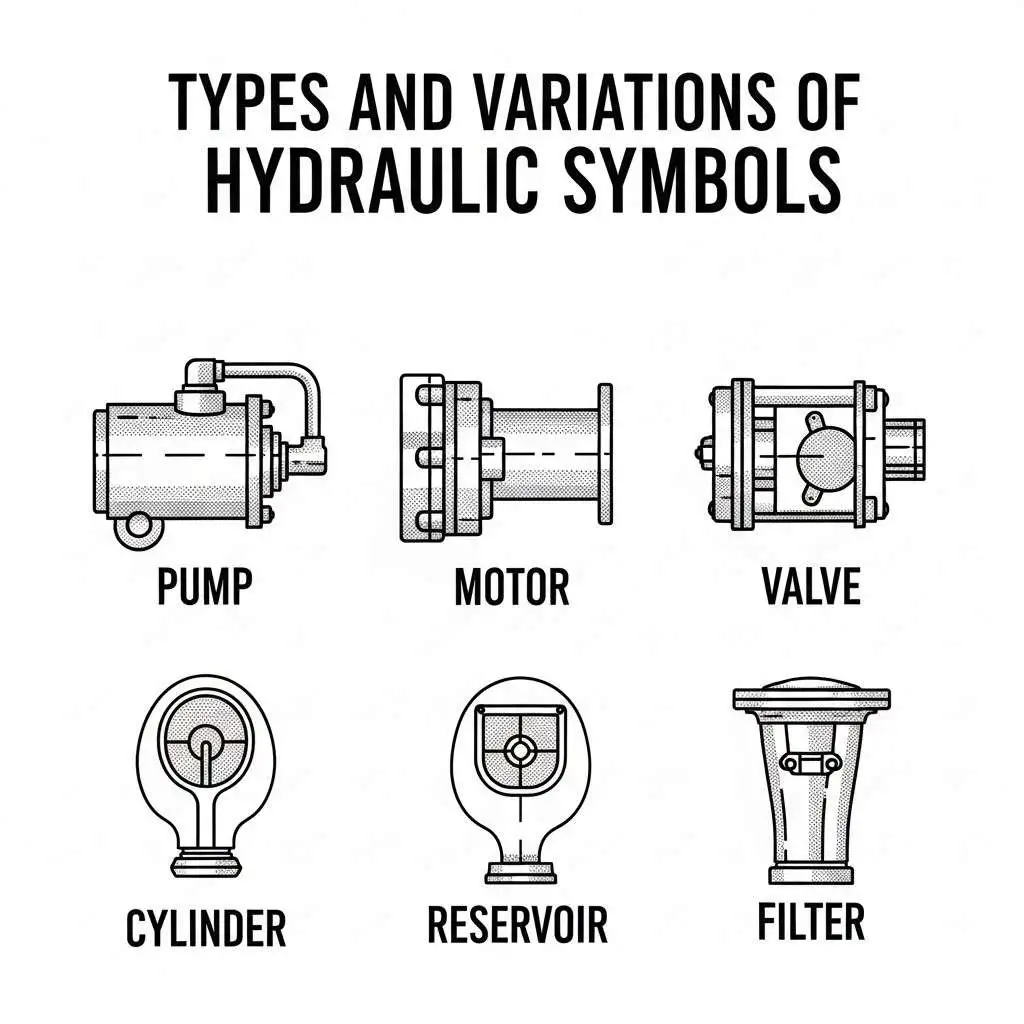
Hydraulic symbols come in many forms, each representing a specific function. Understanding them is like learning the alphabet of machines.
Pump Symbol
A circle with an arrow pointing outward. It shows energy being added to the system. Pumps represent creation and movement, the starting point of action.
Motor Symbol
A circle with an arrow pointing inward. It shows energy being used. Motors symbolize transformation, turning fluid power into mechanical motion.
Valve Symbols
Squares with arrows and lines. They control the direction, pressure, and flow of fluid. Valves represent choice and control, deciding where energy goes.
Cylinder Symbol
A rectangle with a piston line inside. It represents linear motion. Cylinders symbolize force and action, turning energy into movement.
Reservoir Symbol
An open container shape. It stores fluid. Reservoirs symbolize rest, storage, and recovery.
Filter Symbol
A line with a zigzag or mesh pattern. It cleans the fluid. Filters represent purity, removing unwanted elements.
Each symbol may look simple, but together they create complex systems that power industries.
Hydraulic Symbols Across Cultures
Even though hydraulic symbols are modern, the ideas behind them connect with ancient cultures.
In ancient Egypt, water systems were used for irrigation. Flow and control were essential for survival. The idea of directing water mirrors modern hydraulic systems.
In Greek civilization, philosophers spoke about balance and natural flow. Hydraulic principles reflect these same ideas of harmony and equilibrium.
In Chinese culture, the concept of Qi energy flowing through the body is similar to fluid movement in systems. Blockages cause imbalance, just like in hydraulics.
During the medieval period, water mills used early hydraulic principles to grind grain. These systems represented progress and innovation.
In modern culture, hydraulic symbols are part of global engineering language, connecting people across countries and industries.
Hydraulic Symbols in Art, Movies and Pop Culture
Hydraulic symbols are not just for engineers. They quietly appear in creative spaces too.
In movies, complex machines often use hydraulic systems to create movement and tension. The unseen symbols behind these systems represent control and power.
In paintings and industrial art, pipelines and mechanical diagrams inspire futuristic designs. Artists use these elements to show human connection with machines.
In books, technical diagrams sometimes appear in science fiction, representing advanced technology and intelligence.
In tattoos, some people choose mechanical or geometric designs inspired by hydraulic systems. These tattoos symbolize strength, control, and inner power.
In fashion, industrial aesthetics use clean lines and structured designs that reflect the precision of engineering systems.
Spiritual and Dream Meaning of Hydraulic Symbols
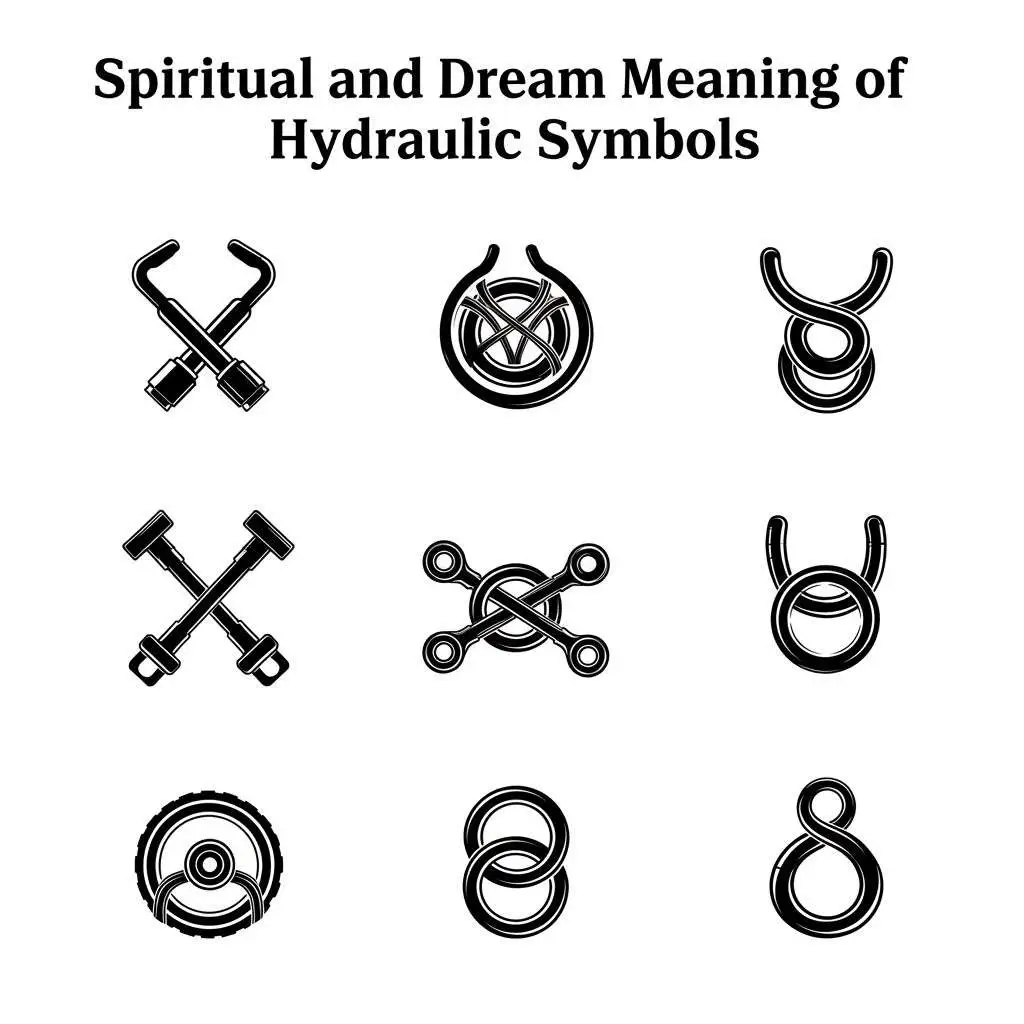
Seeing hydraulic symbols in dreams can feel unusual, but they carry deep meaning.
If you dream of flowing systems, it may represent emotional balance and smooth progress in life.
If you see blocked or leaking systems, it may reflect stress, pressure, or unresolved emotions.
Valves in dreams can symbolize decision making. Opening a valve may mean releasing emotions or taking action.
Pumps may represent new energy or motivation entering your life.
These dreams often connect with how you manage pressure, control, and flow in your daily life.
Positive vs Negative Meaning
Like many symbols, hydraulic symbols carry both positive and negative meanings.
On the positive side, they represent control, efficiency, strength, and progress. They show how humans can harness power and create order.
On the negative side, they can represent pressure, restriction, and overload. Too much pressure in a system leads to failure, just like stress in life.
Balance is the key. When systems are well designed, they work smoothly. When they are not, problems arise.
Why Humans Are Attracted to This Symbol
People are naturally drawn to hydraulic symbols because they reflect something deeply familiar.
We all experience pressure, flow, and control in our lives. These symbols mirror our inner world in a mechanical form.
There is also a sense of beauty in their simplicity. Clean lines, clear shapes, and precise meaning create a visual language that feels satisfying.
They also represent power. Knowing how something works gives a sense of control and confidence.
In a way, hydraulic symbols connect logic and emotion. They are technical, yet deeply human.
FAQs
What are hydraulic symbols used for
They are used to represent hydraulic components and systems in diagrams so engineers can design and understand machinery easily.
Are hydraulic symbols universal
Yes, most hydraulic symbols follow international standards like ISO, making them understandable worldwide.
Why are hydraulic symbols important
They simplify complex systems, reduce errors, and help engineers communicate clearly.
Can beginners learn hydraulic symbols easily
Yes, with practice and basic understanding, anyone can learn to read and use them.
Do hydraulic symbols have deeper meanings
While they are technical, they also reflect ideas like flow, control, and balance, which connect to human experiences.
Conclusion
Hydraulic symbols may seem small and technical, but they carry a powerful story. They represent flow, control, and the invisible forces that move our world. From ancient water systems to modern machines, they reflect human intelligence and creativity.
When you look at them closely, they are not just symbols on paper. They are a language of motion, a map of energy, and a reflection of life itself. Understanding them changes how you see machines and maybe even how you understand your own inner flow.

Nora Bennett
Nora Bennett is a storyteller at heart, always finding magic in the everyday moments of life. From a young age, she discovered the joy of weaving emotions into words, creating characters that feel like old friends. Writing, for her, is both an adventure and a sanctuary—a way to explore the world and herself. She loves connecting with readers who share her passion for heartfelt stories and unforgettable journeys. When she’s not crafting her next tale, Nora enjoys quiet mornings with a cup of coffee and a notebook full of ideas. Her stories are meant to inspire, comfort, and spark imagination in everyone who reads them.
Books:
-
Whispers of Yesterday
-
Echoes of Tomorrow