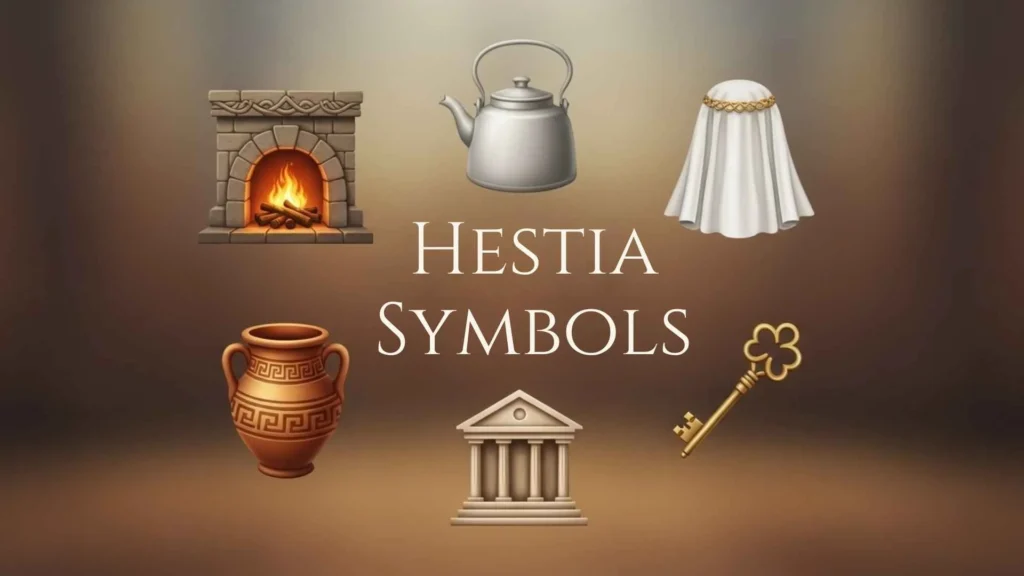
“Hestia symbols” carry a quiet power that most people overlook, yet they live in every warm home, every glowing candle, every place where peace feels real.
They whisper of belonging, safety, and the deep human need for connection. Across centuries, these symbols have guided families, shaped rituals and anchored civilizations.
What if the simplest flame you see holds ancient wisdom about your inner world?
This guide reveals the deeper meanings behind Hestia’s sacred symbols and why they still matter today.
What Are Hestia Symbols?
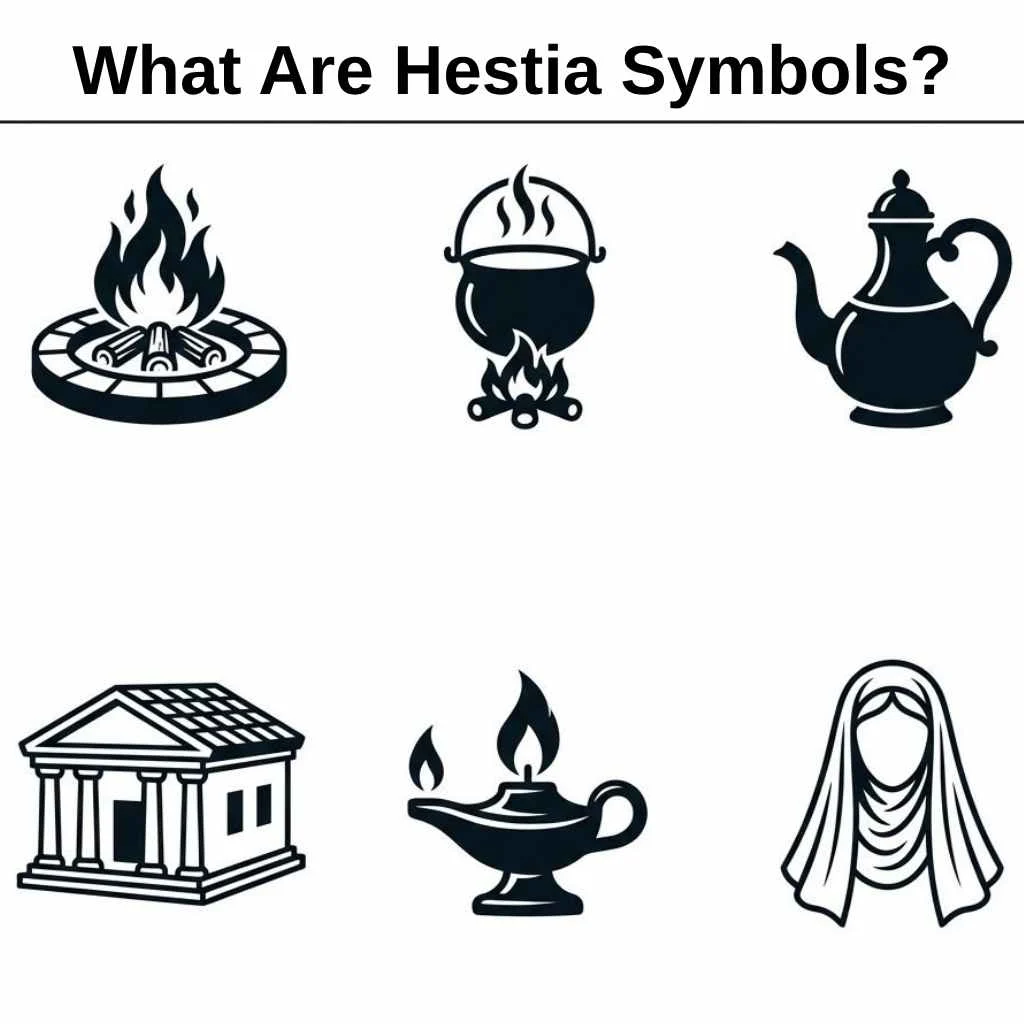
Hestia symbols are sacred representations connected to Hestia, the Greek goddess of the hearth, home, and domestic life in Greek mythology. She was one of the original Olympian deities, yet unlike others, she chose peace over power and remained centered in the home rather than the battlefield.
These symbols revolve around warmth, stability, and sacred space. In ancient Greece, every home and temple had a fire dedicated to Hestia. This flame was never allowed to go out because it represented life itself.
Historical Background
- In ancient Greek households, the hearth was the spiritual center.
- Cities maintained a public flame to symbolize unity.
- Colonies carried fire from their mother city to establish new settlements.
- Hestia was honored before and after every ritual offering.
Her symbols are not loud or aggressive. They are quiet, grounding, and deeply human.
Deep Symbolic Meaning of Hestia Symbols
Spiritual Meaning
Spiritually, Hestia symbols represent:
- Inner peace and stillness
- Sacred space and protection
- Divine feminine energy in its purest, calmest form
The eternal flame symbolizes the soul, always burning even in darkness. It teaches presence, mindfulness, and spiritual grounding.
Psychological Meaning
Psychologically, these symbols connect to:
- Emotional security
- The need for belonging
- Stability in chaos
Think about how you feel when you return home after a long day. That sense of relief mirrors Hestia’s symbolic energy.
Cultural Meaning
Culturally, Hestia symbols stand for:
- Family unity
- Hospitality and generosity
- The importance of home as a sacred space
In ancient societies, losing the hearth fire meant losing identity. It was more than heat. It was life.
Types and Variations of Hestia Symbols
1. The Sacred Flame
Visual: A steady, glowing fire
Meaning: Eternal life, purity, divine presence
Where it appears: Temples, rituals, homes, candles
The flame is Hestia’s most powerful symbol. It represents continuity and the unseen force that keeps life moving.
2. The Hearth
Visual: A central fireplace or fire pit
Meaning: Home, safety, nourishment
Where it appears: Ancient houses, cultural rituals
The hearth is where families gathered. It symbolizes emotional warmth, not just physical heat.
3. The Circle
Visual: A simple, unbroken circle
Meaning: Wholeness, unity, eternity
Where it appears: Ritual spaces, sacred geometry
Hestia’s circular hearth reflects harmony and balance. Nothing begins or ends.
4. The Veil
Visual: A covered or modest figure
Meaning: Modesty, inner power, sacred privacy
Where it appears: Artistic depictions of Hestia
The veil represents strength that does not need to be seen to exist.
5. The Kettle or Pot
Visual: A cooking vessel over fire
Meaning: Nourishment, transformation, care
Where it appears: Domestic rituals, folklore
It symbolizes how raw elements transform into sustenance, much like emotional growth.
Hestia Symbols Across Cultures
Ancient Greece
Hestia was central to every household. Her flame symbolized life, unity, and divine protection.
Ancient Rome
Hestia became Vesta. The Vestal Virgins maintained the sacred fire, ensuring the safety of Rome. The symbolism remained focused on purity and continuity.
Hindu Culture
The sacred fire in rituals, known as Agni, mirrors Hestia’s flame. Fire is seen as a messenger between humans and the divine.
Celtic Traditions
Goddesses like Brigid share similar symbolism. Fire represents inspiration, healing, and home.
Modern Interpretations
Today, Hestia symbols appear in:
- Minimalist home design
- Mindfulness practices
- Candle rituals and meditation
The meaning has shifted but the emotional core remains unchanged.
Hestia Symbols in Art, Movies and Pop Culture
Hestia may not dominate mainstream media, but her symbols quietly shape storytelling.
Movies
Scenes with fireplaces often represent:
- Safety after danger
- Emotional intimacy
- Family bonding
Art
Classical paintings show Hestia as calm and centered. Unlike other gods, she is not dramatic. Her stillness is her strength.
Books
In literature, the hearth often symbolizes:
- A place of return
- Emotional grounding
- The heart of a family
Tattoos
Common Hestia-inspired tattoos include:
- Small flames
- Circular symbols
- Minimalist hearth designs
They represent inner peace and personal sanctuary.
Fashion
Earth tones, warm colors, and layered fabrics reflect Hestia’s grounded energy. Comfort becomes a statement.
Spiritual and Dream Meaning of Hestia Symbols
Seeing Hestia symbols in dreams often signals a need for:
- Emotional healing
- Stability
- Reconnection with self
Common Dream Interpretations
- Flame burning brightly: Inner strength and clarity
- Fading fire: Emotional exhaustion or neglect
- Building a hearth: Desire for security or family connection
In meditation, visualizing a flame can help center the mind and reduce anxiety.
Positive vs Negative Meaning
Positive Aspects
- Peace and calm
- Emotional warmth
- Stability and grounding
- Spiritual connection
Negative Aspects
- Isolation or withdrawal
- Fear of change
- Over-attachment to comfort
- Avoidance of external challenges
Even warmth can become a cage if it keeps you from growth.
Why Humans Are Attracted to Hestia Symbols
Humans are naturally drawn to Hestia symbols because they reflect our deepest emotional needs.
Psychological Reasons
- We seek safety in an unpredictable world
- We crave belonging and connection
- We associate warmth with love
Fire has always been a survival tool. Over time, it became a symbol of emotional survival too.
Emotional Connection
A simple candle in a dark room changes how you feel. It softens fear. It creates calm. That is the essence of Hestia.
Her symbols remind us that power does not always roar. Sometimes, it glows quietly.
FAQs About Hestia Symbols
1. What is the main symbol of Hestia?
The sacred flame is the primary symbol, representing eternal life, purity, and the essence of home.
2. What do Hestia symbols represent spiritually?
They represent inner peace, sacred space, and a deep connection to the soul.
3. Are Hestia symbols still relevant today?
Yes, they appear in modern mindfulness, home design, and spiritual practices.
4. What does the hearth symbolize in mythology?
It symbolizes family, unity, nourishment, and emotional warmth.
5. Can Hestia symbols appear in dreams?
Yes, they often reflect emotional needs like stability, comfort, or healing.
6. Is Hestia associated with feminine energy?
Yes, she represents a calm, nurturing form of divine feminine power.
Conclusion
Hestia symbols are not loud or flashy, yet they hold some of the deepest truths about human life. They remind you that home is not just a place. It is a feeling you carry within. The flame, the hearth, the quiet circle of warmth all point to one truth: peace begins inside you.
In a world that constantly pushes for more, Hestia teaches you to pause, to breathe, and to return to what truly matters. Sometimes, the most powerful transformation starts with a single, steady flame.

Sophia Reed
Hi, I’m Sophia Reed, a storyteller at heart who finds magic in everyday moments. Ever since I could hold a pen, I’ve been weaving tales that explore love, courage, and the unexpected twists of life. Writing allows me to connect with readers on a deeper level, sharing emotions and experiences that resonate across worlds. When I’m not lost in my stories, you can find me wandering through quiet streets, sipping coffee, or dreaming up my next plot twist. I believe every story has the power to inspire, heal, and transport. Through my books, I hope to leave a piece of my imagination with you.
Books:
-
Whispers of the Heart
-
Shadows and Sunlight