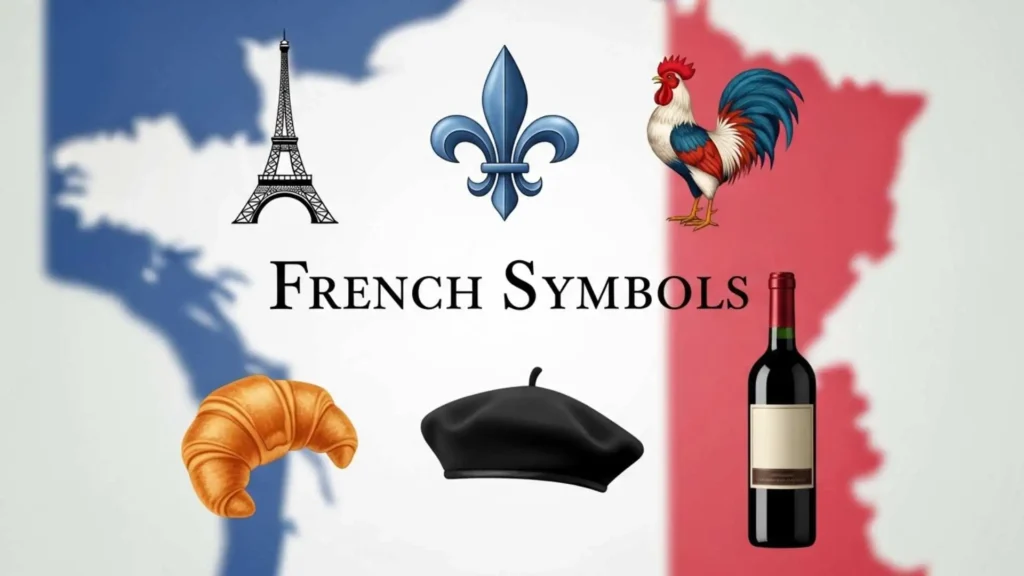
“French symbols” carry a quiet magic that whispers stories of love, revolution, faith and identity.
From ancient emblems to modern icons, these symbols are woven into the soul of France and its people.
They are not just images, they are emotions, beliefs, and memories shaped over centuries.
In this guide, you will uncover the deeper meanings behind french symbols and why they still captivate hearts around the world.
What Are French Symbols?
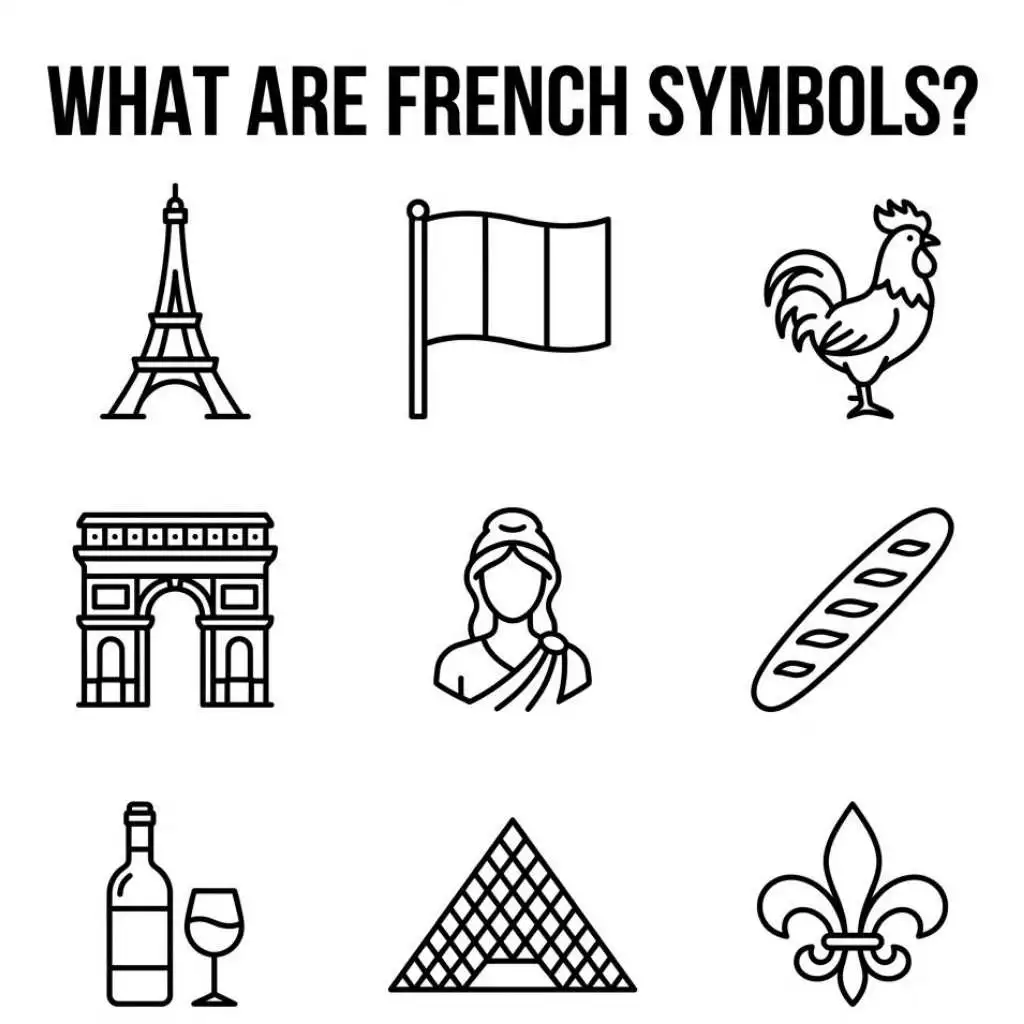
French symbols are visual signs, emblems, or motifs that represent the history, culture, beliefs, and identity of France. These symbols appear in art, architecture, religion, politics, and daily life.
Some date back to medieval times, while others emerged during powerful moments like the French Revolution. Each symbol carries a story, often tied to royalty, faith, resistance, or national pride.
For example, the fleur-de-lis reflects royal heritage, while the rooster symbolizes vigilance and courage. Over time, these symbols have evolved, yet their emotional and cultural significance remains strong.
Deep Symbolic Meaning
Spiritual Level
French symbols often connect to divine ideas such as purity, faith, and protection. The fleur-de-lis, for instance, has been linked to the Holy Trinity, representing spiritual harmony and divine guidance.
Psychological Level
On a deeper level, these symbols trigger feelings of identity, belonging, and pride. They remind people of their roots and values. A simple emblem can awaken a sense of strength, unity, or nostalgia.
Cultural Level
Culturally, french symbols represent shared history and collective memory. They reflect France’s journey through monarchy, revolution, and modern democracy. They are visual reminders of who the people are and where they come from.
Types and Variations of French Symbols
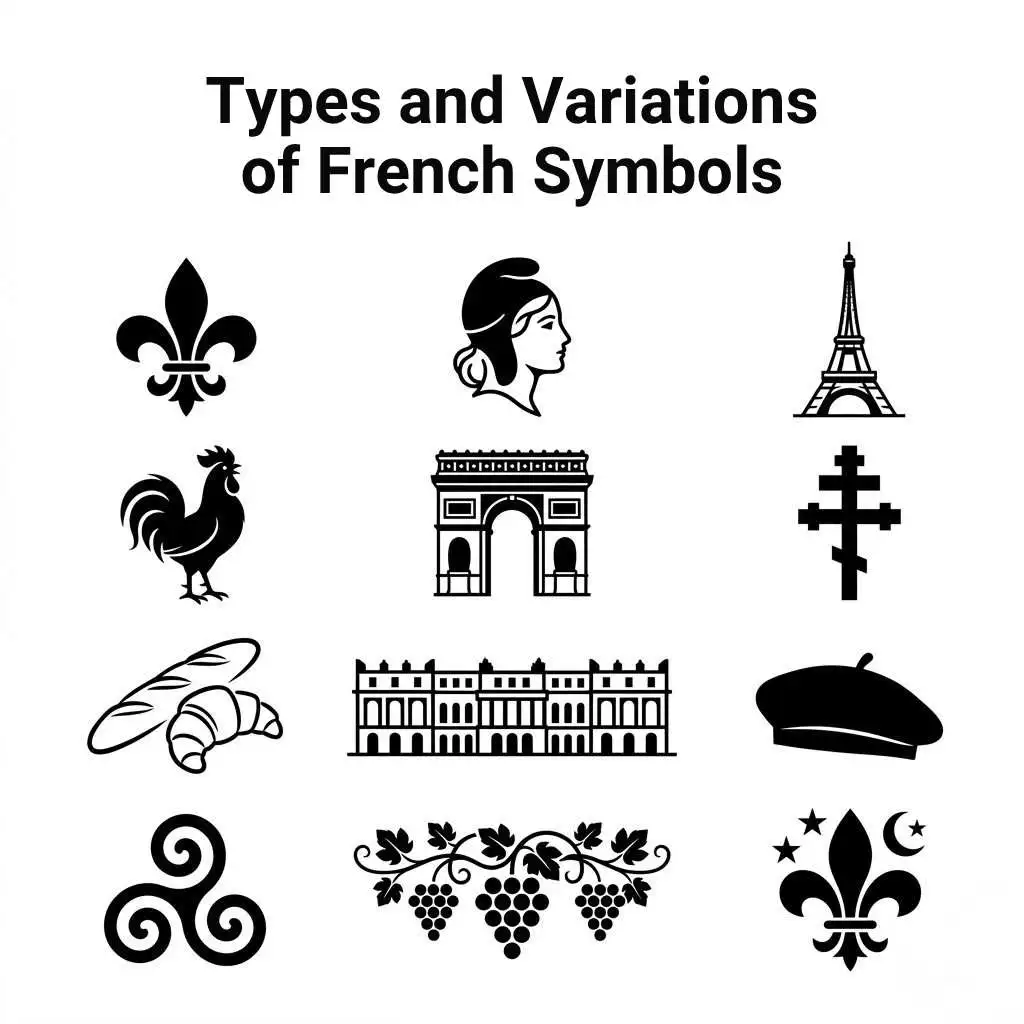
Fleur-de-lis
- Visual: A stylized lily with three petals
- Meaning: Purity, royalty, divine connection
- Where it appears: Royal coats of arms, architecture, religious art
Gallic Rooster
- Visual: A proud rooster standing tall
- Meaning: Courage, vigilance, national pride
- Where it appears: Sports logos, coins, political imagery
Marianne
- Visual: A woman wearing a Phrygian cap
- Meaning: Freedom, republic, revolution
- Where it appears: Government buildings, stamps, sculptures
Tricolor Flag
- Visual: Blue, white, and red vertical stripes
- Meaning: Liberty, equality, fraternity
- Where it appears: National identity, global representation
Cross of Lorraine
- Visual: A double-barred cross
- Meaning: Resistance, faith, strength
- Where it appears: World War II symbolism, historical monuments
French Symbols Across Cultures
Ancient France
Early symbols were influenced by Celtic and Roman traditions. Animals and natural elements were common, representing power and survival.
Medieval Europe
During this period, symbols like the fleur-de-lis became strongly tied to monarchy and Christianity. They signified divine right and royal authority.
Revolutionary France
Symbols shifted dramatically. Marianne and the tricolor flag emerged, representing freedom and the people’s power.
Modern France
Today, french symbols balance tradition and progress. They appear in branding, tourism, and global culture, symbolizing elegance, romance, and sophistication.
Global Interpretation
Outside France, these symbols often represent beauty, art, fashion, and love. They carry a romantic aura that attracts people worldwide.
French Symbols in Art, Movies and Pop Culture
In movies, french symbols often set the tone for romance, mystery, or elegance. A simple Eiffel Tower silhouette or fleur-de-lis can instantly evoke Parisian charm.
In paintings, these symbols represent history and identity. Artists use them to express political ideas or emotional depth.
In books, they appear as metaphors for freedom, rebellion, or passion.
In tattoos, people choose french symbols to express personal values like strength, love, or independence.
In fashion, these symbols reflect luxury and timeless style. Designers often use them to create a sense of heritage and sophistication.
Spiritual and Dream Meaning of French Symbols
Seeing french symbols in dreams often carries deep personal meaning.
- The fleur-de-lis may symbolize spiritual growth or purity
- The rooster may represent awakening or a call to action
- The tricolor flag may reflect identity or inner conflict
Spiritually, these symbols can appear during moments of transformation, guiding individuals toward clarity and purpose.
Positive vs Negative Meaning
Positive Meaning
- Strength and resilience
- Freedom and independence
- Faith and purity
- Cultural pride
Negative Meaning
- Power struggles or control
- Pride turning into arrogance
- Conflict linked to historical events
Like all symbols, their meaning depends on context and personal interpretation.
Why Humans Are Attracted to French Symbols
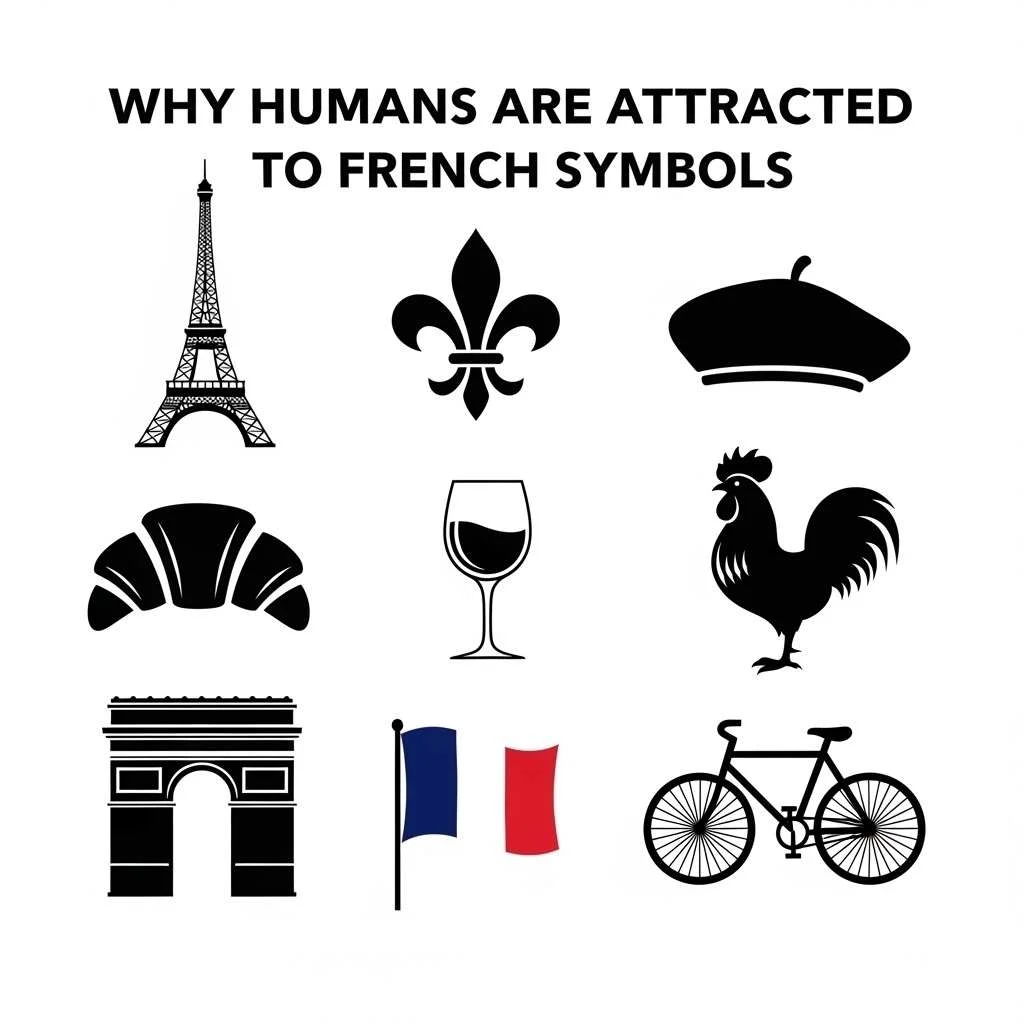
Humans are naturally drawn to symbols because they simplify complex emotions into visual form. French symbols, in particular, carry elegance and depth.
They connect people to stories of love, revolution, and identity. They offer a sense of belonging while also representing beauty and sophistication.
Psychologically, these symbols act as anchors. They help people express feelings that words often cannot capture.
FAQs
What is the most famous French symbol?
The fleur-de-lis is one of the most iconic french symbols, representing royalty and purity.
What does the French rooster symbolize?
It symbolizes courage, vigilance, and national pride.
Why is Marianne important in France?
Marianne represents freedom and the values of the French Republic.
Are French symbols used in modern culture?
Yes, they appear in fashion, branding, art, and global media.
What do French symbols mean spiritually?
They often represent purity, transformation, identity, and inner strength.
Conclusion
French symbols are more than artistic designs. They are living stories carved into history, culture, and human emotion. Each symbol carries layers of meaning that connect the past with the present.
When you look at these symbols, you are not just seeing an image. You are witnessing centuries of belief, struggle, beauty, and identity. And perhaps, in their quiet elegance, you may find a reflection of your own story.

Julian Shaw
I’ve always been fascinated by the small, quiet stories that make life feel magical. Writing allows me to explore worlds that exist just beyond the everyday, where imagination meets reality. Over the years, I’ve found joy in creating characters that feel real and stories that stay with readers long after the last page. When I’m not writing, you can usually find me wandering through city streets, notebook in hand, capturing little sparks of inspiration. I believe every story has the power to connect us, to make us feel a little less alone. Sharing these tales is my way of leaving a mark on the world.
Books:
-
Whispers in the Wind
-
Shadows of Tomorrow