“Freedom symbols” have always whispered to the human soul, reminding us of a life beyond chains, fear and limits.
From ancient civilizations to modern revolutions, these symbols carry stories of courage, hope and rebellion.
They speak a language deeper than words, touching something primal inside you.
In this article, you will uncover meanings, histories and emotional truths behind freedom symbols that most people never notice.
What Are Freedom Symbols?
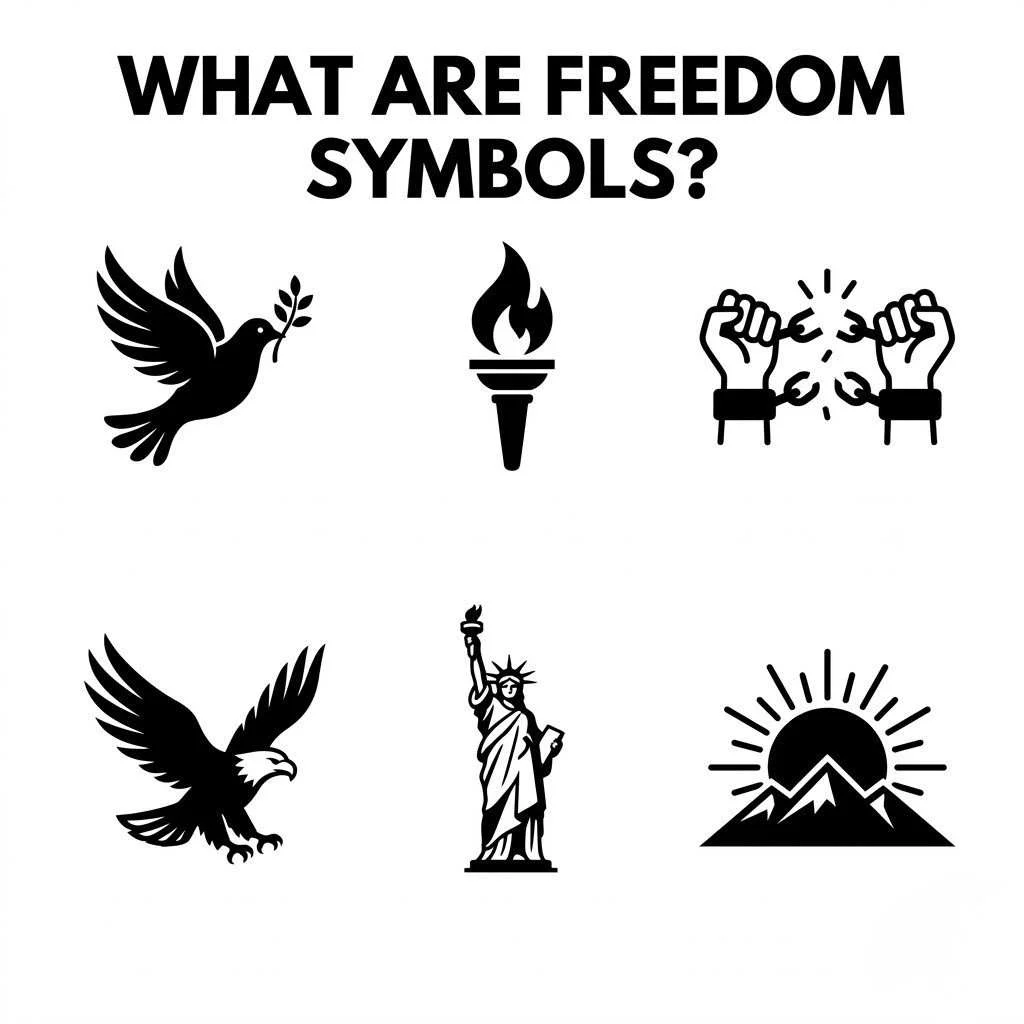
Freedom symbols are visual representations that express the idea of liberty, independence, and the right to live without oppression. These symbols appear in history, religion, art, and even everyday life.
At their core, they serve one purpose: to remind people that freedom is both a natural right and a constant struggle.
Historically, freedom symbols emerged during times of conflict and transformation. Empires rose and fell, revolutions ignited, and people needed powerful images to unite them. Over time, these symbols became deeply embedded in cultural identity.
For example, statues, animals, flags, and natural elements have all been used to represent freedom. Each one carries layers of meaning shaped by the people who believed in them.
Deep Symbolic Meaning
Spiritual Level
On a spiritual level, freedom symbolizes the release of the soul. It represents breaking free from ego, fear, and material attachment. Many spiritual traditions teach that true freedom is not external, it is internal.
It is the moment when you realize nothing truly owns you.
Psychological Level
Psychologically, freedom symbols connect to your deepest desires. Humans naturally resist control. These symbols trigger feelings of empowerment, independence, and self identity.
They remind you that you have choices, even in difficult situations.
Cultural Level
Culturally, freedom symbols unite people. They become rallying points during wars, protests, and movements. They are often tied to national pride, human rights, and social justice.
They carry collective memory, pain, and hope all at once.
Types and Variations of Freedom Symbols
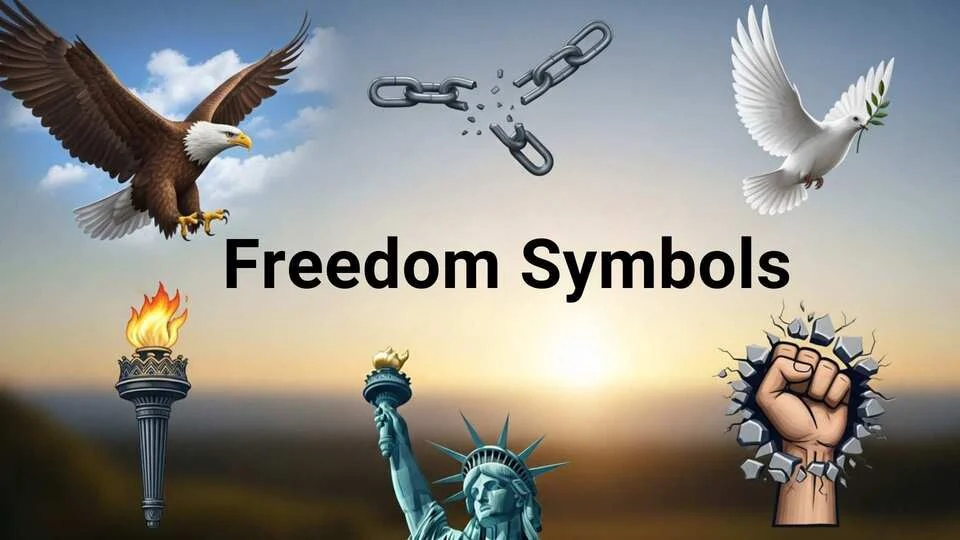
The Bald Eagle
Visual Description: A powerful bird with wide wings soaring high in the sky.
Meaning: Strength, independence, and dominance.
Where It Appears: National emblems, especially in the United States, coins, and official seals.
The eagle’s ability to fly high above the earth represents rising above limitations.
The Statue of Liberty
Visual Description: A towering woman holding a torch and a tablet.
Meaning: Enlightenment, freedom, and hope for a better future.
Where It Appears: New York Harbor, global imagery, films, and literature.
The torch symbolizes light guiding people out of darkness and oppression.
The Broken Chain
Visual Description: A chain snapped into two pieces.
Meaning: Liberation from slavery, oppression, or restriction.
Where It Appears: Protest art, tattoos, historical monuments.
This symbol carries raw emotional power. It represents struggle and victory.
The Dove
Visual Description: A white bird often shown flying or holding an olive branch.
Meaning: Peace, purity, and freedom.
Where It Appears: Religious texts, paintings, political campaigns.
The dove represents freedom achieved through peace rather than violence.
The Open Sky
Visual Description: Vast, endless blue sky.
Meaning: Limitless possibilities and infinite freedom.
Where It Appears: Poetry, films, photography.
The sky reminds you that freedom has no boundaries.
The Flag
Visual Description: A piece of cloth with colors and symbols representing a nation.
Meaning: National identity, independence, and unity.
Where It Appears: Government buildings, events, protests.
Flags often become the strongest symbol of collective freedom.
Freedom Symbols Across Cultures
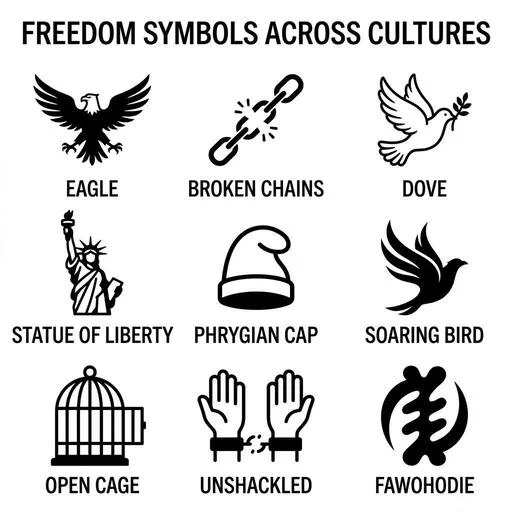
Ancient Rome
In ancient Rome, freedom was represented through symbols like the pileus, a cap given to freed slaves. It marked the transition from bondage to independence.
France
During the French Revolution, freedom symbols became powerful tools of resistance. The Liberty Cap and images of revolutionaries represented the fight against monarchy and oppression.
India
In India, freedom symbols are deeply tied to the independence movement. The national flag and figures like Mahatma Gandhi symbolize nonviolent resistance and moral courage.
United States
The United States uses symbols like Statue of Liberty and the bald eagle to represent liberty and democracy.
Africa
In many African cultures, broken chains and raised fists symbolize liberation from colonial rule and the reclaiming of identity.
Freedom Symbols in Art, Movies and Pop Culture
Freedom symbols appear everywhere once you start noticing them.
In movies, scenes of characters standing on cliffs or looking at open horizons represent emotional liberation. Films often use birds flying away to symbolize escape and new beginnings.
Paintings frequently show broken chains or light breaking through darkness to express freedom.
In literature, freedom is often symbolized through journeys. A character leaving home or breaking rules reflects internal and external liberation.
Tattoos of birds, feathers, or chains are popular because they carry personal meaning. People use them to mark moments when they overcame hardship.
Fashion also uses freedom symbols, especially during social movements. Clothing becomes a form of silent protest.
Spiritual and Dream Meaning of Freedom Symbols
When freedom symbols appear in dreams, they often signal a desire for change.
Seeing yourself flying may mean you are ready to overcome limitations.
A broken chain in a dream suggests you are breaking free from something holding you back.
Open skies can represent new opportunities or emotional release.
Spiritually, these symbols often appear during moments of transformation. They guide you toward self discovery and inner peace.
Positive vs Negative Meaning
Positive Meaning
Freedom symbols often represent hope, independence, and empowerment. They inspire people to fight for their rights and believe in a better future.
Negative Meaning
However, freedom can also carry darker meanings. Absolute freedom without responsibility can lead to chaos. In some cases, these symbols are used to justify rebellion or conflict.
This duality shows that freedom is powerful, but it must be balanced.
Why Humans Are Attracted to Freedom Symbols
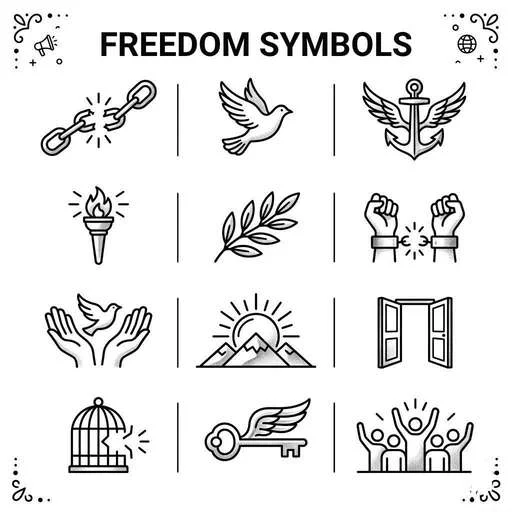
Humans are naturally drawn to freedom because it is deeply connected to survival and identity. From childhood, you seek independence. You want to make your own choices and explore the world.
Freedom symbols tap into this instinct. They remind you of who you are and who you want to become. They also offer hope. Even in difficult times, these symbols suggest that change is possible.
Psychologically, they trigger a sense of control and empowerment. Emotionally, they connect to dreams of a better life.
FAQs
What is the most powerful symbol of freedom?
The most powerful symbol of freedom depends on culture, but the Statue of Liberty and the eagle are among the most recognized worldwide.
Why are birds often used as freedom symbols?
Birds can fly freely in the sky, making them natural representations of independence and escape from limitations.
What does a broken chain symbolize?
A broken chain symbolizes liberation from oppression, slavery, or restrictions.
Are freedom symbols the same in every culture?
No, each culture has unique symbols based on its history, beliefs, and struggles.
What does it mean to dream about freedom symbols?
It usually represents a desire for change, independence, or emotional release.
Conclusion
Freedom symbols are more than images. They are echoes of human struggle, courage, and hope. They remind you that freedom is not just something given, it is something felt, fought for, and protected.
When you see these symbols, you are not just looking at art or history. You are witnessing the human spirit refusing to be confined.
And maybe, deep inside, they are reminding you of your own desire to be free.

Sophia Reed
Hi, I’m Sophia Reed, a storyteller at heart who finds magic in everyday moments. Ever since I could hold a pen, I’ve been weaving tales that explore love, courage, and the unexpected twists of life. Writing allows me to connect with readers on a deeper level, sharing emotions and experiences that resonate across worlds. When I’m not lost in my stories, you can find me wandering through quiet streets, sipping coffee, or dreaming up my next plot twist. I believe every story has the power to inspire, heal, and transport. Through my books, I hope to leave a piece of my imagination with you.
Books:
-
Whispers of the Heart
-
Shadows and Sunlight