
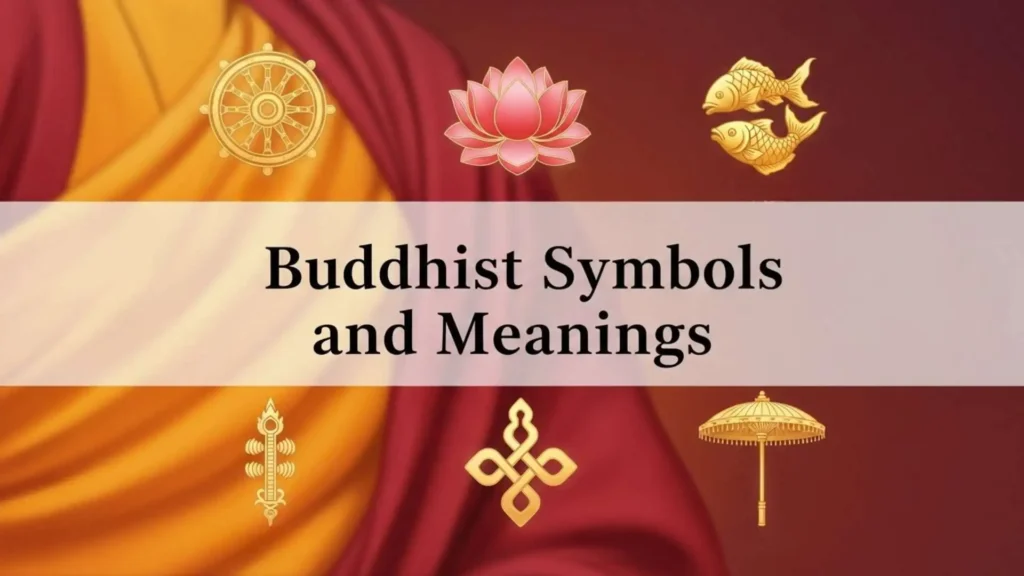
“Buddhist symbols and meanings” are not just ancient designs carved into stone or painted on temple walls.
They are silent teachers whispering truths about suffering, compassion, awakening and the human search for peace.
Across centuries, these symbols have shaped minds, healed hearts, and guided millions toward inner stillness.
This article unveils the deeper layers behind Buddhist symbols and meanings, layers most people sense but rarely fully understand.
What Are Buddhist Symbols and Meanings?
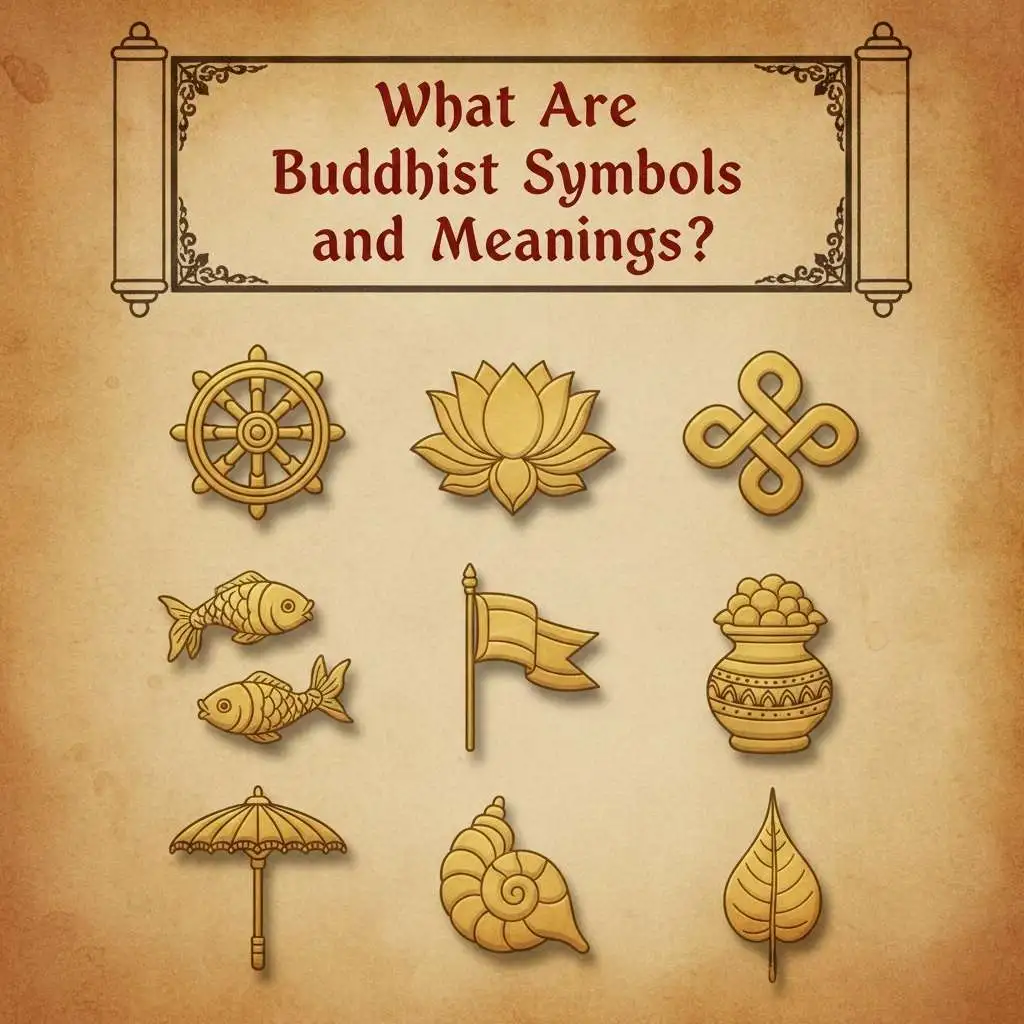
Buddhist symbols and meanings refer to sacred visual representations used in Buddhism to express profound spiritual truths that words alone cannot capture. Originating over 2,500 years ago with Siddhartha Gautama (the Buddha), these symbols emerged as tools for teaching enlightenment, morality, and the nature of reality.
In early Buddhism, symbolic imagery replaced direct images of the Buddha to emphasize wisdom over form. Over time, Buddhist symbols evolved across Asia—India, Tibet, China, Japan, Sri Lanka, and Southeast Asia—absorbing cultural nuances while preserving core spiritual messages. Each symbol functions as a mirror, reflecting the inner journey of the mind toward clarity and compassion.
Deep Symbolic Meaning of Buddhist Symbols
Spiritual Level
At a spiritual level, Buddhist symbols point toward enlightenment, impermanence, non-attachment, and liberation from suffering (dukkha). They serve as reminders of the Noble Eightfold Path and the ultimate goal: awakening from ignorance.
Psychological Level
Psychologically, these symbols act as anchors for the mind. They calm anxiety, focus awareness, and help practitioners internalize abstract ideas like emptiness, mindfulness, and balance. The human brain responds deeply to symbols because they bypass logic and speak directly to emotion and intuition.
Cultural Level
Culturally, Buddhist symbols have shaped ethics, art, architecture, meditation practices, and daily rituals. They connect communities to shared values—peace, compassion, restraint, and wisdom—across generations.
Types and Variations of Buddhist Symbols and Meanings
1. The Dharma Wheel (Dharmachakra)
- Visual Description: A wheel with 8 spokes
- Meaning: The Eightfold Path and the Buddha’s teachings in motion
- Where It Appears: Temples, flags, scriptures, meditation art
2. The Lotus Flower
- Visual Description: A flower rising clean from muddy water
- Meaning: Purity, spiritual awakening, rebirth
- Where It Appears: Statues of the Buddha, mandalas, tattoos, poetry
3. The Buddha Image
- Visual Description: Meditative figure with symbolic hand gestures (mudras)
- Meaning: Enlightenment, compassion, inner stillness
- Where It Appears: Shrines, homes, art, meditation spaces
4. The Endless Knot
- Visual Description: Interwoven lines with no beginning or end
- Meaning: Interdependence, karma, eternal wisdom
- Where It Appears: Tibetan Buddhism, jewelry, sacred art
5. The Bodhi Tree
- Visual Description: Sacred fig tree
- Meaning: Awakening and ultimate realization
- Where It Appears: Pilgrimage sites, paintings, spiritual texts
6. The Stupa
- Visual Description: Dome-shaped structure
- Meaning: The enlightened mind and the Buddha’s presence
- Where It Appears: Sacred architecture across Asia
Buddhist Symbols and Meanings Across Cultures
Ancient India
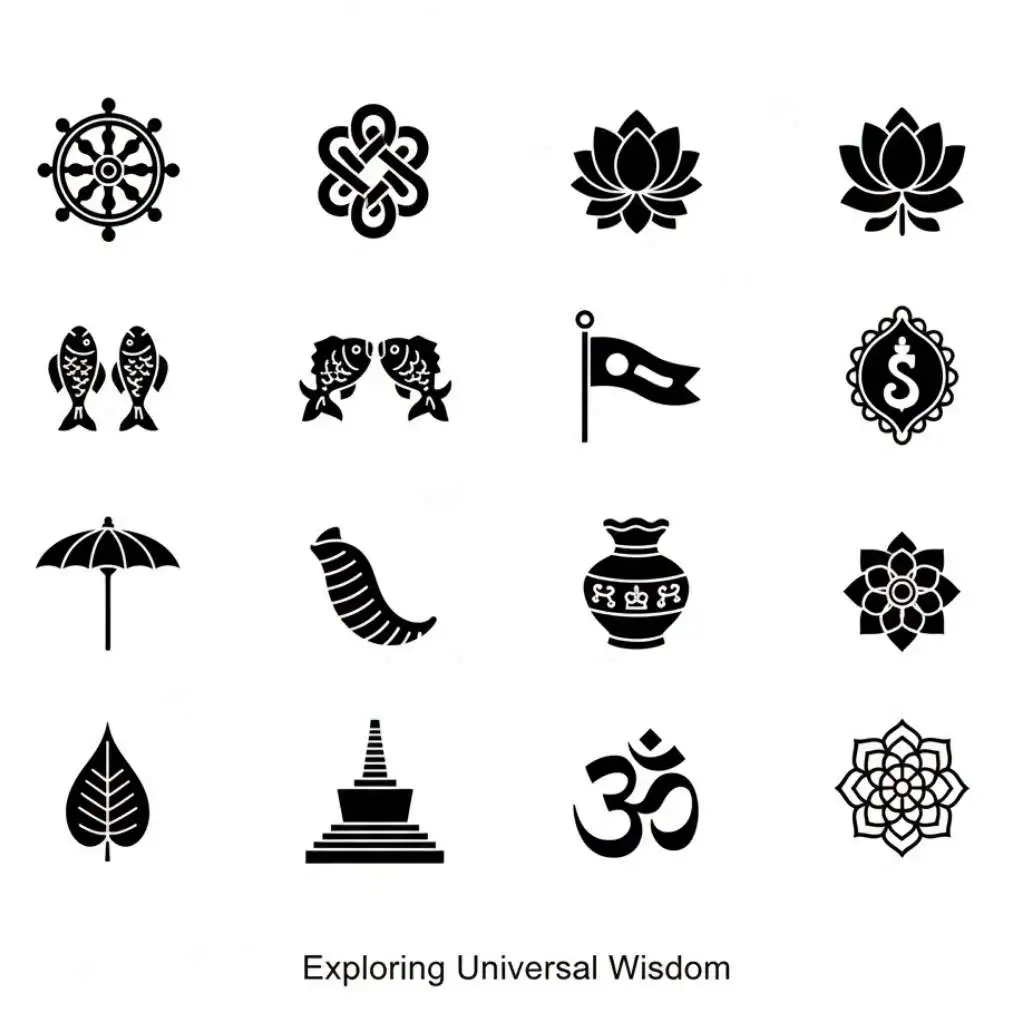
Symbols emphasized liberation, meditation, and non-violence. The lotus and Dharma Wheel dominated early representations.
Tibetan Culture
Added layers of mysticism. Symbols like the Endless Knot and mandalas became tools for visualization and tantric practice.
Chinese Buddhism
Integrated Taoist and Confucian ideas. Symbols reflected harmony, balance, and moral order.
Japanese Buddhism
Focused on simplicity and impermanence. Zen symbols like the ensō (circle) highlighted emptiness and mindfulness.
Modern Global Culture
Today, Buddhist symbols represent peace, mental health, spirituality, and self-awareness beyond religion.
Buddhist Symbols in Art, Movies and Pop Culture
- Movies: Films use Buddha statues and mandalas to symbolize inner transformation.
- Paintings: Buddhist art conveys serenity, balance, and transcendence.
- Books: Symbols serve as metaphors for awakening and personal growth.
- Tattoos: People choose Buddhist symbols to express healing, resilience, or spiritual identity.
- Fashion: Lotus and mandala designs symbolize calm, mindfulness, and ethical living.
Spiritual and Dream Meaning of Buddhist Symbols
Seeing Buddhist symbols in dreams or meditation often signals inner change. A lotus may indicate emotional healing. A Buddha image can reflect a desire for peace or wisdom. The Dharma Wheel may appear during moments of moral decision or spiritual questioning. These symbols arise when the subconscious seeks balance and clarity.
Positive vs Negative Meanings of Buddhist Symbols
Positive Meanings
- Enlightenment
- Compassion
- Inner peace
- Balance
- Protection
Negative or Shadow Meanings
- Attachment to spirituality
- Spiritual ego
- Misuse as decoration without understanding
- Cultural misinterpretation
Like all powerful symbols, meaning depends on intention and awareness.
Why Humans Are Drawn to Buddhist Symbols
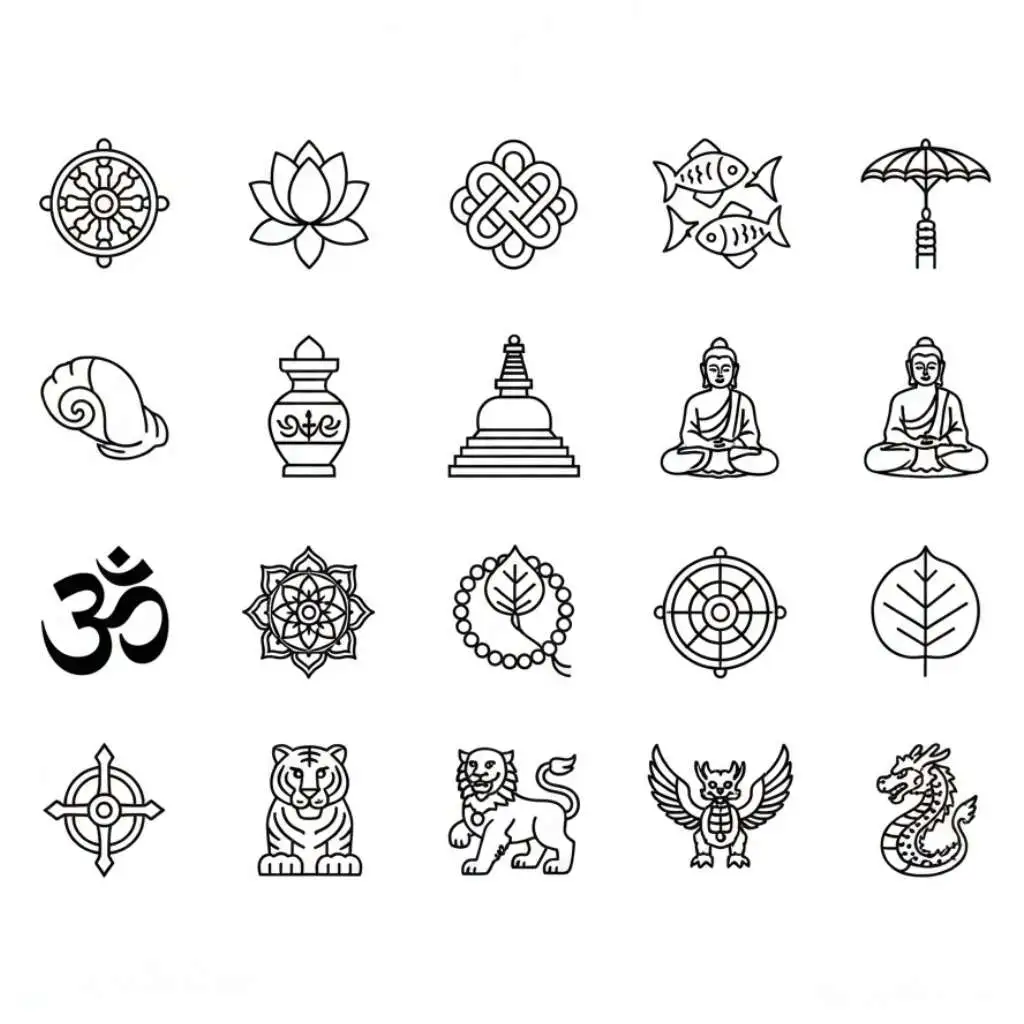
Humans are attracted to Buddhist symbols because they promise what modern life often lacks: stillness, meaning, and emotional grounding. These symbols reassure the nervous system, calm the mind, and offer a sense of belonging to something timeless. They speak to the universal human longing to suffer less and understand more.
FAQs About Buddhist Symbols and Meanings
1. What is the most important Buddhist symbol?
The Dharma Wheel is considered the most foundational symbol of Buddhist teachings.
2. Are Buddhist symbols religious or spiritual?
They are both—religious in origin but deeply spiritual in meaning.
3. Can non-Buddhists use Buddhist symbols?
Yes, when used respectfully and with understanding.
4. What does the lotus symbolize in Buddhism?
Spiritual awakening rising above suffering.
5. Do Buddhist symbols have healing power?
They support mental and emotional healing through focus and meaning.
6. Is it disrespectful to get Buddhist symbols as tattoos?
Intent and placement matter. Respectful understanding is essential.
Conclusion
Buddhist symbols and meanings are bridges between the visible and invisible, the mind and the heart. They remind us that peace is not found by escaping life but by understanding it deeply.
In a world that moves too fast, these ancient symbols quietly invite us to slow down, breathe, and remember who we truly are.

Sophia Reed
Hi, I’m Sophia Reed, a storyteller at heart who finds magic in everyday moments. Ever since I could hold a pen, I’ve been weaving tales that explore love, courage, and the unexpected twists of life. Writing allows me to connect with readers on a deeper level, sharing emotions and experiences that resonate across worlds. When I’m not lost in my stories, you can find me wandering through quiet streets, sipping coffee, or dreaming up my next plot twist. I believe every story has the power to inspire, heal, and transport. Through my books, I hope to leave a piece of my imagination with you.
Books:
-
Whispers of the Heart
-
Shadows and Sunlight